


How to choose ski clothing with advice and correct fit
Search ski clothing near me Searching doesn’t just mean finding the most convenient store. It means having someone who can read your actual use, your level, your sensitivity to cold and how you move on skis. A jacket that’s too stiff, pants that pull when seated or a poorly chosen midlayer can ruin a day on the slopes. This guide is for resort skiers, for those who alternate freeride and touring, for families, beginners and experienced skiers who want to buy better, with correct fit and sensible advice.
Summary
- Start from real use: piste, freeride, ski touring, family weekends or versatile pieces for city and mountain.
- Always try the fit with skiing movements, not just standing in front of a mirror.
- Build a layering system: base layer, midlayer, jacket, pants, gloves, socks and accessories.
- Consider a shop also for advice, services, rental and after-sales support.
- If you leave soon, choose a few correct pieces instead of an oversized complete outfit.
Ski clothing near me: the answer to look for
A good specialist shop doesn’t start from the most technical item or the most recognizable brand. It starts with concrete questions: where do you ski, how many days per season, do you feel the cold, do you often stop at huts, do you use a backpack, helmet, protections or do you need to dress children too.
The search ski clothing near me makes sense when it leads you to a real fitting, comparing sizes, fits and layer combinations. Proximity is useful, but the difference is the ability to guide you to a coherent purchase.
If you want to evaluate the shop as a whole, not just the ski department, this guide on how to choose a mountain shop near you, can also be helpful, especially if you alternate skiing, trekking, travel and urban use.
Start from real use: piste, freeride, touring or family
Before looking at sizes and models, define the main scenario. A kit for long days in a resort requires different priorities than a set for climbing with skins. If you’re starting from ski clothing near me because you have a ski holiday planned, this distinction prevents buying items that are too heavy, too light or not versatile enough.
| Main use | Priorities | Fit to look for |
|---|---|---|
| Piste and resort skiing | Thermal comfort, protection, ease of movement | Jacket that follows shoulders and torso, comfortable pleated trousers |
| Freeride and splitboard | Mobility, layering, backpack and glove compatibility | Cut that doesn’t restrict arms, hips or knees |
| Ski touring | Breathability, lightness, layer management | Non-bulky pieces, easy to open and remove |
| Beginners and families | Simplicity, durability, balanced warmth | Comfortable fit without excess volume |
| Urban outdoor and weekends | Versatility, function, clean aesthetics | Technical pieces you can also wear off the snow |
Quick decision in three minutes
- If you mostly ski on piste, prioritize comfort, manageable warmth and freedom in chairlift positions.
- If you do freeride, pick pieces that work well with a backpack, helmet, gloves and wide movements.
- If you do touring, don’t focus only on warmth: moisture management is key.
- If you’re a beginner, buy the right layering system before looking for the most specialized piece.
- If you dress a family, look for practical, durable pieces that are easy to adjust.
Correct fit: what to try in store before buying
Fitting-room testing is the concrete advantage when you start from a search like ski clothing near me. It’s not enough to zip up and check the length. The outfit must work while you bend, twist, raise your arms, put on gloves and sit down.
Essential tests for jacket, trousers and midlayer
During the fitting, simulate real moves. Raise your arms as if adjusting a helmet. Bend your knees as in a turn. Sit to check that the trousers don’t pull at the waist or behind the knee. Wear a midlayer under the jacket, because trying outerwear over a too-thin shirt can skew the size.
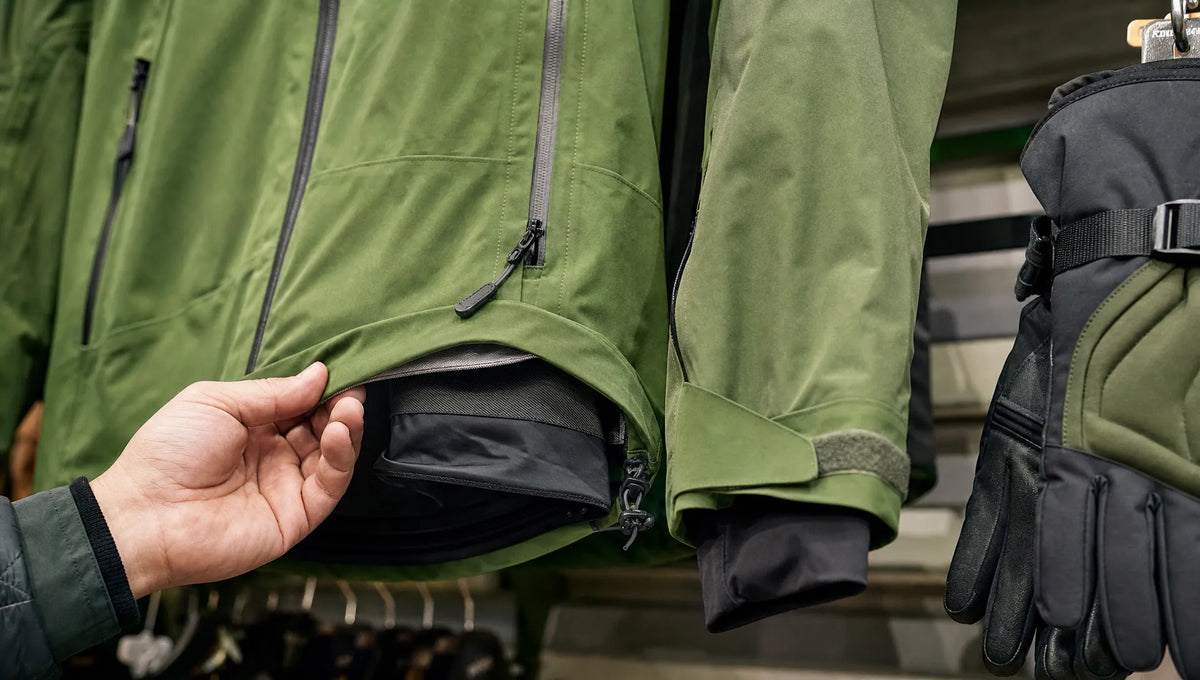
Also check the relationship between jacket and gloves. The cuff should integrate well, without leaving exposed gaps. The same logic applies to trousers and boots: the hem should cover properly without creating unnecessary bulk.
Quick size guide
A correct size should not compress the base layer, restrict the shoulders or create tension at the seat. If you are between two sizes, choose based on movement, not just silhouette. For women, it’s worth checking the bust, hips, armhole and rise of the trousers carefully, because comfort and safety depend heavily on fit stability.
For children and teens, avoid buying much larger to make the garment last many seasons. An overly roomy garment can reduce freedom of movement and protection from the cold.
Advice: questions a good shop should ask you
Good advice on ski clothing near me doesn’t start with size, but with context. In Biella, in the mountains or online, the criterion is the same: the right garment is the one that matches your use, not the one that looks most technical on the hanger.
A knowledgeable advisor should ask you at least these things:
- How many days you ski in a season.
- Whether you mostly ski on piste, off-piste or uphill.
- When you travel and which locations.
- If you get cold hands, feet or torso.
- Which helmet, gloves, backpack and boots you will use.
- Whether you want a garment just for snow or also for travel and city wear.
To get an idea before trying on, you can start from all the online collections and then narrow the choice with in-store advice. If you’re looking for pieces with a more lifestyle, everyday reading, the selection Biella Fabrics can be a good reference point to understand how function and style can coexist.
Services to consider before buying everything
If you ski only a few days or are a beginner, you don't always need to buy the full tech set. ski and snowboard rental allows you to invest first in the pieces that most affect personal comfort, like clothing and accessories. If you already have your equipment, the workshop is useful to keep skis and snowboards in order before departure.

Our recommended options
The recommended options are not a universal ranking. They help you decide which direction to take based on your typical day, level and the need to build a complete outfit.
| Recommended option | Ideal if | Key features | To pair with |
|---|---|---|---|
| On-piste insulating set | Resort skiing, frequent breaks, cold days | Thermal comfort, protection, stable fit | Technical base layer, ski socks, well-integrated gloves |
| Versatile shell with midlayer | Alternating piste, light freeride and travel | Modularity, layer management, flexible use | Warm midlayer, neck warmer, compact backpack |
| Lightweight set for touring and splitboarding | Skin up or do dynamic outings | Breathability, freedom of movement, simple layering | Light gloves plus warm liners, technical underwear, beanie |
| Beginner or family kit | You want comfort without overcomplicating the choice | Ease of use, intuitive adjustments, balanced protection | Helmet, goggles, correct socks, a warm midlayer |
| Mountain-to-city outerwear | You want technical pieces also for travel and city use | Clean lines, everyday function, good versatility | Technical knitwear, outdoor shoes, essential accessories |
| Comfort fit for women | You want stability without compression | Pay attention to bust, hips, waist and knee movement | Specific base layer, low‑bulk midlayer, properly sized gloves |
To compare brands and on‑piste styles, you can review the selection Colmar against other brands available online. The point isn’t to pick a label in advance, but to understand which fit and construction work best for your body.
Mistakes to avoid when trying on a ski outfit
When you’re looking ski clothing near me for an imminent departure, the risk is buying in a hurry. It’s better to slow down during the fitting and speed up only after you’ve checked the right details.
Avoid these common mistakes:
- Trying the jacket on without the midlayer you’ll actually use.
- Choosing a size just because it matches your city clothing size.
- Ignoring helmet, gloves, goggles and backpack during the fitting.
- Focusing only on the warmest item without assessing breathability and layering management.
- Buying pants without simulating bends, sitting and movement with your boots.
A well‑chosen ski outfit should almost disappear while you ski: it protects, follows your movement and doesn’t require constant adjustments.
FAQ
How snug should a ski jacket be? It should stay stable without compressing. You must be able to raise your arms, rotate your torso and wear a midlayer without tension across shoulders and chest.
Is it better to buy or rent if I’m a beginner? For technical equipment, renting can be a prudent choice. For clothing and personal accessories, buying the right pieces improves comfort, hygiene and consistency of use.
How do I know if the ski shop near me gives advice with good judgment? The advisor should ask where you ski, how often, your level and what you wear underneath. If they only talk about size or price, the consultation is incomplete.
Can I use the same garments for skiing and the city? Yes, if you choose versatile, not overly specialized pieces. For intense days on the snow, though, base layer, socks, gloves and ski pants remain dedicated items.
What should I bring to the shop for a more accurate fitting? Bring or wear a base layer similar to the one you’ll use, tell them which boots and helmet you already have, and replicate the real movements of skiing during the fitting.
If you want to choose with more confidence, start with the online collections, define your main use and then ask for a fit consultation. For those in the Biella area, an in-store fitting remains the most accurate way to build a comfortable, coherent and durable ski set.
Ski Sises on Google
Choose Ski Sises as a preferred source: you'll see our guides and news more often in Top stories on Google.