Women's ski suit The North Face: buying guide
Choosing a women's ski suit The North Face makes sense if you're looking for a precise balance: protection on the slopes, freedom of movement and a clean look that also works off the lifts. The point is not to buy the warmest garment possible, but to build a system suited to how you ski, the weather you meet most often and your sensitivity to the cold.
This guide is designed for those who want to buy well, without getting lost among codes, fits and layering combinations.
In short
- If you mainly ski on the slopes, start with a two-piece suit with a matching jacket and trousers.
- If you feel the cold a lot, favour an insulated garment and leave room for a midlayer.
- If you alternate skiing, walking and urban use, consider a versatile shell with technical layering.
- The right fit should allow squats, torso rotation and raised arms without pulling.
- For a safer purchase, choose based on real use, not just the expected temperature.
Why choose The North Face for a women's ski suit
The North Face is a natural choice for those who want a technical look that isn't overly specialist. Its identity comes from the mountains, but many pieces also work well in an everyday outdoor wardrobe: travel, weekends at altitude, walks in ski resorts, the city in the cold months.
When we talk about a ski suit, in most cases we mean a system made up of a jacket and trousers. It is the most adaptable solution: it lets you manage layers better, wear the jacket even after skiing and replace a single piece if your needs change.
To start, it's worth looking at the selection The North Face already thinking about the main use. A highly protective jacket can be perfect for cold days and chairlift rides, while a lighter, layerable garment makes more sense if you ski at a fast pace or want to use it for winter trekking too.


Three factors make the difference: protection from the weather, heat management and women's fit. The brand may cover different needs, but the right garment depends on you.
First question: where and how do you really ski
The best choice comes from a simple question: in what conditions will you wear the suit most often? A weekend a year on the slopes requires different priorities than a whole season between resorts, light freeride and mountain trips.
| Use scenario | Priorities | Recommended choice | To avoid |
|---|---|---|---|
| Occasional slope skiing | Warmth, simplicity, immediate comfort | Insulated jacket and comfortable ski trousers | Fit too technical or not forgiving enough |
| Frequent resort skiing | Protection, durability, layering | Two-piece suit with good mobility | Garment chosen only for looks |
| Extreme cold | Insulation and room for layers | Warmer jacket, technical base layer, midlayer | Cut too tight |
| Sporty fit | Breathability and ventilation | Shell or less padded piece for layering | Excessive padding |
| Mountain and city travel | Versatility | Clean jacket, technical trousers, essential accessories | Pieces too specialised for everyday use |
If you are starting from scratch, the most balanced solution remains a two-piece suit. It offers protection, is easy to adjust during the day, and lets you wear the jacket separately. If you prefer a coordinated wardrobe, you can also explore the women's collection, useful for completing the outfit with layers, footwear and compatible outdoor pieces.


A small decision tree can help:
- If you ski slowly, take many breaks and feel the cold, choose more insulation.
- If you ski intensely and warm up quickly, choose more breathability and modular layering.
- If you want to wear the jacket in the city too, look for a simple line that is not too bulky.
- If you often go to the mountains, prioritise durability, adjustments and compatibility with helmet and gloves.
Warmth and layering: padded or shell?
The warmest suit is not always the most comfortable. In the mountains the body alternates between static moments, such as the chairlift and breaks, and active phases in which sweating increases. If moisture stays trapped, the cold arrives even with a heavy jacket.
A padded garment is ideal if you want immediate comfort, ski on the piste and do not want to build a complex layering system each time. It is a practical choice for many skiers, especially on cold or windy days.
A shell, on the other hand, works better as an outer shell. It does not aim to keep you warm on its own, but to protect you from the weather, leaving the base layer and midlayer to regulate temperature. It is more flexible for those who travel, alternate activities or want to wear the same pieces across several seasons.
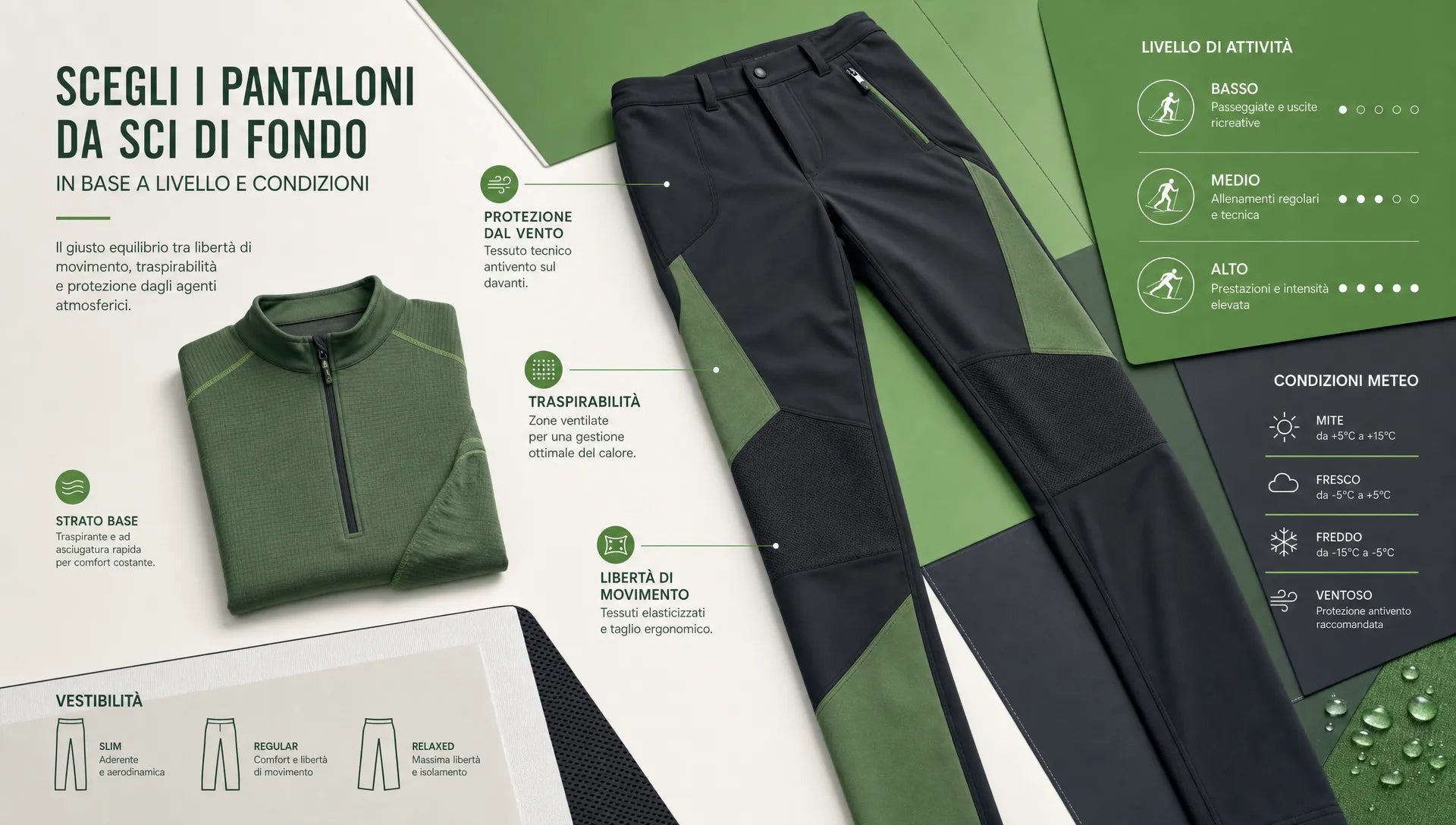
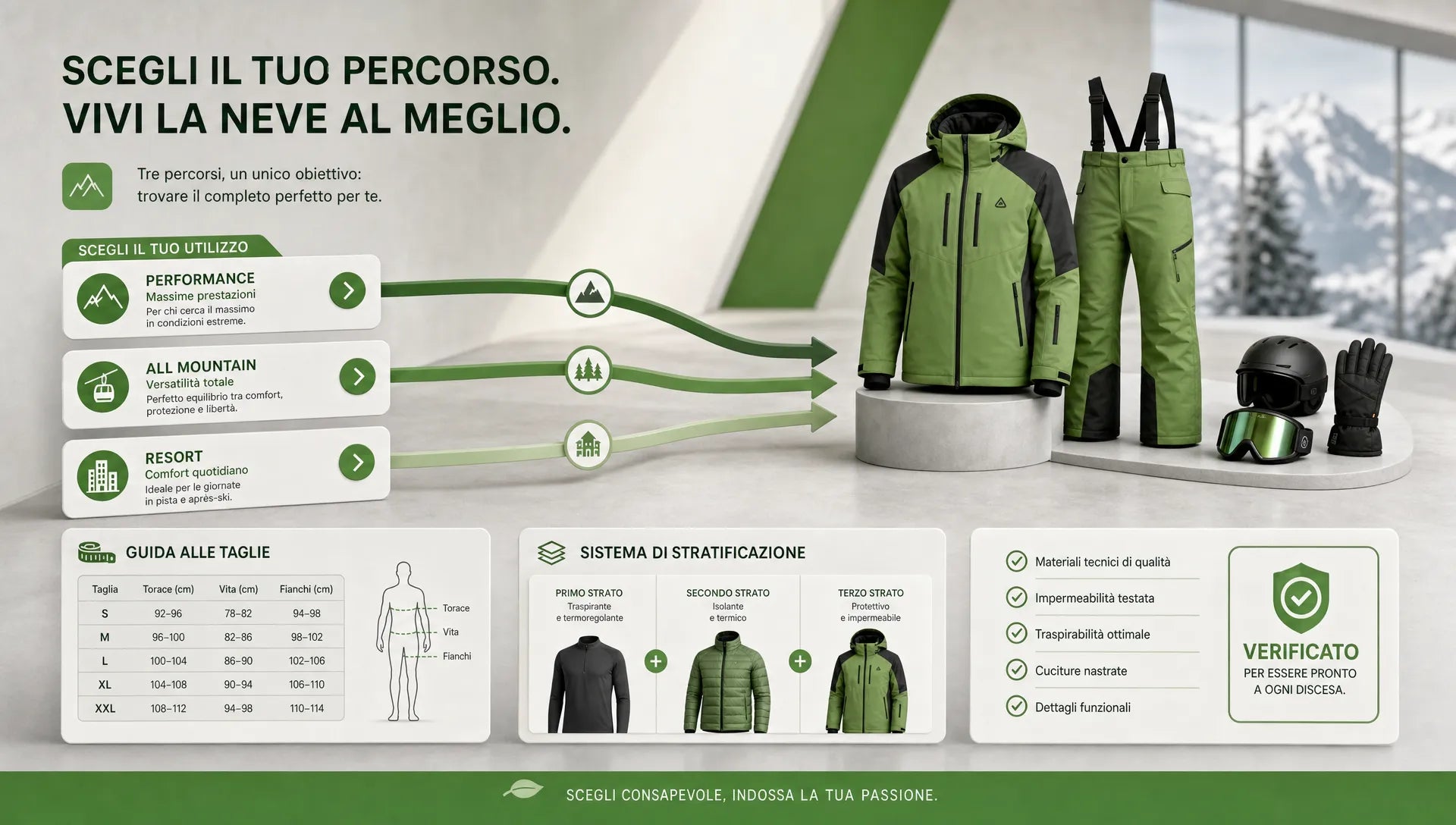
For most people, an effective combination is this: a technical base layer against the skin, a light or medium midlayer, and an outer jacket suited to the cold. Trousers must protect you on the chairlift but remain comfortable when bending.
The ski collection is the most logical place to start if you want to build the complete set, from the jacket to the trousers and the technical accessories.


Women's fit: what to check before choosing
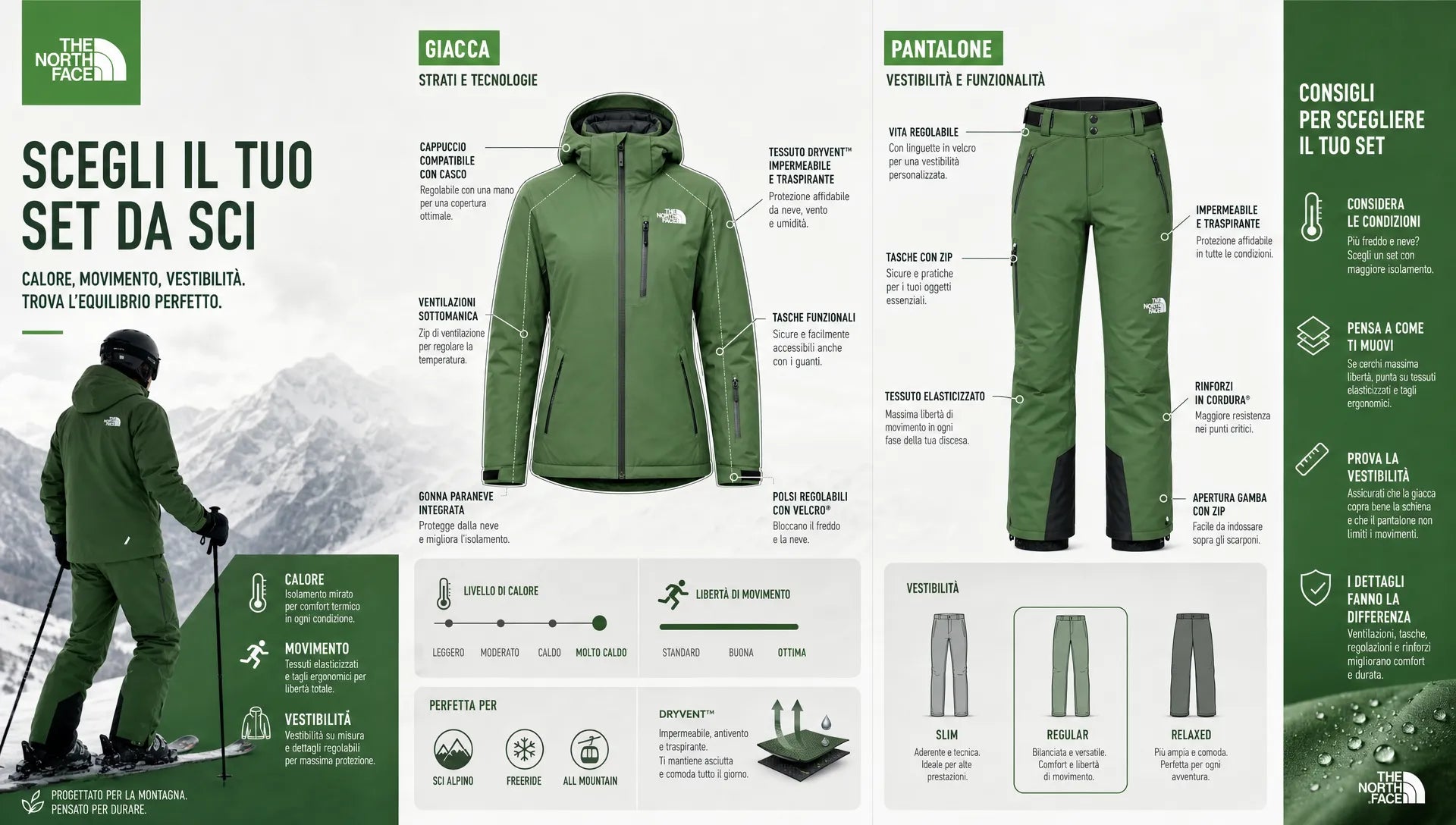
The fit of women's ski wear shouldn't just feel right standing still. It has to work in motion, with base layers, midlayers and any protectors. A jacket that looks perfect in the mirror can become too short when you raise your arms, or too tight across the shoulders when you grip your poles.
Check these points before deciding:
- Shoulders: they should allow the torso to rotate without strain.
- Waist: it should stay in place without compressing the layers underneath.
- Hips and thighs: they should allow bending and an athletic stance.
- Jacket length: it should still cover well when you sit down.
- Trouser hem: it should work properly with your ski boot.
- Cuffs and collar: they should close well without creating pressure.
If you're between two sizes, consider how you usually layer. If you wear a thick midlayer, you may prefer a slightly roomier cut. If you want a cleaner line for the slopes and town, you can stay with a more regular fit, as long as it doesn't restrict your movement.
A good test is to simulate three movements: squatting, twisting your torso and raising your arms as if adjusting a helmet or goggles. If the garment pulls, rides up or compresses, it isn't the best size for skiing.

Recommended options
The options below are not specific models, but curated configurations to help you choose sensibly. They are useful if you want to buy a women's ski suit The North Face based on your actual use.
| Recommended option | Ideal for | Features to look for | What to pair |
|---|---|---|---|
| Insulated jacket and ski trousers | Resort skiers who want immediate comfort | Good cold protection, regular fit, simple adjustments | Technical base layer and warm gloves |
| Shell plus technical trousers | Skiers who ski at high pace or want versatility | Outer protection, room for layering, good mobility | Modular midlayer and technical sock |
| Jacket The North Face with bib trousers or high-waisted trousers | Cold days, fresh snow, greater coverage | Waist stability, lower-back protection, freedom in the shoulders | Thin technical underwear and helmet-compatible |
| Lightweight set for travel and urban use | For those who want a piece that works off the slopes too | Essential lines, compact bulk, a good balance between technique and style | Outdoor sneakers or après-ski boots |
| Warmer outfit for those who feel the cold | Skiers sensitive to low temperatures | Generous insulation, protective collar, inner space for midlayers | Neck warmer, padded gloves and suitable socks |
Best for the slopes and immediate comfort
The combination of an insulated jacket and ski pants is the easiest choice to wear. It works well for those who want to get dressed quickly, spend many hours on the lifts and not have to readjust their layers with every outing.
The advantage is ready-to-go thermal protection. The limitation is less flexibility if the weather changes or if the pace increases a lot.
Best for active skiers
A layered shell system is more technical, but also more precise. If you move a lot, sweat easily or alternate between the slopes and less static stretches, a layering system lets you adapt better.
This choice requires more attention in building the outfit, but offers broader use throughout the season.
Best for those who want functional style
The North Face is also appealing for those seeking a clean outdoor aesthetic. A well-chosen technical jacket can take you from the slopes to the journey without looking out of place.
In this case, the priority is to avoid pieces that are too specialised for your real use. Look for balance: sufficient protection, a tidy fit and coherent accessories.
To complete the set, the outdoor and ski accessories make a concrete difference: gloves, socks, neck warmer and mask can improve comfort more than an excessive increase in padding.


When to buy online and when to visit the shop
Buying online is convenient if you already know your size, preferred fit and intended use. At Fabbrica Ski Sises you can choose from a curated selection, with free shipping in Italy on orders over 50 euros, fast delivery and returns within 14 days.
If instead you are preparing a ski week, are torn between two sizes or want to coordinate clothing and equipment, a visit to the shop may be more efficient. The Biella location is also useful for those who want to complete their preparation with the rental and workshop services, especially when the focus is not just the suit but the entire snow setup.
A practical rule: buy online when you know what you need, and ask for advice when you are building the outfit from scratch or changing the type of skiing you do.
FAQ
Is the The North Face women's ski suit suitable for beginners? Yes, especially if you choose a simple setup with an insulated jacket and comfortable trousers. To start, prioritise comfort, manageable warmth and ease of movement over overly technical solutions.
Is a one-piece suit or a two-piece set better? For most female skiers, the two-piece set is more versatile. A one-piece suit offers plenty of protection, but it is less practical during breaks and less flexible if you want to wear the jacket off the slopes too.
How do I choose the size if I buy online? Start from your real measurements and consider the layers you will wear underneath. If you are between two sizes, think about how much you want to move and how often you wear a thick midlayer. The garment should not pull across the shoulders, hips or thighs.
Is a heavily padded jacket really necessary? No. If you ski at a high pace or in variable conditions, a shell with layering can be more comfortable. Padding is useful if you feel the cold, take frequent breaks or ski often in low temperatures.
Which accessories to pair with a The North Face suit? Suitable gloves, technical socks, a neck warmer and a goggles mask are the priorities. It is better to choose a few accessories that suit the climate and your skiing pace, rather than compensating with an overly heavy jacket.
Choose with a simple criterion
The best The North Face women's ski suit is the one that suits the way you experience the mountains: warmer if you want immediate comfort, more modular if you ski actively, more essential if you also want to use it while travelling. Start from the curated selection of Fabbrica Ski Sises, compare fit and layering and, if you have doubts, ask for advice before buying.
Ski Sises on Google
Choose Ski Sises as a preferred source: you'll see our guides and news more often in Top stories on Google.