
Ski mountaineering clothing: the essential layer kit
Ski mountaineering rewards those who can manage the heat uphill and the cold downhill. The point is not to wear more, but to dress better: light layers, compressible, easy to open and remove when the rhythm changes. This guide is designed for those who are building the first kit, but also for those who want to make their ski mountaineering clothing more essential, avoiding redundant garments and choices not suitable for the winter mountain.
In summary
- Start from a breathable layer base, not too heavy.
- Add a light mid layer to the supports and cold days.
- It always wears an anti-wind and protective shell.
- Choose comfortable pants uphill, compatible with boots and wide movements.
- Care accessories and spare parts: hands, head and feet determine much of comfort.
- Integrate clothing and safety: the technical kit does not replace bulletin, training and self-sufficiency.
Why ski mountaineering requires different clothing
In the ski run the body alternates short moments of laughter effort in the plant. In mountaineering, however, the climb can last hours. Suda, you turn to the wind, you stop for the inversions, then you face a descent where the perceived temperature changes quickly.
This is why mountaineering clothing has to do three things in a balanced way: to transfer moisture away from the skin, to protect from the wind and to allow a quick adjustment. A very warm but not breathable head can work in the chairlift, but become uncomfortable during a long climb with the skins.
The correct logic is modular. Each layer has a precise function and has to work with others. If a garment does not open, it does not compress, does not leave freedom of movement or remains humid too long, it is probably not the most efficient choice for touring.
Layer system: what to wear from skin to shell
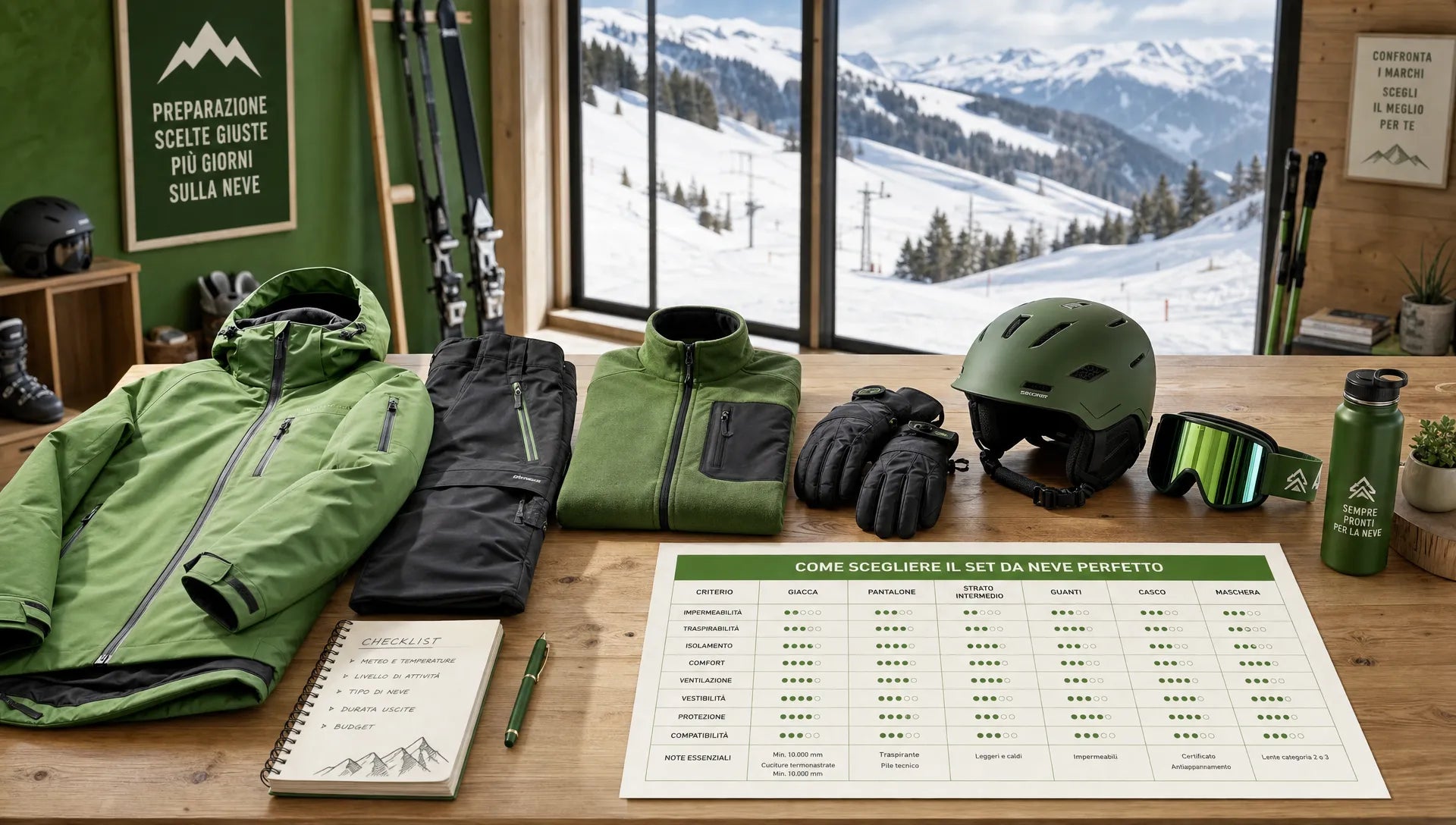
The essential kit should not be complicated. It has to cover the most common conditions: ascent at medium pace, transition at altitude, descent, sudden wind and stop. The quality of the details counts as much as the fabric: ventilation zip, compatible hood, cuffs manageable with gloves, pockets accessible with the backpack.
| Road | Function | What to look for | To avoid |
|---|---|---|---|
| Base layer | Manage sweat and comfort on the skin | Breathable fabrics, quick drying, tight fit | Cotton, too heavy garments for uphill pace |
| Mid layer | Add modulable heat | Lightweight, technical wool or thin insulation | Excessive volumes under the shell |
| Windproof | Protect in exposed ascent | Lightweight fabric, good mobility, practical zip | Hard heads if used for many hours moving |
| Gum | Wind protection, snow and variable conditions | Functional hood, layer-compatible cut, durable construction | Too tight fit over the mid layer |
| Trousers | Movement, protection and ventilation | Joint knees, bottom compatible with boots, ventilation openings | Too padded track pants |
| Accessories | Adjust temperature and protect end | Replacement gloves, band or cap, technical socks | Just a couple of gloves all day long |
Base layer: the first microclimate control
The layer base is the most underrated item. He has to stay close to the skin without compressing. Its priority is not “heating” in absolute sense, but keeping the body dry. For those who sweat a lot, a technical synthetic fabric can be ideal. For those looking for natural comfort and good smell management, merino wool remains a very versatile solution.
On exit, avoid leaving already too covered. If you feel hot in the first ten minutes, you probably overreacted. Better start with a slight feeling of fresh and add a layer only if the rhythm or weather require it.
Mid layer: insulation without encumbrance
The mid layer serves when the temperature drops, when you stop or when the descent requires more protection. A technical fleece or a light mountain sweatshirt are often more useful than a very heavy garment, because they allow you to adjust the temperature better.
If you are looking for a premium technical leader to use even beyond ski mountaineering, the Arc'teryx selection is a good starting point for essential mid layer, clean and designed to move in the mountains.
Shell and windproof layer: the difference between protection and overheating
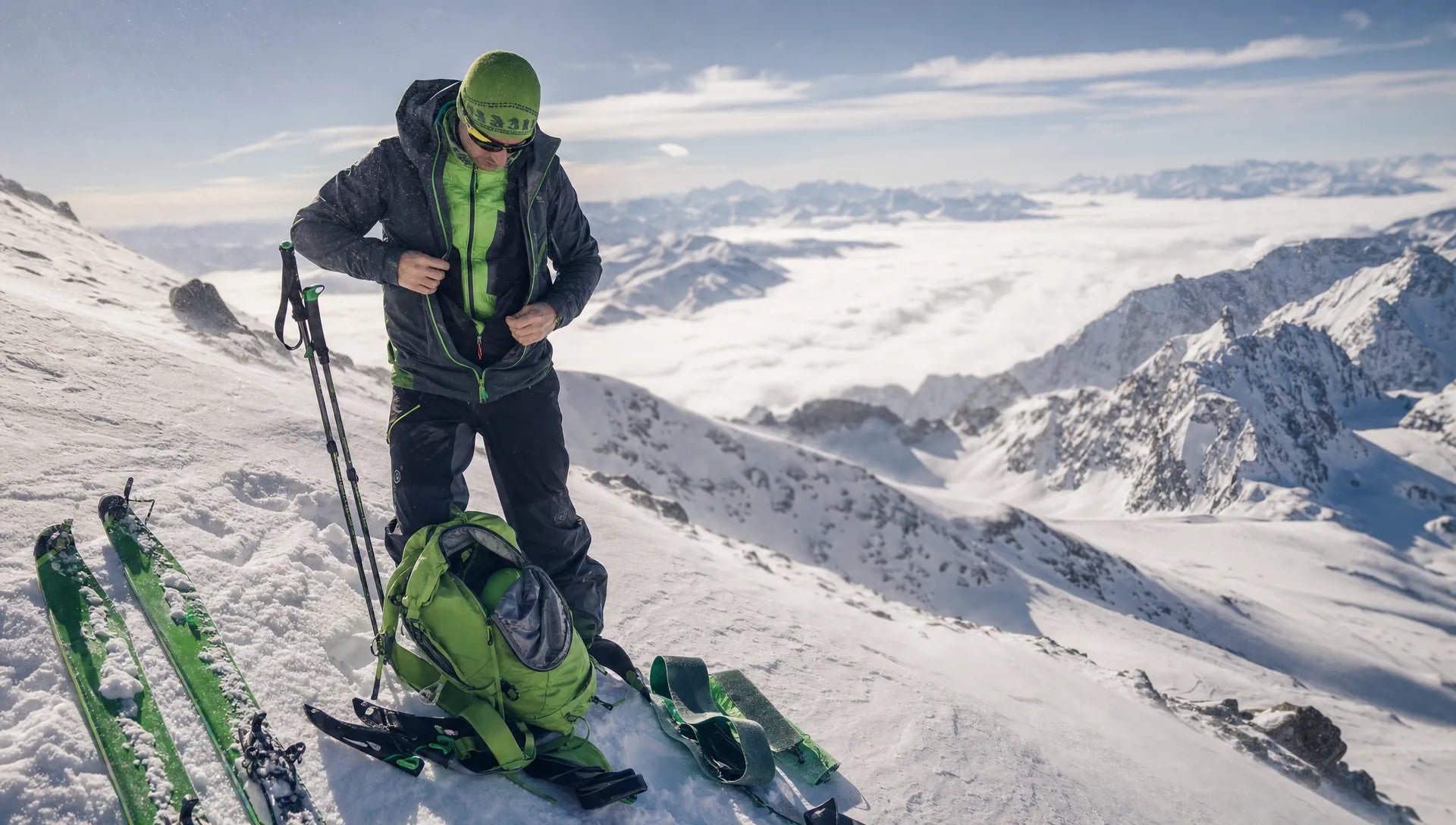
You do not always need to wear the shell throughout the ascent. Often it is more efficient to keep it in the backpack and use it in the crest, downhill or during the stops. On stable days a light windproof layer can be enough over the layer base or the mid layer.
The shell remains a key element. It must protect from wind, snow and rapid changes. It also has to leave space to the inner layers without limiting arms, bust and posture with the backpack.
Pants: mobility before the padding
Ski mountaineering trousers must follow the uphill step. We need freedom of movement, bottom compatible with the boot and heat management. Too padded trousers can become uncomfortable in long and humid ascents before descent.
The ventilation openings are a very practical detail. They allow heat discharge without stopping and without removing layers. For colder outputs, the solution can be add a light technical underwear under a non-excessly hot pants.
How to adapt the weather kit, rhythm and itinerary
There is not only one valid kit for all outputs. The choice changes according to altitude, exposure, wind, duration and personal intensity. A short climb near the plants does not require the same management of a long trip with final crest and exposed descent.
| Scenario | Recommended choice | Why it works |
|---|---|---|
| Long rise and sustained rhythm | Light layer base, windproof in the backpack | Reduces sweat risk too |
| Cold but stable day | Base layer, mid layer thin, ready shell | Offers modulable heat without excess |
| Wind in the ridge | Wheel accessible, warmer gloves, headdress | Protects in static moments and in altitude |
| Wet or variable snow | More protective shell, technical pants | Improved downhill comfort and transitions |
| Short output or training | Minimal system, much ventilation | Avoid unnecessary weight and overheating |
Before leaving, always check weather and avalanche bulletin. In Italy you can consult territorial information throughAINEVA. Clothing helps to manage comfort and protection, but safety in snowy environment also requires proper skills, planning and equipment.

Our recommended options
Technical base layer
Ideal for:who wants to start with a clean and versatile kit, suitable for climbs of different intensity.
Key Features:breathable fabric, comfortable contact on the skin, tight fit but not constrictive. The choice between synthetic and wool depends on your balance between quick drying, comfort and smell management.
To match:Technical pants and light mid layer. If the day is mild, it can be enough to add only one windproof layer in the backpack.
Mid layer light
Ideal for:who alternates uphill, breaks and descends in varying conditions.
Key Features:moderate isolation, good freedom of movement, volume contained under the shell. A too hot mid layer tends to stay in the backpack or sweat uphill.
To match:base thin layer and protective shell. For a technical and minimal approach, oriented on mountain garments with clean cut and essential construction.
Vest or windproof jacket
Ideal for:climb up on dorsal, exposed beams and days when the wind is more annoying than the cold.
Key Features:lightness, compressibility, easy to manage front opening. A vest protects the bust without overheating your arms, while an anti-wind jacket offers more coverage.
To match:technical layer base in the intense climbs, or a thin mid layer when the temperature drops. For garments designed for movement and alpine environment, the selectionLa Sportivais particularly consistent with this type of use.
Protective shell
Ideal for:who wants a head of safety for wind, snow, descent and weather change.
Key Features:protection, fit compatible with layers, functional hood, pockets accessible. It should not be chosen only for maximum robustness, but for the balance between protection and real use.
To match:light mid layer or compressible insulation. In transitions it is best to wear it before cooling, not when it is already sweated and stopped.
Trousers touring
Ideal for:who seeks uphill comfort and downhill control.
Key Features:elasticity, cutting that follows the step, side ventilation, bottom compatible with ski mountaineering boots. The priority is to move well, do not replicate the feeling of a padded alpine ski pants.
To match:technical stocking and, on colder days, light underwear. Avoid too hot combinations if you predict important differences.
Gloves, headgear and spare socks
Ideal for:Everyone. The accessories are small, but often determine the quality of the day.
Key Features:a lighter glove for the ascent, one warmer for descent and stops, band or cap, neck warmer and technical socks. Bringing a dry replacement is a simple and very effective choice.
To match:backpack with organized pockets. Accessories must be reached quickly, especially during transitions.
Backpack and transfer bag
Ideal for:who prepares day trips, snow weekends or frequent trips between city and mountain.
Key Features:in the backpack serve order, quick access and compatibility with safety equipment. For travel, a sturdy bag helps to separate dry garments, changes and accessories.
To match:light inner pockets and dry kit for return. For garments and accessories suitable for travel, you can explore the selectionThe North Face.
Fit and sizes: what to check before buying
Ski mountaineering fit must be precise, not extreme. Too tight a garment limits movement and makes it difficult to layer. A too wide garment disperses heat, creates folds under the backpack and can entangle in the technical phases.
Always try the layers together, not separately. Arms up, simulates the movement of the stick, close the backpack, folded as during a conversion. The shell must also cover well with the mid layer below. The trousers must follow the step without pulling on knees and basin.
For the layer base, choose a tight fit. For the mid layer, leave enough space to move. For the shell, consider the hottest layer you will use below. If you are between two sizes and predict many cold or long outputs, evaluate the size that allows a more natural stratification.
Essential checklist before leaving
This is a synthetic checklist to control the kit without filling the backpack of useless items.
- Base layer dry and suitable for the expected rhythm.
- Mid layer light or insulation compressible.
- Protective shell always accessible.
- Technical pants with good mobility.
- Light gloves and warmer gloves.
- Fascia, cap or warm neck.
- Technical and spare steps if the output is long.
- Glasses or mask based on weather and light.
- backpack ordered with safety equipment.
The safety part deserves a clear note: Artva, shovel and probe are not optional accessories in valanghivo environment. They must be chosen, brought and above all know how to use. If you need to complete the equipment for a day on the snow, you can find out about the ski and snowboard rental service in Biella and evaluate what you need before departure.
Common errors to avoid
The first mistake is to dress like skiing on the track. Uphill the body produces a lot of heat and a too insulating head can become a problem after a few minutes.
The second error is to postpone the adjustment. If you start sweating too much, open the zip, remove a layer or slow down before the layer base is bathed. Temperature management should be anticipated.
The third mistake is to forget the hands. Wet gloves and downwind quickly spoil comfort. A system with light glove and warmer glove is simple, effective and little bulky.
The fourth error is to choose garments only for maximum protection. Ski mountaineering needs balance. The best garment is what you will really use for many hours, not what remains in the backpack because too hot, rigid or bulky.
Frequently asked questions
What is the first head to buy for ski mountaineering?Start from a good layer base and a protective shell. They are the two extremes of the system: one manages comfort on the skin, the other protects from wind and snow. Then add mid layer and accessories according to the outputs.
Better merino or synthetic wool for the layer base?It depends on your rhythm. Synthetic tends to dry quickly and is suitable for sweaters very much. The merino wool is appreciated for comfort and smell management. Both are valid if the weight of the head is correct for the ascent.
Can I use the alpine ski jacket for ski mountaineering?You can use it in some situations, but it is often too hot and little breathable for long climbs. If you are starting, consider the intensity of your outputs first. For regular trips, a lighter and more modular system is generally more efficient.
How many layers do you really need?Usually you just need layer base, light mid layer and shell. To these are added accessories and, for cold days or long stops, a modular insulation. The goal is modular, not to accumulate garments.
How do I get dressed at the start?Start slightly fresh. If you are already very hot before moving, you will probably sweat uphill. Keep warmer shell and gloves easily reachable for ridges, stops and descent.
Should mountaineering ski pants be waterproof?It must protect against the conditions envisaged and allow movement. For many outputs there is also a great deal of breathability. In wet snow or unstable weather, greater protection becomes more important.
Building the right kit means choosing less items, but more consistent. If you want to upgrade your ski mountaineering clothing with a careful and technical selection, parts from the fundamental layers: base layer, mid layer, shell, pants and accessories. For more targeted advice, you can explore the technical collections online or go to shop in Biella with the itinerary you have in mind.