




























Used skis: when they meet and what to control
Buying used skis can be a smart choice, but only when the price does not hide a higher cost: wrong order, no more adjustable attacks, finite lamines or a ski too technical for your own level. This guide is designed for those who ski on track, for families with growing children, for those who want to reduce waste and for those who are considering whether to buy, rent or invest in a new set. The goal is simple: to understand when the use really happens and what controls do before taking it on the snow.
In summary
- The used skis agree if they are consistent with level, frequency of use and real conditions of the equipment.
- For 1-5 days a year, rental is often the most practical choice.
- For 8-10 days or more, a good revised use can make sense, especially if the model is recent and suitable.
- Attacks, lamina, insole and structure are the four decisive controls.
- The boots deserve separate attention: the fit counts more than the price.
- Before using a used ski, it is prudent to check adjustment of attacks and maintenance from a laboratory.
When used skis really agree
The first mistake is to evaluate the skis used only according to the price. A cheap but too long ski, too rigid or with no longer supported attacks can become a useless purchase. A well-chosen ski can be a rational solution for those who already know their own level and want to contain spending without sacrificing proper equipment.
The question to ask is not: how much does it cost? The right question is: how many days will I use this ski, and in what conditions?
| Scenario | More sensible choice | Why? |
|---|---|---|
| First exits or return to the ski after years | Rental | Allows you to understand level, measurement and preferences without binding |
| 1-5 days per season | Rental or used only if very safe | Maintenance can weigh on the purchase value |
| 6-10 days per season | Used revised or new model in promotion | The cost is distributed on multiple exits |
| Stable, intermediate or advanced skier | Used recent, new or end series | Counts coherence with style and soil |
| Kids and boys growing up | Seasonal or used rental | The measures change quickly |
| Freeride, touring, ski mountaineering | Used only with accurate technical verification | Attacks, skins, boots and safety require precise compatibility |
A practical criterion: if you still need to understand if you prefer short or more stable skis, easy run or sports skiing, renting is cleaner. If you have already tried different measures and know what you are looking for, the use can become interesting.
In Biella area, before buying blind, you can also rate ski and snowboard rental: it is often the fastest way to test a category before buying.
What to check before buying used skis
A used ski must be read as a technical object, not as a garment. The aesthetics counts little. They include structure, geometry, attacks and maintenance possibilities.
Solothurn: scratches, repairs and flatness
The insole is the part in contact with the snow. Small superficial signs are normal. Deep cuts, raised areas, extensive repairs or deformations are signs to be evaluated with caution.
Put the ski on the floor and see if the insole seems regular. A very dry insole or full of grooves requires at least skimming and probably laboratory intervention. It is not necessarily a problem, but it must be put in the account.
Lamine: thickness, rust and continuity
The blades ensure grip on the hard and control in the curve. They must be continuous, without missing or deformed traits. A slight oxidation can be removed, but very thin foils indicate many already carried out trimming cycles.
Pass a nail with caution along the lamina: if you feel obvious interruptions, blows or raised areas, you need technical verification. On hard snow, a compromised foil feels immediately.
Structure: twists, delaminations, cracks
Check hips, tip and tail. Search for openings between materials, cracks, swellings, major impacts or areas where the ski seems to separate. Delamination is not an aesthetic detail: it can indicate structural damage.
Press the ski slightly and compare the response of the two elements of the pair. They must look like that. If one is much softer or reacts differently, better stop.

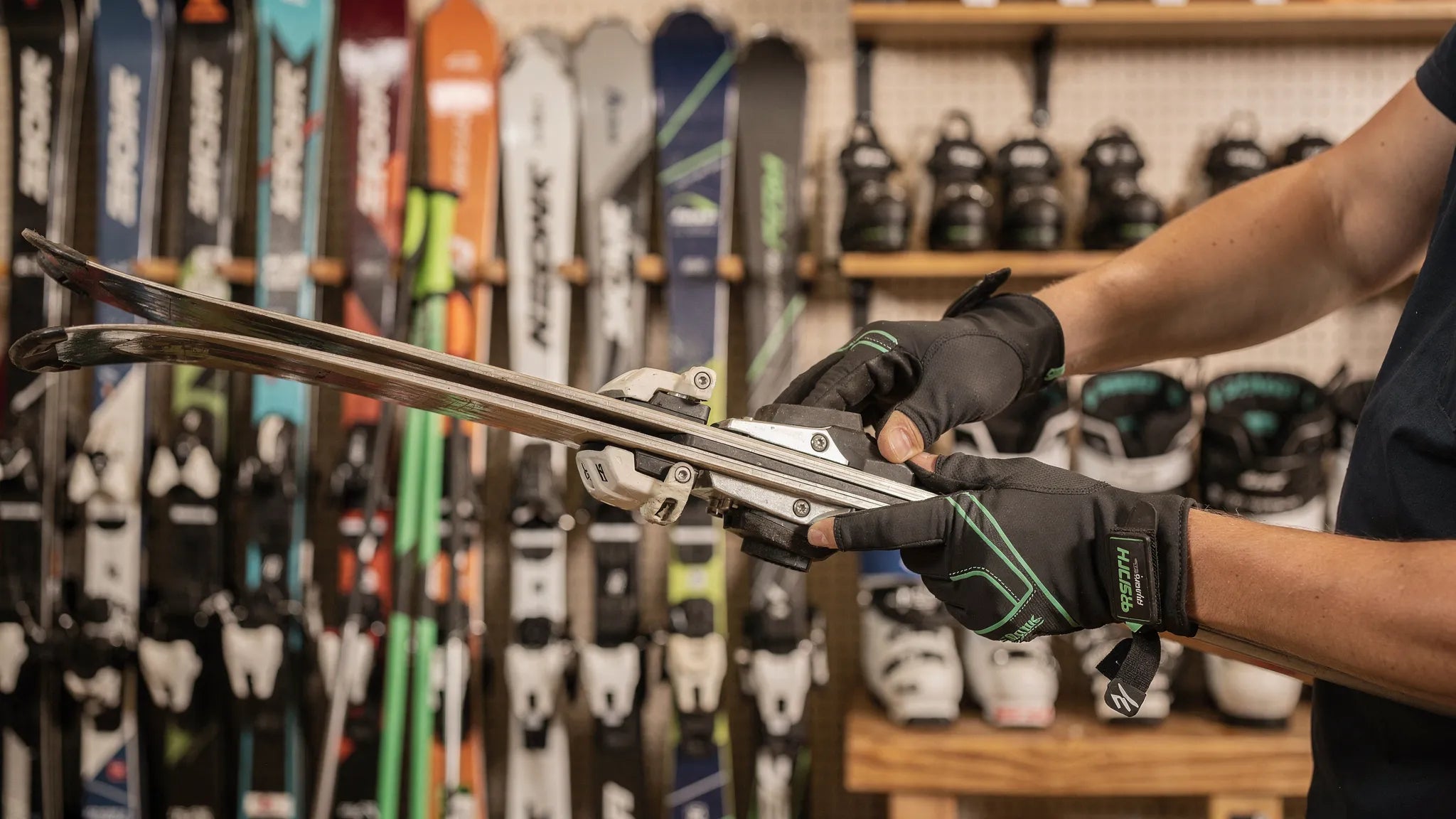
Attacks: compatibility and regulation
Attacks are the most delicate point. It's not enough that they're mounted. They must be compatible with your boots, adjustable on your weight and level, and in suitable conditions for use.
Check these elements:
- Compatible with the boot sole, for example alpine, GripWalk or touring.
- Adjustment range sufficient for the length of the boot.
- Absence of cracks, abnormal games or blocked parts.
- Possibility to let them check and adjust from a laboratory.
Avoid your DIY on calibration. The adjustment of the attacks must consider weight, height, age, technical level, sole length and ski style. A used ski apparently perfect can become unsafe if the attack is not adjusted correctly.
For a check before the season, the correct reference is a workshop like Sport Service, especially if you do not know the history of skiing.
Decision tree: used, rental or new?
Use this quick sequence before you decide.
- If you ski for the first time or after many years, choose the rental.
- If you ski a few days and do not want to take care of maintenance, choose the rental.
- If you have growing children, season rental currency or used only if revised.
- If you know level, size and style of skiing, consider a recent use.
- If you want precise equipment, guaranteed and to hold more seasons, evaluate the new or a promotion of end season.
- If you do touring, freeride or technical use, buy used only after complete ski control, attacks and boots compatibility.
This approach reduces the main risk: buy a ski only because convenient, but wrong for real use.
Size, level and fit: the right ski is worth more than the discount
A used ski is not a bargain if it is not the correct measure. The length depends on height, weight, technical level, soil and style. As a general orientation, a shorter track ski is easier to manage, a longer one is more stable but requires more control.
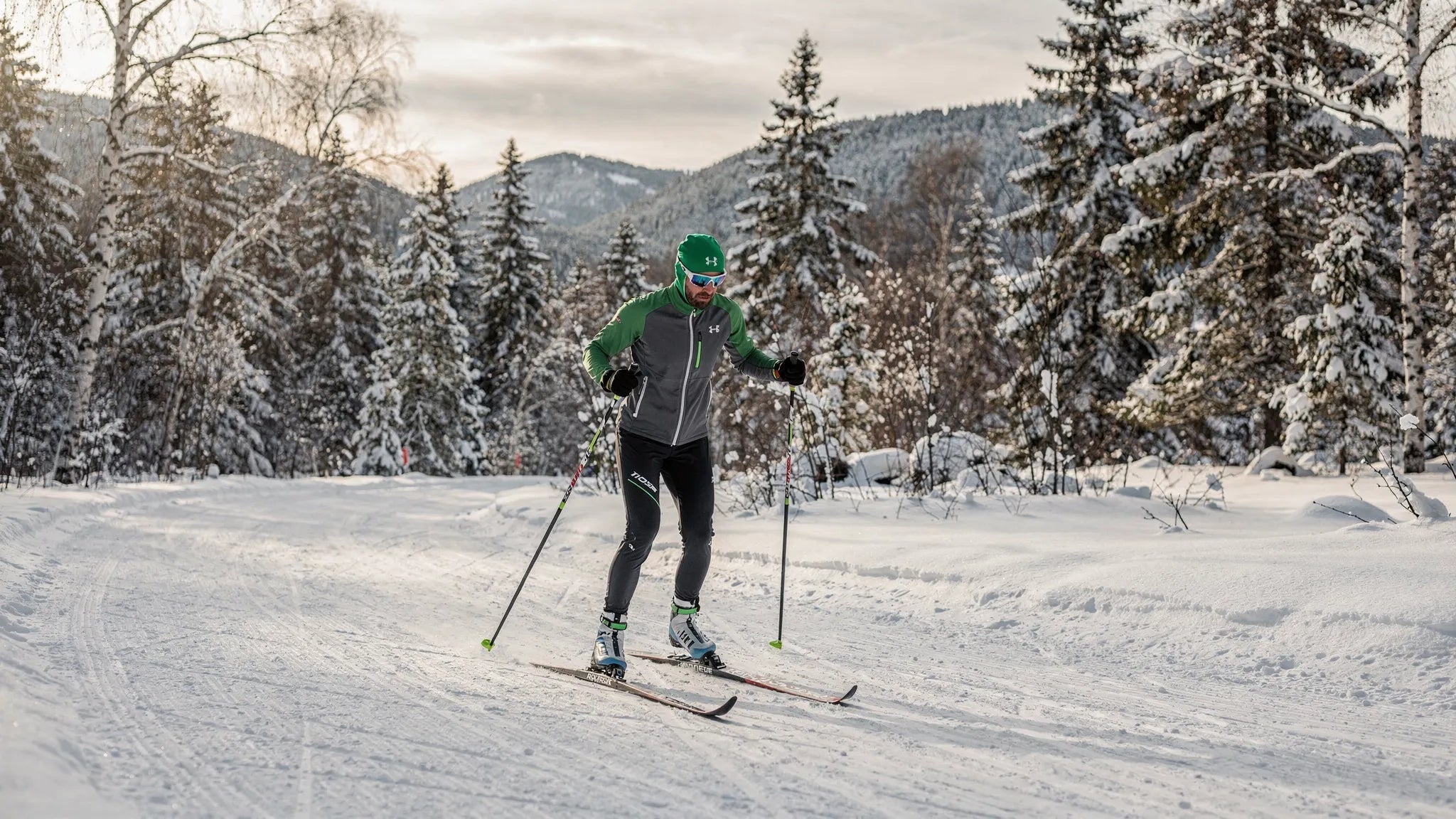
For beginners and intermediates quiet, better not to exceed with length and rigidity. For experienced skiers, the choice can move towards greater stability, structure and precision. But even here the compromise counts: a ski too challenging tired before and forgives less.
It also assesses width at the center and radius of curve. A tight and manageable ski is more immediate on the track. A wider ski can be more versatile on variable snow, but not always is the best choice for those who spend most of the time on the beaten track.
Boots deserve a separate chapter. A used boot can have compressed shoe, shape already adapted to the previous owner and wearable plastics. If the budget obliges you to choose, it is often better to invest first in a well stocked boot and then evaluate used skis, rentals or promotions.
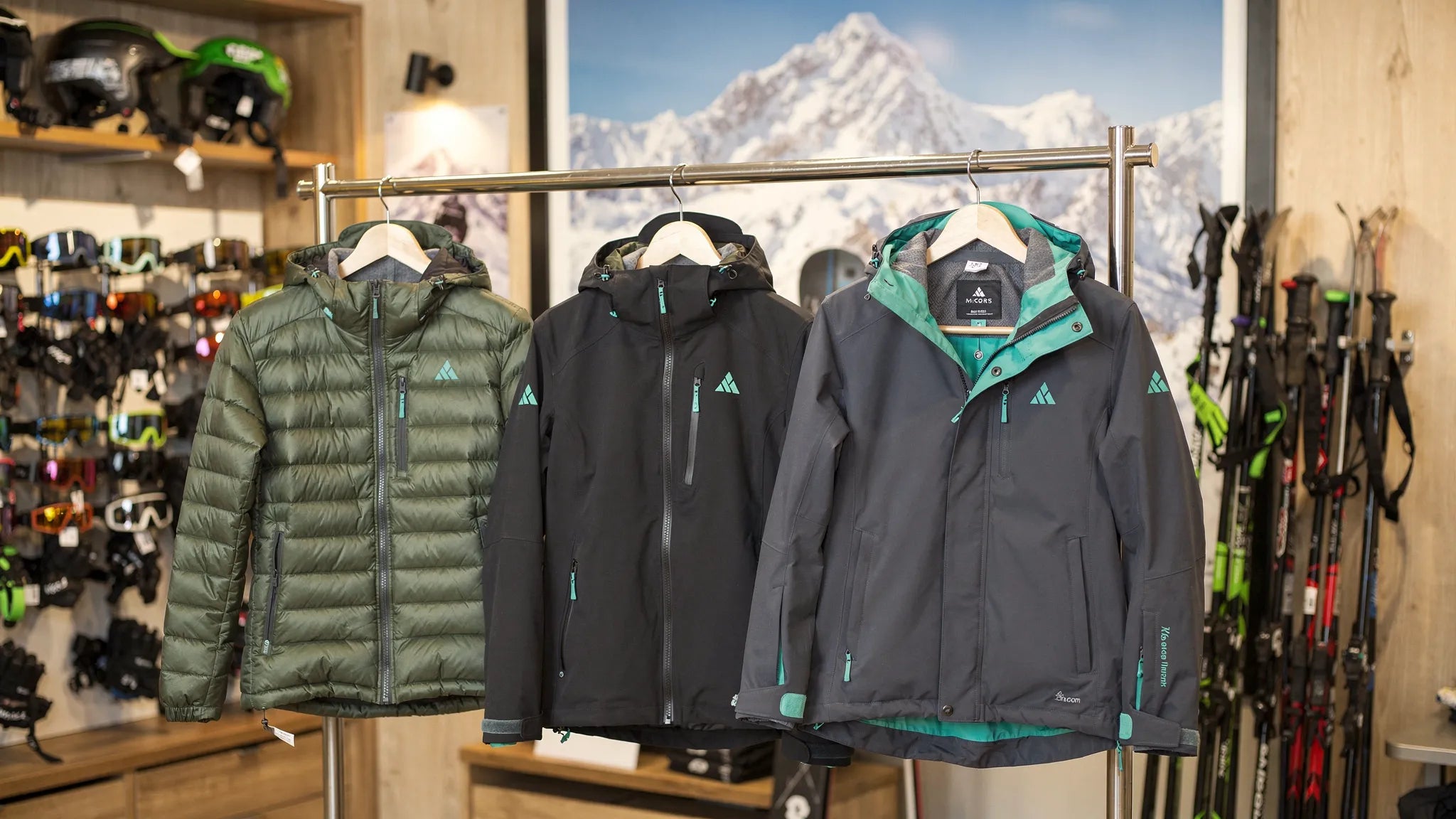
To complete the set consistently, look also at technical clothing: a good jacket, proper pants and correct gloves improve more ski days than it looks. You can start with selected selections such as Peak Performance,Colmaror Descent, choosing based on protection, mobility and layers.


Hidden costs: what to account after purchase
The price of the ski used is not the final cost. Almost always it should be considered at least a technical control. In some cases they need sharpening lamine, chasing, insole repair or adjustment attacks.
Before paying, ask yourself: if I add maintenance and time to fix it, does the purchase remain convenient?
A small checklist helps:
- Is skiing the right size for me?
- Are the attacks compatible with my boots?
- Do the blades still have enough material?
- Does the insole only require ordinary maintenance?
- Is the pair symmetrical and without structural damage?
- Can the seller explain year, use and maintenance?
- Am I willing to let him check before skiing?
If one or more answers are uncertain, the price must reflect the risk. Alternatively, rental or new promotion can be more linear.
Recommended options
Used revised by track
Ideal for:intermediate skiers who ski several times a season and already know their size.
Key Features:manageable length, structure not too rigid, blades still workable, compatible and controllable attacks.
To match:well stocked boots, recent helmet, waterproof gloves and ski pants with good mobility.
Rental for first exits or weekends
Ideal for:beginners, families, casual skiers and those who want to try different measures.
Key Features:no maintenance to manage, possibility to receive a set consistent with weight, height and level, greater flexibility if the weather changes.
To match:technical stocking, thermal underwear, protective jacket and mask suitable for daylight.
New or end season for regular use
Ideal for:who skis many days and wants to keep skiing for more seasons.
Key Features:more precise choice of the category, greater clarity on warranty and conditions, less uncertainties on wear and product history.
To match:programmed maintenance, ski bag, protections and a consistent technical clothing set.
Set touring or freeride controlled
Ideal for:technical skiers who already know attacks, boots, skins and use off-piste.
Key Features:Comprehensive compatibility between components, accurate attack control, structure verification and mounting points.
To match:layered clothing, light shell, technical backpack and safety accessories adapted to the ground. For clothing and light approach, selectionDynafitis a good starting point.


Controlled junior solution
Ideal for:children and boys who change quickly measure.
Key Features:not too long skis, professionally regulated attacks, simple maintenance and frequent growth control.
To match:correct measurement helmet, hot gloves, comfortable pants and unoversized boots.
FAQ
Are used skis safe?They can be, if structure, lamine, insole and attacks are in good condition and if the regulation is made by a laboratory. The risk increases when you do not know the history of the equipment.
How old can they have used skis?There is no single threshold. It counts the real state, the type of use and above all the ability to control and regulate attacks. A little used ski but very old can be less interesting than a more recent well maintained.
Better buy used skis or rent them?If you ski little, the rental is often more convenient and practical. If you ski regularly and know which category you need, a revised user can make sense.
Can I adjust the ski attacks alone?Better not. The calibration requires personal data, compatibility with the boot and mechanical verification. It's a lab surgery.
Should I also buy used boots?Only with caution. The boot must fit well, not only cost little. The inner shoe can be compressed or deformed by the previous use.
What to avoid?Skiing with cracks, delaminations, too consumed foils, damaged or uncheckable attacks, and models too technical compared to your level.
Choose by method, not only with the price
Used skis can be a sustainable and intelligent choice, but only if they are checked with criterion. Before buying, currency usage frequency, measurement, compatibility of attacks and maintenance costs. If you are near Biella, go to the store for rental or technical verification. If you want to complete your set with selected clothing and accessories, explore the online collections of Fabbrica Ski Sises, with free shipping in Italy from 50€ and made within 14 days.
Ski Sises on Google
Choose Ski Sises as a preferred source: you'll see our guides and news more often in Top stories on Google.