














Cross-country skiing: how to dress without wronging layers
In the bottom the most common mistake is to dress “from skiing”, that is too much. On track from bottom the body produces heat continuously, especially in skating and in the climbs, so the goal is not only to isolate from the cold: it is to stay dry, to protect itself from the wind and to be able to remove or add a layer in seconds. This guide is designed for those who are choosing their cross-country skiing clothing, from beginners who hire for a day to the most trained skiers looking for a technical, light and consistent set.
Summary: the quick response
- Start lighter than you would do for alpine skiing: in the first minutes you have to feel a controlled fresh.
- Use three modular layers: technical underwear, light mid layer, windproof and breathable exterior.
- Avoid duvets and jackets padded during the active phase, except for very slow exits or long breaks.
- Protect well hands, head and neck, but choose subtle accessories and easy to adjust.
- For the classic bottom, it serves more thermal comfort; for skating it serves more breathability.
- It always carries an emergency layer in the backpack if the output is long, isolated or with variable weather.

Why cross-country skiing requires layers other than alpine skiing
Alpine skiing alternates downhill, laughter in plant and still moments. Cross-country skiing is more continuous. Even at moderate pace, legs, arms and trunk work together, and sweat comes soon.
The critical point is moisture. If you wear a head too hot, you sweat. When you slow down or stop, sweat cools and the feeling of cold increases. For this reason the layering in the bottom must favour the transpiration before isolation.
It also counts the technique. In the classic background the rhythm can be more regular and manageable, ideal for those who start or for those who ski in a tourist way. In skating the intensity is often higher, so it is better to lighten the intermediate layer and choose external with good ventilation.
The practical rule:If you’re perfectly hot as you get out of the car, you’re probably too dressed. After 8-10 minutes of movement you should reach comfort.
The three correct layers: base, mid layer, external
The most reliable system remains the three-layer system, but in the bottom each layer must be lighter and more dynamic than the static mountain or the downhill ski.
Base layer: dry first of all
The first layer must stay close to the skin and transfer moisture to the outside. The most used materials are technical synthetics and light merino wool. Cotton is to be avoided: absorb sweat, dry slowly and cool when you stop.
For an intense exit, choose a light underwear. For a tourist rhythm or low temperatures you can climb to an average weight, but without exaggerating. The fit must be adherent, not compressed, and should not create folds under the shoulders or in life.
Mid layer: heat dosed
The mid layer is the most often wrong layer. In the bottom does not need a thick pile in most conditions. Better a light fleece, a technical mesh with zip or a thin thermal garment that you can easily open.
The zip is useful because it allows to download heat without stopping. If you do skating or are very trained, in many days you can only use layer base and light jacket. If you start, accompany children or expect breaks, the mid layer becomes more important.
For a technical selection oriented to winter aerobic activities, you can start from the collectionDynafit, always evaluating the product card based on weight, fit and intended use.


External layer: windproof more than padded
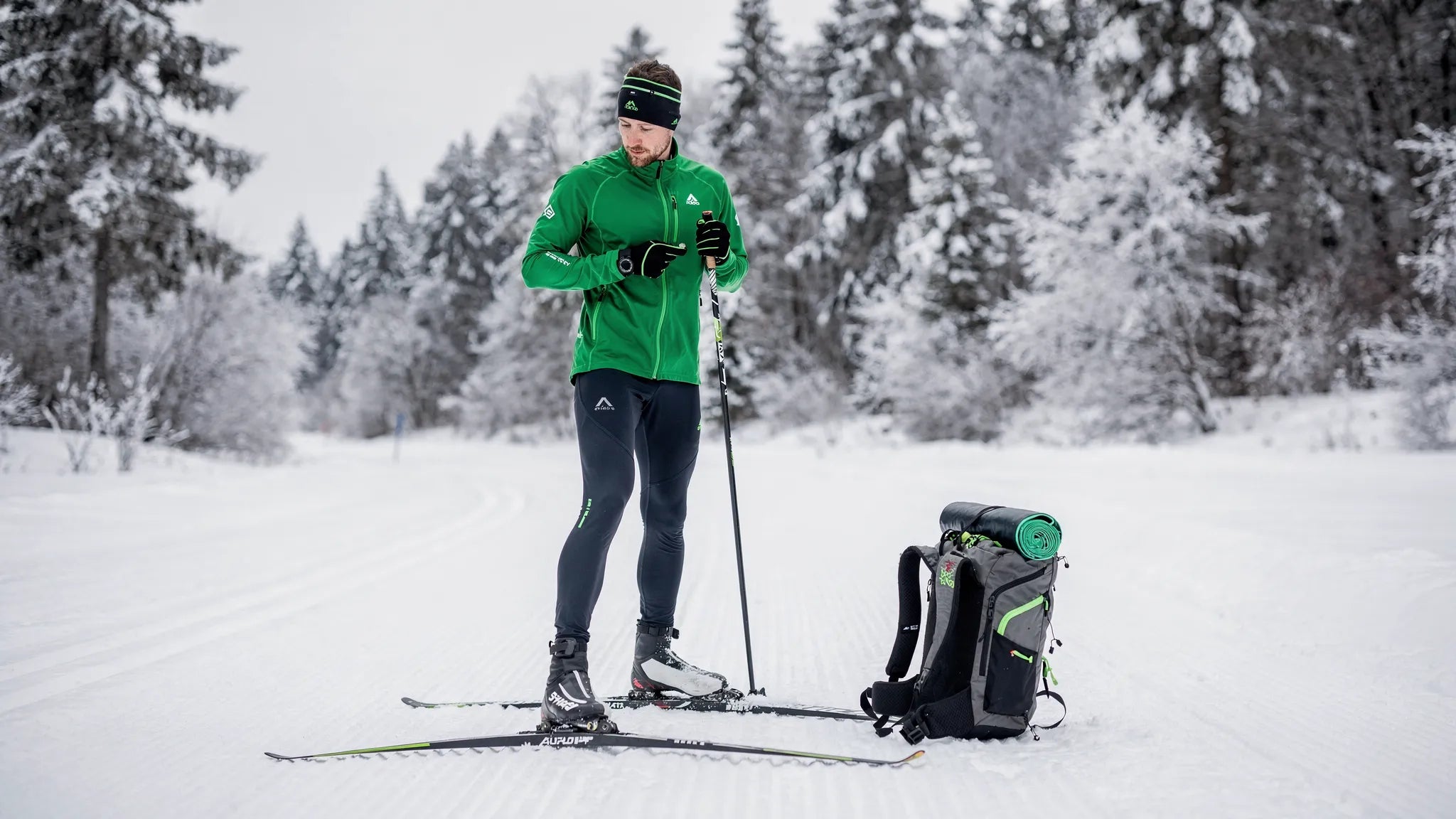
In the bottom the ideal jacket is not the warmest, but the one that cuts the wind and leaves moisture out. Many skiers prefer light softshells or hybrid jackets with frontal protection and increased breathability on back and hips.
A complete waterproof shell makes sense with wet snow, light rain or strong wind, but can be less breathable if you push a lot. Too protective head, if not ventilated, can create internal condensation.
The correct choice depends on three variables: intensity, temperature and wind. If only one of these changes, the right layer also changes.
| Condition | High recommended part | Recommended low part | Practical note |
|---|---|---|---|
| From +5°C to 0°C, average rhythm | Lightweight base + windproof | Technical slim pants | Avoid mid layer if you sweat easily |
| From 0°C to -8°C, average rhythm | Base + mid light + softshell | Technical trousers, possible light base | Open the zips as soon as you feel warm |
| Under -8°C, tourist rhythm | Medium base + mid + outer protective | Hottest trousers or thermal base | Brings a hot layer for breaks |
| Strong wind | Base + light mid + windproof exterior | Trousers with front protection | The wind changes more than the real temperature |
| Wet snow or unstable weather | Base + slim mid + light shell | Water repellent trousers | Check ventilation and drying |
How to decide the layers before leaving
Before you get dressed, not just look at the grades. Evaluate rhythm, duration and possibility of return. A short ring near the bottom center allows more margin of error. A long, cold and isolated route requires a safety layer in the backpack.
A simple method:
- If after 10 minutes you're hot in your chest, you have a layer of too much or a little breathable jacket.
- If you feel cold only in the first minutes, do not immediately add a garment: wait for the body to enter to regimen.
- If the wind enters in front, add external protection, not by insulation force.
- If you often stop for photos, children or lessons, bring a warm garment to wear in breaks.
- If you do skating, prefer ventilation and lightness compared to static heat.
For those who alternate background, winter trekking and mountain trips, it makes sense to build a modular wardrobe. Some garments can also work outside the track, as long as you do not confuse the lifestyle head with the technical layer for the active phase. For versatile pieces to use between travel, city and outdoor light, you can also exploreLanapoandBiella Fabrics, choosing based on real use.


Trousers, gloves, socks and accessories
The upper part receives a lot of attention, but in the bottom comfort often depends on the details.
The trousers must follow the movement without pulling on knee, inside thigh and pelvis. A too wide fit can create friction and thermal dispersion; a too tight limit the thrust. For the classic background a technical slim trousers is good. For skating or high rhythm, many prefer tights or very elastic trousers, with protection from the wind where it serves.
The hands warm up moving, but they are exposed. Choose thinner gloves than alpine skiing gloves, with good grip on sticks. On cold days it can be useful to carry a second dry pair in the backpack. The very hot moths are rarely ideal during the active phase, except for intense cold or very slow rhythm.
The head must be precisely adjusted. A technical band is often more suitable than a heavy cap, because it protects the ears without holding too much heat. The neck must be protected, but with a light and breathable neck warmer, easy to lower when you increase the rhythm.
Socks must be technical and not too thick. Excessive stocking can compress the foot into the boot, reducing circulation and sensitivity. Better a stable model, dry and proportioned to the volume of the boot.
Fit and size: dry, but not constrictive
In the bottom the correct fit is closer to the body than the alpine ski. This reduces bulk, improves breathability and limits tissue movement. But “stick” does not mean tight.
Do these tests when you try the heads:
- Simulate the thrust of the arms with the sticks: the shoulders should not pull.
- Fold your knees and carry the bust slightly forward: the trousers should not block basin or thigh.
- Lift your arms and rotate the bust: the jacket must follow the movement without discovering the lumbar area.
- Wear all layers together: the mid layer should not create excessive volume under the outside.
- Try the zips with the gloves: if you can't open them easily, the adjustment on the track becomes uncomfortable.
If you are between two sizes, choose according to use. For high rhythm and elastic garments, it often works the most dry size. For slow outputs, more generous layering or bodywork with important shoulders, better leave a controlled margin.
Our recommended options
1. Lightweight layer base
Best for:Exit at medium or high pace, skating, not too cold days.
Key Features:Fit close to the body, quick drying, comfortable seams, good sweat management.
To match:Light windproof jacket or thin softshell. Add a mid layer only if the rhythm is low or the temperature drops.
2. Base layer medium
Best for:Beginners, classic background, cold exits or many breaks.
Key Features:More thermal comfort than the light base, but always breathable and non voluminous.
To match:Mid layer thin and technical trousers. Avoid adding medium base, heavy fleece and padded jacket during activity.
3. Mid layer with zip
Best for:Who wants to adjust the heat without stopping.
Key Features:Weight content, adjustable neck, easy to open zip, good freedom of movement.
To match:Exterior windproof. If the day is mild, it can stay in the backpack and become useful only on break.
4. Softshell or light windproof jacket
Best for:Most cross-country ski exits.
Key Features:Wind protection, breathability, cutting that does not hinder the push, essential pockets.
To match:Light layer base for skating or base + slim mid for classic background in cold weather.
5. Slim technical trousers
Best for:Classical background, regular workouts, excursions on the beaten track.
Key Features:Elasticity, frontal protection, free knees, bottom compatible with the boot.
To match:Technical shoe not too thick and, if needed, light layer base under the pants on cold days.
6. Lightweight accessories kit
Best for:Everyone, especially those who tend to overheat.
Key Features:Slim gloves, light band or cap, breathable neck warmer, stable technical fit.
To match:A second pair of gloves in the backpack if the exit is long or if the weather is unstable.
Errors to avoid
The first mistake is to copy Alpine skiing clothing. Very padded jackets and heavy pants are designed to alternate descent and immobility, not for a constant aerobic activity.
The second mistake is to underestimate the wind. A not too cold day can become uncomfortable if the outside does not protect the chest. In this case you do not need to add much heat, you need a more effective barrier.
The third mistake is to forget the break. If you stop for a lesson, a lunch or a panoramic stretch, the body cools quickly. A hot and compressible layer in the backpack can make a difference, even if you do not wear it while skiing.
Finally, do not wait to be wet to adjust the layers. Open a zip, remove the mid layer or change gloves in advance is more effective than recover comfort when you already sweated too.
If in the same week alternate fund, alpine skiing or snowboarding, it can be useful to coordinate clothing and equipment with services in store. In Biella you can consult the ski and snowboard rental or the Sport Service for support on preparation, maintenance and organization of the exit.
Frequently Asked Questions
How to dress for the first time at cross-country skiing?Choose a technical layer base, a light mid layer and a breathable windproof jacket. Start slightly fresh and bring a hot layer into the backpack for any breaks.
Do you need a waterproof jacket for cross-country skiing?Not always. In many conditions a windproof and breathable jacket is more useful. The waterproof shell serves with wet snow, light rain or very variable weather.
Better merino wool or synthetic as first layer?Both can work. Synthetic dries quickly and is suitable for intense rhythms. Light merino provides thermal comfort and smell management, useful for longer outputs or moderate rhythm.
The alpine ski pants are good for the bottom?Not usually. They are often too hot, wide and not suitable for continuous movement. For the bottom is better a technical pants slimmer, elastic and breathable.
What gloves to use for cross-country skiing?Light or medium gloves, with good grip on sticks. Avoid models too padded if you ski at a sustained pace. On cold days brings a second dry pair.
What is the best cross-country skiing clothing for skating?For skating prime light layer base, very breathable windproof exterior and elastic trousers. The mid layer should only be used with marked cold or less intense rhythm.
Dressing well for the bottom means removing the superfluous and choosing layers that work together. Start from a light technical set, try the fit in motion and build your system according to rhythm, weather and output duration. If you want to compose a coherent wardrobe for snow, outdoor and travel, explore the curated selection of Fabbrica Ski Sises online or go to shop in Biella for a targeted advice.
Ski Sises on Google
Choose Ski Sises as a preferred source: you'll see our guides and news more often in Top stories on Google.