
































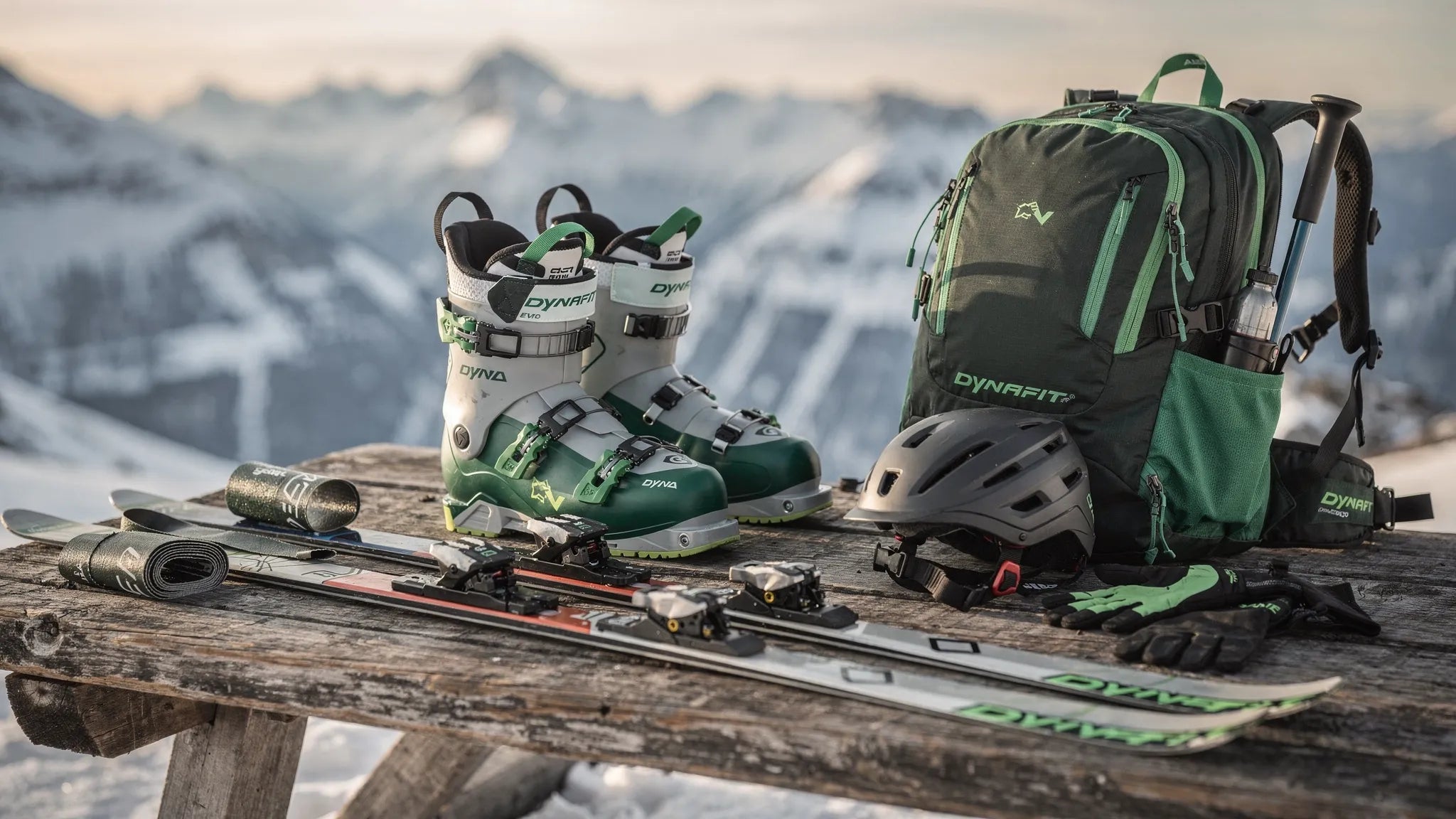
Dynafit Dyna Evo: fit guide, use and sensible set-up
The Dynafit Dyna Evo is interested in those who climb a lot, looking for clean transitions and want a boot consistent with light mountaineering. But precisely because it is born for technical use, it must be chosen with more criterion than a generic boot: the fit must be precise, the compatible attack and the rest of the set-up should not contradict its logic. This guide is designed for advanced skiers, who arrives from the trail and wants to enter the skimo, and who seeks a reasoned purchase before the season.
In summary
- The Dynafit Dyna Evo makes sense if priority is to climb efficiently and maintain a light set-up.
- The fit must be firm on heel and neck of the foot, without straight painful points already in test.
- It should not be combined with skis too structured or use mainly from track and heavy freeride.
- The compatibility with tech/pin attacks must always be verified on product board and a technician.
- If you are undecided between purchase and test, better test a light touring set first or ask for assistance in store.
What is the Dyna Evo, without confusing it with a track boot
The Dynafit Dyna Evo should be read within the Dynafit world: ski mountaineering, rapid climbs, essential equipment, attention to weight and mobility. It is not the boot to choose only because “more technical” or because lighter. It is a sensible choice when the whole system works in the same direction.
In practice, the point is not to wonder if it is “the best”, but if it is consistent with your skis, your attack, your foot and your way of moving in the mountains.
For availability, similar models and matching items, you can start fromDynafit selection. The specifications can vary by season, size and version: weight, construction, compatibility and technical details must always be read in the updated product sheet.


The Dyna Evo is interesting if you want to reduce uphill dispersions, walk with a more natural feeling and maintain an agile set-up. It is less if you are looking for a unique ski boot, very variable snow days with wide skis, jumps, high speed or intensive use in planting.
| Scenario of use | Makes sense | Evaluate other if |
|---|---|---|
| Fast climbs and training | Search for efficiency, rapid transitions and overall lightness | Do you want maximum downhill structure |
| Classic ski touring trips | You use consistent skis and have good management technique | Get often in heavy snow or with important backpack |
| First touring exits | Have guidance, clear goals and verified fit | You still don't know what kind of ski mountaineering you will do |
| Track and freeride | Only as occasional use and if compatible | Is your main use |
Fit and size: the proof that really counts
On a lightweight boot the margin of error is reduced. A too abundant size may seem comfortable in the store, but uphill lets move the heel and downhill reduces precision. A too tight size, however, can quickly become a problem on long trips, temperature changes and repeated transitions.
The correct feeling is dry, stable, controlled. It should not be “walking paradise”, but not even painful.
| Plant control | Correct signal | Risk signals |
|---|---|---|
| Length | The fingers perceive the bottom in an upright position and release slightly in bending | Folded fingers, nails tablets or too much space in front |
| Tallion | It remains still when you fletti and simultaneous walk | It lifts at each step or slips laterally |
| Foot neck | Distributed and controlled pressure with closing | Dry point, tingling or need to tighten too |
| Avampiede | Stable contact without crushing | Instant lateral pain or foot that “galleggia” |
| Catch | Supports without cutting the calf | Concentrated pressure or limited mobility unnaturally |
To choose the size, measure both feet at the end of the day, with the sock that you will really use out. If a foot is longer or more voluminous, think about that. Then compare the size with the manufacturer's table and, if possible, with a boot you already know.
Do not automatically choose the upper size if you are between two sizes. In light touring, a small volume excess can force you to tighten too much, creating pressure on your foot neck without solving the heel movement. It is better to evaluate also plantar, thicknesses and, only if provided by the model, possible thermoforming of the shoe.
A practical note: test the boot with a thin or medium technical stocking. Too thick stocking can distort the test, increase moisture and reduce precision.
Use and set-up: decision tree practical
The Dynafit Dyna Evo should be evaluated as part of a system. If you put it in a set too heavy, you lose your advantage uphill. If you combine it with too nervous or wide skis, you may ask him more support than it is sensible to expect from a lightweight ski boot.
- If you make quick climbs, regular levels and controlled descents, the Dyna Evo is in its natural environment.
- If you make long trips with constant rhythm and non-extreme skis, it can be a valid choice with correct fit.
- If you ski strong in variable snow with wide skis, better evaluate a more structured boot.
- If you come from the track and want to start ski mountaineering, try first a more tolerant set or rent.
- If you have doubts about attacks, sole lengths or adjustments, check the set-up by a technician.
Skiing
The most sensible set-up is with consistent touring skis: not too heavy, not excessively wide, easy to manage inversions and technical descents. The ideal width depends on the ground and snow, but the logic is simple: the more the ski becomes challenging, the more it requires support from the boot.
For those who use Dyna Evo on quick trips, agile ski reduces fatigue and makes conversions more fluid. For those who want more safety downhill, it is best not to look for everything in the boot: better balance skis, attack and technique.
Attack
Compatibility with tech/pin attacks should never be given for granted. Always check the indications of the manufacturer of the boot and the attack. If you change boots on a set already mounted, you need to check the sole length, hook, heel position and system adjustments.
This is a security point, not a detail. Ski mountaineering attacks have different logics from traditional alpine attacks and require accurate controls.
Films, knives and accessories
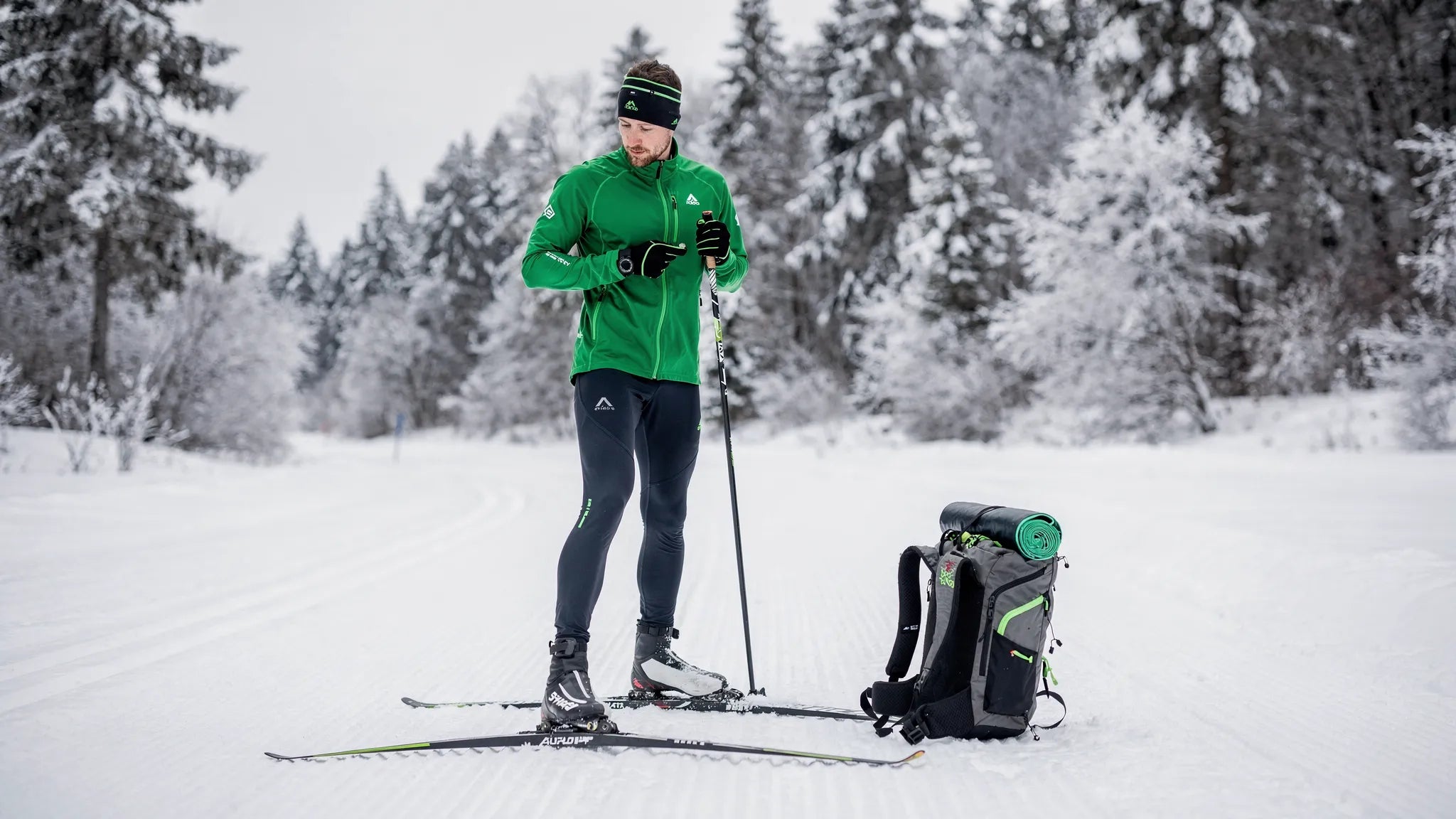
A lightweight boot works best if all the kit remains essential. Hair cut well, compatible knives, efficient sticks and compact backpack affect more than it looks. A clean set-up reduces wasted energy and makes transitions less chaotic.
Do not neglect the small details: dry socks, thin gloves for maneuvers, buffs or light hat, a jacket easily accessible. In fast mountaineering, temperature management is part of the performance.
Layering
With a set like the Dyna Evo, it often rises with intensity. Layering must therefore evacuate moisture, protect from the wind and allow rapid changes. A dry base layer, a light mid and a compressible shell are more useful than a very hot garment worn all day.
For mountain technical leaders you can also evaluate Karpos selection or, for a more safety and mountain-oriented approach, theOrtovox selection.


Security
Outside the controlled slopes, the set-up is not complete without preparation. ARTVA, shovel, probe, knowledge of the route and reading of the bulletin are part of the exit. Before moving on uncontrolled snowy terrain, consult up-to-date sources likeAINEVA avalanche bulletins.
Lightness does not replace risk assessment.
Our recommended options
| Option | Best for | Key Features | To match with |
|---|---|---|---|
| Dynafit Dyna Evo and Dynafit selection | Ski mountaineering light, fast climbs, users with clear technical goal | Efficiency-oriented choice, mobility and minimal set-up | Ski touring light, thin technical fit, well cut skins |
| Alternative Scarpa to compare | Who doesn't find the right volume or want to compare different fits | Useful to assess foot shape, support and comfort in test | Planting correct, ski of equal category, test with real stocking |
| Layering Karpos | Exit with high rhythm and frequent weather changes | Mountain technical heads designed for movement and modularity | Base layer dry, light mid, modular shell |
| Selection Ortovox | Environment trips, safety and cold management | Technical approach to the mountain, useful to complete the kit | Compact backpack, maneuver gloves, targeted thermal layers |
| Ski rental in Biella | Who wants to understand before which set-up to use | Useful to test lengths, widths and sensations before purchase | Test day, fit notes, comparison with your own level |
| Sport service in store | Control of attacks, maintenance and set-ups before the season | Technical support for safety, durability and consistency of equipment | Check attacks, control lamines and sunscreens, pre-exit revision |
This is not a list “more technical equals better”. It's a list of consistency. The Dyna Evo works well when each element avoids unnecessary overloads: light boots, proportioned skis, compatible attack, breathable clothing and technical controls made by method.
Errors to avoid
The first mistake is to only buy based on weight. A lightweight boot that does not lock the heel or that compresses the neck of the foot becomes inefficient after a few hours.
The second mistake is to combine it with too demanding skis. If the set-up is light, it must be readable: better a ski that facilitates the trip than a ski chosen for a descent image that does not correspond to the real use.
The third error is to adjust the attacks “to the eye”. With tech boots and attacks, compatibility and adjustments should be carefully checked. If you have any doubts, go to a lab.
The fourth mistake is to overlook the stocking. In light touring, stocking is part of the fit: too thick alter volume and sensitivity, too thin can create rubbing if the boot is not stabilized well.
FAQ
The Dynafit Is Dyna Evo okay to start ski mountaineering?It depends on your goal. If you want to learn calmly, do occasional trips and prefer comfort and tolerance, it can be more sensible to try or rent a less specialized set first. If you already have an efficient climb goal and are followed in choosing the fit, it can make sense.
What size to choose in Dynafit Dyna Evo?Start from the actual size of the foot, try with technical stocking and especially check heel, foot neck and avampiede. Do not choose a larger size only to have immediate comfort: in light mountaineering, volume control is decisive.
Can I use the Dyna Evo on the track?It may happen to use it for traits on track or back, but it should not be chosen as main boot from plant. If your activity is above all track, it is better to orientate on a boot more consistent with that use.
Is it compatible with all tech attacks?No, compatibility must always be verified. Check product sheet, indications of the manufacturer of the boot and the attack, then check the set-up by technical staff if you change boots or attack.
Do you need to thermoform your shoe?Only if the boot provides it and if the initial fitting is already correct. Thermoforming can refine comfort, but does not solve a wrong size or volume incompatible with the foot.
What ski to match with Dynafit Dyna Evo?In general, light and not excessively challenging touring skis are the most consistent choice. If you want to use large, heavy or very downward-oriented skis, consider whether a more structured boot is more suitable.
To start with criterion, explore theDynafit collectionand build the set-up around your real use: foot, ski, attack, rhythm and security first of all.


Ski Sises on Google
Choose Ski Sises as a preferred source: you'll see our guides and news more often in Top stories on Google.