













Rewoolution: how to choose merino and garments for 4 seasons
The merino is one of those materials that, if chosen well, really reduces the number of garments that serve in the closet. It works for those who alternate city and mountain, for those who travel often, for those who make trekking at varying pace and for those who want reliable layers under a ski shell. The point is to avoid purchasing “feel”: weight, construction and fit change the result a lot. In this guide onRewoolutionfind a simple method to choose sensible merino garments for 4 seasons, with clear compromises and practical combinations.
- Summary
- The merino is ideal for a 4 season kit because it manages well thermal shocks and smells, especially in travel and multi-day uses.
- The choice depends more onweight of fabric, construction and fitthat from the name “merino”.
- Start from the garment that you will use most often (base layer or t-shirt), then complete with a mid layer and accessories.
- Correct care = duration: delicate washing, right drying, rotation.
Because the merino is really “4 seasons” (and when it is not)
The merino has three concrete advantages, if you use it in the right way:
-
Thermoregulation: fits well to different microclimates (metropolitan, office, path, chairlift) because it works by layers and not by “fixed insulation”.
-
Odor management: compared to many synthetics, it tends to remain more “neutro” longer. This is one of the reasons why it is highly appreciated in travel and trekking of several days. A useful reference, to deepen the theme in a non-commercial way, is the dissemination overview ofThe Woolmark Company.
-
Comfort: if the construction is correct, the merino is a great “first layer” also for those who do not love the most rigid technical fabrics.
The limits, to be considered before buying:
- Drying: it is not always faster than a light synthetic. If you need to dry up in a few hours (daily burns with frequent washing), it also evaluates alternatives or mixed garments.
- Duration: at equal weight, some woolen fabrics can suffer abrasion and pilling more than synthetics, especially with backpacks or repeated rubbing.
- Cost: Makes sense if the head really enters the weekly rotation.
Basically, Rewoolution is a consistent choice if you are lookingto use so much, not “technical piece” to wear twice a year.

How to read a garment in merino: weight, construction, mix
You do not need to know every detail of spinning, but three elements make the difference when choosing merino for 4 seasons.
1) Woven weight (the most underrated variable)
In many collections, the weight is expressed in grams per square meter (g/m2). It is not always stated, but logic is this.
| Indicative weight | How to behave | Ideal for |
|---|---|---|
| 120-160 g/m2 | Very light, maximum versatility in half season and indoor | Travel, city, aerobic activities, basic layer “always” |
| 170-230 g/m2 | Balanced, more stable and warm | Trekking 3 seasons, winter layer base, daily use |
| 240+ g/m2 | More warm and structured | Static cold, winter mid layer, slow outdoor use |
Practice rule:If you want one piece for more months, stay in the middle. If you want the “package helmet” that also works in summer, go on the light.
2) Construction and details (more important than marketing)
When you look at a product card, look for concrete signals:
- Stitching: if they are flat or well finished, reduce rubbing with backpack or under structured jackets.
- Wear points: shoulders and hips (zain), inner thigh (walk), wrists (strate).
- Collo and cuffs: define how much the head “holds” the air or lets breathe.
3) Pure Merino or Mixed Merino
There is no one answer. Depends on use.
- More wool: natural feeling, often better smell management.
- Blend with technical fibres: often more resistance, better shape seal, sometimes faster drying.
If you do business with backpack, encamp, travel a lot, or you want a single “battle” head,a well made blendis often the most pragmatic choice.
Decision tree: which Rewoolution buy first
If you start from scratch, avoid buying three middle pieces. Buy one.
Will you use it more in the city and travel, with light excursions?Start with a t-shirt or light merino mesh. It is the layer that exploits on its own.
Will you use it above all under a shell (ski, snowshoes, winter hiking)?Start from a long sleeve layer base. It solves comfort and moisture management.
Do you sweat a lot and do aerobic activities (salite, fast trekking)?Look for a lighter merino or a blended merino, and match it with a minimal windproof.
Are you cold when you stop (pause, shelter, chairlift)?After the first layer, the second best purchase is a merino or mixed mid layer, warmer and easy to modular.
If you need a wider view of the 4 season kit, you can cross this guide with the “capsule” method already developed here:mountain clothing: kit 4 seasons without waste.
Layering 4 seasons with merino: clean combinations
The merino gives the best when it is part of a system. No need to complicate it.
Four formulas that work
Spring: light merino + windproof. If it rains, add a shell.
Summer: light merino alone (or with shirt/overshirt light). Bring an extra layer only if you're high.
Autumn: medium merino + light mid layer + shell (if wind or rain).
Winter: merino layer base + mid layer + shell. The “real” isolation is decided according to what you stand still.
Sensated combinations (without doubles)
To complete the system, it makes sense to reason also for “partners of wardrobe”, not only for single boss.
- For a more technical set (trekking, touring, freeride), take a look atDynafitfor external and activity-oriented layers.
- For travel and urban use, a bridgehead like overshirt or versatile trousers can come fromLanapo.
- For the footwear part, if you need a “airport-to-trail” shoe to walk so much, often a well-chosen outdoor-lifestyle sneaker solves more than it looks, for example in the selectionFlower Mountain.


Fit and sizes: how to avoid the most common error (merino too tight)
With the merino the typical error is to buy a layer base too tight, thinking that “closer heats”. Actually, if you buy too much, you lose comfort and mobility, and often worse moisture management.
Quick guide (val for man and woman, then each product card makes text):
- Basic layer: adherent but not constrictive. You must be able to raise your arms without pulling back and chest.
- Mid layer: it serves space for the layer base, but it does not have to “ball” under the shell.
- Use travel: privileges the freedom of movement from sitting, thinks of train and plane.
Home test in 60 seconds, as soon as the boss arrives:
- Arm up, then down, breathes deep: no net traction on shoulders and neck.
- Simulate a fast walk: no annoying rubbing under the armpits.
- Add the layer you will use below: if the head changes completely feeling, you probably took too much right.
If you are undecided between two sizes, the correct choice depends on use:more adhering to activities under shell, more relaxed for travel and city. In any case, remember that on the shop are plannedmade within 14 days, useful when you want to check layering and fit with calm.
Care and longevity: to make the merino last (without treating it as “fragile”)
The merino lasts when it enters a simple routine, not when it “splashes”.
Essential care checklist:
- Washing at low temperatures and delicate cycle, with detergent suitable for wool garments.
- Avoid aggressive drying if not indicated on the label, spread in order.
- Do not wash too often for habit: air well enough.
- Rotation: having two basic garments that alter is better than stressing one.
For an authoritative framework on labelling and fiber, you can also consult theInternational Wool Textile Organisation(especially if you want to understand terminology and industry standards).
Our recommended options Rewoolution (choices “best for”)
Here you will find a reasoned selection of types, not specific models. The idea is to help you choose the first right purchase, then build around.
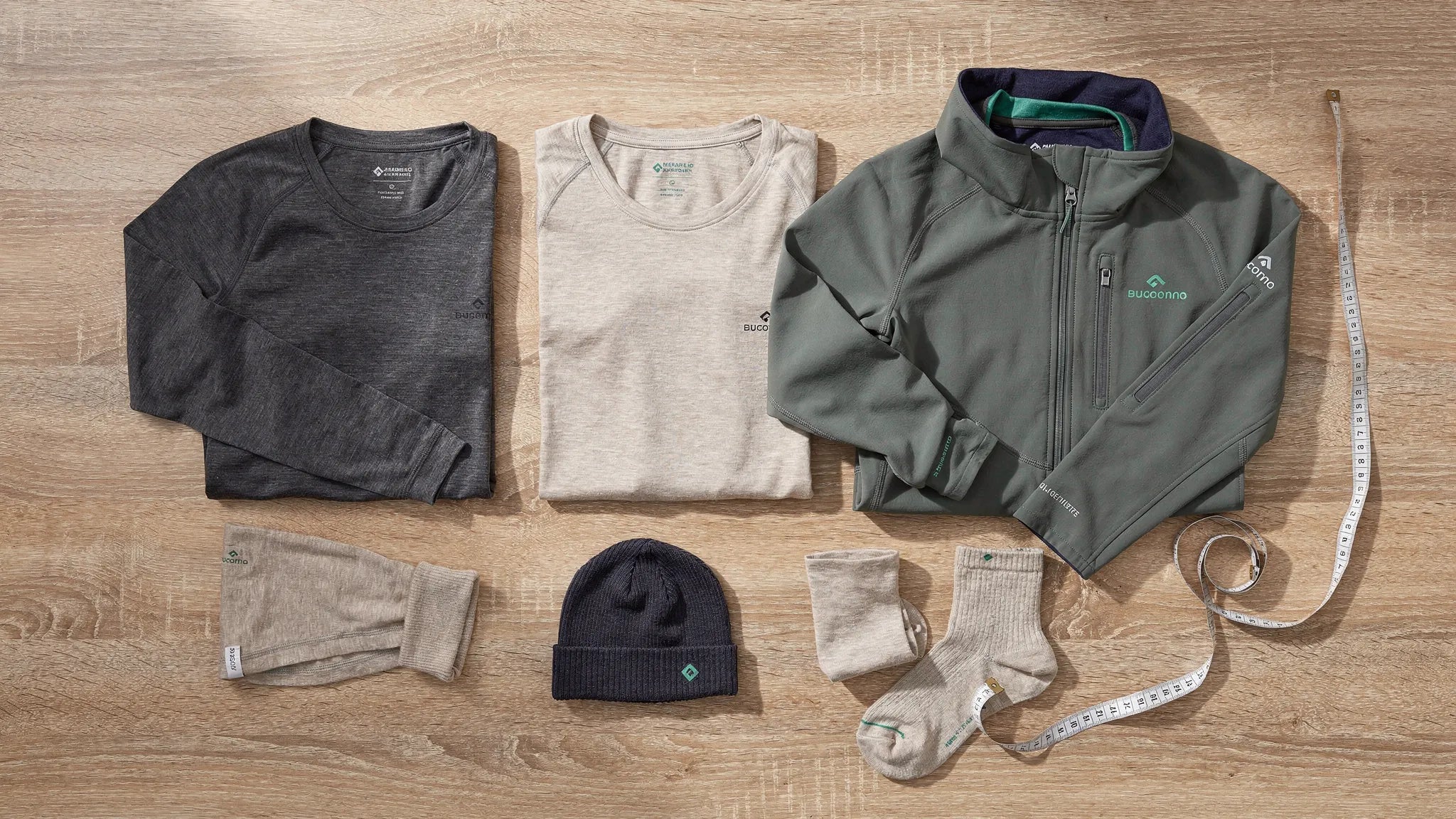
1) T-shirt in light merino
Best for: travel, daily use, spring-summer, minimal layering.
Key features: comfort on the skin, smell management, excellent base for capsules suitcase.
What to do: a versatile trousers and a light windproof, or an indoor overshirt.
2) Long sleeve layer base in merino
Best for: ski on track, winter hiking, cold days with thermal shocks.
Key features: moisture management under shell, comfort on long days.
What to do: light mid layer and shell. If you're planning a snow day without buying everything immediately, consider the rental, here is a practical guide:ski rental Biella: quick guide to book without errors.
3) Leggings or bottom layer base in merino
Best for: cold static, chairlift, trekking with wind, winter trips.
Key features: hot layer without excessive volume, useful under technical trousers.
What to do: outdoor trousers with good mobility. If you often ski, it also crosses the logic “fast controls” on funds:ski pants: 5 features to check immediately.
4) Mid layer in merino or merino blend
Best for: autumn-winter, breaks, variable days, intelligent stratification.
Key features: modular insulation, excellent “bridge” between layer and shell base.
What to do: technical shell for uncertain weather, or light jacket for the city.
5) Socks in merino
Best for: walking, boots, long days, travel with many hours standing.
Key features: moisture management, comfort, reduction of rubbing if the size is correct.
What to do: footwear with consistent volume, do not compensate with stockings too thick.
6) Accessories in merino (heat neck, hat)
Best for: thermal micro-regulation, wind, half season.
Key features: great utility/shaft ratio, perfect in backpack or bag.
What to do: a light shell or a technical coat, especially during the transition months.
To see the updated assortment, go toRewoolution collection.


Frequently Asked Questions
Rewoolution in merino is good in summer too?Yes, if you choose a light head and use it as a single layer or with minimal layering. In summer “pure”, there is also a lot of activity and ventilation.
Better 100% merino or merino blend?Depends on use. If you want more strength and stability (zain, intense use, travel), often a well-designed blend is more pragmatic. If you are looking for natural sensation and smell management, you can prefer higher percentages of wool.
The lace merino?The feeling depends on construction and personal sensitivity. In general, on garments designed to be in skin contact, the processing and quality of the fiber greatly reduce this risk.
How tight a layer base in merino should be?Adherent enough to work well under the layers, but without compressing. If it limits you in your arms or creates troubles on your neck and armpits, it is too tight for real use.
How do I wash it without ruining it?Follow the label, prefer delicate cycle and detergent suitable for wool, avoid thermal stress and aggressive drying not indicated. Alternating heads and airing helps to wash less often.
Recommended action
If you want to build a 4 season kit with a few pieces you will really use, start from a well chosen base layer and then complete with a mid layer. Find a selection curated inRewoolution collection. If you have doubts about size and layering, the quickest way to buy well is to write to customer service with height, weight and scenario of use (city, travel, trekking, skiing).
Ski Sises on Google
Choose Ski Sises as a preferred source: you'll see our guides and news more often in Top stories on Google.