
Sensa Cunisiun: Guide to size and fit without errors
BuySensa Cunisiunonline is simple until the size becomes an unknown. The point is not “that size port”, butthat fit you wantand how much margin you need to move and layer. This guide is designed for those who want a clean result, without unnecessary returns: a measurable method, quick test controls and a clear logic to choose between two sizes.
Quick guide (no useless theory)
- Start from the scenario of use: everyday, travel, light layering, or dry silhouette.
- Use ahead of comparisonthat suits you and compares the measurements with the product table.
- Play numbers correctly: they are oftenhead measuresNot the body.
- If you are between two sizes, decide according to the “critical” point (skirts for tops and jackets, waist and basin for trousers).
- Take 4 tests at home within a few minutes, and evaluate immediately if to hold or make.

1) First measure: choose the fit you really want
“Watch size” often means only choosinga fit different from that imagined. Before opening the table, clarify this point.
| Your goal | What to look for in the fit | Practical note |
|---|---|---|
| Clean and dry Silhouette | Volume controlled on shoulders and chest | Avoid compensating by tightening too much: penalizes movement |
| Versatility (work, weekends, travel) | Regular fit with minimum margin | Is the safest choice if you are between two sizes |
| Layering (mid layer below, use 3 seasons) | Spalle ok, chest with margin, not short sleeve | The “margin” serves more front and chest than in length |
A useful rule:do not choose the size “to be more comfortable” if the shoulders are not in place. On the sides above, the shoulders govern everything: fall, sleeve, posture.
2) The most reliable method: the “capo of comparison”
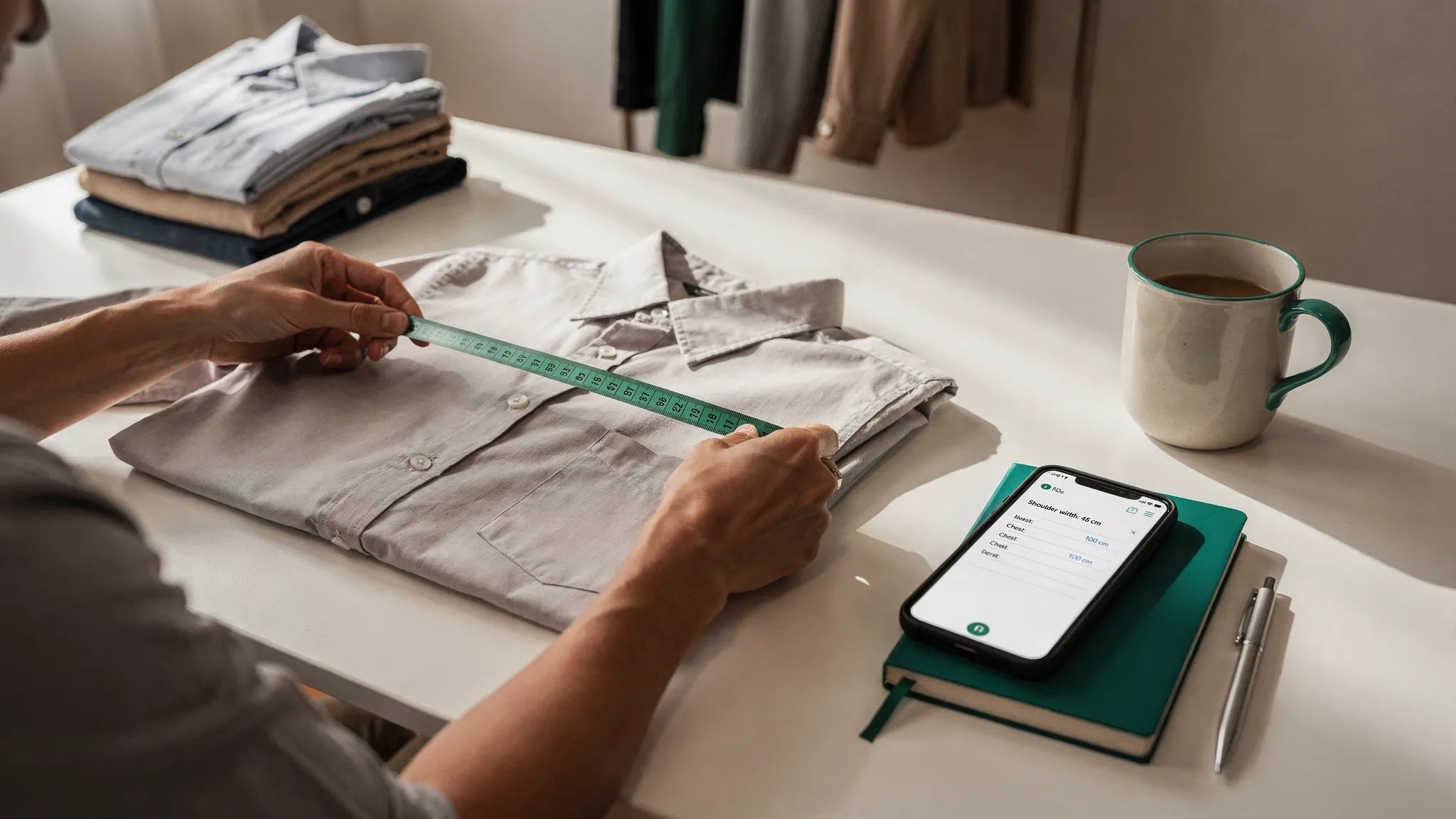
To buy Sensa Cunisiun with less risk, use a garment you already own and often wear with satisfaction. The method works because it comparesboss with boss, not “body with table”.
How to do it in 10 minutes
Choose a similar item by category (shirt with shirt, trousers with trousers). Spread it on a flat and measure straight, without pulling the fabric.
| Category | Measures that count more | How to read the result |
|---|---|---|
| Shirts, overshirts, shirts | Shoulders, chest, sleeve length, total length | If shoulders and chest come back, the rest adjusts with styling and layering |
| Jackets and outerwear | Shoulders, chest, sleeves, bottom | Priority to shoulders and sleeves, the bottom affects proportions |
| Pants | Life, basin, thigh, bottom, horse | If life and pelvis are ok, the leg manages more easily |
Practical tip:notes the measurements of your head “perfect”in a note on the phone. You'll need all future purchases, not just for sensa cunisiun.
3) How to read the size chart (and not interpret it backwards)
In the product cards, tables are often built onmeasures of the finished garment. It means that they already include the necessary margin (more or less) to move.
Three common mistakes
- Compare body measurements with those of the head: risk of choosing a size too large.
- Give priority to length: the length can be “managed” in styling, shoulders and chest much less.
- Ignoring the critical point: for the tops are the shoulders, for the pants is the basin.
Quick rule when you are between two sizes
- If the garment has to work with a layer below, choose the size that leaves you margin on the chest (or thigh in the pants).
- If you want it dryer and you will wear it almost always on the base layer, it remains on the most contained size (as long as it isshoulders and basinDon't shoot.
Operating note: when the table is not very clear, the most rational choice is always the same,shoulders ok first, then volume.
4) Try home: 4 quick tests to understand immediately if you have centered the fit
As soon as you get the head, do not limit yourself to “look in the mirror”. Do these tests (during less than two minutes) and you have a concrete answer.
- Arms test: raise your arms like to take something over your head. If the boss goes up and stays stuck, shoulders or sleeves are tight.
- Setting up: sit and rise. If you pull in (pantaloni) or on the back (top), the volume is insufficient at the right point.
- Long pass test: take two long steps and a light squat. In the pants, if you feel resistance on thigh and pelvis, evaluate the size above.
- Real Layer Test: wear under what you really use (t-shirt, light knit, or a mid layer). If the feeling changes too much, the chosen size is “at the limit”.
If a test fails, but the boss likes you, don't force conviction. Usually the fit does not improve with use, it only improves your tolerance.
5) Indications of fit per category (where you are most mistaken)
Top, shirts, overshirts
- Shoulders: they must fall naturally. If too much goes down, the head “larga” and loses line.
- Chestnut: look for a margin that does not deform the closure or the flap.
- Sleeves: If I am court, you will always notice. If they are slightly long, it is easier to live with them.
Spaniard
- Try the layer you will use most often below.
- Check that you can cross your arms without tension on the back.
- The length affects proportions and use, but should not become the main criterion.
Pants
- Life and Basin: if it is right, the rest is manageable.
- If life is ok but the basin pulls, the size is wrong for your anatomy, not for “elasticity failure”.
- If you are between two sizes, it often makes more sense to choose based on the basin and then adjust the waist with belt (when possible).
Our recommended options (choose according to fit, not to trend)
Here you can’t find “the best model”, find the right category to start, build consistent outfits and reduce size errors.
1) Overshirt or structured shirt
Best for: who wants a bridge between casual and light outdoor.
Key features to check: shoulders, chest, possibility of light layering.
What to do: an essential pant and versatile sneaker. To complete with real-use footwear, look at the selectionFlower Mountain.
2) Clean mid layer
Best for: travel and office, when you want comfort without useless volume.
Key features to check: sleeve length and shoulder point, because they are those that “translate” the size.
What to do: light head and a functional accessory. If you like a curated and material aesthetic, exploreBiella Fabrics.
3) Daily trousers (consistent cutting, no complication)
Best for: who walks a lot and wants a pants that hangs long days.
Key features to check: life, basin, thigh. Don't leave the bottom.
What to do: a shoe with compatible volume and a clean mesh. If you are looking for a “capsule” setting, the collectionLanapois a good reference for versatile items.
4) Main wheel (what you wear most often)
Best for: who wants only one outside and really use it, not only “have it”.
Key features to check: shoulders and sleeves with layering, mobility on the back.
What to do: base layer and mid layer with controlled volumes, so the size of the outer part remains stable.
5) “seria” shoe for cleaner outfits
Best for: who wants to raise the level of the outfit without changing style.
Key features to check: internal volume and margin in front of the fingers (do not tighten on the first use).
What to do: trousers with simple line and clean outer garments. If you are interested in a very guided approach to sizes, seeParaboot.
Fit and sizes: micro-checklist before clicking “buy”
- Do I have a clear scenario (city, travel, layering)?
- Have I measured a comparison head and compared shoulders or waist/bain?
- Am I looking at head measures (not body)?
- They are between two sizes: did I choose according to the critical point?
- Do I have a plan to try it right away with four quick tests?
FAQ
Sensa Cunisiun big or small dress?It depends on the category and fit of the individual boss. The safest way is to compare the measurements in the table with a comparison head that suits you well.
If they're between two sizes, what do I choose?Choose from the critical point: shoulders for tops and jackets, basin and thighs for trousers. If you predict layering, it prefers the size that leaves margin where it serves.
Are the measurements in the table of the body or head?In most cases, I'm the boss. For this reason the comparison “head on head” is more reliable.
How long do I have to make a boss if the size is not correct?The shop indicates returns within 14 days. To reduce the risk, try the boss as soon as he arrives and do the mobility and layering tests.
Can I ask for help before buying?Yes. If you send your measurements (and those of your boss) the advice becomes much more accurate.
Clear action
If you want to buySensa Cunisiunwith a minimum error margin, prepare the measurements of your head of comparison and then go to the shop: on Fabbrica Ski Sises you will find a careful selection, quick delivery (indicatively 1-4 days in Italy) and free shipping from 50€.
If you prefer a more “shop” support, it is also worth knowing the services in Biella, from technical set-up to assistance:Sport service: all services in store.