













Ski pants The North Face man: fit and details to evaluate
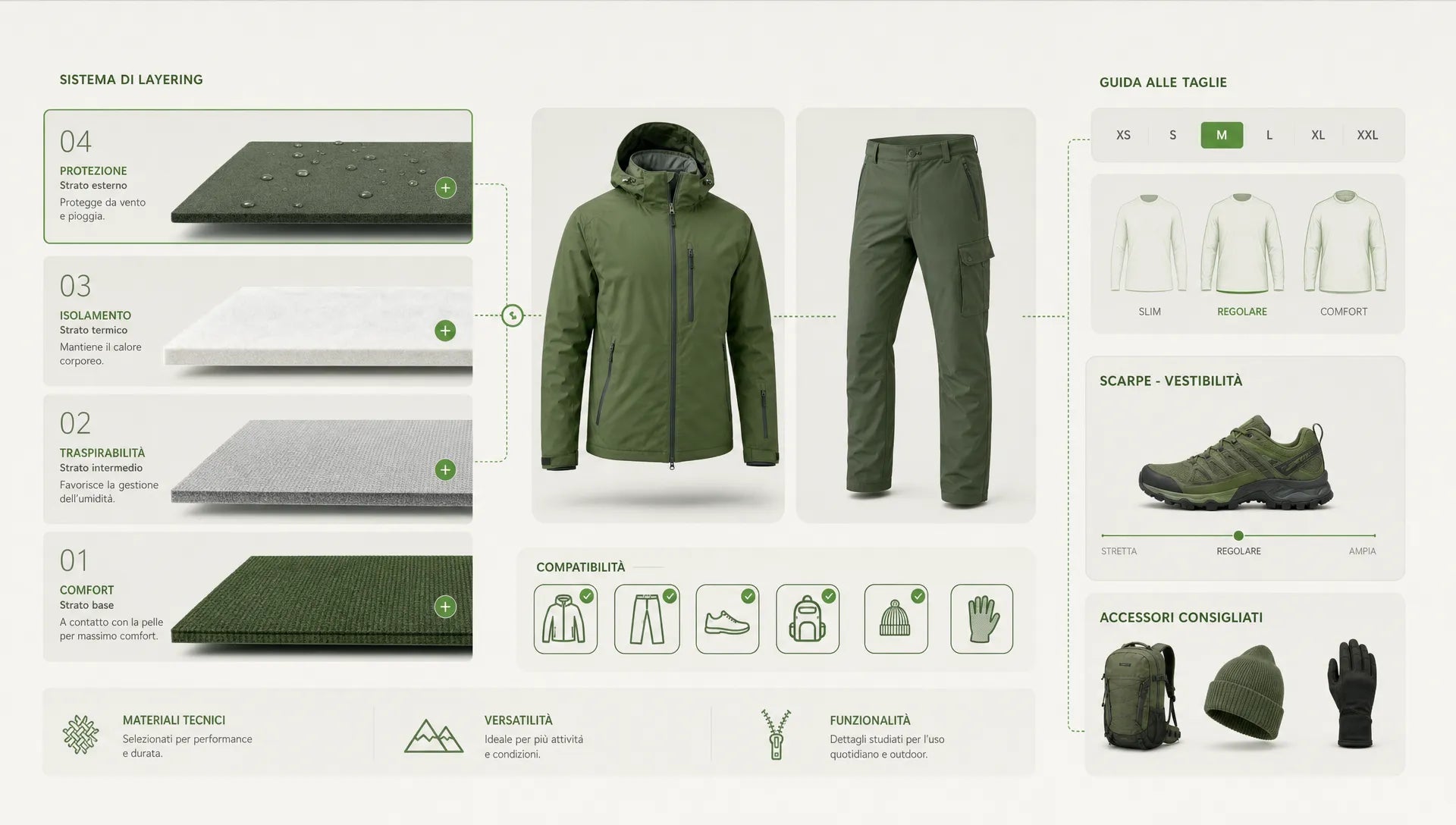
Choosing The North Face ski pants man does not only mean finding the right size. The point is to understand how the boss works with your way of skiing, with the layers you wear and with the boot. Too dry trousers limit movement. Too wide disperses heat and can interfere with attacks and lamines.
This guide is designed for those looking for a technical but clean purchase: runway, white week, light freeride, winter outdoor use and urban wardrobe with real function. If you want to start from the brand's proposal, you can exploreThe North Face selectionand use the criteria below to filter with more security.


In summary:
- For the track, choose a regular fit with enough space for a technical layer base.
- For freerides and variable days, it assesses more freedom on thighs and knees.
- If you suffer cold, consider an isolated trouser, but always check the breath.
- If you ski intensively, prefer ventilation, secure seams and precise adjustments.
- Always try the bottom leg with the boot, not just in front of the mirror.
- If you are building the setup from scratch, ski and snowboard rental in Biella can help you verify compatibility and sensations before departure.
Quick answer: which fit to choose
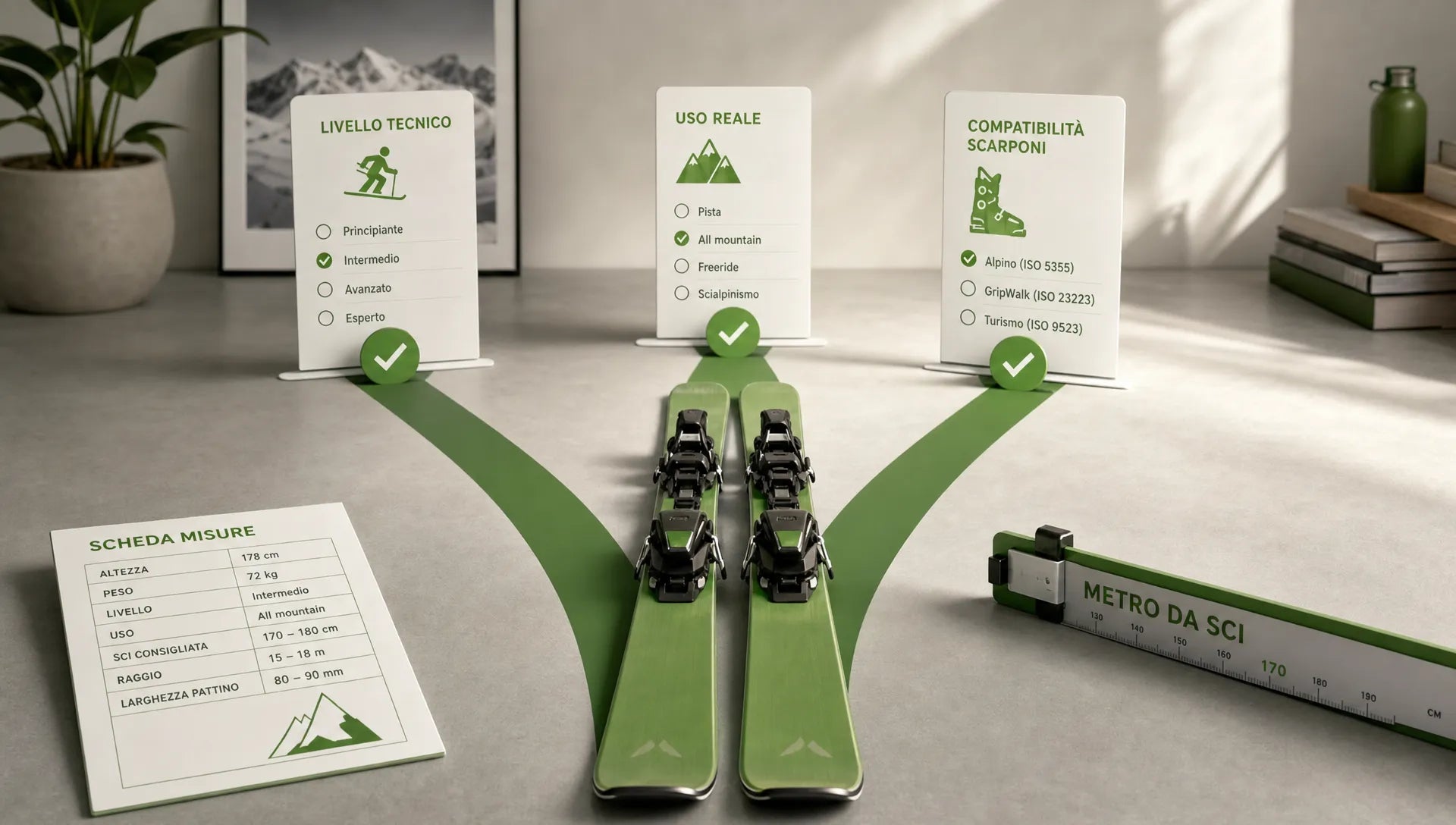
The best fit is not the most adherent, nor the wider. It is what remains stable when you move and let the layers work without creating useless volume.
| Main Use | Recommended Fit | Why it works | Essential control |
|---|---|---|---|
| Piste and resort | Regular | Balance between comfort, order and protection | Complete welcome without pulling on the knee |
| Sports skiing | Adjust with good joint | More control and less excess fabric | Freedom in advanced position |
| Light Freeride | More relaxed on thigh and seat | Improved mobility and space for variable layers | Stable leg bottom above the boot |
| White Week | Isolated or versatile | Thermal comfort in chairlift and breaks | Convenient life even after many hours |
| Use outdoor and urban | Clean, not too voluminous | Mountain function and essential line | Proper length with shoe and boots |
If you do more activity, choose according to the most demanding scenario. A perfect trousers for strolling in the village can be limiting in deep snow. A very technical model from freeride can be excessive for those who ski two hours a day on the beaten track.
Fit: controls that really count
Static evidence says little. A ski pants should be evaluated in motion, with the same type of layer you will use in the mountains. If possible, wear a thermal layer base and carry it with you or verify compatibility in the store.
Life and Basin
Life must remain firm without compressing. If you have to tighten too much regulation, probably the size or cut is not correct. If you feel pressure when you sit or bend, the pants may become annoying after a whole day.
The basin area is crucial for those who ski dynamically. In conduction, in curved entrance or during a walk with boots, the fabric must follow the movement without pulling on the horse.
Knee, Knee and Skiing Position
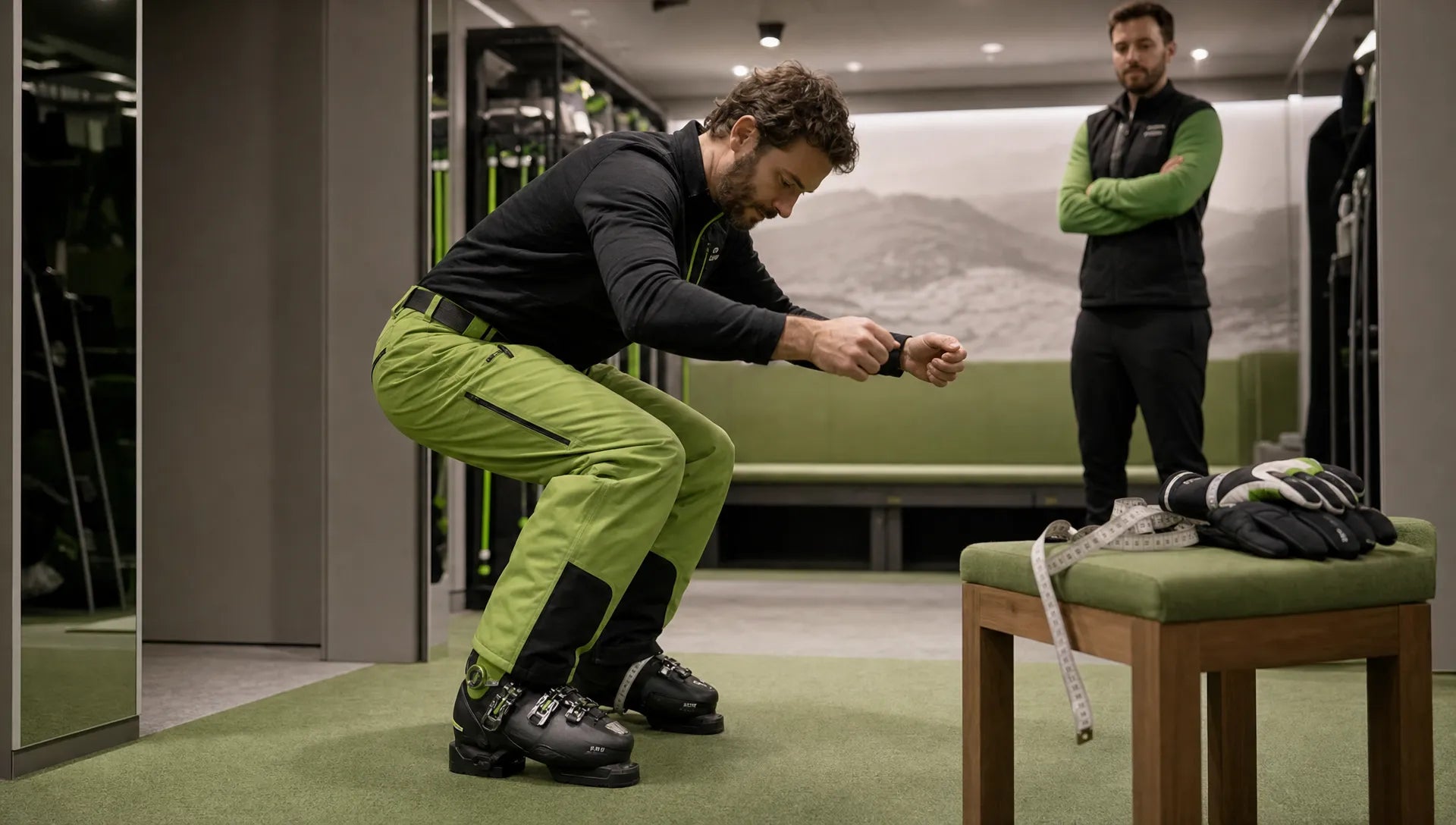
The most useful evidence is simple: bent as if you were in position on the skis. The pants should not rise too much, lock the knee or create tension on the back of the thigh.
For those with athletic legs, the problem is not always life. It is often the relationship between thigh and seat. In that case it is best to evaluate a more regular or relaxed fit, instead of automatically climbing up and finding yourself with a life too wide.
Bottom leg and boots
The bottom leg must cover the boot well and allow the inner gaiter to work properly. Check that the fabric does not come up when you bend and that there is no excess material near the lamines.
If you use voluminous boots or do freeride, the bottom leg deserves even more attention. It has to open up and close with ease, but stay clean once set.
For more general insight into fit, you can compare these criteria with ourguide to the fit of snow pants, also useful for snowboarding, touring and family use.
Technical Details to evaluate on the The North Face ski pants men
The brand name is a starting point, not a sufficient criterion. In the men's The North Face ski pants, as in every technical garment, it is best to read the product sheet and check which details are present on the specific model.
Snow protection, wind and humidity
To ski in the resort, the trousers must protect from snow, wind and prolonged contact with cold seats or wet surfaces. Search for information about waterproofness, breathability and seams. You do not always need to chase the highest value: it counts the balance between protection and comfort for your real use.
If you ski often with variable weather, better give priority to a more protective construction. If you do quiet days and almost always choose stable conditions, a simpler garment can be enough, provided it is well finished.
Insulation or shell
An isolated trousers is ideal if you spend a lot of time in the chairlift, if you ski in the middle of winter or if you tend to get cold. It offers more thermal comfort, but it requires attention to the layers: too heavy layer base can become excessive.
A shell is more flexible. It does not heat much on its own, but allows to modulate the temperature with the layer below. It is an interesting choice for those who ski actively, travel often or want a more adaptable garment during the season.
Ventilation and heat management
The ventilation openings are an important detail for those who ski strong, walk with the skis on the shoulder or alternate track and take off the track. Check where they are positioned and if they open easily with gloves.
Ventilation does not only serve on mild days. It helps to avoid accumulation of internal humidity, which can then cool when you stop.
Pockets, zip and adjustments
The pockets must also be reached with jacket, gloves and backpack. A well placed pocket is more useful than many poorly distributed pockets. The same applies to zip and tirazip: they must be solid, easy to use and not create rigid points.
Lifetime adjustments make the difference when you change layers or when you wear pants for many hours. If the model has internal loops, straps or regulators, evaluate which system is more consistent with your dressing mode.
Reinforcements and duration
The most exposed areas are bottom leg, inner ankle and seat. Reinforcements help limit wear from lamines, boots and contact with abrasive surfaces. For those who want to buy better and keep the boss longer, they are details to observe before the price.
The duration also depends on the care. Always follow the manufacturer's instructions for washing and drying, especially if the garment has water repellent treatments or technical membranes.

Our recommended options
There is not only one pants for everyone. In the choice, reason for use profile. If you are also completing the rest of the outfit, the selection ofmen's clothingallows to coordinate layers, jackets and technical garments with the same logic of function and cleaning.


| Recommended option | Ideal if | Details to search | What to match |
|---|---|---|---|
| Pantalone isolated from track | Skiing in full winter, frequent breaks, cold chairlift | Good protection from the wind, comfortable life, bottom compatible with the boot | Light or medium layer base and structured ski jacket |
| Technical guide | Want versatility and adjust heat with layers | Protective fabric, ventilation, cured seams | Hottest layer base on cold days and mid layer only if necessary |
| Fit regular to mountain | Ski on the track but you want freedom all day long | Mobile knee, comfortable seat, waist adjustment | Not too long technical jacket and resort gloves |
| Fit more relaxed | Alterni piste, fresh snow and wider movements | Space on thigh and basin, stable bottom, affordable pockets | Modular layers and compact backpack |
| Bib or technical salopette, if available | Search for more coverage and stability in deep snow | Comfortable braces, high panel, good side opening | Upper shell and essential accessories for variable weather |
For gloves, masks, socks and small protective elements, complete control in the sectionaccessories. These are details that affect comfort, especially if the trousers are already chosen well.


How to choose the size without errors
The size should be decided by method. Measure waist, basin and inner leg, then compare the data with the specific model table. Do not rely on the size you wear in jeans: a ski pants works with layers, movement and boots.
Use this checklist before buying:
- Wear the base layer that you will use most often in the mountains.
- Close completely life, zip and adjustments.
- Make a full suit and check your knees, horse and seat.
- Sit down to check pressure on life and abdomen.
- Simulate an advanced ski location.
- Try the bottom leg above a boot similar to yours.
If you're between two sizes, ask where you feel the limit. If you pull up thighs and knees, rise in size or change fit can be sensible. If the problem is only life, look for a model with better adjustments before choosing a larger measure.
The length deserves attention. Too short leaves uncovered areas of the boot and can bring snow in. Too long creates folds and early wear on the bottom. With the boots worn, the pants must fall neatly and stay stable when you move.
Layers: the right trouser works with what you wear under
The ski pants is the external layer of the system. Below, as a rule, a technical layer basis is sufficient. The mid layer on the legs is less common and should be considered only for intense cold, low activity or long stops.
With isolated trousers, choose a thinner base layer to avoid volume and overheating. With unpadded shells, the layer base becomes more important and can change according to the season.
People travelling often should prefer modular combinations. A shell with two different weights of base layer covers more conditions than just one very hot pants. Those who are always skiing in the same period and in the same place can choose a more specific garment.
To complete the choice consistently, look also the ski collection and reason for system: trousers, jacket, base layer, socks, gloves and visual protection.
FAQ
Men's The North Face ski pants dress adherents?Depends on the model. Some cuts are more regular, other more technical or relaxed. The best way to evaluate is to control measures, intended use and moving test with layer base and boots.
Better an isolated pants or a shell?If you ski mainly on track, cold and with many breaks, an isolated pants is comfortable. If you want more versatility, do intense activity or travel under different conditions, a shell with modular layers is often more practical.
How much space should there be under a ski pants?There must be room for a layer base without folds and without compression. Too much volume reduces precision and comfort, too little limits movement and can create cold in pressure points.
How do I know if the bottom leg is correct?Try it on the boot. It must cover well, allow the gaiter to adhere and not create accumulations near the lamines. During a bending, it should not rise excessively.
Can I use The North Face ski pants even in the city or outdoor?Some models have a clean aesthetic and can work in winter outdoor contexts, but a ski pants remains designed for snow, boots and technical movement. For frequent urban use, volume currency, fabric noise and practicality of pockets.
The right choice comes from a concrete test: fit, movement, boots and layers. If you are looking for a curated purchase, explore the online selection of Fabbrica Ski Sises or go to shop in Biella for a direct advice before the next snow exit.
Ski Sises on Google
Choose Ski Sises as a preferred source: you'll see our guides and news more often in Top stories on Google.