














Snow trousers: how to find the right fit
The wrong snow trousers are immediately recognized: come down to life, pull on the thighs, go up above the boot or create useless volume under the jacket. The point is not to choose a more comfortable size in general, but to find a stable fit while you move, sit in chairlift, attach boots or walk in the snow. This guide is designed for those who ski on the track, snowboards, practice touring, prepares a weekend in the mountains or must dress the whole family with less errors of size.
In summary
- Snow trousers must leave room to a base layer, but they should not slip or create excessive folds.
- The most important control is in motion: welcome, drowning, sitting and testing with the boot.
- Life must remain stable without tightening, especially if you carry base layers or protections.
- The bottom leg must cover the boot without dragging to the ground.
- If you are between two sizes, choose according to use: more margin for freeride and snowboard, more precision for touring and sports track.
The right fit is not adherent: it is functional
A snow technical trousers is not considered as a jeans or a casual trousers. He has to work with the body, with the layers below and with the boot. If it is too tight, it compresses the layer base and limits mobility. If it is too wide, it retains moisture, creates friction and can interfere with attacks, lamina or walk.
The practical rule is simple: the correct fit must seem slightly more generous than an urban trouser, but controlled. You must be able to bend your knees, sit down and take a long step without feeling traction on the horse or thigh.
| Test signal | What is it | How to correct |
|---|---|---|
| Life comes down when you bend | Large size or insufficient adjustment | Currency adjustable waist, suspenders or salopettes |
| The fabric pulls on the horse | Fit too tight or too low horse | Try a size or model with more volume |
| The bottom rises above the boot | Short legs or bottom not compatible | Check leg length and bottom opening |
| The bottom drags without boots | Excessive length | Try with boots, then evaluate a different size |
| The knees pull up | Insufficient articulation or volume | Search for more technical or less adhering fit |
The right fit must not be noticed. You realize it works because you don't have to fix it all the time.
How to take measures before buying online
Before looking at the size, measure. It is the fastest way to reduce returns and compromises. They need a soft meter, a technical pants that already suits you and, if possible, the base layer you will use on the snow.
Do not measure over too voluminous garments. Snow trousers must predict a thin or medium heat layer, not compensate for a wrong size with excessive volume.
| Measures | How to take it | Why does it matter |
|---|---|---|
| Life | Where are you going to take your pants? | Stability, comfort, compatibility with jacket and layer base |
| Fianchi | The broadest point | Avoid traction in session and welcome |
| Chestnut | Around the fullest part | Mobility, especially for powerful skiers and snowboarders |
| Internal horse | From horse to leg bottom | Correct length above the boot |
| External length | From life to the bottom | Useful if you compare different models |
| Bottom leg | Opening of stretched trousers | Ski, snowboard or after-ski boots compatible |
A reliable method is to compare the size card with a trousers that you really use in the mountains, not with a head from city. Support it in the floor, measure life, thigh, inner horse and bottom leg, then compare the data with the model you want to buy.
If you're between two sizes, don't just decide according to life. Consider hips, thighs and use. For track and touring it is better a precise but not constrictive fit. For snowboarding, freeride and very cold days can serve more margin for movement and layering.

Choose fit based on real use
The same trousers do not dress in the same way on who skis two hours on the track, on who spends the day in fresh or on who climbs with skins. Before the size, define the scenario.
| Main Use | Recommended Fit | Priority | Attention |
|---|---|---|---|
| Skiing on track | Regular, stable in life | Comfort, heat, freedom in curve | Do not choose too wide if you love a precise ski |
| Snowboard and freeride | Regular wide or salopettes | Mobility, coverage, snow protection | Check that the bottom does not hinder walking and attacks |
| Ski touring and splitboard | Technical, dry but not tight | Breathing, long step, lightness | Leaves space to the layer base without excess fabric |
| Snow, travel and occasional use | Regular clean | Versatility, comfort, simplicity | Check if you really need a very technical boss |
| Children and family | Adjustable, not oversize | Growth, practicality, duration | Too much volume limits movement and isolation |
If you spend almost all the time on the track, it prefers a stable life and a clean leg. If alternate slopes and fresh snow, a salopette or a more protective fit can avoid infiltration. If you do touring, the pants must accompany the step, not only protect from sitting.
For those looking for a more technical approach to ascent and quick exits, selectionDynafitis a good starting point to build a light and movement-oriented kit. For intermediate layers and bridge heads to be used also on the road, you can evaluate the collectionLanapo. If instead your outdoor wardrobe prefers durability and daily use, look alsoFilsonfor accessories and durable garments to be added to the snow kit.


The four tests to be tested
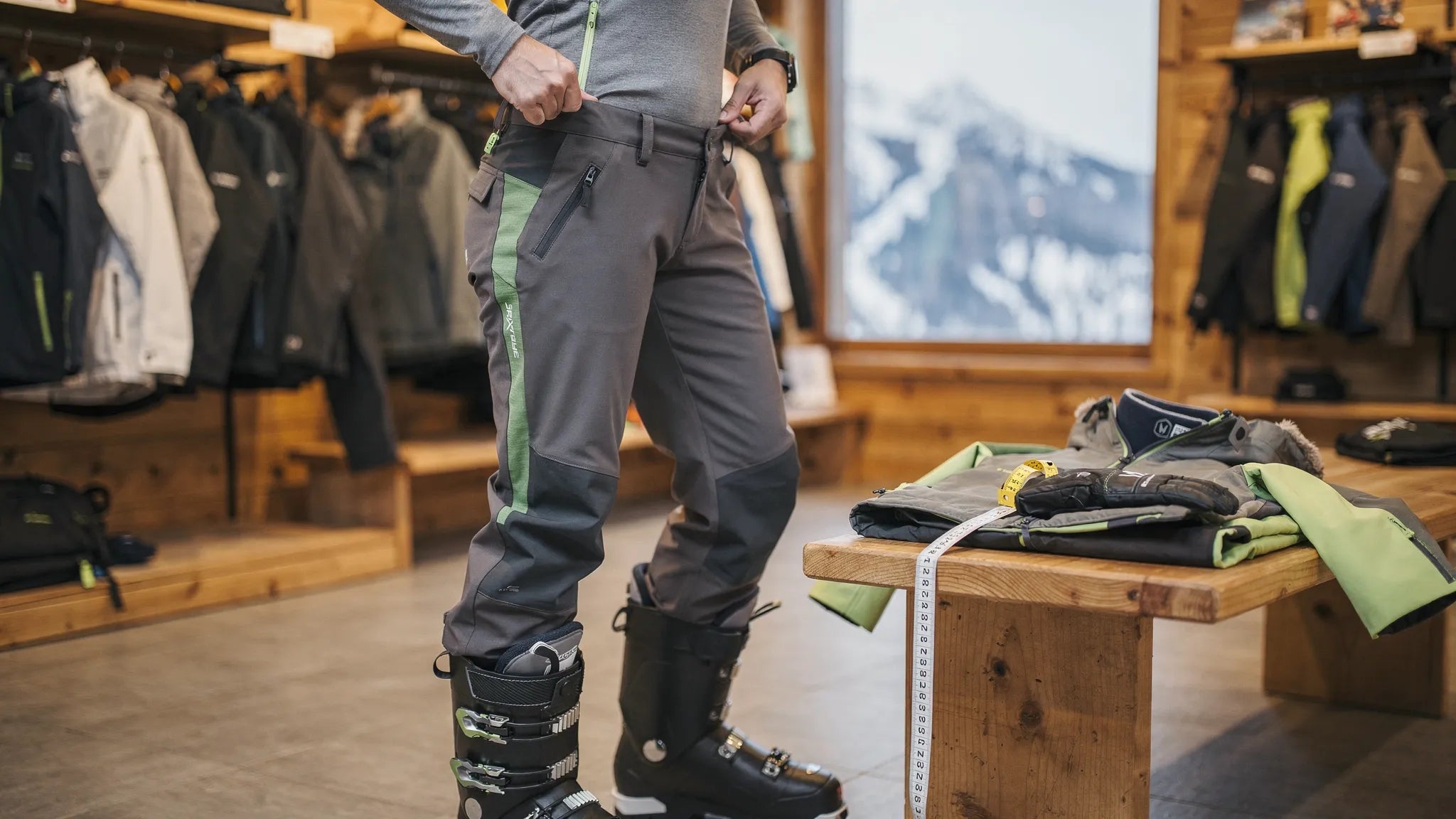
The correct size is decided in motion. When you get the head or try it in the store, wear at least the base layer you will use on the snow. If you have available boots, use them: they completely change the perception of the length and bottom leg.
- Controlled deposit:bend your knees as if you had to collect something from the ground. The fabric should not pull on the horse and life should not open behind.
- Side effect:simulates a wide step. It is useful to understand if thigh and knee have enough space, especially for snowboard, freeride and touring.
- Sitting:sit as in the chairlift. If life tightens the abdomen or back drops too much, the fit is not correct for a whole day.
- Shoe test:close the boot and bring the bottom leg over the shrimp. The gaiter must stay in place and the fabric should not go too far when you push the ankle.
A trousers can look perfect standing and become unsuitable as soon as you sit. This is why dynamic tests are more important than life alone.
Details that change the fit
Life, suspenders and salopettes
Adjustable waist is useful if alternate base layers light and warmer. It has to stabilize without compressing. If you have to tighten to the maximum to hold on the trousers, probably the size or model are not ideal.
The straps help when you want more stability without tightening your life. They are practical for those who ski many hours, for those who have marked difference between life and hips or for those who use the pants with different layers. The salopette offers more coverage and reduces the risk of snow in the lumbar area, but requires attention to the bust: you should not pull on your shoulders when you bend.
Horse, knees and thigh volume
The horse too low creates traction in bundled. The horse too high or narrow limits the step. Look for a balance: you have to move without feeling the pants stuck between your thigh and pelvis.
Preformed knees, when present, improve movement. However, they do not replace a correct size. If the trousers already pull off, no technical construction will make it comfortable on the track.
Bottom leg and interface with boot
The bottom leg is one of the most underrated points. With ski boots, you need enough space to cover your legs. With snowboard boot can be useful a more generous opening, because the fit is different and the ankle movement is more free. For afters or winter boots, however, too much volume can become uncomfortable in the walk.
The correct length covers the boot when you push your knees, but does not create exaggerated accumulations. A too long background is ruined more easily. Too short bottom lets snow and cold enter.
Pockets and protections
The pockets affect the fit more than it looks. If they are very full, they can limit the bending or create seated pressure. For days in the resort it is better to distribute items between jacket and pants. For freeride and touring, always evaluate how the trousers work with backpack, harness or protection, if you use them.
Fit woman, man and junior: what really changes
For the female fit, it is not enough to choose a size based on life. Clamps, horse height and stability in the lumbar area are decisive. If the rear opening is created, evaluate a model with more enveloping life, better regulation or suspenders.
For the fit man, the most frequent errors are too tight thigh and too wide waist. Those who have legs developed for skiing, bike or gym should always check the thigh size, not only the waist.
For children, the goal is not to buy very big to make the boss last. A trousers too long or voluminous makes it harder to move and can bring snow in. Better to look for useful adjustments, stable suspenders and a realistic margin per layer base and seasonal growth.
Recommended options
1. Regular insulated ski pants on track
Ideal if:skis in the resort, take breaks in the chairlift and want an easy to manage head on cold days.
Key details:regular fit, space per layer base, stable life and bottom compatible with the boot. The padding, when present, adds comfort but requires careful proof: too volume can limit the bending.
To match:technical underwear light or medium, ski jacket with good cover, waterproof gloves and technical socks not too thick.
2. Snow shell for those who want modularity
Ideal if:prefer to adjust the heat with layers and want a more versatile trousers between mild days, wet snow and dynamic activities.
Key details:precise but not adhering fit, space per layer base, freedom on knee and horse. The shell works well if the layering is correct, less if you choose it too tight thinking of using it as a unique pant.
To match:thermal layer base based on temperature, light mid if necessary and coordinated technical jacket for complete protection.
3. Salopette or bib for freeride and snowboard
Ideal if:look for more coverage, move a lot, sit on the snow often or want to reduce the risk of infiltrations.
Key details:comfortable high part, straps that do not pull, enough volume on hips and thighs. The salopette must remain stable without compressing the bust.
To match:breathable layer base, not too short jacket and waterproof accessories. For those who switch out and hire equipment, it can be useful to consult the guide toski rental in Biellabefore the weekend.
4. Touring-oriented trousers
Ideal if:do climbs, beams, splitboards or exits where sweat management counts as much as protection.
Key details:dry fit, good mobility in the step, controlled volume on the bottom and compatibility with light layer base. If the pants are too large, it can be less efficient uphill. If it's too tight, limit the falcade.
To match:Breathable base layer, light shell and essential backpack. For this scenario, the collectionDynafithelps to reason in terms of movement, weight and stratification.
5. Versatile snow trousers for travel and occasional use
Ideal if:take a few weekends on the snow, walk in cold places or want an easy garment to put in a winter suitcase.
Key details:clean fit, comfort in seat and compatibility with winter footwear. You don't always need the most technical leader: you need the right boss for the real rhythm of the day.
To match:technical knitwear, protective jacket and compact accessories. To complete a sober travel capsule, you can also watch the bridge heads of the selectionLanapo.
6. Adjustable junior trousers for families
Ideal if:you have to dress up children or boys for ski school, weekends and snow holidays.
Key details:stable waist, straps or simple adjustments, bottom covering the boot without dragging. The margin of growth must be reasonable: too large a garment reduces comfort and safety in movement.
To match:warm layer base, technical socks, reliable gloves and jacket with good cover. If you are in Biella area and you need to organize equipment or maintenance, find a useful overview of servicesSport Service.
FAQ
Should snow pants be wide?They must be large enough to allow layering and movement, but not wide to the point to go down, create excessive folds or hinder the boot. The key word is stability.
How do I know if the length is right?Try them with the boot. The bottom must cover the legs well when you push your knees, without dragging too much to the ground when you walk.
Better normal pants or salopettes?The normal trousers are simpler and more versatile. The salopette is ideal if you want more coverage, if you do freeride or snowboard, or if the life of the pants tends to descend during the movement.
What size do I choose if they are between two sizes?If you do sports track or touring, look for the most precise fit as long as you pass motion tests. If you snowboard, freeride or use warmer layers, it often becomes the upper size margin.
Do I have to try them with the layer base?Yes. A thin layer also changes comfort, life and mobility. The best test is with the same system you will use on the snow.
Can I use trekking pants on the snow?For short walks and light snow a suitable outdoor garment can be enough for the weather. For skiing, snowboarding or long days on the snow is better a trousers designed for protection, bottom leg and compatibility with boots.
The correct fit is not an aesthetic question, but of comfort and control. Measure, test in motion and choose based on your real use. To complete the kit, explore the technical and lifestyle collections of Fabbrica Ski Sises, with free shipping in Italy over 50€, quick delivery and return within 14 days. If you have any doubts about size or use, contact the store or switch to Biella with your measurements: choosing well is easier when the trouser is evaluated in the right context.
Ski Sises on Google
Choose Ski Sises as a preferred source: you'll see our guides and news more often in Top stories on Google.