























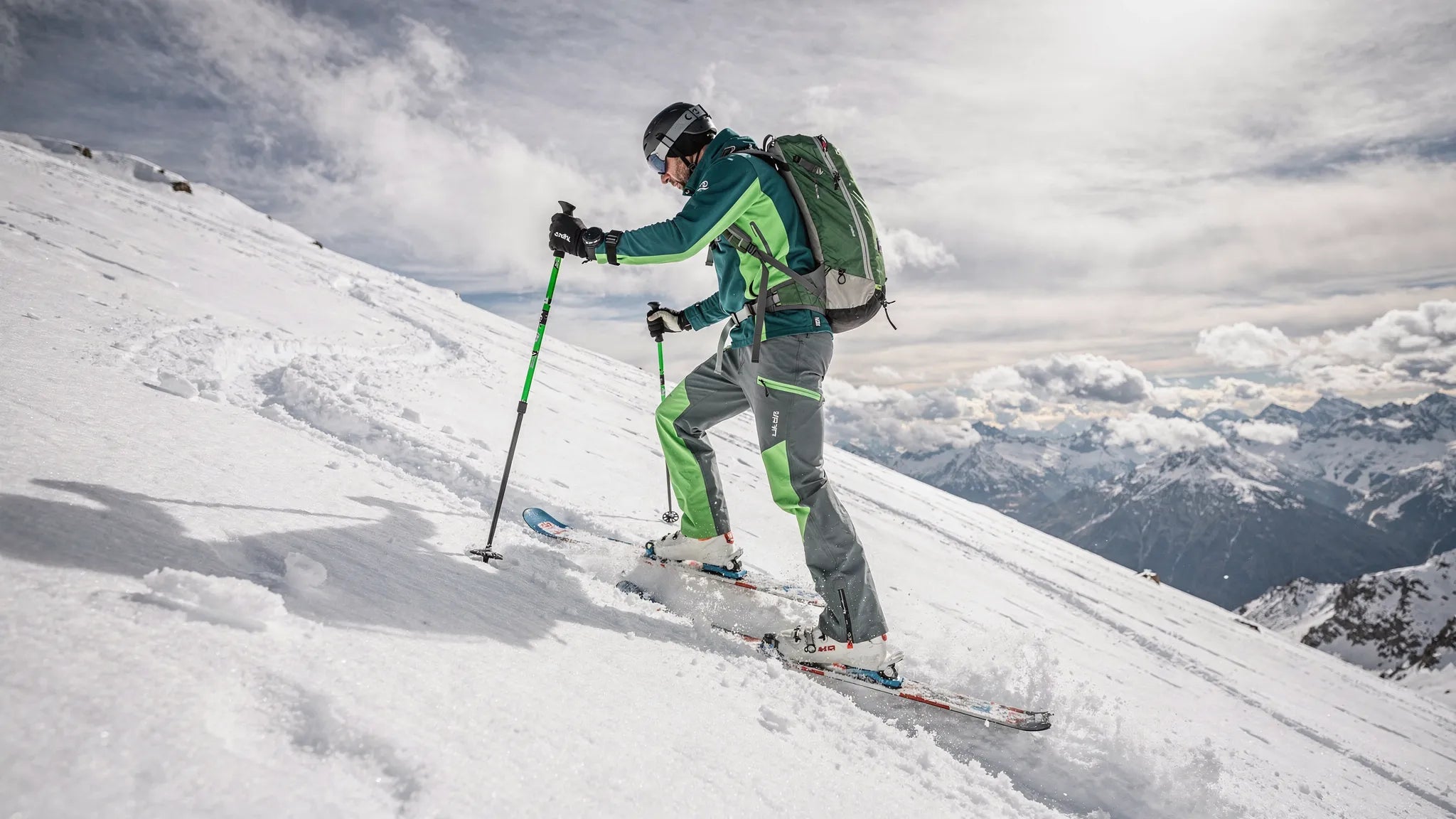
Ski mountaineering pants: how to choose them well
In mountaineering skis the pants should not only keep out the snow. It must accompany the climb, let your legs work, download heat when you increase the rhythm and protect yourself downhill when you stop, change your thirst and feel the wind. For this reason, choosing mountaineering ski pants with the same logic as a track pants is often the most expensive mistake. This guide is designed for those who make first trips, regular touring, freeride with skins or fast exits, and wants to buy with criterion, without chasing unnecessary details.
Summary
- Priority: breathability, freedom of movement and ventilation, before the padding.
- Softshell if you make active climbs and stable weather; hardshell or hybrid if you meet wind, wet snow or descents exposed.
- Check leg bottom, internal reinforcements, pockets compatible with backpack or harness and ventilation hinges really accessible.
- Try the size with layer base, boots and ascent movements, not only in front of the mirror.
- If you are at first, consider equipment and real scenario first: rental, advice and practical tests help to avoid over-specialized purchases.

First question: how much you go up, how much you go down, how much you sweat
Ski mountaineering pants live in a continuous compromise. Uphill generates warmth, often more than you imagine. Downhill, instead, you are exposed to wind, snow and colder breaks. The correct model must handle both moments.
If you come from the ski on the track, you might think that a warmer pants is automatically better. It's not always like that in touring. Too padded head can become uncomfortable in the first half hour of ascent, accumulate moisture and cool you as soon as you stop.
The practical question is this: is your main problem the cold from stationary or the heat in motion? If you climb with medium or high rhythm, start from a breathable trousers and build the heat with the layer below. If you do slow outputs, very cold or with frequent stops, you can consider a more protective construction.
For those who are building the complete kit, it makes sense to compare the pants with jackets, base layers and accessories in the ski clothing selection, always keeping the same logic: less useless volume, more temperature control.
Softshell, hardshell, hybrid: which to choose
The construction of the trousers determines the real behavior more than any generic label. There is no perfect model for everything. There is the model consistent with your soil, your rhythm and the weather you encounter most often.
| Type of pants | Ideal for | What is it | Compromise to accept |
|---|---|---|---|
| Softshell | Regular climbs, spring, dry excursions, active rhythm | Great mobility, good breathability, prolonged comfort | Lower protection with wet snow or severe weather |
| Hardshell | Wet snow, wind, exposed descents, freeride with skins | Greater barrier against external agents, more manageable drying | It can be less elastic and requires more precise layering |
| Hybrid | Mixed use, alternating up/down, variable conditions | Balance between protection and breathability | It depends very much on construction and panels used |
| Bib or technical salopettes | Deep snow, freeride touring, cold and windy days | Upper cover, less infiltration, stability in life | More heat and less rapid management in breaks |
| Thermal or isolated trousers | Exit very cold, low rhythm, use closer to the track | Immediate thermal comfort | Often too hot for long and continuous climbs |
For most recreational skiers, a technical softshell or a well ventilated hybrid is the most sensible starting point. Those who often enter in windy environments, face long descents or match skins and freeride should look more carefully at light hardshells or technical bib.
In the selectionDynafityou can orientate towards leaders designed for dynamic alpine activities, useful when weight, freedom of movement and rhythm management are central.


Technical details that really count
A mountaineering ski pants is evaluated in small, repeated and often uncomfortable movements: lift the knee in reverse, open the boot in walk mode, fix the skin, bend to the trim change, walk with the backpack.
Side vents are one of the most important details. They must not only exist, they must be usable with gloves, backpack and cold hands. A long zipper can make a difference in intense climbs, but it must remain practical and not create discomfort under belt or harness.
Mobility comes from cutting, elasticity and construction of the knee. Look for a pants you don't pull when you take a long step or a conversion. If you feel traction on thigh, horse or knee already in test, uphill will worsen.
The bottom leg deserves attention. It must dialogue with the ski mountaineering boot, which has different volumes and mechanisms compared to the ski boot. Check that the bottom allows you to reach levers, hooks and walk modes without coiling or blocking.
The internal reinforcements on the bottom are useful because skis, lamines and crampons can mark the fabric. You do not need to look for a rigid armor, but a more resistant area in the contact points increases the length of the head.
The pockets must be accessible with closed backpack and abdominal belt. For self-awakening device, phone or critical objects, do not improvise: always follow the instructions of the equipment manufacturer and use safe systems. The pant helps the organization, but does not replace training, experience and consultation of the bulletin. Before each exit, check conditions and avalanche risk through authoritative sources such asAINEVA.
Fit and size: test in five minutes
The right size isn't the one that's better off. It is the one that remains stable as you climb, moves without pulling and leaves room to a thermal layer when needed.
If you buy online, measure life, basin and inner leg, then compare with a technical pants you already use. For women, the relationship between life, pelvis and thighs is often decisive: a pattern too tight on the side will limit the step even if life seems correct. For men, attention to horse, thigh and bottom leg, especially if you use voluminous boots.
| Quick test | How to do it | Correct signal |
|---|---|---|
| Long pass | Simulate a climb with high knee | The fabric does not pull on horse and thigh |
| Controlled deposit | Fold your knees as to fix your boots | Life remains stable and the bottom does not rise too |
| Conversion | Rotate a leg out as inversion | The knee follows the movement without blocks |
| Shoe test | Wear or simulate touring boots | The bottom allows access to levers and hooks |
| Try layering | Wear a layer base below | The pants remain comfortable without compressing |
If you are between two sizes, choose according to use. For quick trips and little layering, a dry fit can work. For cold days, freeride or travel with uncertain weather, an extra margin is often more practical. The pants should not go down, but not compress when you sit or raise your leg.
To compare models and categories, you can start from selection trousers, filtering mentally based on real use: quick climb, classic touring, freeride, travel or replacement of a worn garment.
Layering: what to put under ski touring pants
The pants don't work alone. The layer below decides much of the thermal comfort. In many outputs a light or medium layer base is enough, better if thought to manage moisture. Avoid cotton and layers too thick, because they hold sweat and reduce freedom of movement.
In spring or with high rhythm, a light layer base often works under a softshell. In the middle of winter, with wind or long descent, it can serve a more consistent thermal layer, but only if the trousers leave enough space. If you add too much volume, the head breathes worse and the knee works badly.
The jacket also affects. A very breathable trousers combined with a heavy and unventilated shell creates imbalance. Better build a consistent system: dry layer base, mobile pants, adjustable mid layer and shell to use when the weather requires it.
If you still have to define the whole set, look at the selection of ski clothing and reason for layers, not for single isolated garment.
Quick decision tree
If you sweat a lot uphill and make trips with stable weather, choose a breathable softshell with good elasticity and simple ventilation.
If you often encounter wind, wet snow or long descents, oriented towards a hardshell or a more protective hybrid, without exaggerating with the stuffing.
If you do freeride with skins and look for more coverage, evaluate a technical bib or a pant with more stable life, especially if you ski in deep snow.
If you are a beginner and you still have no clear use, avoid the most extreme head. Choose a versatile model, then refine the kit after some outputs.
If you are planning your first days and want to better understand materials, boots and set-ups, ski and snowboard rental can be a smart choice before buying everything. For equipment, maintenance and seasonal controls, you can also refer to the sport service in shop in Biella.
Our options
Softshell touring trousers
Best for: skiers who climb with regular rhythm, make classic trips and prefer comfort in movement. It is the most balanced choice for those who want a boss to use often, without feeling closed or overheated.
Key features: elastic fabric, good breathability, articulated knees, practical ventilation and bottom compatible with touring boots. The protection must be sufficient for dry snow and moderate wind, but should not be confused with that of a shell fully oriented to bad weather.
What to pair it with: light or medium layer base, windproof jacket or light shell in the backpack, thin gloves for ascent and warmer gloves for descent and transitions.
Protective hardshell trousers
Best for: exits with uncertain weather, wet snow, strong wind or long descents. It is also indicated if you make touring in areas where time changes quickly and you want a more reliable barrier.
Key features: more protective construction, seams and zip to be carefully evaluated, wide and fit ventilations that allow at least one layer below. The quality of the cut is essential, because a little mobile hardshell becomes tiring uphill.
What to pair it with: modular layer base, light mid layer for breaks, coordinated shell and dry accessories in the backpack.
Hybrid trousers for mixed use
Best for: who alternates active climb and descends more technical, or wants only one trousers for variable conditions. It is often the most rational choice for those who do not want two separate leaders.
Key features: more breathable areas where mobility and more protective areas are needed at the exposed points. Always check that the panels do not limit the step and that the ventilations are easy to open.
What to pair it with: medium layer base on cold days, light upper layer and backpack with emergency shell.
Technical bib or light salopette
Best for: freeride touring, deep snow, windy days and skiers who want maximum coverage between jacket and pants. It works well when the descent has an important weight in the day.
Key features: high waist, stability, protection from infiltration and high pockets more accessible. The compromise is a more delicate thermal management, because the bust remains more covered.
What to pair it with: breathable layer base, jacket with effective ventilation and upper layers easy to open during the ascent.
Trousers fast and light
Best for: fast trips, important differences, spring and experienced users who can manage well rhythm and weather. It is a more specialized choice, ideal if the climb counts a lot.
Key features: reduced weight, low volume, great mobility and essential details. It must, however, have adequate background to the boots and sufficient protection at the contact points.
What to pair it with: light layer base, compact shell in the backpack, minimal but reliable accessories.
Versatile pants for first trips
Best for: those who start with ski mountaineering and want a sensible purchase also for snowshoeers, winter outdoors or snow days not too technical.
Key features: convenient fit, durable fabric, simple ventilation, adjustable bottom and not too hot construction. Versatility counts more than specialization.
What to pair it with: medium technical underwear, modular jacket, stockings appropriate to the boot and backpack ordered to manage temperature changes.
Maintenance: less wrong washing, more duration
A technical trousers lasts more if it is treated with consistency. Fango, salt, sweat and residues reduce comfort and water repellency over time. After the exits, dry it completely, empty the pockets and check the bottom leg, seams and zip.
Wash by following the label of the manufacturer, using detergents suitable for technical garments when necessary. Avoid softeners, which can compromise moisture management. If the external fabric no longer flows the water as before, it may be time to reactivate or restore the water repellent treatment, always according to the indications of the head.
He often controls internal reinforcements. Small cuts from lamina or ramp, if neglected, become more extensive openings. Intervention soon is almost always easier than replacing the boss.
Frequently Asked Questions
Are track pants good for ski mountaineering?They can work for very short or occasional outputs, but they are often too hot, less breathable and less mobile. For regular climbs it is better a specific pants or however more oriented to the movement.
Better softshell or hardshell to start?If you make trips with stable weather and active rhythm, softshell. If you want more protection against wind, wet snow and cold descents, hardshell or hybrid. For many advanced beginners, hybrid is the easiest compromise.
Do you need a padded pants?Not always. In mountaineering skiing, heat is built mainly with layering. Too padded pants can make you sweat uphill and cool downhill. It makes sense only for intense cold, low rhythm or use closer to the track.
How do you dress the mountaineering ski pants?It must remain stable in life, leave freedom to knee and thigh, allow a layer below and work with the boot. If you pull over long, welcome or conversion, it is not the right size.
Are side vents indispensable?They are not mandatory, but they are very useful. Uphill allows you to download heat without stopping or removing layers. They must be accessible and easy to use with gloves and backpack.
What do I check before buying online?Measures, declared fit, compatibility with boots, presence of ventilation, reinforcements at the bottom, accessible pockets and care instructions. If you are undecided between two sizes, think about the layer you'll wear below.
Choosing ski mountaineering trousers well means starting from your way of moving, not from the most technical boss ever. If you want to compare models and build a consistent kit, explore the Ski Sises selection online or go to shop in Biella for a targeted advice. The shipment is free in Italy over 50€, with quick delivery and made within 14 days.
Ski Sises on Google
Choose Ski Sises as a preferred source: you'll see our guides and news more often in Top stories on Google.