


















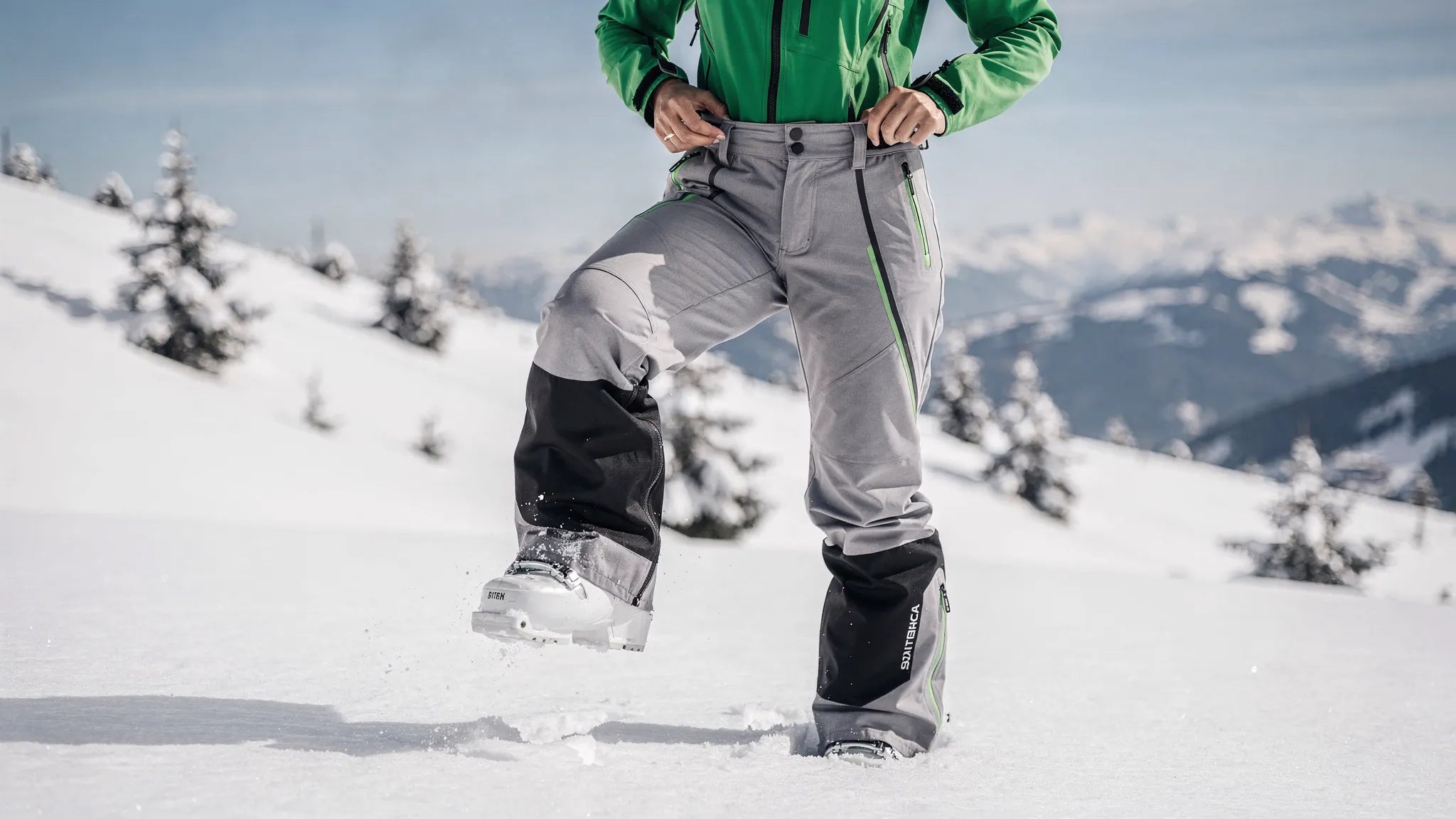
Women snow pants: 7 details to check
BuyWomen snow pantsIt seems simple until you find yourself with snow that enters the bottom leg, condenses inside the chairlift or a life that tightens when you bend to fasten the boot. The good news is that the difference between “ok” and “just” rarely lies in a single technical data. It stands in the details of construction and in how those details work in your real scenario: runway, freeride, short exits or whole days.
This guide is designed for those who want to choose quickly but competently, even online, with a checklist to be used immediately.
Summary (to be saved)
- 1) Snow and moisture protection(woven, finishes, seams)
- 2) Real Transpiration(ventilations you will really use)
- 3) Fit and mobility(Sales, knees, layering compatibility)
- 4) Life and closures(comfort, adjustments, sealing)
- 5) Anti snow seal(kick and boot interface)
- 6) Durability(reinforcements, components, abrasion zones)
- 7) Pockets and features(order, access, essential)
First: choose according to the scenario (not the “model”)
If you ski above all on the track, you need continuity: stay dry, move well, manage the weather. If you do freeride or variable snow, priority becomes sealing and robustness. If alternate light climbs and descents, count more breath and freedom on hips and knees.
Use this fast map as a starting point.
| Scenario of use | Main priorities | Type that often works best |
|---|---|---|
| Pista, whole days | Protection + comfort in the chairlift | Isolated or shell trousers with cured layering |
| Wet snow, variable weather | Moisture barrier + sealing details | Shell well built, with solid finishes |
| Freeride, deep snow | Sealing + reinforcements | Robust shell or bib/pettorina |
| High rhythm (very moving) | Ventilation + breathability | Lightweight or technical softshell (if stable weather) |
| Occasional exits, weekends | Simplicity + versatility | Balanced all-mountain model |
If you’re planning a few days a season or want to test a set-up before investing, also evaluate rental and assistance: the article onski rental in Biellaclarifies what to communicate and what to control at the retreat.

The 7 details to check (in product card and test)
Here you find the controls that really make the difference. You don’t need to “until them” all at the highest level, you need to understand which are non-negotiable for you.
1) Snow and moisture protection (beyond data)
When we talk about protection, the point is not only “how much holds”, buthow it holds in time and critical points.
What to look at:
- Locks and input points: knees, seat, thigh interior, zip zone.
- Zip and potatoes: where there is a zip, there is a potential bow.
- Water repellent treatment (DWR): it helps to make the surface moisture flow away, but it must be maintained.
If you want a broader technical reference (water resistance, construction, compromise), the guide onwoman ski suit and waterproof criteriait is useful even if you do not look for a whole suit.
2) Real breath: ventilation that you will really use
Many “transpirate” trousers on paper, few help you when the rhythm rises or when moving to stop.
What to control:
- Ventilation on the thighs: position and ease of opening with gloves.
- Opening width: more than the zip number, counts if the opening moves air.
- Condensation management: if you tend to sweat, prefer light ventilation and layering instead of focusing only on the padding.
3) Fit and mobility: test in 30 seconds
In the female segment, the difference is often here: life, basin and thighs must work together without “drawing” when you make everyday movements on the snow.
Quick tests (also at home):
- Complete welcome: no excessive tension on sitting and knees.
- High pass(as a step up): the trousers should not brake the hip.
- Boot simulation: try with the boot or with voluminous fit, especially if the bottom leg is tight.
Useful signal: if to stay comfortable you have to open too much adjustments in life, probably the volume is not balanced between life and basin.
4) Life and closures: comfort that lasts a day
Life is the point you always feel: in the car, in the chairlift, while fixing the equipment.
To check:
- Regulations: better if they are simple and stable (do not “molate” with movement).
- Front closure: it must remain flat under the layers, without creating pressure.
- Compatible with belt or straps: useful if you want to avoid slipping when you carry backpack or make large movements.
5) Anti snow sealing: gaiter and interface with boot
It is the detail that saves the day when the snow is soft or when you sit on the track.
Essential controls:
- Internal leg: must adhere well to the boot and stay in place.
- Bottom leg: wide enough not to “draw” over the boot, but not so open to leave gaps.
- Bottom closures: if present, they must be easy and robust.
6) Durability: reinforcements where you really need
On the snow, the pants are consumed in three areas: inner ankle (blades and edges), seat, inside thigh.
What to look for:
- Localized reinforcements(not just woven often everywhere).
- Solid components: zip, buttons, tirazip.
- Clean finish: often indicate constructive attention, and over time we see.
If you have doubts about what to control in general in the ski pants (building, ventilation, reinforcements), you can also add this guide:ski pants, characteristics to control.
7) Pockets and features: less, but just
Your pockets are for real use. The rest is volume and input points.
Currency:
- Access with closed jacket: you can take the essential without contortions.
- Reliable closures: on the snow, a pocket that opens itself is a risk.
- Distribution: better few well placed pockets than many, uncomfortable.
Sizes and fits: a simple rule to buy online
Before choosing the size, decidewith what you will wear.
- If you predictimportant layering(intimo + thermal layer), leaves margin on basin and thigh.
- If you want a dryer and “cleaner” trim, make sure that the mobility tests remain ok without force.
Practical method:
- Measure a pants that suits you (life and basin) and compares with the size chart of the product.
- When you're between two sizes, use this logic:if the critical point is the basin, go up; if it is life, check adjustments and construction.
For a very measurable approach (especially if you buy new brands), Ski Sises’s “fit-first” guide onhow to choose the size with a comparison headexplains a method that also works out of that brand.
Our recommended options (careful choices based on use)
We do not indicate a single “best”. Here you can find the options that typically work best, with “best for” logic. Then match the 7 details.
1) Technical Shell (shell trousers)
Best for:variable weather, wet snow, who wants modularity with layers.
Key features:good moisture barrier, usable ventilations, clean construction at critical points.
What to match:technical underwear + modulable thermal layer. For a more “light and fast” setting, see also the selectionDynafit.


2) Insulated trousers (heat ready)
Best for:track, long chair, who suffers cold and wants simplicity.
Key features:immediate thermal comfort, less dependence on layering, good stop-and-go protection.
What to match:base breathable layer, gloves and mid layer that do not sweat in motion (humid management remains central).
3) Bib/pettorina (extra cover)
Best for:freeride, deep snow, days with so much “in and out” from the snow.
Key features:superior sealing, stability in life, less snow inputs in the lumbar area.
What to match:compatible cut jacket and layers not too voluminous on the bust, not to compress.
4) Technical Softshell (if the weather is stable)
Best for:high rhythm, dynamic outputs, dry and controlled conditions.
Key features:comfort and mobility, sweat management, less rigid feeling.
What to match:shell in the backpack if the weather changes, base layer treated. If you look for versatile and clean items even off-piste, exploreBiella Fabrics.


5) Balanced All-mountain (one pair choice)
Best for:who wants only one trousers all season, without extremes.
Key features:compromise between protection, mobility and durability, essential functional details.
What to match:classic layer system, and consistent accessories. To complete an outdoor wardrobe that remains premium even on the trip, it can make sense to look alsoLanapo.


6) Robust trousers for intense use
Best for:who often skis, abrasive environments, focus on durability.
Key features:reinforcements in the right points, reliable components, construction designed for many days.
What to match:boots and protections that do not “lead” the bottom leg, and regular maintenance to avoid accelerated wear.
Minimum maintenance extending life (and performance)
A snow trouser is a system: if it is impregnated and remains humid, it loses comfort and thermal management.
- Always follow the manufacturer's instructions.
- If you notice that water no longer flows as at first, it may be time to restore water repellent treatment.
- For seasonal repairs, adjustments and controls, keep in mindSport Service in store: often targeted intervention is worth more than an anticipated replacement.

Frequently Asked Questions
Should women snow pants be adherent or comfortable?They must allow mobility and layering without pulling up basin and thighs. A too tight fit worsens comfort and breathability; too wide makes it difficult to seal snow and manage layers.
How do I know if I need a shell or isolated pants?If you often change rhythm or skis in variable conditions, the shell with layering is more modular. If you do above all track and suffer the cold in the chairlift, the isolated tends to be easier.
Do the ventilations also serve in full winter?Yes. Ventilation handles internal humidity when you move. Staying dry in often is more important than “add heat”.
How much does the gaiter count?Many: it is one of the main barriers against snow that enters the bottom, especially with soft snow or when you sit.
If I'm in two sizes, what do I do?Consider the critical point: if you feel tight on basin/coscia, go up; if it is just life, check adjustments and construction. And always do the three quick tests (accosciata, step high, try with boots).
Better buy or rent if I ski a few times?If you do a few days a season, renting can be smart. It allows you to really understand what you need before investing, and optimize your set-up with assistance. See the guide onski rental in Biella.
A simple action
If you have already clear your scenario, the next step is to compare the models with the checklist of 7 details and choose calmly. You can start from the online shopFabbrica Ski Sisesand, if you want a targeted advice on fit and use, use the guide content and services in store as a support before purchase.
Ski Sises on Google
Choose Ski Sises as a preferred source: you'll see our guides and news more often in Top stories on Google.