
Complete ski woman: 3 layers practical guide
Choose acomplete woman skiIt doesn't just mean matching jacket and pants. The point is to build a system that manages three things: moisture, heat and weather protection. If a layer works badly, the rest of the whole loses effectiveness. This guide is designed for skiers on the piste, leaves for a weekend on the snow or wants to buy online with less doubts about size, layering and comfort. The goal is simple: to dress in a technical, modular and orderly way, without buying useless garments.
In summary
- The complete ski woman works best if built on 3 layers: layer base, mid layer and external layer.
- The base layer must dry quickly and stay close to the body, without compressing.
- The mid layer regulates heat: lighter for dynamic skiing, more insulating for intense cold or long breaks.
- Jacket and trousers must protect from snow, wind and humidity, but also allow movement and ventilation.
- The size should be chosen by thinking about the layers below, not only the “dry” fit.
- For travel and weekends, better a modular system: it adapts to climate, altitude and rhythm of the day.

Because the 3 layers are the basis of a complete ski woman effective
The principle of the three layers is a consolidated rule in outdoor clothing: the first manages sweat, the second retains heat, the third protects from wind, snow and rain. Technical guides such as REI on layering explain the system in these terms: comfort and safety depend on the combination, not on the individual head.
For alpine skiing this is even more evident. A descent can heat quickly, a chairlift can cool in a few minutes, a wet snowfall can also test a complete aesthetically flawless. The 3 layers allow you to adapt without having to change everything.
| Road | Main function | What to control | Common error |
|---|---|---|---|
| Base layer | Remove moisture from skin | Technical fabric, tight fit, comfortable seams | Use cotton or too wide garments |
| Mid layer | Adjust the heat | Weight, elasticity, clutter under the jacket | Choose a garment too hot and slightly breathable |
| External | Protects from weather and snow | Waterproofing, ventilation, fit, fit | Buy only according to the padding |
The point is not to dress “heavier”. It's getting better. A complete well built ski woman allows to remove or add heat without sacrificing protection and freedom of movement.
Layer 1: basic layer, the part you do not see but decides comfort
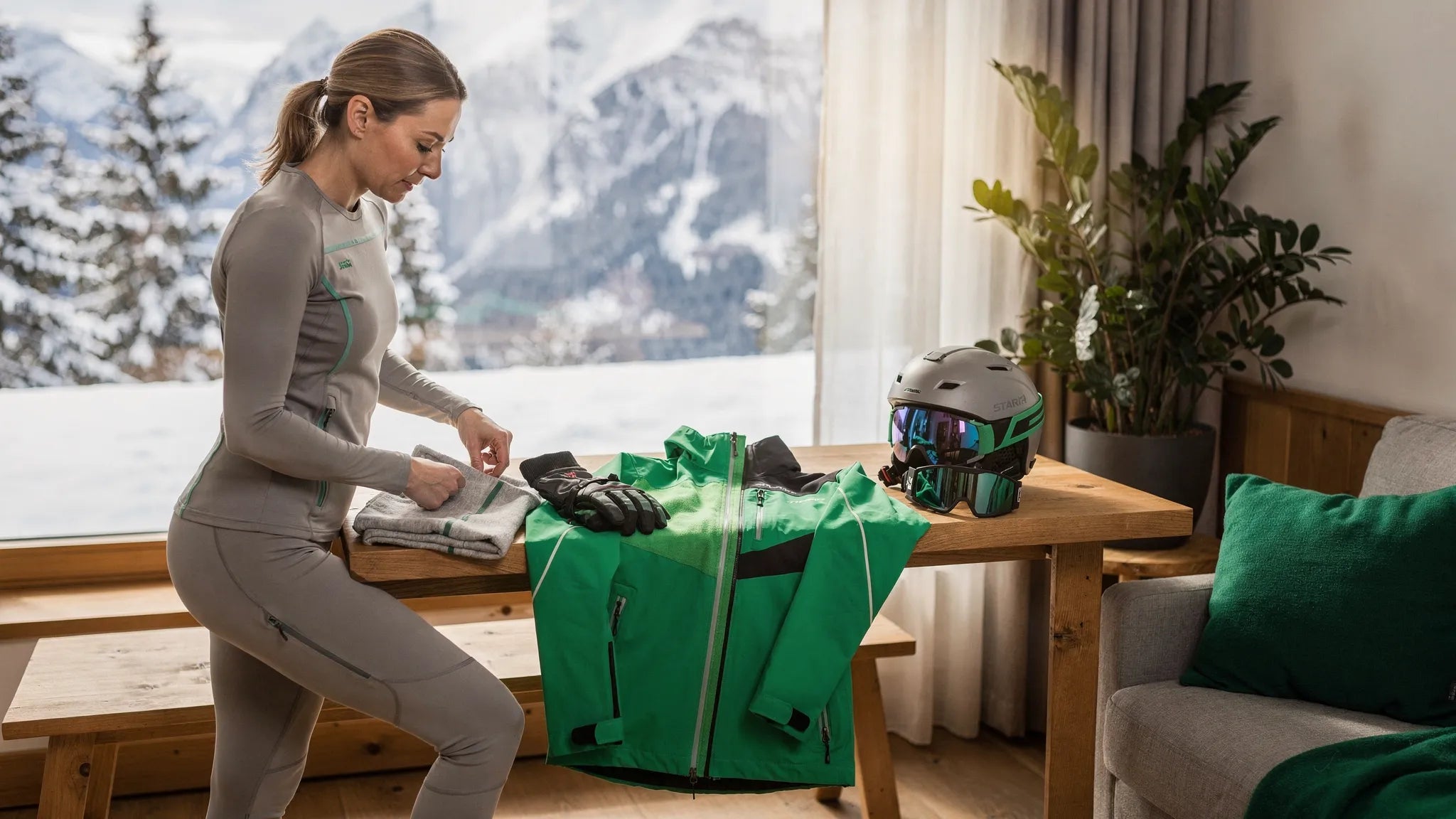
The layer base is the layer in contact with the skin. It must transfer moisture to the outside and dry quickly. If it remains wet, the body cools as soon as the activity decreases, especially in the chairlift or during breaks.
For skiing, the most practical choice is between technical synthetic fabrics and merino wool. The synthetic tends to dry very quickly and is indicated for those who sweat easily or ski with sustained rhythm. The merino wool offers a natural thermal adjustment and a pleasant comfort on long days, especially for those who alternate skis, breaks and return to the country.
The fit must be close to the body, but not mandatory. If the top base layer forms folds under the jacket, it can create pressure points. If the technical underwear is too often, it can interfere with the ski pants or with the closure of the boot.
A simple rule: for the track, better a clean and tight layer base, with flat or well positioned seams. For intense cold you can choose a greater weight, but without turning the base layer into a voluminous head.
To start building the set, you can start from selectionwomen's clothingand mentally filter the garments according to the function: skin, heat, protection.
Sheet 2: mid layer, heat regulator
The mid layer is the most modulable layer of the complete. It can be a fleece, a light padded head, a more structured technical mesh or a vest, depending on climate and personal sensitivity to the cold.
For a skier who remains mainly on the track, the mid layer must offer warmth without blocking mobility. Shoulders, chest and lumbar area move freely under the jacket. If the mid layer is too often, the jacket works badly: it compresses the stuffing, limits the air circulation and makes it more difficult to manage the temperature.
For dynamic skiing, mild days or spring, a light and breathable mid layer is often enough. For rigid temperatures, frequent breaks or skis with children, it serves more insulation. For freeride or ski mountaineering, priority changes: the intermediate layer must breathe well and compress easily in the backpack.
This is the quick choice:
| Scenario | Mid layer recommended | Why it works |
|---|---|---|
| Track with mild temperatures | Lightweight or technical mesh | Scalda without sweating too |
| Stable cold slope | Mid layer more insulation | Helps in breaks and plants |
| Skiing with children or many stops | Head warm but not voluminous | Maintains comfort in dead times |
| Freeride or touring | Breathable and compressible layer | It adapts to climb, descent and rhythm changes |
| Weekend travel | Mid layer versatile | It also works off track and in the city |
For those looking for technical garments suitable for sustained rhythm, touring or more dynamic mountain uses, selectionDynafitis a consistent starting point. For those who want an intermediate layer that can also be used in travel or in everyday life, the collectionLanapocan help build a more modular wardrobe.
Layer 3: jacket and trousers, protection and freedom
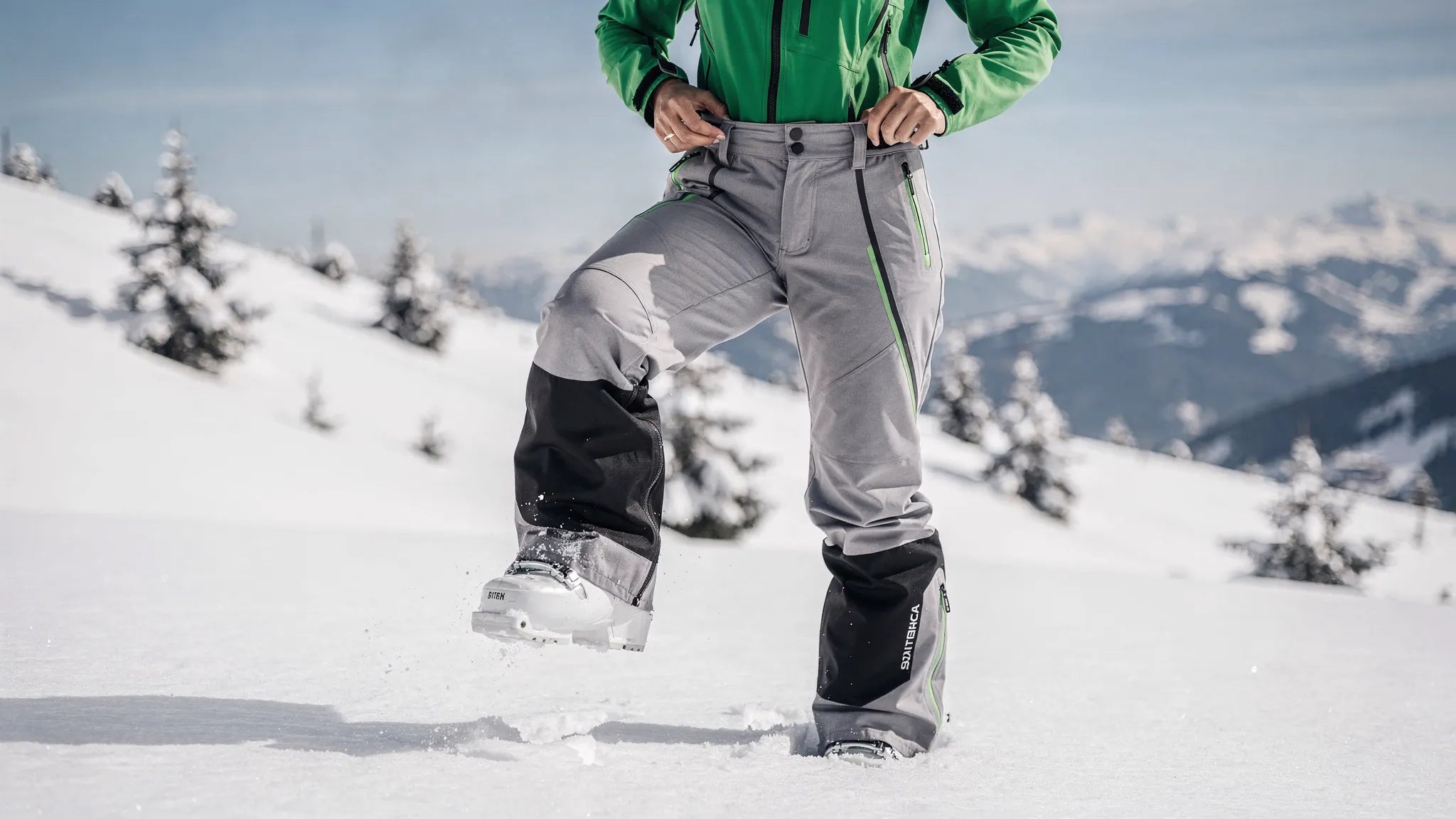
The outer layer is what defines the visible performance of the complete ski woman: jacket and trousers must protect from snow, wind and humidity, but also let the system breathe below.
Here the compromise is between isolation and modularity. A very padded jacket is comfortable for those who suffer cold, skiing on the track and do not want to handle too many layers. A technical shell, however, works best for those who prefer to adjust the heat with base and mid layer. The shell is not “less hot” in absolute sense: it simply delegates heat to the inner layers.
For pants, evaluate three practical elements: mobility, compatibility with the boot and snow protection. The bottom leg has to work well with the boot, life should not mark when you sit or push your knees, gaiters need to reduce snow entry without creating bulk.
The jacket, on the other hand, must be tried with the real movements: arms forward as if you grip the sticks, torsion bust, simulation of closure of the boot, sitting. If the jacket goes up too much, pull on the shoulders or compress the mid layer, the size or the model are not ideal.
To deepen the part of equipment, fit and preparation of the day, who is in the area can also consider ski and snowboard rental services, useful when you want to test the practice before investing in the whole set.
How to compose the suit according to your way of skiing
There is no one complete correct ski woman. There is the most suitable system for your real use. Before choosing, define three variables: how much sweat, how much cold you suffer, how much you change rhythm during the day.
| Profile | Recommended combination | Practical note |
|---|---|---|
| Beginner on track | Technical layer base, mid warm medium, jacket and protective pants | Priority to comfort, simplicity and protection |
| Sports skier | Light base, breathable mid, exterior with good ventilation | Avoid heat accumulation in intense descents |
| Cold | Thermal base, mid more insulating, external protective | Check that the fit doesn't become too tight |
| Family Weekend | Dry base, warm mid, comfortable jacket in breaks | The supports count as the descents |
| Spring skiing | Lightweight, very modular mid, ventilated exterior | Better to open and lighten |
| Freeride or touring | Breathable base, modular mid, protective shell | Moisture management is priority |
If you have to choose online and you don't know where to go, think for priority. If your fear is cold, invest in a better mid layer. If you ski with variable snow or uncertain weather, give more weight to the outer layer. If you always get sweated in the middle of the morning, resell layer and ventilation before buying a heavier jacket.
Fit and size: how to try it without errors
The female fit in the ski must respect different proportions between shoulders, bust, waist, hips and thighs. A suit may seem correct standing, but failing as soon as you move. This is why the test should be done with the actual layers below.
Wear the layer base and the mid layer you will use most often. Then try jacket and trousers with four simple movements.
| Testing | How to do it | What must happen |
|---|---|---|
| Arms forward | Simulate the stick handle | The jacket should not pull on the shoulders |
| Controlled deposit | Fold knees and also | Pants should not block thighs or waist |
| Sitting | Sit as in the chairlift | Life and back must remain protected |
| Shoe closure | Bring your hands to the foot | Jacket and trousers should not limit the gesture |
If you're between two sizes, evaluate your layering. If you use very thin mid layer, the dryest size can work. If you want a warmer and more modular system, you need margin. Margin does not mean oversize: it means useful space to move and make the layers work.
For online purchase, always compare product measurements with a garment that you already own and works well. Size chest width, waist, hips, sleeve length, leg inner and leg bottom. For the pants, also check how much space you have in the thigh area when you wear a technical underwear.
Our recommended options
These are not rigid combinations, but practical configurations to build your complete ski woman with criterion.
| Option | Ideal for | Key Features | To match with |
|---|---|---|---|
| Light Technical Layer | Dynamic swingers and mild days | Fast drying, tight fit, little bulking | Breathable mid layer and ventilated jacket |
| Thermal layer base | Stable cold and frequent breaks | Greater thermal comfort, soft contact, good moisture management | Mid layer not too voluminous and protective trousers |
| Technical plates | Track, weekend and versatile use | Balanced heat, mobility, easy management during the day | Jacket with regular fit and thermal accessories |
| Mid layer soft padded | Hard or ski temperatures with stops | Upper insulation than a light mesh, good modularity | Suede or jacket not too tight |
| Technical guide | Freeride, touring and variable weather | Protection, ventilation, modular heat management | Base and mid layer chosen according to temperature |
| Complete jacket and pants isolated | Skiing on track and simplicity | Integrated heat, immediate use, comfort for cold sufferers | Technical not too heavy base |
| Set travel snow | Weekend, reduced baggage and après-ski | Versatile heads, clean layering, also use off track | Sneaker or shoe travel from selectionFlower Mountain |
The best choice is that that allows you to ski without constantly thinking about cold, sweat or clutter. A too hot outfit can be as annoying as one too light.
Accessories: small details, big difference
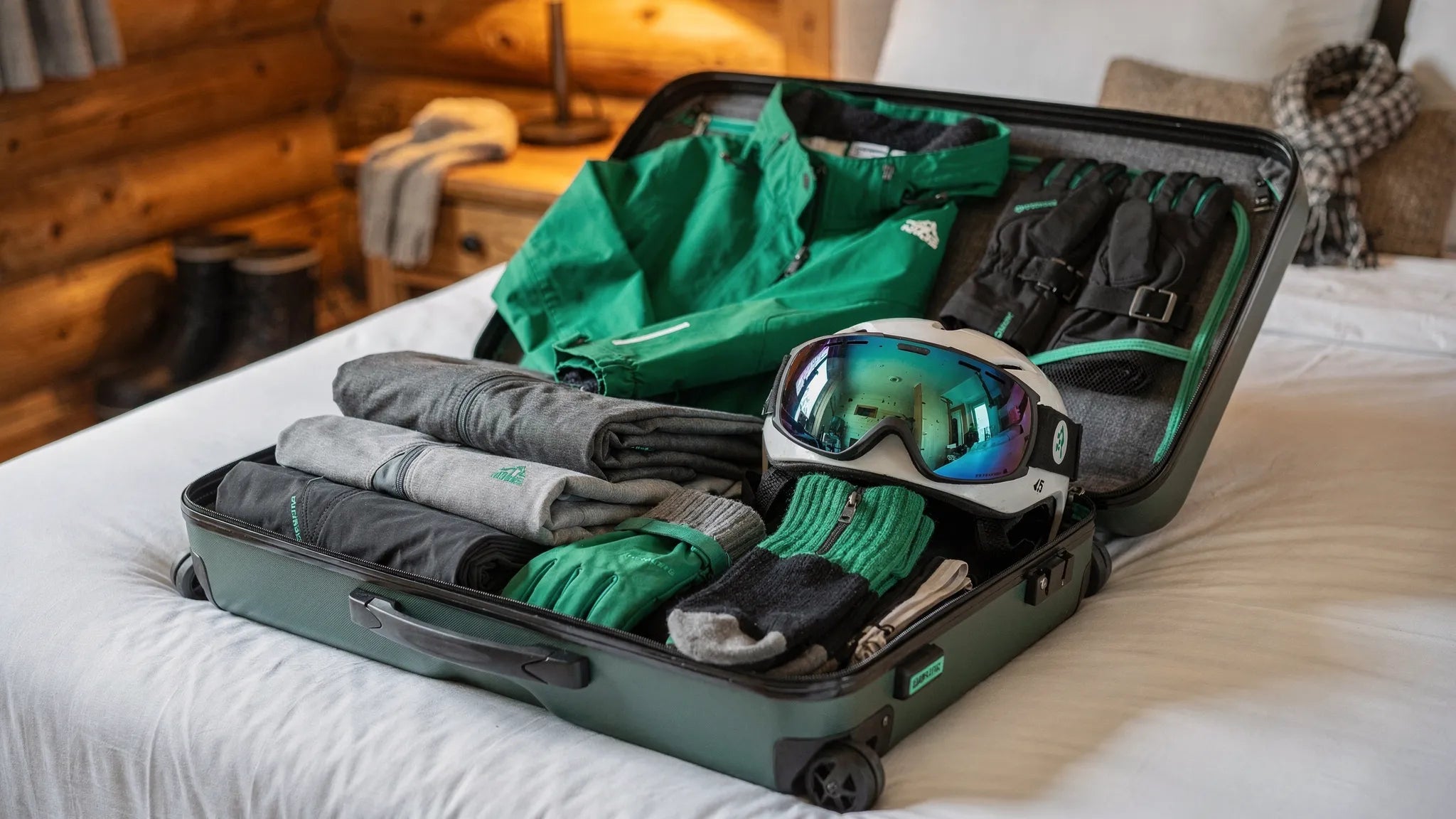
A complete ski woman doesn't end up wearing a jacket and pants. Socks, gloves, neck warmer, helmet and mask complete the system. Here too is the logic of the layers: the right accessory must protect without creating excess.
The shoe must be technical and compatible with the boot. Too thick can reduce precision and comfort. The glove must balance heat, grip and moisture protection. The neck warmer is often more versatile than a scarf, because it creates less volume and manages better under the jacket.
Helmet and mask should be chosen together, or at least tried as a couple. If there is room between helmet and mask, cold air enters. If the mask presses too much, after a few hours it becomes annoying.
For those who prepare the whole season, do not underestimate the maintenance of the equipment. Lamine, sciolina, adjustments and small controls affect the quality of skiing as well as clothing. In Biella, you can refer to Ski Sises sports service for laboratory, repair and preparation services.
Full care: to last waterproofness and performance
The duration of a complete technician depends also on how it is washed and preserved. sweat, creams, dirt and residues can reduce breathability and water repellency over time. Washing too little is a mistake, washing aggressively is just as much.
Always check the label of the boss. In general, avoid softeners, unmarked drying and very aggressive generic cleaners. For waterproof garments, the water repellent treatment may require reactivation or renewal over time. The official indications ofGore-Tex on the care of bossesare a useful reference also to understand the general logic of technical fabrics.
At the end of the season, clean and dry jacket and trousers, without compressing them for months. Check zip, seams, gaiters and bottom leg before the next season. A small intervention made in time often avoids an early purchase.
Frequently asked questions
What is the best ski woman to start?To get started, choose a simple system: technical layer base, mid layer warm medium, jacket and protective pants. Avoid extreme garments if you still don't know how much sweat or how much cold you suffer.
Better padded jacket or shell with layers below?The padded jacket is more immediate and comfortable for the track. The shell is more modular and suitable for those who change rhythm, ski in variable conditions or want to better manage the heat with the internal layers.
How many base layers are needed for a white week?It is usually better to have more base layers to alternate, especially if you ski every day. The number depends on possibility of washing, intensity of skiing and personal sensitivity to odors.
Should the mid layer be tight?He must follow the body without compressing. If it is too wide it creates useless volume under the jacket. If it is too tight limits movement and thermal comfort.
How do I know if the size of the jacket is right?Try it with base and mid layer. Lift your arms, simulate the stick handle and sit down. If you pull on your shoulders, go up too much or crush the mid layer, it is not the correct fit.
Can I use non-specific outdoor ski garments?Yes, if they respect function and compatibility: breathable base, warm mid and protective outer layer. However, beware of ski details such as gaiters, lengths, compatible hood and leg bottom.
How do I prepare the suit for a snow weekend?Start from the weather, then build two options: a warmer and lighter. Brings at least one base layer of spare, a modular mid layer and dry accessories for the second day.
A complete ski woman well chosen is not a sum of heads, but a system. Start from the 3 layers, choose the fit with real movements and build the set according to your way of skiing. Discover the online selection of Fabbrica Ski Sises, or go to Biella store for more precise advice on sizes, layers and services. Free shipping in Italy above 50€, fast delivery and made within 14 days make purchase easier even when preparing the next exit on the snow.