
Ski clothing: essential checklist to start
Starting to ski is simple only in appearance: the jacket is ready, but lacks a technical stocking, the glove is warm but not waterproof, the pants enters the suitcase but not above the boot. The difference between a smooth day and an uncomfortable day is often in the checklist. This guide is designed for those who prepare a white week, a weekend on the track, a first exit with the family or a more technical set to ski with criterion, without filling the bag of useless garments.
In summary
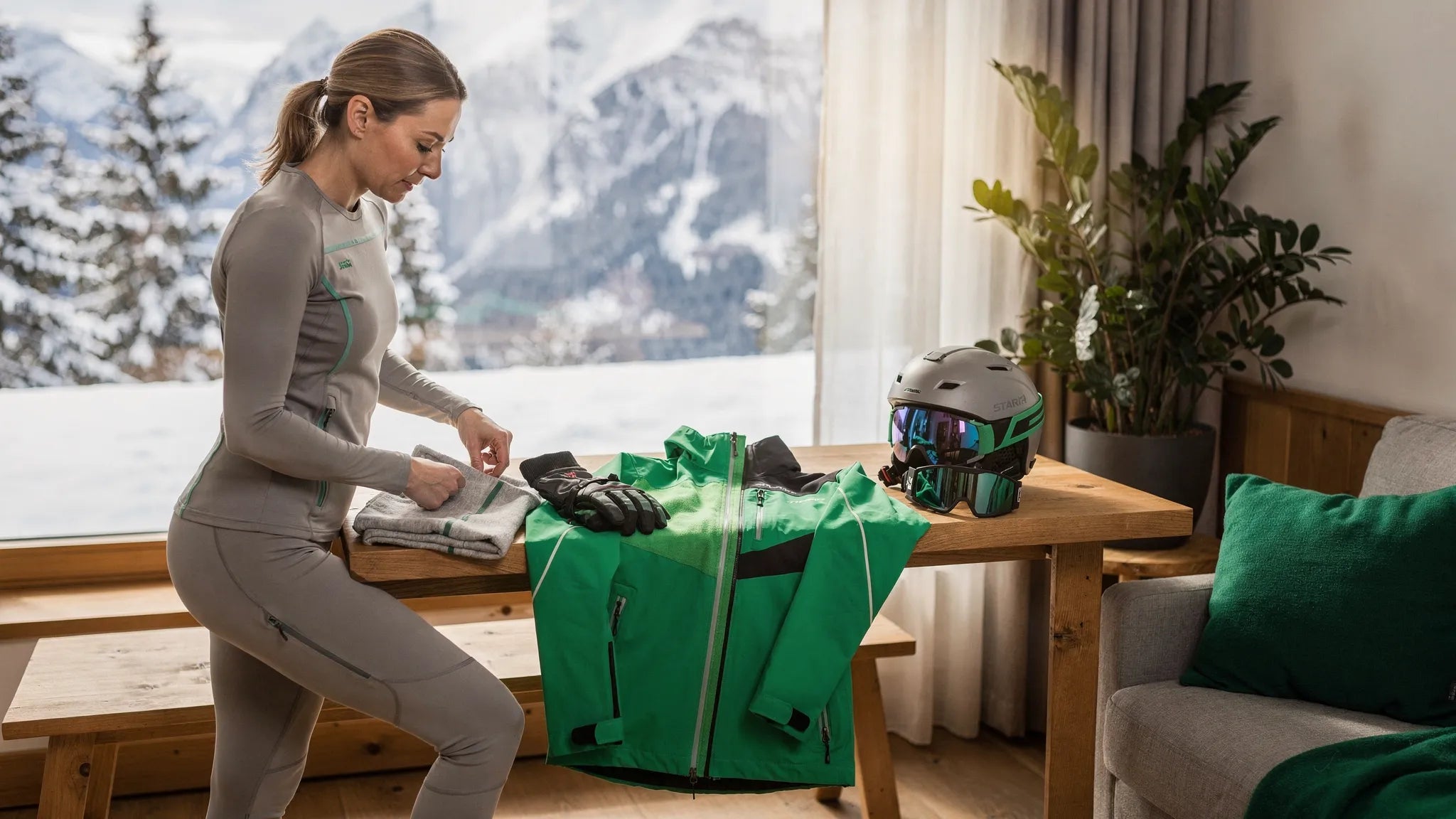
- Ski clothing works as a system: layer base, mid layer, protective exterior and accessories.
- Priority is not only the heat, but stay dry, move well and manage sweat.
- Before leaving, try all together, including boots, glove, helmet and mask.
- For track, family and beginners it is best to favour simplicity and protection.
- For freeride, touring and variable days, more modular and breathable layers are needed.

The essential checklist: what to put in the bag
A good ski kit does not depart from the most expensive head. Start from balance. A layer too hot under a breathable jacket can make you sweat already in the tail to the plants. A correct but without proper fit can cause discomfort in the boot. The checklist is used to avoid these small errors.
| Head or accessory | Why do you need it? | Quick control before leaving |
|---|---|---|
| Technical base layer | Handles sweat and skin contact temperature | It must adhere without compressing and not retain moisture |
| Technical footwear | Adds comfort under the ski pants | It must remain smooth, without creases inside the boot |
| Mid layer | Adjusts heat in breaks and weather changes | You have to get under the jacket without locking your shoulders and elbows |
| Ski or shell jacket | Protects from wind, snow and humidity | Check wrists, neck, zip, pockets and freedom of movement |
| Ski or bib trousers | Protect legs and living area from snow | Check leg bottom, gaiter and boot compatibility |
| Ski shoes | Improve comfort and precision in the boot | Use only one technical pair, not two overlapping pairs |
| Gloves or mittens | Protect hands from cold and moisture | They must allow grip on the sticks and closure of the wrist |
| Scaldacollo and undergrowth | Close Thermal Dispersion Points | They must be comfortable under helmet and jacket |
| Helmet and mask | Protect and improve visibility | Check fit, compatibility between helmet and mask and weather-suitable lenses |
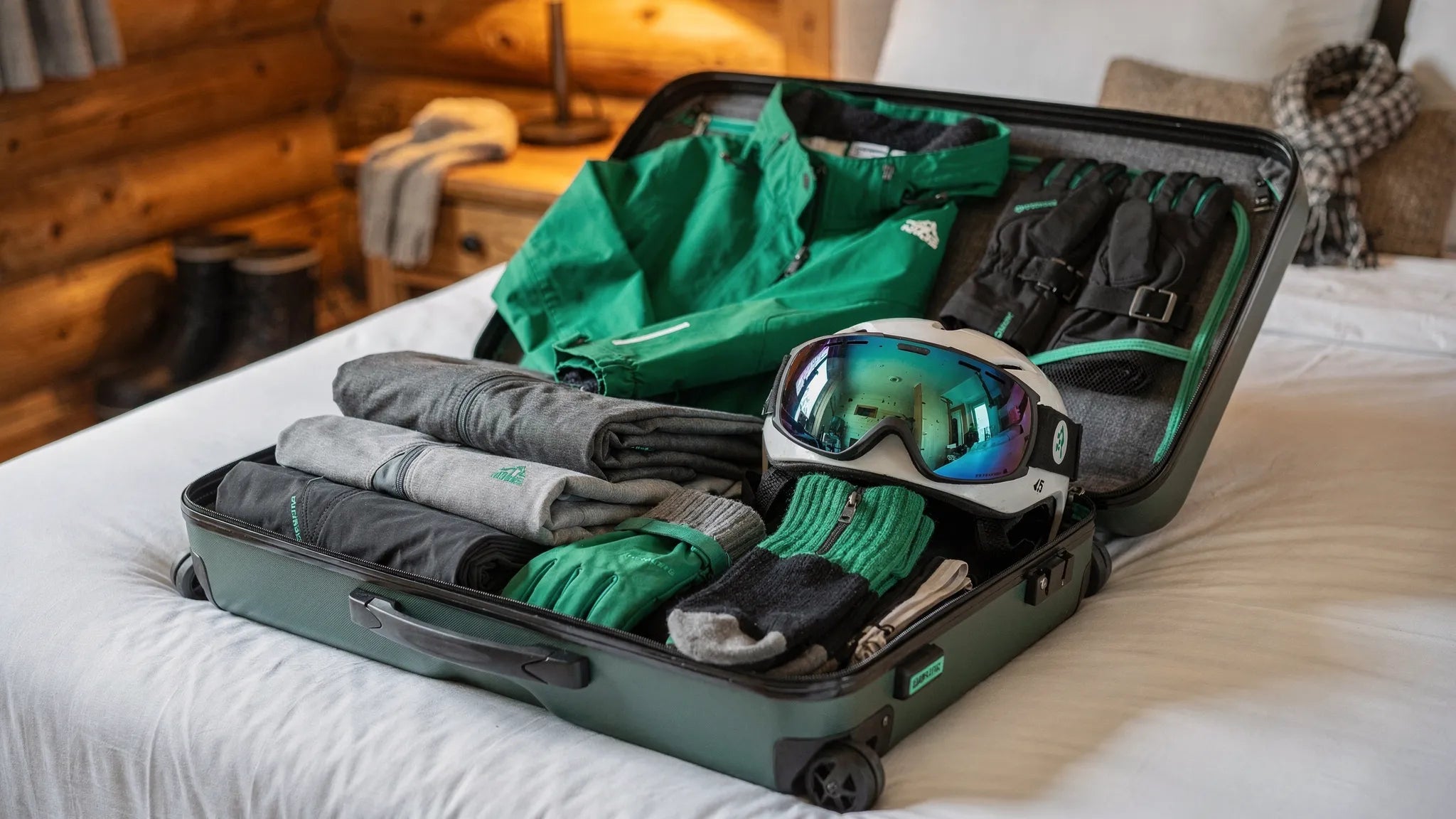
| Dry change | Serves for return trip or unexpected | Keep layer base, socks and underwear in a separate envelope |
The principle is simple: every head must have a role. If you don't know when you use it, you probably don't need it in your bag.
Roads: how to decide based on weather and rhythm
The same temperature can be perceived very differently. A skier who makes quiet slopes with many breaks will need more insulation. Who skis strong, walks, salt with skins or often passes from inside to outside will need more breathability.
For more technical outputs, it is advisable to reason on modular and dry garments. A selection like theDynafit collectionis a good starting point for those looking for layers oriented to movement, lightness and management of activity.
| Scenario | Priority | Practical choice |
|---|---|---|
| Pista resort | Stable heat and protection | Ski jacket and trousers with technical layer base and light mid layer |
| Beginner or ski school | Comfort, simplicity and resistance | Easy to wear, good cover and warm accessories |
| Family with children | Quick change and thermal margin | Spare dry sections, extra gloves and simple garments to handle |
| Freeride and dynamic days | Ventilation and freedom | Protective shell, mid layer adjustable and trousers with good mobility |
| Ski touring or splitboard | Breathability and weight | Layer system, compact shell and insulation to use in breaks |
| Weekend travel | Versatility and reduced footprint | Few coordinated garments, also available off-piste |
If you have to choose from a very warm and more modular garment, consider your rhythm. On the track, the constant heat can be useful. On the move, instead, the possibility to open, remove or add a layer counts more.
Fit and size: the tests to do before leaving
The right size in the ski is not the one that looks good in front of the mirror. It's the one that works when you bend, raise your arms, close your boots, carry your backpack and get in the chairlift.
Before buying online or preparing the kit, take at least these measures:
- Torace, for jacket, shell and mid layer.
- Life and hips, for trousers and bib.
- Interior leg, to avoid too long or short funds.
- Hand length, for gloves and muffole.
- Height and weight, useful even if you have to rent equipment.
Then do four tests with the complete outfit:
- Lift your arms like you're taking sticks or fixing your helmet.
- Make a light suit to control pants, waist and knees.
- Simulates the closure of the boots to verify bottom leg and freedom.
- Wear mid layer and jacket together to figure out if the system is too tight.
If you are between two sizes, choose according to the role of the boss. The layer base must follow the body, but not compress. The mid layer must leave mobility. The outer jacket must accommodate at least one intermediate layer without creating tension on the shoulders. For children and boys avoid too big garments: they last perhaps one extra season, but they can reduce comfort and safety.
Common errors to avoid
Many snow problems arise from seemingly logical choices. Adding heat does not always improve comfort. Filling the bag does not always increase your options. The solution is to bring less leaders, but more consistent among them.
| Error | Because it creates problems | Best choice |
|---|---|---|
| Use cotton sweatshirts as main layer | Keep moisture and dry slowly | Technical and mid layer base suitable for climate |
| Wear two pairs of socks | Increases pressure and folds in the boot | Just a couple of technical ski socks |
| Choose the jacket only for the heat | Can sweat and reduce comfort | Evaluate breathing, fit and ventilation |
| Forget dry change | Back inconvenient after snow or sweat | Bring stockings and first layer of spare |
| Do not try helmet and mask together | They can create spikes or pressure points | Always test the match before departure |
| Wash technical garments with unsuitable products | Can compromise water repellency and performance | Follow the label and use delicate cycles |
An extra control at home is worth more than an improvised solution at altitude.
Our recommended options
These are not rigid formulas, but practical configurations. Start from your real scenario, then choose the garments based on weather, travel duration and level of activity.
1. Balanced resort track set
Ideal for:skiers from plants, whole days in the area and classic weekends.
Key Features:ski jacket or protective shell, trousers with good coverage, technical layer base and mid layer not too voluminous. The goal is to protect against wind and snow without creating a rigid system.
To match:ski socks, waterproof gloves, neck warmer, helmet and mask. If you ski several days, add a second layer base to alternate the garments.
2. Technical mid layer shell system
Ideal for:freeride, light ski touring, splitboard and skiers alternating intense phases and breaks.
Key Features:non excessively padded protective exterior, manageable mid layer and dry layer base. The advantage is modularity: you can adapt more easily to wind, ascent, snow and temperature changes.
To match:technical layers fromDynafit collection, gloves with good grip, compact accessories and a hot layer to use in the supports.
3. Beginner kit or ski school
Ideal for:first exits, lessons, children and adults who want to think less about the equipment and more about the day.
Key Features:easy to wear garments, reliable protection, affordable pockets and comfortable fit. For those who often fall or spend time sitting on the snow, pants and gloves deserve special attention.
To match:helmet, mask, single technical fit and a dry change. Better to avoid too many layers: they confuse and make it more difficult to understand if you are hot or cold.
4. Controlled cold package
Ideal for:cold skiers, days with wind, high altitudes and quiet rhythms.
Key Features:base thermal layer, warmer mid layer and well chosen accessories. Hands, neck and feet are often critical points, so do not solve everything with a heavier jacket.
To match:warmer muffoles or gloves, soft undergrowth, neck warmer and adequate socks. Always insert a possibility of ventilation or lightening if the weather changes.
5. Weekend and essential après-ski suitcase
Ideal for:who travels light, passes from the train or from the car to the snow and wants usable garments also outside the track.
Key Features:clean, compact and versatile layers. The best garment is what works in the cable car, in shelter and on the return trip without seeming out of context.
To match:Chapters poured fromLanapo collectionfor time off track and durable accessories fromFilson collectionto organize travel and weekends.
6. Comfort off-piste and travel shoes
Ideal for:White weeks, mountain trips and those who do not want to stay in the boots beyond the necessary.
Key Features:after the ski serve comfortable shoes, stable and suitable to walk between hotel, country and return trip. They are not track leaders, but they improve the management of the day.
To match:dry socks, travel pants and a sneaker or technical lifestyle footwear. For a more complete suitcase you can watchFlower Mountain selection, useful for travel side and après-ski.
Before leaving: equipment, rental and maintenance
The right clothing works better if the equipment is also consistent. If you do not have skis, snowboards or boots, or skis a few times a year, the rental can be the most rational choice. If you are in Biella area, you can check the ski and snowboard rental service and arrange before the busy days.
If you use your equipment, check for time lamine, sunshine, attacks and general status. A passage from the laboratory and sport service before departure helps to avoid surprises on the day of the ski.
For rent or maintenance, prepare this information in advance:
- Dates of use and indicative times of withdrawal and return.
- Height, weight, age and level of ski.
- Number of boots or usual size of the foot.
- Exit type, such as easy track, sports ski, snowboard or family.
- Any special needs of comfort or fit.
When you pull the gear back, try the boots with the stocking you'll really use. Walk a few minutes, close and reopen the hooks, verify that the foot is still but not compressed. The same logic applies to clothing: everything must be tested before arriving at the first plant.
FAQ
How many layers do you need to ski?In most cases three layers are sufficient: technical layer base, mid layer and external jacket. On very cold days you can increase the isolation of the mid layer, while for intense activities it is better to bet on greater breathability.
Can I use a mountain jacket instead of a ski jacket?Yes, if it offers adequate protection from wind and snow, freedom of movement and compatibility with layers. However, check practical details such as wrists, pockets, hood, length and resistance to use with backpack or chairlift.
Better gloves or muffoles?Gloves offer more precision, moths tend to give more heat. If you have a lot of cold in your hands, consider muffole or more isolated solutions. If you rule boots, zip and sticks often, a technical glove can be more practical.
What should the children's ski kit have?It must be simple, warm and easy to handle. We need garments that cover well, spare gloves, dry socks and a system of layers not too complicated. Avoid excessively large sizes, because they can limit movement and comfort.
Should I buy everything for the first white week?Not always. Buy first garments that affect comfort and hygiene, such as layer base, socks and gloves. For skiing, snowboarding and in some cases boots, rental can be more sensible until you understand how often you will ski.
How do I make my bag the night before?Set the complete outfit, test the layers together, separate dry change and small accessories, check helmet and mask, then prepare documents, skipass if already available and sun protection. You should just dress up and leave in the morning.
Preparing ski clothing method means buying less, choosing better and getting on the track quieter. Check the checklist, identify the missing items and complete the kit with a consistent selection to your ski mode. On Fabbrica Ski Sises you can buy online with free shipping in Italy over € 50 and made within 14 days, or go to shop in Biella for advice, rental and technical services before departure.