Hoka Anacapa 2 Mid GTX men's: size guide and real-world use
If you're considering the Hoka Anacapa 2 Mid GTX men, the question is not "is it a good shoe?" but "is it the right shoe for my real use, and what size should I get?". The mid cut and the waterproof membrane are a concrete advantage when the weather changes or trails stay wet for long, but they also affect feelings of volume, heat and how the walk feels. This guide is designed for those buying online who want to minimise the risk of error, with a simple, verifiable and repeatable method.
Quick answer (in short)
- Size: start from your usual size in hiking shoes, then adjust based on socks, foot shape (wide or narrow) and room at the toe.
- Real use: ideal for day hikes, fast walks and travel with uncertain weather; less sensible for full heat and very technical use on rock.
- Correct fit: stable heel, no pressure on the top of the foot, enough toe room when you go downhill.
- Pairing: the right technical socks and trousers with clean hems make more difference than you might think.
- If you're undecided: order with the idea of doing a "downhill" test at home, and make use of the free returns within 14 days.
What kind of shoe is the Hoka Anacapa 2 Mid GTX (and what changes in use)
The Anacapa 2 Mid GTX is a hiking shoe with a mid cut, designed for protection, steady stride and weather management. Two elements define the experience:
- Mid cut: more support and ankle protection than a low cut, useful on uneven ground and when carrying a backpack, but also slightly more noticeable on the ankle bone.
- Waterproof membrane (GORE-TEX): excellent for rain and wet trails, with a typical trade-off: it tends to retain more heat than an upper without a membrane. To understand how the technology works, the clearest source remains the official website GORE-TEX.
In practice: this is a shoe that performs well when you want to walk a lot, efficiently, without thinking too much about puddles, wet grass and light to moderate rain.
Size guide: a practical method for choosing online
There is no universal rule valid for everyone, but there is a protocol that greatly reduces errors.
1) Start from a "reliable" size (not from hope)
Choose as your reference a shoe you actually use for walking (not a soft sneaker used only in town). The goal is to replicate the conditions of use:
- a sock similar to the one you will use with the Anacapa
- slightly "warm" foot (test at the end of the day, or after 5 minutes standing)
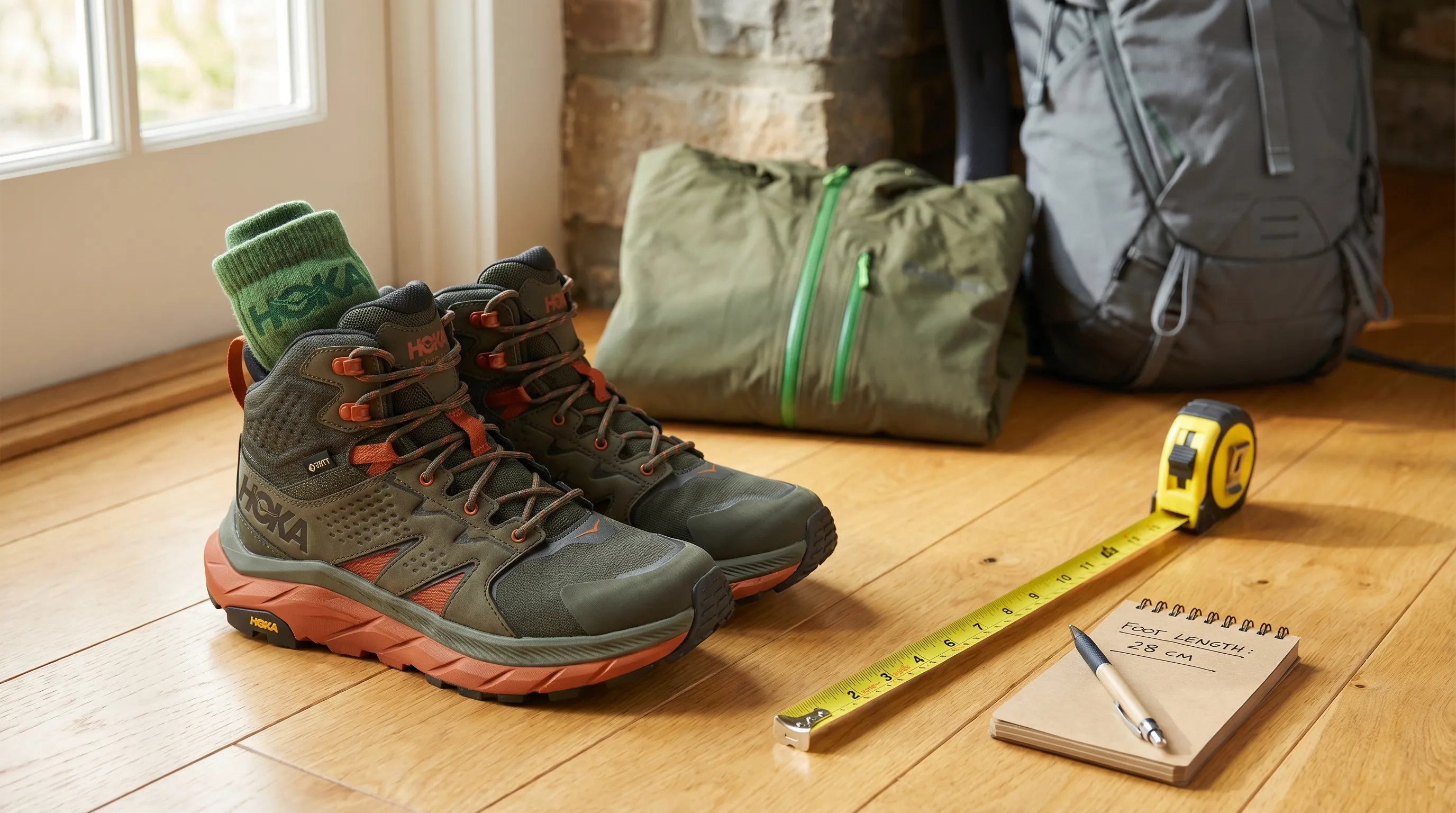
2) Measure your foot simply (and usefully)
If you want a solid figure, measure the length of the foot in cm:
- place your heel against the wall
- mark the tip of the big toe (or the longest toe)
- measure the distance
Repeat on both feet and take the longer one.
3) Apply the right adjustments (the part that avoids returns)
A hiking boot should not "fit like a running shoe". It must protect on descents without crushing the toes.
| If this sounds like you | What to do about sizing | Why |
|---|---|---|
| You're between two sizes and will wear thicker socks in winter or mid-seasons | Consider the larger size | Real volume changes, especially with a membrane |
| You have a wide foot or a high instep | Consider more volume (if available) or a size that won't create pressure | Pressure on the instep becomes uncomfortable within 60-90 minutes |
| You have a slim foot and a heel that tends to move | Stay with the most precise size and take care with the lacing | Rubbing at the heel is the main cause of blisters |
| You'll often do long descents | Don't sacrifice space at the toe | On descents the foot moves forward, even with correct lacing |
4) Fit check in 2 minutes (at home, without "walking it off")
Do these checks on a clean floor, with the sock you normally wear:
- Downhill test: point your foot toward a wall, knee forward as on a descent; your toes must not "hit" the front.
- Heel test: walk around the house for 30 seconds; your heel must stay stable without you having to tighten the laces aggressively.
- Ankle collar test: lace at normal tension; you should not feel a point that "cuts".
If you fail any of these tests, the size or volume is not right, even if everything looks fine when you're standing still.
Quick note on insoles
If you use a custom insole, try it straight away with that. It is one of the most common reasons a size that seems right ends up feeling tight.

Real-world use: where it performs best (and where you should consider alternatives)
Ideal if
- you want a shoe that supports well unstable weather and damp trails
- do day hikes and long walks at a steady pace
- you need a model that is travel-friendly, from the airport to the trail, without changing shoes
Less sensible if
- you often walk in high temperatures (the membrane tends to heat up more)
- do very technical routes on rock with "climbing-style" sections (better to use more specialised footwear)
- you're looking for a minimal, super breathable shoe for full summer
A clean way to decide is this mini decision tree:
| Question | If the answer is "yes" | If the answer is "no" |
|---|---|---|
| Do you often walk in rain, mud, or wet grass? | GTX makes sense | Consider a more open upper |
| Do you do long descents and want more ankle protection? | Mid makes sense | Low may be enough |
| Do you want one shoe for travel and light outdoor use? | It's a good candidate | You can specialise further |
What to pair it with to make it really work (without overcomplicating things)
A waterproof shoe works best when the rest of the setup is consistent. Three simple, very concrete choices:
- Technical socks: they reduce friction and manage internal moisture, especially when the pace picks up.
- Trousers with a tidy hem: less snagging on the mid collar, a cleaner stride.
- Lightweight outer layer: if you choose a GTX shoe for the weather, complete the system with a sensible shell or windproof layer.
To build an essential, credible kit, you can start with targeted selections such as HOKA for footwear, Dynafit for technical outdoor gear, and Lanapo if you're looking for a more travel and city approach.


Our recommended options (real set-ups)
1) Wet day hike, medium pace
Best for: wooded trails, intermittent rain, damp terrain.
Key features to look for in your set-up: technical socks, quick-drying trousers, lightweight shell in your backpack.
What to pair it with: an essential mid layer and a technical outer piece from the collection Dynafit.
2) Travel with long walks (city + nature)
Best for: days on the move, "surprise" walks, reduced luggage.
Key features to look for in your set-up: clean silhouettes, garments that don't crease too much, credible weather protection.
What to pair it with: travel trousers and versatile layers from Lanapo.
3) Weekend in the hills, uncertain weather
Best for: 2 days, a lightweight backpack, alternating sun and rain.
Key features to look for in your set-up: temperature management (zips, layering), socks suited to a cool morning and a warm afternoon.
What to pair it with: a sturdy outer and durable accessories, if you like functional heritage aesthetics, check out Filson.


4) Daily winter walking (urban use)
Best for: commuting, rain, wet pavements, long days.
Key features to look for in your set-up: all-day comfort, socks not too thick, trousers that don't pull at the ankle.
What to pair it with: a technical-casual wardrobe that lasts the week, with essential, modular pieces (see Lanapo).
5) Easy trekking with a backpack (family or beginners)
Best for: first outings, simple but variable terrain, comfort first.
Key features to look for in your set-up: non-aggressive fit, weather protection, frequent breaks.
What to pair it with: a snug fit and layers that are easy to manage, better little but consistent.
Care and maintenance (to keep waterproofing and comfort)
GTX shoes last longer if you treat them as a tool, not as an item to "wash when it's late".
- Clean mud and dirt as soon as they dry (soft brush, lukewarm water).
- Dry at room temperature, away from direct heat sources.
- If the outer water repellency wears off, consider a specific footwear treatment, following the manufacturer's instructions.
A clean upper breathes better, even with a membrane.
FAQ
Does the Hoka Anacapa 2 Mid GTX for men run large or small? It depends on your foot and sock. The safest approach is to start from your reliable hiking size and check with the "downhill test" and heel stability.
Mid or Low for lots of walking? If you do long descents, uneven terrain, or want more protection, the mid cut is often more reassuring. If you want maximum lightness and freedom, low may suit you better.
Does the GTX membrane make your feet sweat? The membrane helps manage moisture, but in warm conditions a waterproof shoe tends to trap more heat than a non-membrane one. In peak summer, consider whether you really need waterproofing.
Can I also wear them in the city every day? Yes, especially in wet or cold seasons. I would look after your sock and lacing to avoid pressure points on long days.
What do I do if I'm between two sizes? If you'll wear thicker socks or often go downhill, it makes sense to consider more room. If instead you have a narrow foot and a heel that moves, it's often best to stay with the more precise size and work on the lacing.
A simple step to finalise your choice
If your goal is to find your right size and actually use it, without random trial and error, start from the collection HOKA and, if you want quick support, write to us with your usual size and foot length in cm.
If you pass through Biella and want to combine purchase and in-store service, also take a look at the Sport Service and, in season, at the guide to theski rental in Biella.
Ski Sises on Google
Choose Ski Sises as a preferred source: you'll see our guides and news more often in Top stories on Google.