
Ski jacket woman sale: how to choose well
Buying a woman ski jacket on balance can be a very smart choice, or an expensive error disguised as opportunity. The point is not to find the highest discount, but to understand if that garment works well with your way of skiing, with the layers you already own and with the climate in which you will use it. This guide is designed for those looking for a women's ski jacket without sacrificing fit, protection and duration: skier, beginner on departure for the white week, passionate about freeride or customer who wants to buy once and well.
In summary: how to evaluate a woman ski jacket on balance
- Start from real use: quiet track, resort, freeride, touring or travel require different jackets.
- In the sauces filter first by size and function, then by price. A wrong size doesn't get right because it costs less.
- If you ski mainly on the track and take frequent breaks, an isolated jacket is often the easiest choice.
- If you alter high rhythm, variable weather or technical outputs, a shell with layering is more modular.
- Always try the jacket with layer base and mid layer, not above a casual shirt.
- Check hood, cuffs, pockets, ventilation and freedom of movement before evaluating the discount.
- A good deal is a boss that you will use for more seasons, not only an interesting price.
Before price: define your ski scenario
The ski jacket is the layer that protects from wind, snow and external humidity. But not everyone has to do the same job. In the balances the risk is to choose what remains available, not what you really need.
The first question is simple: where will you spend most of the time? If you ski in the resort, take plants, take breaks and look for immediate comfort, the priority will be the heat with good weather protection. If you do freeride or ski mountaineering, the point becomes to manage sweat, wind and rhythm changes. If you leave for a weekend or a white week, it also counts versatility in your suitcase.
| Main Use | More sensible jacket | Priority |
|---|---|---|
| Piste and resort | Isolated jacket | Heat, comfort, practicality |
| Sports skiing on track | Lightweight or insulated ventilated jacket | Movement and heat management |
| Freeride | Technical guide | Protection, robustness, layering |
| Ski touring | Protective shell or softshell | Breathing and lightness |
| Weekend and travel | Versatile model | Encumbrance, modularity, après-ski use |
| First white week | Hot and easy jacket | Simplicity and protection |
In the balances, this table should be used before looking at the price. If the discounted jacket does not fit into the right scenario, it is probably not an efficient purchase.

Types of women's ski jacket: which to choose during sales
The categories are not rigid, but help to read the assortment with more clarity. In the balances you can find models of previous seasons, fine series or residual sizes. This is not a problem if the boss is consistent with your use.
Isolated jacket
It is the most immediate choice for skiers on the track, suffers cold or does not want to build a layered system too technical. It offers integrated heat and simplifies dressing in the morning.
The limit is the least modularity. If the day becomes mild or if you ski at a sustained pace, you may feel too hot. In this case they become important ventilations, easy to open zip and a breathable layer base.
Technical guide
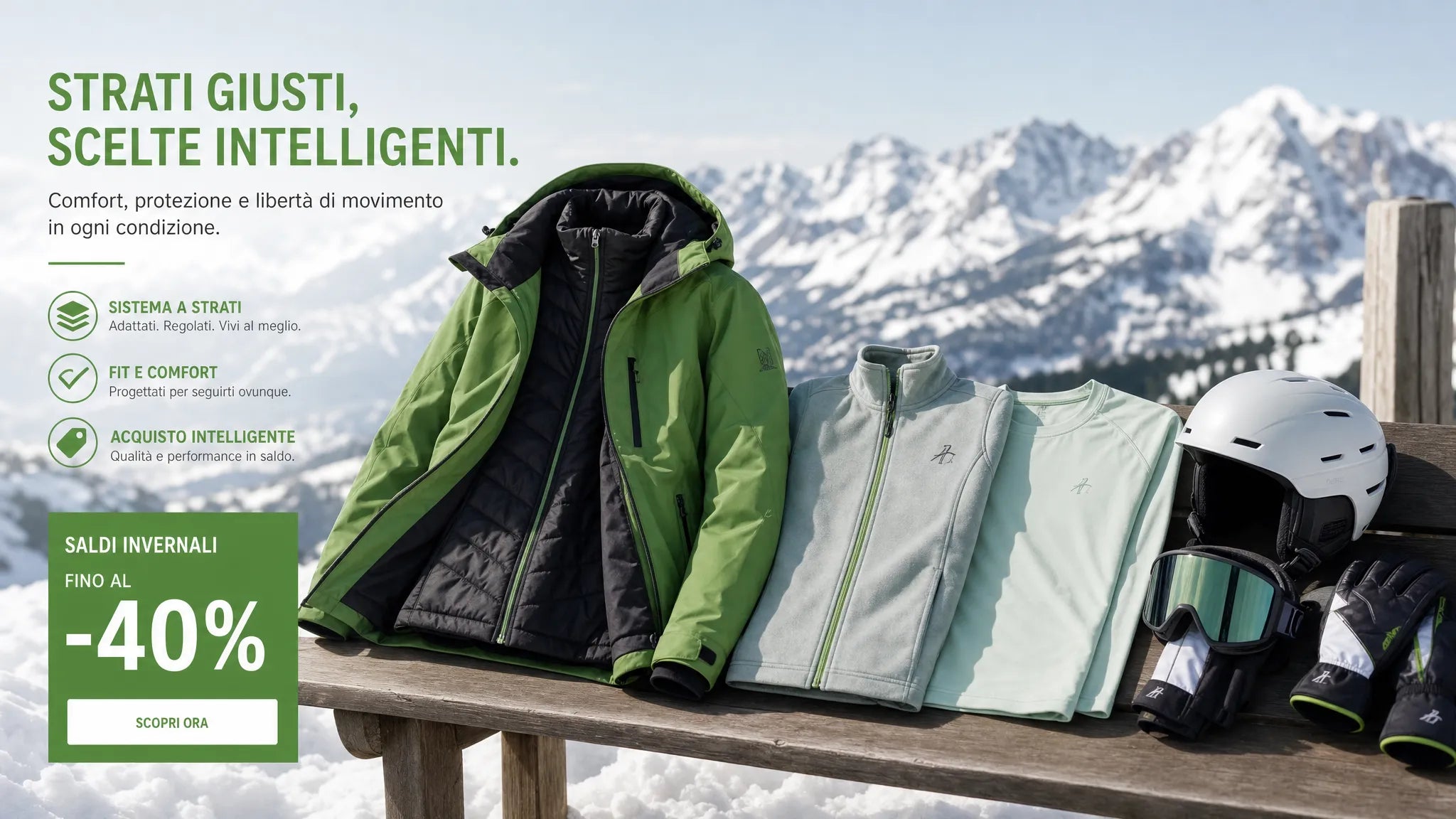
The shell is not born to warm itself. It serves to protect from wind, snow and humidity, leaving the layer base and the mid layer the task of adjusting heat. It is a sensible choice for freeride, ski mountaineering, variable days and skiers who prefer to modulate the layers.
In the sauces, a shell can be an excellent purchase if you already have or expect to buy appropriate intermediate layers. If you are looking for a unique jacket for a very cold white week, consider carefully.
3-in-1 jacket
It is a versatile solution: a protective external layer and an internal one that can be used together or separated. It makes sense for those who want a suitable garment between snow, travel and daily outdoor use.
Compromise is technical precision. A 3-in-1 can be very practical, but it is not always the most targeted choice for those who have high performance needs or want a very light set.
Softshell or hybrid
It is suitable at high pace, dynamic activities, spring or dry conditions. It offers good freedom of movement and breath, but it does not always replace a fully protective jacket on wet snow days, strong wind or long breaks.
For those looking at the most technical collections, selectionsDynafitand Karpos are a good starting point to build a system oriented to movement, mountain and stratification.
How to read the discount without wrong purchase
A women's ski jacket on sale should not only be judged by the percentage. A very discounted but too tight on the shoulders, not compatible with the helmet or unsuitable to your rhythm will remain in the closet.
The cleanest method is this: first function, then fit, then price. The discount comes at the end.
Check these items before checkout:
- The available size really matches your layering measurements.
- The hood is practical with helmet or however suitable for the intended use.
- The sleeves remain protective when you raise your arms or press the sticks.
- The pockets can be reached with gloves, backpack or trouser belt.
- The cuffs close well and do not create useless volume under the gloves.
- The jacket doesn't pull up chest, shoulders or hips when you bend.
- The boss is consistent with the ski pants you'll use.
The date of the collection is less important than the consistency of use. A previous season model can be a very valid purchase if materials, construction and fit meet your needs. On the contrary, a discounted novelty in the wrong size remains a mistake.
Fit and size: the proof that really counts
The women's ski jacket must leave room to the layers, but it should not become wide to the point to disperse heat or entangle in the movements. The correct test does not stand in front of the mirror. It's simulating the day on the snow.
Wear a layer base and the mid layer you'd really use. Close your jacket to your neck. Then you make four movements: arms forward as if you hold the sticks, arms up, lightly arranged, rotation of the bust.
If the jacket goes up too much on the back, pull on the chest or lock the shoulders, the size or the cut is not correct. If instead it creates too much volume on the hips, it lets pass cold air or interfere with the backpack, it is probably too wide for your use.
| Point to check | Correct signal | Risk signals |
|---|---|---|
| Shoulders | Fluid movement with mid layer | Tension when you raise your arms |
| Chestnut | Space to breathe and move | Tension zip or excessive volume |
| Sleeves | Wrist cover in motion | Uncovered or bulky cuff |
| Jacket background | Protected back in collected location | Horlour rising too |
| Neck and hood | Compression protection | Fastidio with helmet or neck warmer |
If you are between two sizes, do not automatically choose the smallest because on balance. For the ski it serves functional margin. The right size is the one that allows layering and movement, still keeping a clean line.
For mid layer and technical layers in wool or performing materials, you can also evaluate the selectionOrtovox, useful when you want to build heat without adding useless volume.
Technical details not to be sacrificed in sales
The price can go down. Technical requirements are not. A ski jacket must remain reliable when changing weather, when you enter the wet chairlift, when you take a break in the wind or when you increase the rhythm.
Weather and snow protection
Always check the boss's description. Waterproofing, water repellent treatment, seams, zip and general construction are elements to be evaluated in relation to use. Not every day requires the maximum technical level, but a ski jacket must protect better than a normal urban down jacket.
Breathing and ventilation
If you sweat a lot or ski in a sporty way, breathing is as important as heat. A jacket too hot but not manageable can leave you humid during the activity and cold as soon as you stop. Fans help adjust the microclimate without having to remove layers on the track.
Hood, neck and cuffs
These are small details only in the store. The snow makes a difference. The neck must protect without compressing, the hood must be compatible with your use and the cuffs must dialogue well with the gloves. If you already have helmet and mask, try them together with the jacket when possible.
Pockets and practicality
Skipass, phone, mask, thin gloves and small accessories must have a sensible location. A very clean jacket but with short pockets can be uncomfortable on long days.
Duration and maintenance
A technical jacket should be maintained. Correct washes, adequate drying and treatment of water repellent treatment help to prolong the life of the head. In the balances this aspect counts even more: buying better also means making it last more.
If you are in Biella area and are preparing the full setup for the season, you can combine the purchase of the jacket to the ski and snowboard rental services or the control of the equipment at the ski and snowboard workshop.
Suggested options
1. Track isolated jacket
Ideal for:who skis in the resort, makes frequent breaks, seeks immediate warmth and a simple choice for the white week.
Key Features:integrated insulation, good weather protection, practical pockets and fit that allows base layer plus light mid layer.
To match:ski pants isolated or salopettes, technical socks, warm gloves and mid layer not too voluminous.
2. Technical shell for freeride and variable weather
Ideal for:skiers who want modularity, protection and freedom to build layers according to the day.
Key Features:outdoor protection, ventilation, functional cut and sufficient space for a thermal mid layer when needed.
To match:breathable layer base, technical mid layer, shell or bib pants. For a consistent setup, look at the collectionsDynafitand Karpos.
3. 3-in-1 jacket for travel and mixed use
Ideal for:who wants a versatile garment for snow, weekends and shifts, without multiplying too much layers.
Key Features:modular construction, internal layer usable separately and good practicality for those who alternate different activities.
To match:essential ski pants, technical gloves and shoes or after-skis suitable for après-ski context.
4. Softshell or hybrid for high rhythm
Ideal for:dry days, dynamic skiing, spring, activities where the breather weighs more than isolation.
Key Features:mobility, comfort in movement and good sweat management. It should be carefully chosen if you predict wet snow or long stops.
To match:technical layer base, light mid layer and emergency shell if the weather is uncertain.
5. Premium jacket for travel and après-ski
Ideal for:who seeks an elegant and functional garment for mountain, cold city and moments off-piste, but not necessarily as the only technical layer of ski.
Key Features:careful construction, thermal comfort and versatility. Always distinguish from a real ski jacket if the goal is the performance on the track.
To match:technical or natural knitwear, clean outdoor pants and essential accessories. For travel and après-ski heads you can explore the selectionWoolrich.
6. First ski jacket on sale
Ideal for:Beginners, programmed white week, who wants to buy well without immediately entering a setup too specialized.
Key Features:balanced heat, simple fit, adequate weather protection and practical details easy to use with gloves and helmet.
To match:comfortable ski pants, technical layer base, reliable gloves and mask suitable for the conditions.
When buying on balance and when to wait
Buy on balance if you find the correct size, the model suitable for your use and a construction consistent with the conditions in which you will ski. It's the best case: you pay less, but don't give up the function.
Wait if the model convinces you only for the discount, if you have to change your layering too much to make it work or if the size does not exceed the movement tests. Wait even if you don't know if you're going to ski on track, touring or snowboarding: in that case it's better to define first use.
For those who are at first exits, it often makes sense to buy personal clothing and rent skiing, snowboarding or part of the rigid equipment. In this way you invest on comfort and hygiene, but maintain flexibility on technical level and discipline.
FAQ
When should I buy a women's ski jacket on sale?It is convenient when you find the right model for your real use, in the correct size and with appropriate technical details. The discount must confirm an already sensible choice, not drive it alone.
Better padded jacket or shell?The padded jacket is simpler and warmer for track and resort. The shell is more modular for freeride, ski mountaineering and variable weather, but requires a well constructed layering.
How do I choose the size online?Measure a technical garment that suits you, compare chest, shoulders, sleeve and length with the product card, then consider the space needed for layer and mid layer base. If you get the head, try it immediately with the real layers.
Can a ski jacket be used in the city?Yes, especially if it has a versatile line. However an urban jacket does not always replace a ski jacket, because it can lack useful details on the track such as ventilations, technical cuffs, functional pockets or specific protection.
Does it make sense to buy a previous collection?Yes, if fit, protection and construction are suitable for your use. For a technical garment, functional consistency counts more than the year of collection.
What do I have to do with the jacket so I don't feel cold?Start from a breathable layer base, add a mid layer consistent with the temperature and choose trousers, gloves and technical socks. The jacket works better when the whole system is balanced.
Choosing a ski jacket in balance means buying with method: real use, fit, technical details and only at the end price. Explore the technical collections of Fabbrica Ski Sises, compare the sizes calmly and, if you have any doubts about setup, contact the team or go to shop in Biella. Online find free shipping in Italy from 50 euros, fast delivery and return within 14 days.