Skiing accessories: essentials not to forget
Forget an accessory in the mountains rarely spoils the holiday, but can ruin a day. Cold hands, dull lenses, wrong socks or unprotected skin make you feel after a few descents. Ski accessories are not details: they are what makes all the rest of the kit consistent, from the jacket to the boot. This guide is designed for those who prepare a day on the track, a white week, an exit with children or a more technical set for freeride and ski mountaineering.
Quick reply
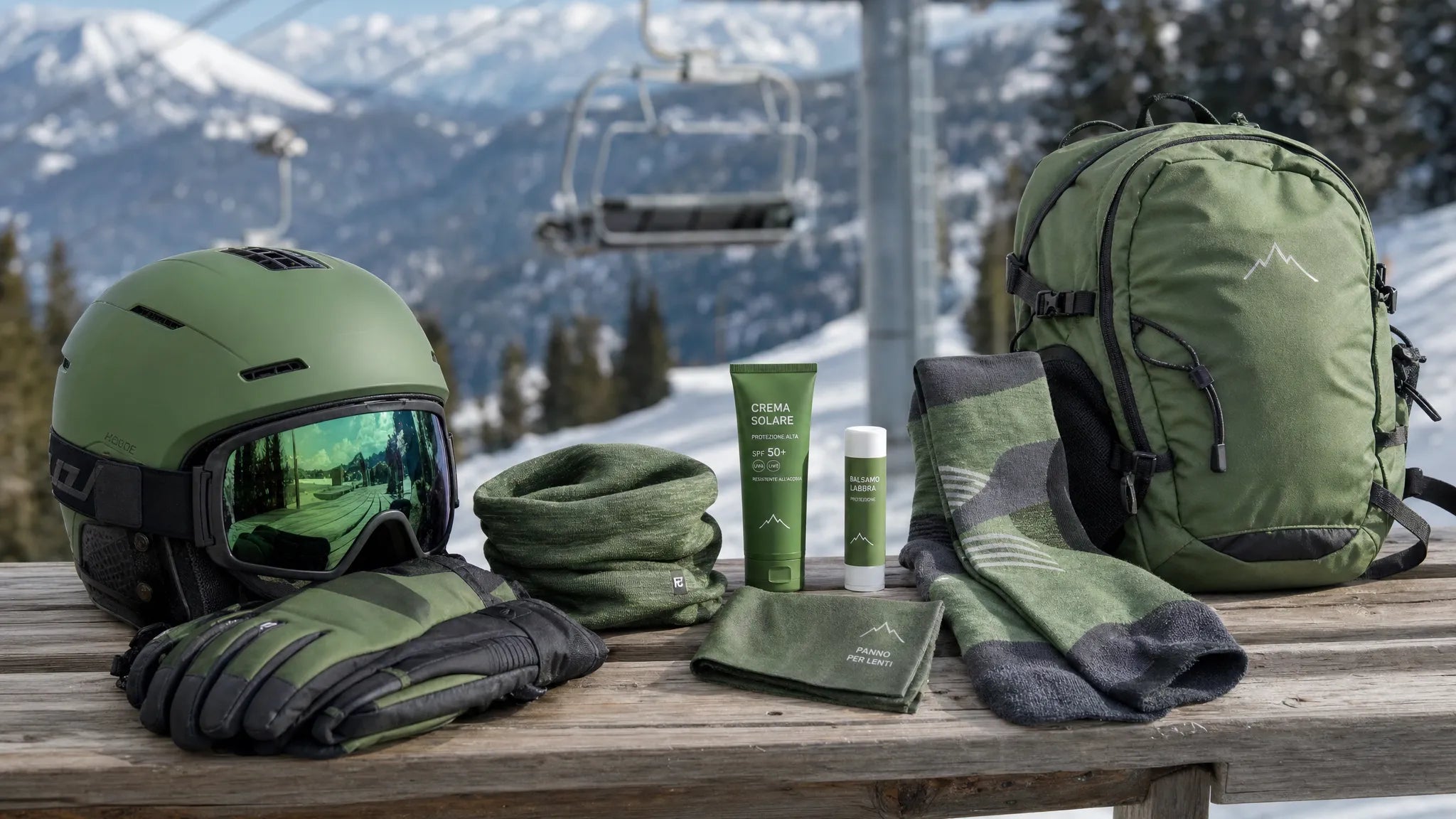
- Indispensable on track:helmet, mask, gloves, technical stockings, neck warmer, sun protection, document and cargo phone.
- To be added for long days:second pair of light gloves, snacks, bottle, power bank, lens cloth, extra plot.
- For freeride and touring:ARTVA, shovel, probe, adequate backpack, knowledge of the avalanche bulletin and ability to use the kit.
- Not to be improvised:helmet, mask and socks. If they don't dress well, everything else works worse.
- Practice rule:buy what touches the body and has to fit well; hire currency and workshop for the rigid equipment.
The essential checklist of ski accessories
A good kit should not be voluminous. It must be clean, verified and consistent with the day. Before thinking about extras, make sure the basic accessories are present and in order.
| Accessories | Serves for | Quick control before leaving |
|---|---|---|
| Casco | Thermal protection and comfort | It must remain stable without tightening on the temples |
| Mask | Visibility, wind, snow and intense light | It has to adhere to the face and work well with the helmet |
| Gloves | Heat, grip on sticks, protection | Your fingers must move, your wrist must close well |
| Technical calculations | Comfort in the boot and moisture management | One shoe, without creases and without annoying seams |
| Scalpel | Wind and cold protection | It has to stay under helmet and jacket without creating volume |
| Solar protection and lips | High exposed skin, wind and snow reflex | Small size, easy application, always accessible |
| Panel for lenses | Cleaning mask and glasses | Must be dry and stored in a protected pocket |
| Snacks and water | Energy and clarity in breaks | Small, easy to open even with gloves |
For most resort skiers, this list covers 90% of real needs. The rest depends on weather, duration, technical level and distance from services.
How to decide what to bring: track, family, touring
The correct question is not “how many accessories do you need? ”, but “What kind of day am I preparing? ”. One morning on the track with return to the shelter requires a kit different from a complete day with children or an exit away from the plants.
If you ski on track for a day
Bring a dry and simple kit: helmet, mask, gloves, socks, neck warmer, protective cream, phone and document. Add a lens cloth and a small bar. You don't need to fill your pockets, but you need to be able to quickly solve cold, draining and energy.
If you have just started and don’t want to buy everything right away, you can evaluate the ski and snowboard rental in Biella for the rigid part of the equipment, concentrating your purchase on personal accessories and toilets.
If you leave for a white week
Ragiona by rotation. Two pairs of technical socks are more useful than a decorative accessory. A second pair of gloves, even lighter, can save a wet day. It also carries a small kit for drying and airing: separate bags, cloth, possible shoe dryers if provided by the structure.
For those who ski for more consecutive days, the priority is to maintain dry gloves, socks and layer base. The accumulated humidity is often the real reason why it feels cold on the third day.
If you ski with children
Checklist must be duplicated and simplified. Every child should have dry spare gloves, neck warmer, snacks, protective cream and a clear way to recognize their material. Avoid accessories too complex to close or adjust. The more an accessory is simple, the more it will be used correctly.
The helmet must be tried calmly. It should not move when the child shakes his head and should not leave marked signs after a few minutes.
If you do freeride, ski mountaineering or off-piste exits
Here logic changes. Some accessories become safety tools. In uncontrolled environment, ARTVA, shovel and probe are not optional accessories. They must be brought, controlled and wise to use. The same applies to backpack, windproof layer, reserve gloves, water, food and telephone with enough battery.
For more technical sets, look at lightness, breathability and reliability collectionsDynafit, Ortovoxand Karpos. The choice should not start from the lowest weight, but from the real ground and your ability to manage weather, rhythm and safety.
The details that make the difference
The best accessories are those not known while skiing. They don't shake, they don't slip, they don't get wet right away, and they don't have to stop you every two tracks.
Helmet and mask must work together
The helmet should not be chosen in isolation. Always try it with the mask: no cracks on the front, the mask should not be pushed towards the nose and the strap should remain stable. If you use eyeglasses, check space and compatibility carefully.
The mask should be chosen according to the typical visibility, not only to aesthetics. Those who often ski with variable weather should prefer a versatile and easy to manage solution. Those who only ski on clear days can go on protection from intense light, but without sacrificing contrast and comfort.
Gloves: heat, grip and drying
Too tight glove is a common mistake. It reduces circulation and makes it feel colder. The fingers must move, the palm must close well on the stick and the wrist must seal over or under the sleeve of the jacket.
Moffoles can be warmer, but less accurate. They are ideal for those who suffer cold, for very rigid days or for skiers who do not need to manipulate often zip, phone or attacks. A technical glove remains more practical for those who often regulate material and clothing.
Socks: one, technique, well tense
Two socks no longer mean heat. They often mean more pressure, less circulation and more rubbing. The ski shoe must be high enough, tight and devoid of folds in the boot. If you feel a pressure point at home, the track will get worse.
Always bring a dry pair of spare if you ski more days or if the weather is humid. It is a small accessory, but it affects a lot on comfort.
Skin, lips and eyes are not details
Height, wind and snow reflection test skin and lips even when the sky looks covered. A small size of sun protection, a lip balm and an essential routine for return are part of the kit, especially during white weeks or long days. If you prefer products oriented to a more natural care, you can evaluate thenatural cosmetics for face and bodyto integrate into the post-ski beauty routine.
Keep these products in an accessible pocket. If they're in the bag in the car, you won't use them when they need them.
Suggested options
1. Helmet with stable fit
Ideal for:skiers of every level, children, beginners and those who want an accessory to buy once and use with constancy.
Key Features:Stable fit, intuitive adjustment, good compatibility with the mask, sufficient comfort for a whole day.
To match:proven mask along with the helmet and thin neck warmer, so avoid interference between front, chin and neck.
2. Ski mask versatile
Ideal for:skiers in varying conditions, from the run to the day with light snow or flat light.
Key Features:clean field of view, good grip to the face, management of the enclosure, compatible strap with helmet.
To match:soft cloth for lenses and protective case. Do not clean the inner lens with wet gloves or rough fabrics.
3. Technical gloves or hot moffol
Ideal for:cold-sensitive skiers, families, who spends a lot of time in the chairlift and who skis in cold resorts.
Key Features:adequate insulation, palm with good grip, closure on the wrist, construction that limits the snow entrance.
To match:jacket with well adjustable cuffs and, for long days, a second light pair in the backpack or in the bag.
4. Skiing techniques
Ideal for:who wants to immediately improve comfort and sensitivity in the boot without changing the whole set.
Key Features:fit, correct height, breathability, absence of folds in pressure points.
To match:dry boots and trousers with bottom leg ordered. Avoid trousers strung in the boot, create thickness and discomfort.
5. Technical warming
Ideal for:Windy days, high chair, skiers who want protection without using a bulky scarf.
Key Features:soft fabric, quick drying, contained volume, easy adjustment under helmet and jacket.
To match:base breathable layer and jacket with protective neck. You must complete the system, do not create moisture accumulation.
6. Mini-zain or technical pack
Ideal for:Long days, exits with children, skiers carrying snacks, water, extra layer or small spare parts.
Key Features:contained volume, stability in movement, simple access, ordered pockets. On the track it is only a little bit, in the touring it serves a more technical structure.
To match:snacks, soft bottle, reserve gloves and lens cloth. For off-piste, it integrates the appropriate and verified safety kit.
Fit and sizes: quick controls before leaving
Accessories are not only chosen for declared measure. They choose for compatibility with the rest of the kit.
For the helmet, wear it for at least a few minutes. He has to wrap his head evenly, without hard points. With the strap closed, shake your head slightly: if the helmet moves clearly, it is not correct.
For the mask, try helmet and mask together. Check that it doesn't press on your nose and that you don't have space on your forehead. If you use eyeglasses, try with real glasses, not “memory”.
For gloves, simulate the grip of the stick and try to open a zip. If the glove is very hot but it does not allow you minimal gestures, on track it becomes uncomfortable.
For socks, wear them with the boot. Do not consider hand softness: counts how they behave under pressure, especially on tibia, foot neck and heel.
What to buy, what to rent, what to control
Personal accessories should buy them when they affect hygiene, fit and comfort: helmet, mask, gloves, socks, neck warmer and layer base. Skiing, snowboarding and part of the rigid equipment can be rented, especially if you are beginner, if you ski a few days a year or if you are still getting your level.
Maintenance is not a separate detail from accessories. Lamine, chisel, attacks and soles in order improve control and safety. If the material is yours or you are reusing it after months, a pass in the ski and snowboard lab before departure is a sensible choice.
Common errors to avoid
- Use heavy trekking socks:in the ski boot can create thickness, pressure and cold.
- Bring an urban scarf:absorb moisture, create volume and can interfere with helmet and jacket.
- Choose the mask only for aesthetics:visibility changes the quality of the ski more than it looks.
- Keep everything in the big backpack:on track essential accessories must be accessible without emptying the bag.
- Forget the skin:wind, altitude and snow reflection require constant protection.
Frequently asked questions
What ski accessories are really indispensable?Helmet, mask, gloves, technical socks, neck warmer, skin and lip protection, load phone and document. For long days add snacks, water, lens cloth and a dry replacement.
Better gloves or moffoles for skiing?It depends on sensitivity to cold and use. Moffoles tend to be warmer, gloves are more precise. If you have to adjust often zip, phone or equipment, the glove is more practical.
Does the mask serve if I have sunglasses?Yes, especially with wind, snow, cold or flat light. Sunglasses can be enough in some very mild breaks or days, but down the mask offers more protection and stability.
How many pairs of socks do I have to carry for a white week?At least two or three technical pairs, to be alternated and to dry well. Better few correct socks than many generic socks.
What changes for freeride and ski mountaineering?Change the level of responsibility. Outside the controlled slopes serve ARTVA, shovel, probe, adequate backpack, soil knowledge and ability to use the material. Accessories become part of the security system.
Should I buy all the accessories now?No. Buy first what requires personal fit and hygiene, such as helmet, gloves, socks and neck warmer. For skiing, snowboarding or complete sets, rental can be smarter until you have clear your real use.
Complete the kit with criteria
Before the next exit, prepare a dry checklist: protection, visibility, hands, feet, neck, skin, energy. Then just choose what's really missing. To build a consistent set, explore the online technical selection of Fabbrica Ski Sises and ask team support to check fit, compatibility and availability before departure.