
















Women snowwear: Layering guide
Dressing for snow seems simple until the first temperature change: cold in chairlift, warm walking towards the plants, humidity snows, wind at altitude. The solution is not to wear the heavier head, but to build a system. In this women snowwear guide you will find a practical method to choose layer base, thermal layers, jacket, pants and accessories without losing freedom of movement. It is designed for those who ski on the slope, prepares a weekend on the snow, makes touring light or wants a technical but also clean capsule on the road.
In summary
- Effective layering starts from three functions: dry, isolate, protect.
- The layer base must stay close to the body, without compressing.
- The mid layer serves to adjust the heat, better if modular.
- The outer layer must protect from snow, wind and rubbing.
- The size should be tested with all layers, not on the resting body.
- For snow, cotton is almost always the least functional choice.

Layering rule: dry, hot, protected
Layering doesn't just need to keep warm. It is especially necessary to avoid the worst alternation on snow: sweat during movement and cool as soon as you stop.
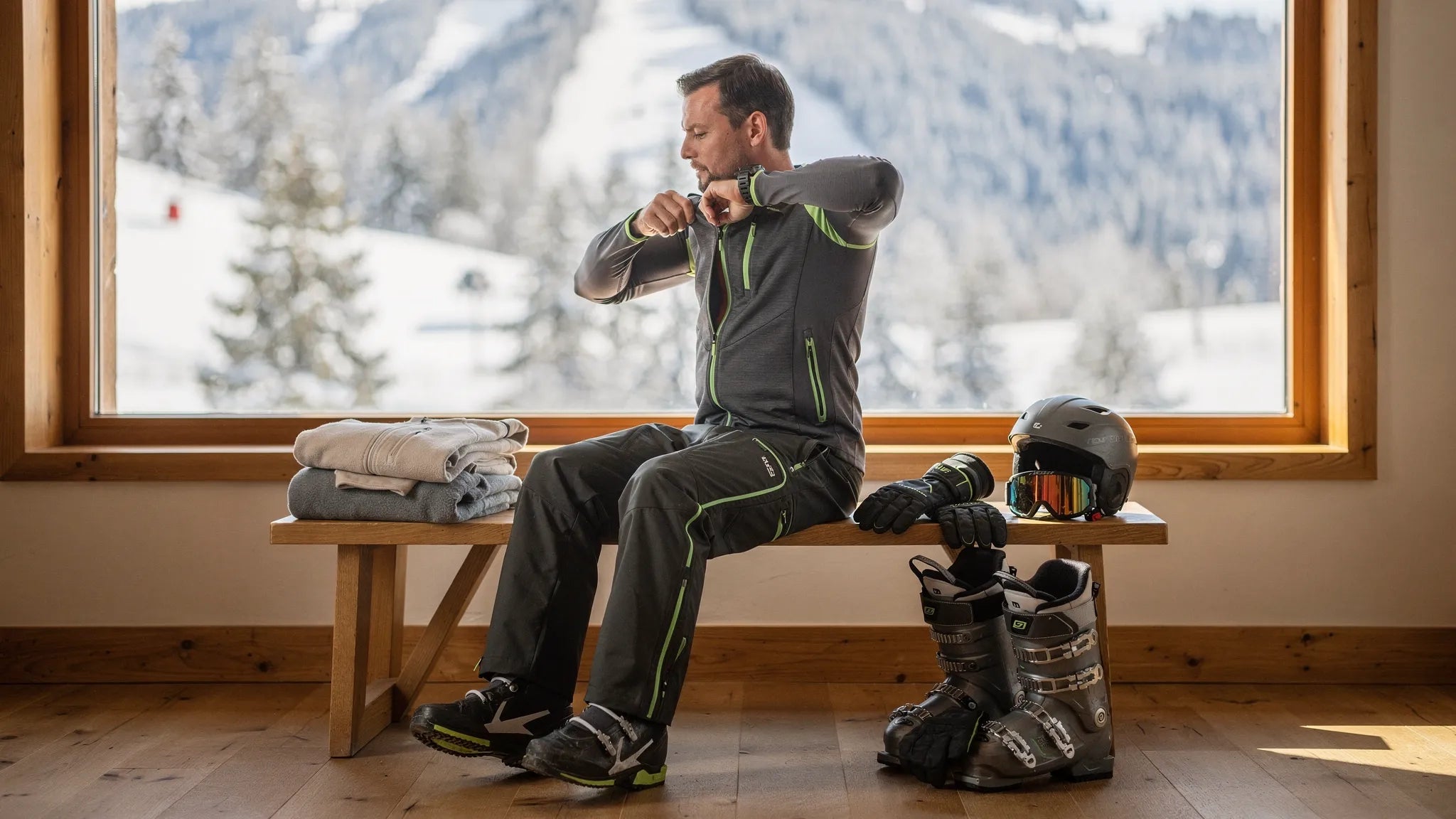
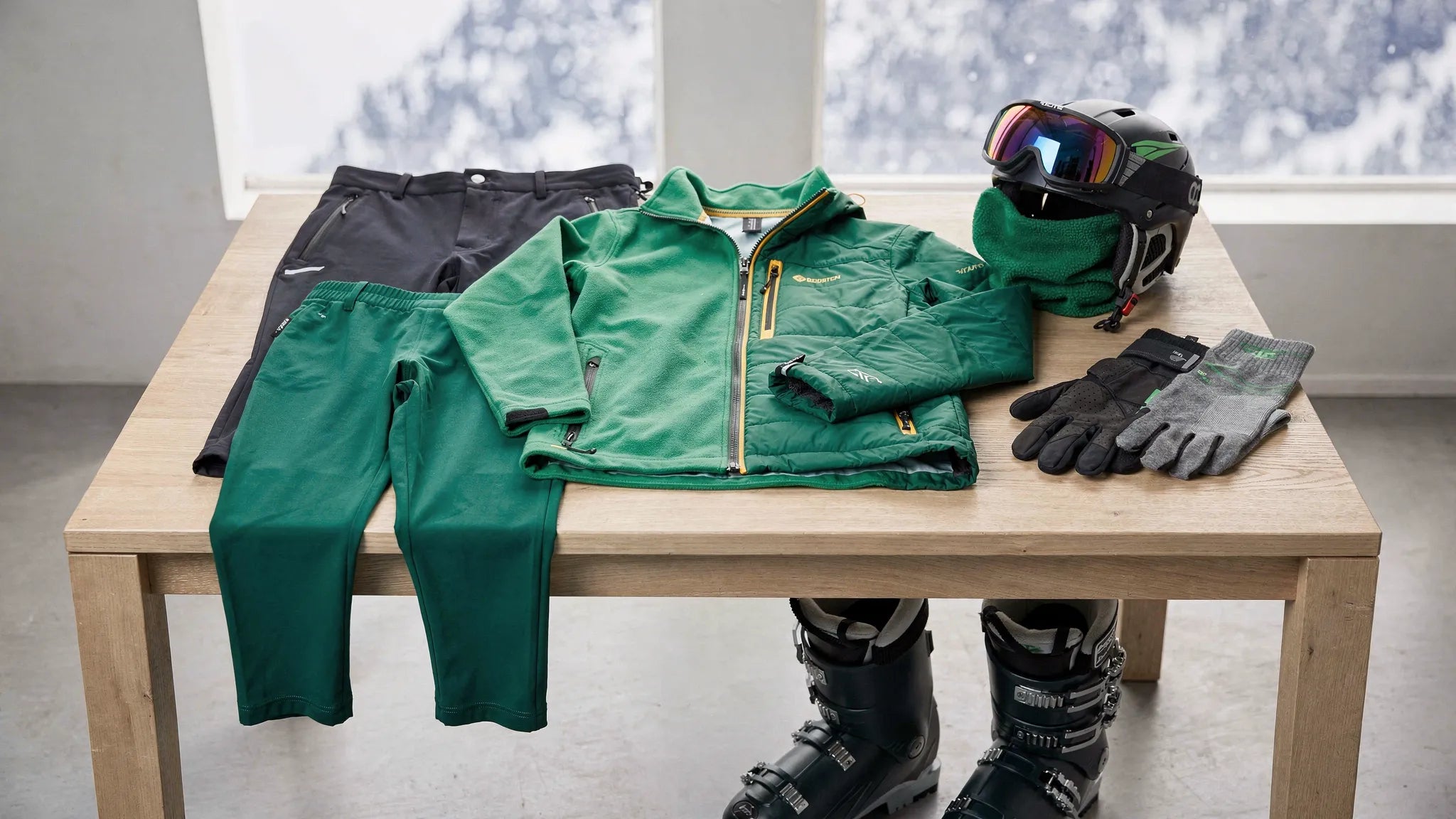
A correct system works in sequence. The layer in contact with the skin handles moisture. The intermediate layer retains heat. The outer layer blocks wind, snow and contact with the environment. Accessories close critical points, namely hands, feet, neck and head.
| Road | Objective | What to look for | Common error |
|---|---|---|---|
| Base layer | Remove moisture from the skin | Technical fabrics or merino wool, fit close to the body, comfortable stitching | Use cotton or too wide garments |
| Mid layer | Adjust the heat | Pile, wool, light padding, non bulky construction | Choose one too hot layer |
| External | Protect from snow and wind | Jacket and trousers with good protection, useful pockets, compatibility with helmet and boots | Buy a size too tight |
| Accessories | Protect cold ends and points | Technical socks, gloves, neck warmer, cap or undercarriage | Use too thick stockings that buy the foot |
The difference between a good outfit and a uncomfortable is not always the price of the single boss. It is often the consistency between layers.
Choose layering based on real use
Before buying, define the scenario. A day on track with frequent breaks requires a cold management other than a ski touring exit or a weekend in mountain resorts.
| Scenario | Recommended formula | Priority | Attention |
|---|---|---|---|
| Skiing on track and resort | Base layer medium, mid layer warm, external protective or padded | Comfort in chairlift and during breaks | Do not sacrifice ventilation |
| Freeride and variable days | Technical base, modular mid, shell or more protective complete | Mobility, protection, weather management | Compatible with backpack and helmet |
| Ski touring or splitboard | Lightweight, breathable mid, shell in the backpack or worn to need | Quick transpiration and change | Avoid too hot garments uphill |
| Snow trip | Comfortable base, mid versatile, compact exterior | Essential suitcase and mixed use | Choose items that also work off track |
For more dynamic activities, such as ski touring and fast outputs, look garments built for movement and breathability. The selectionDynafitis a good starting point for those looking for a more technical approach, without overloading the kit.


If you are planning a day or a weekend and you still need to define skis, boots or snowboards, you can coordinate your set with ski and snowboard rental. For equipment already owned, the laboratory service and sports service helps to present itself on the snow with controlled materials.
Base layer woman: the leader who decides the day
The layer base is the first filter between skin and cold. It must adhere without tightening, follow the movements and dry quickly. If it remains wet, the whole system above loses effectiveness.
For many women, fit is the decisive point. Life doesn't have to roll under the ski pants. Seams should not create pressure under salopettes, backpack or shoulder straps. The bottom should not form annoying folds inside the boot.
The merino wool is appreciated for thermal comfort and natural feeling on the skin. Technical synthetics are often chosen for quick drying and intensity management. Mixtures can be a balanced solution. The choice depends on how much you sweat, how cold you feel and how many hours you stay on the snow.
A simple rule: if you move a lot, choose a lighter and breathable layer base. If you ski in resort with many breaks, you can increase thermal weight, but without turning the first layer into a voluminous garment.
Even the sporty underwear counts. A stable technical bra, without rigid parts in pressure points, improves comfort and posture under the layers. Socks must be technical, dry and proportionate to the boot. The thicker does not necessarily mean warmer, especially if they reduce circulation.
Mid layer and insulation: modular heat without volume
The mid layer is the most personal layer. There are those who are always cold in the chairlift and who sweat just walks. For this reason it is better to reason in modules, not in a single heavy garment.
A lightweight fleece is ideal when serving manageable heat. A more structured mid layer works well on cold days or for skis on track. An insulating vest can add warmth to the bust leaving more freedom to the arms. A light insulating jacket is also useful in travel, breaks or after-skiing.
For a more versatile snow wardrobe, garments with natural hand and clean construction can also live outside the technical environment. The collectionsBiella FabricsandLanapoare interesting for those looking for intermediate layers and bridge heads to use in cabins, travel or in the city, without replacing the technical shell when serving true weather protection.


The critical point is the volume. If the mid layer is too often, the outer jacket pulls on shoulders, breasts and hips. The result is less mobility and less comfort. Better two compatible layers than just one excessive layer.
Outer layer: jacket, trousers or suit
The outer layer is your barrier. It has to manage snow, wind, wet seats, falls and contact with backpacks or plants. Here they count fabric, construction, zip, pockets, hood, gaiters and freedom of movement.
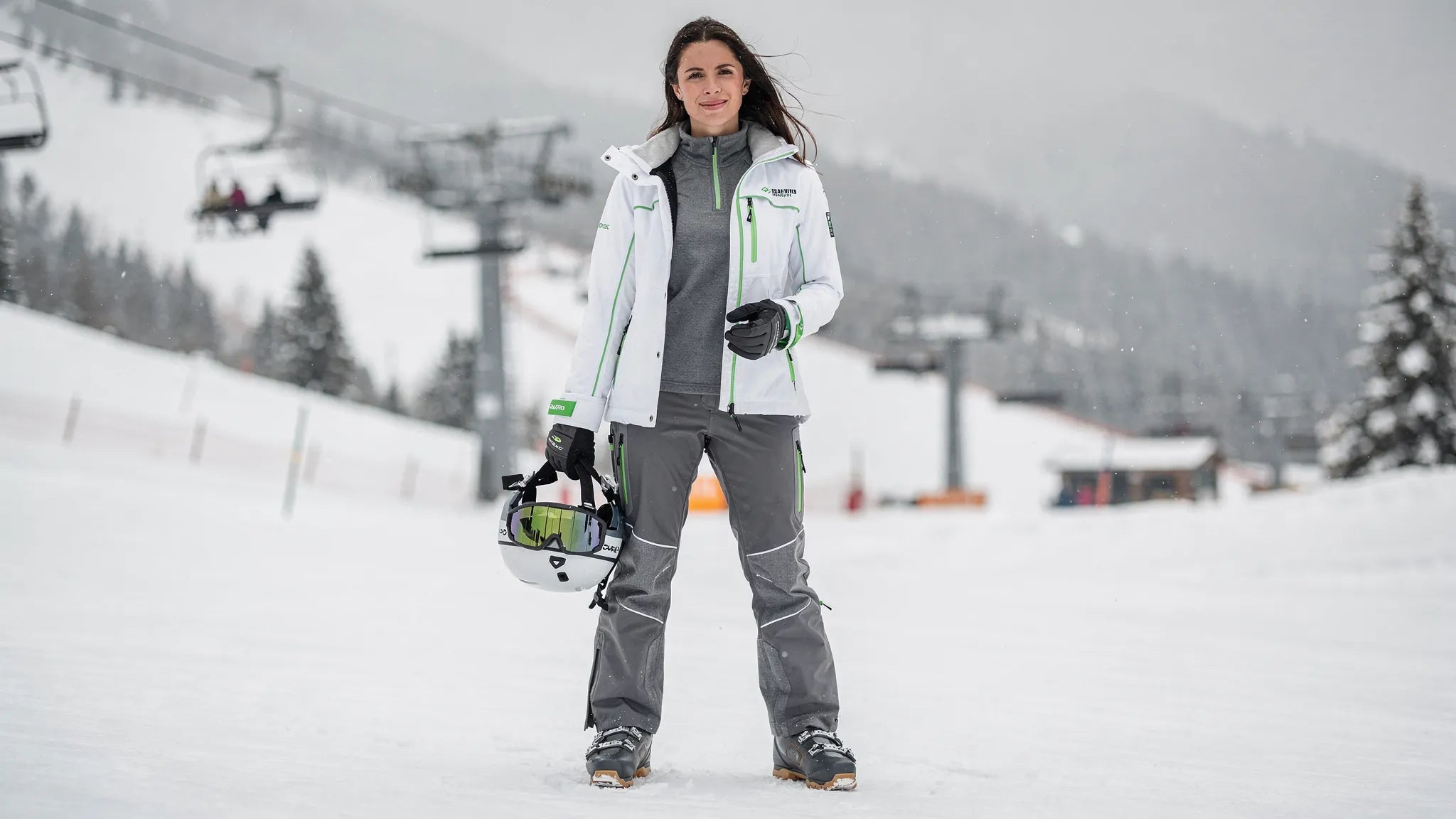
For the woman, the fit deserves specific attention. A jacket too precise on the bust can become uncomfortable with base and mid layer. A trouser too tight on hips and thighs limits the skid and makes it harder to fasten the boots. Too low life can create cold points when you fold.
The choice between complete two pieces and whole suit depends on the use. The suit is more modular, easy to manage in breaks and more flexible to change only jacket or pants. The whole suit offers continuous protection, very appreciated with fresh or cold intense snow, but it requires more attention in daily testing and practicality.
If you are considering a complete suit, you can deepen fit and waterproofness in the guide dedicated towoman ski suit. If, on the other hand, the weak point of your kit is trousers, it also controls the essential features of your kitSki pants.
A often underestimated detail is ventilation. On a cold but active day, opening aeration zip or modular mid layer can make more difference than a very heavy padding.
Fit and size: test layering before snow
The right size is not evaluated by wearing only a t-shirt. It should be tried with the real combination you will use on the snow.
Use this quick check before deciding:
- Wear layer base and mid layer under jacket and trousers.
- Lift your arms as if you hold your sticks or fix your helmet.
- Simulate the boot lace by bending you forward.
- Make a controlled suit to check thighs, knees and life.
- Sit down to see if the pants pulls or if the jacket goes up too much.
If you're in two sizes, ask yourself what you'll do most often. For track and resort, a slightly higher margin helps with warm layers and long breaks. For intense activities, a cleaner fit reduces volume and rubbish, but must not limit movement.
Also check the length. Sleeves and bottom leg must remain in position during movement, not only in front of the mirror. Zippers must close without tension on the bust or hips. The pockets must remain accessible with gloves, backpack and trouser belt.
Our recommended options
These are not strict recipes, but useful combinations to build a consistent snow wardrobe. Start from the most frequent scenario, then add only what is really missing.
| Option | Best for | Key Features | What to do |
|---|---|---|---|
| Technical base layer | First snow days, ski on track, light touring | Adherent, breathable, without useless volume | Proportionate mid layer technique |
| Mid layer light | Women who sweat easily or do dynamic activities | Controlled heat, good freedom of movement, easy to remove | Protective shell and neck warmer |
| Mid hot layer | Resort, cold chair, frequent breaks | Upper insulation, comfort in static phases | Jacket with enough space on shoulders and bust |
| Compact vest or insulator | Travel, cabin break, modular layering | Heat on the bust, small footprint, also use off track | Technical base and light shell |
| Complete jacket and trousers | Shavers seeking versatility and gradual replacement of garments | Modular, practical, easy to adapt to different weather | Gloves, helmet and technical socks |
| Full suit | Cold days, fresh snow, maximum protective continuity | Uniform cover, less snow inputs, essential look | Slim layer base and non-volume mid layer |
| Thermal accessories kit | Who feels cold in hands, feet and neck | Targeted protection of sensitive points | Adequate gloves, neck warmer, non-compressive technical stockings |
For those who want a snow outfit that does not end up in the closet at the end of the weekend, the best logic is to build a reusable set. A technical layer base, a clean mid layer and a well-chosen exterior cover multiple scenarios of a highly specialized impulsive purchase.
FAQ
How many layers do you need for women snowwear?Usually three: layer base, mid layer and external layer. On mild days you can lighten the mid layer. On cold days you can add a vest or a compact insulator, provided you do not limit the movement.
Better merino or synthetic wool for the layer base?The merino wool is comfortable and manages heat well. The technical synthetic dries quickly and is suitable for more intense activities. If you sweat a lot, prefer the quick drying. If you are looking for prolonged comfort, merino currency or technical mischies.
Is cotton okay in the snow?Better avoid it as the first layer. It keeps moisture and can cool the skin when you stop. For snow are preferable technical fabrics or merino wool.
Is the whole suit warmer than the complete two pieces?It can offer greater protection continuity, especially with snow and wind. The complete two pieces remain more modular and practical in breaks. The choice depends on climate, use and preferences of fit.
How do I choose the size if I buy online?Measure bust, waist, hips and compare the data with the product card. Always try the head with base and mid layer. If the garment pulls during deposit, bending or raised arms, the size or model are not suitable.
Do I need a shell even if I have a padded jacket?It depends on the conditions. A padded jacket can be enough on the track and with stable weather. A shell is more versatile when the weather changes, when you move a lot or when you want to adjust the heat with internal layers.
Building a good snow layering means buying less, but with more precision. Start from your real use, choose compatible layers and always try full mobility. To compose your kit, explore the technical and lifestyle collections of Fabbrica Ski Sises online, with free shipping over 50€ in Italy, fast delivery and return within 14 days, or go to Biella store for a recommendation on fit.
Ski Sises on Google
Choose Ski Sises as a preferred source: you'll see our guides and news more often in Top stories on Google.