Monte Mucrone from Oropa: what to check before you set off
If you are considering the Monte Mucrone from Oropa, the first point to make clear is this: the route OROPA-SPORT – Mount Mucrone is described as an easy walk on a good marked trail, but the same source adds that there are sections that are a bit exposed in placesSo it’s not an alpine route, yet you shouldn’t treat it like any ordinary stroll. The practical question is: are you comfortable on mountain trails where some passages demand more precise footwork? The suggested start is Oropa Sport, in the Oropa basin, reachable from Oropa by the cable car that climbs to just under 1,900 metres. Before checking clothing, verify the weather, any day-of notices and your actual confidence on this kind of terrain.
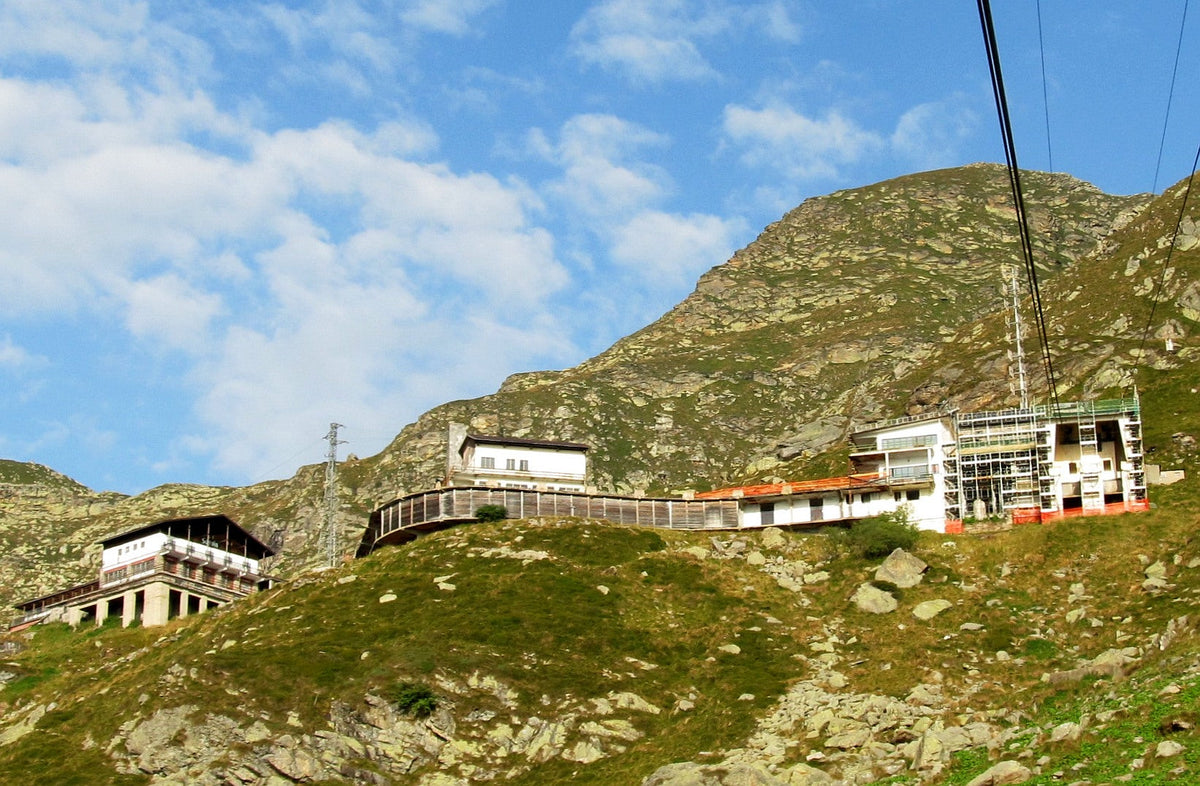
Where the route starts
Route map
The line follows the GPX track published by the cited source. Use it for orientation, but always check signs, conditions and notices before setting off.

We’ll send you links to this route’s official GPX track and its starting points.
Notify me when my size arrives
Views along the route


For kit, it can help to start from the trekking collection: it makes it easier to tell a proper trail shoe from one that’s too urban, and a useful layer from an item that would end up unused in your pack.


Monte Mucrone from Oropa: What to expect on the route
The name published by the official source is OROPA-SPORT – Mount Mucrone. It matters more than it seems, because here the reference is not a generic ascent from Oropa but a specific itinerary starting from Oropa Sport. The same page lists it among downloadable trails and provides a dedicated GPX file; it also states that main trails are available in GPX or KML format.
Downloading the track makes sense if you want a coherent reference already loaded on your phone or GPS. It doesn’t replace signage or day-of checks, but it’s better than relying on traces found without context. In this case the file linked to the official itinerary is the first one to consider.
Read the phrase “easy walk” carefully. It describes the general character of the trail, not every hiker’s experience. When that description is paired with a warning about a few exposed sections, the difference isn’t just about fitness. It’s also about how you react when the path demands more attention, when the lateral margin feels closer, or when you dislike having to concentrate on each step. If you already know this unsettles you, decide that before you go, not on the trail.
What to check before you set out
The route page lists three very clear recommendations: proper gear, weather check and caution. They’re essential suggestions. For a trail described as accessible but with some exposed parts, they’re enough to plan the day well.
- Check the up-to-date weather shortly before you leave.
- Verify any official day-of notices about the route, access or facilities.
- If you use navigation, download the official GPX or KML track beforehand.
- Ask yourself honestly whether you feel comfortable on slightly exposed sections.
- Pack a light but complete backpack with water, a warm layer, and protection against changing weather.
Here you should be clear: an article can help you interpret the outing better, but it doesn't replace the official checks for the day. Don't assume a waymarked trail is automatically suitable at all times, and don't read clothing as a guarantee of safety.
If, besides shoes, you want to review layers and more versatile accessories, you can expand your search in the outdoor collection.

How to dress without ending up with an unnecessarily heavy backpack
For an outing like this, the best rule is simple: dress so you can walk comfortably and correct your balance easily when you stop or when the air changes. You don't need to start out bulky; you need a layers system you can manage without constant fiddling.
The base layer should stay comfortable and dry without unnecessary bulk. Above it, a light or mid-weight insulating layer that's easy to open and remove usually works best. If the weather is uncertain, it makes sense to carry an outer shell in your pack. The goal isn't to wear everything at once, but not to be exposed during a stop or encumbered while moving.
Many people err here: they read "not demanding walk" and dress as if for a lower, more sheltered stroll. In this itinerary, however, the stated start is Oropa Sport, in the Oropa basin, just under 1,900 metres. That doesn't automatically mean severe cold. It does mean that wind, stops and changes in the air can weigh more than expected. That's why a well-chosen fleece or a light midlayer jacket often makes more sense than a very heavy garment worn out of overcaution.
Shoes: the choice that matters most
On a good waymarked trail with a few exposed spots, the shoe must above all give you consistent footing. A mid-cut trekking boot remains the most straightforward choice: it adds structure, better protects the foot and helps keep a clean stride when terrain changes. It's not the only possible solution for everyone, but it often reduces the most judgment errors.
Renegade Evo GTX Mid Men's Shoes Dark Brown/Black have a boot construction designed for trekking, hiking and walks on mountain trails. The Gore-Tex membrane helps protect the foot in wet and variable conditions, while the Vibram sole completes a shoe built for natural terrain and mixed routes. In practice: more structure and protection, with the trade-off of a less lightweight feel compared with a low-cut shoe.
For those seeking a matching women's option, Renegade GTX Mid Women's Shoes Slate/Blackberry are described as trekking shoes for trails, hikes and walks, with a Gore-Tex membrane, mid cut and high-traction sole. Here too the compromise is clear: such a shoe is slower than a more minimal solution, but can feel more reassuring when you want support and control of your step.
Layers and trousers: movement must count
If the weather stays steady and you walk at an even pace, a well-chosen midlayer works better than an overly heavy garment. The real advantage is manageability: you can keep it on without overheating, or take it off without having to redo your whole setup.
In that spirit, Men's Nordic Fleece Jacket — Blueberry is a technical polyester jacket designed for comfort, warmth and freedom of movement during outdoor activities. The description says it can be worn alone in milder seasons or as a midlayer under a protective shell. That’s its strength: it fits neatly into a simple layering system. The limit is clear: if conditions seriously worsen, it won’t replace an outer protective layer on its own.
On the women’s side, Women's Atom Hoody Jacket — Bracken is designed to provide warmth during outdoor and active use. You can wear it as an outer layer in moderate temperatures or under a shell when you need more protection. The practical consequence is simple: it’s an easy-to-use piece that works across many outings, not just this one.
For trousers, the priority isn’t having the most technical fabric possible. The priority is moving well. Men's Groove Pants — Green Sage are stretch polyester with a regular fit and zip pockets, recommended for hiking, trekking and outdoor activity. That translates into freedom of movement without the trousers tugging when you take a long step.
For the same reason, Women's Groove Pants — Sage Green are intended for outdoor activities, hikes and moderate trekking. Their strength here is ease of use: if you frequently do similar outings, you’ll get a lot of use from trousers like these.
Two complete looks that stay coherent
When the route doesn’t require extreme gear, thinking in sets makes sense. The men’s look Understated ridge trekking combines Men's Nordic Fleece Jacket — Blueberry, Men's Groove Pants — Green Sage, Renegade Evo GTX Mid Men's Shoes Dark Brown/Black and Ubic 25 Backpack — Black/Dark Blue. It works because it pairs a manageable warm layer, a dynamic trouser, a structured hiking boot and a daypack.
The women’s look Natural tones at altitude pairs Women's Atom Hoody Jacket — Bracken, Women's Groove Pants — Sage Green, Renegade GTX Mid Women's Shoes Slate/Blackberry and Ubic 25 Backpack — Black/Dark Red. Here too the logic is practical: easy-to-adjust garments, a real hiking shoe and a pack suited to a day out.
The right backpack is the one that doesn’t force you to overpack
For the Mucrone from Oropa Sport you don’t need a large pack by default. You need one that carries the load well and lets you find quickly the items you actually use. Ubic 25 Backpack — Black/Dark Blue is described as a compact, multifunctional 25-litre daypack with adjustable shoulder straps, a sternum strap, a waist belt, mesh side pockets for bottles and an integrated rain cover. Those details matter because they make the load more stable and easier to organize.
In the same logic, Ubic 25 Backpack — Black/Dark Red It's a lightweight, versatile 25‑liter hiking backpack compatible with hydration systems, with multiple pockets, compression straps and an integrated rain cover. The useful question isn't how much you can cram into it — it's whether you can carry the essentials without hauling empty bulk.
Fit checks to do at home
Before you set off, try everything together. Walk for a few minutes with the pack loaded as you would in real use. Adjust the hipbelt well and check whether the load stays put or bounces on your shoulders. With your shoes, wear the actual socks and check that on descents your foot doesn't strike the toe. With your trousers, lift your knee onto a step: if it pulls there, it'll pull on the trail too.
Also test your layers. Open and close zips while moving. Take off and put back your fleece or jacket without wasting too much time. These are small details at home; outdoors they become the line between a smooth outing and constantly readjusting your clothes.
The most useful rule before deciding
For the Monte Mucrone from Oropa Sport, the best choice isn't building the most technical setup. It's assembling reliable shoes, layers that are easy to adjust, a lightweight pack and updated day‑of checks. The description speaks of an undemanding walk, but also notes some slightly exposed sections. Holding those two facts together is the right way to prepare.
If you want to start from an already coherent selection, you can look at clothing and hiking shoes and then narrow down based on how you actually hike.
Two ways to build the look
AI-generated outfit scenes grounded in the linked product photographs. The landscape is illustrative.

Products mentioned in this article


Products mentioned in this article


FAQ
Is Monte Mucrone from Oropa suitable for those with little experience?
The official description presents it as an undemanding walk on a good, waymarked path, but adds that there are a few slightly exposed spots. For this reason it's more suitable for anyone with at least some familiarity with mountain trails who can stay attentive where the route requires it.
Where does the official route for Monte Mucrone start?
The published itinerary is OROPA-SPORT – Monte Mucrone and Oropa Sport is indicated as the trailhead. From Oropa a cable car runs up to Oropa Sport, in the Oropa basin, at just under 1,900 metres.
Is it useful to download the GPX track for Monte Mucrone from Oropa?
It can be a good idea. The official source provides a specific GPX file for the itinerary and notes that the main trails are also downloadable in KML format. The track doesn't replace the signage or your day‑of checks, but gives you a reference consistent with the published route.
Better low shoes or mid hiking boots for this itinerary?
On a path described as good and waymarked but with a few slightly exposed stretches, a mid‑height trekking boot remains the most straightforward choice for many. It offers more structure and support, at the cost of being heavier than a low shoe.
What should you check on the day of departure?
You should check the latest weather, any official notices about the route, access and lifts, your equipment, and your actual comfort on exposed sections. These day-of checks are essential and this article does not replace them.
Ski Sises on Google
Choose Ski Sises as a preferred source: you'll see our guides and news more often in Top stories on Google.