

























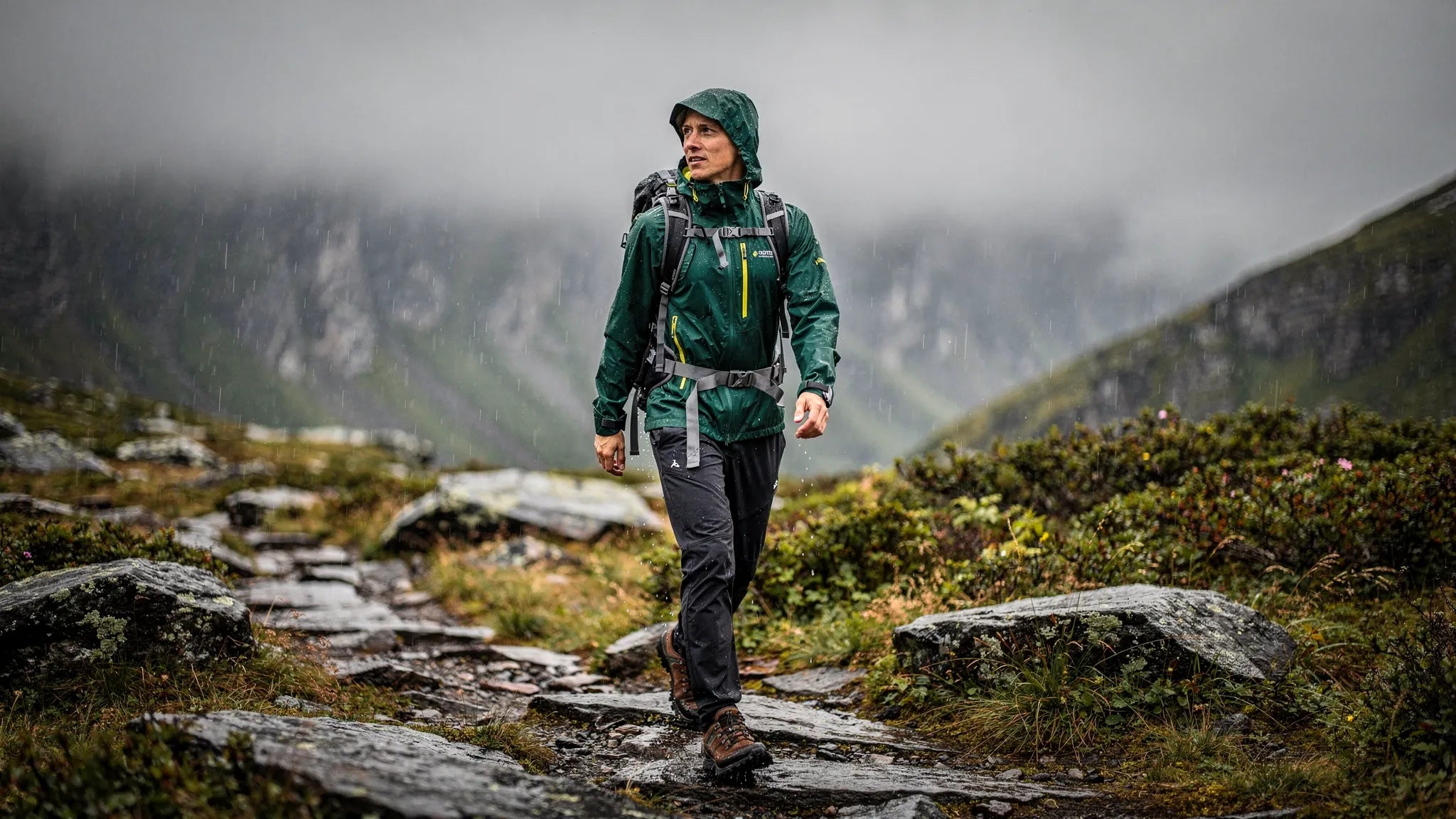
Ultra Gore-Tex Shakedry: what to expect on the field
If you have already used a classic waterproof shell, the first time withUltra GORE‐TEX SHAKEDRYit can smooth out: the water does not “impregnate” the external fabric, the jacket does not weigh down and, after the rain, often it is enough to shake it back almost dry. It's a very concrete feeling on the field. But it is not a universal solution: the exposed membrane requires more attention to rubbish and rough contacts. This guide is for those who make quick exits (trail, fast hiking, light skialp) and want to understand what to really expect before investing.
Summary (in short)
- SHAKEDRY was born to avoid the “wet‐out” (the moment when the outer fabric is soaked and the transpiration falls).
- On the field means: less wet cold feeling, very quick drying, simpler handling of intermittent rain.
- The compromise is thedelicacy to abrasion: shoulder straps, rock, branches, chairlifts and intense daily use may not be the ideal habitat.
- If you wear heavy backpacks often, if you do freeride in the woods or if you want “a shell for everything”, a traditional 3L remains more consistent.
What is SHAKEDRY in practice (and why on the field you feel)
Many waterproof jackets have an external fabric (face fabric) treated with DWR and, below, a membrane. When it rains long or dirt compromises the DWR, that external fabric can saturate with water. The jacket remains waterproof, but the feeling changes: more weight, colder perceived, breath that seems to get worse.
With SHAKEDRY the logic is different: the membrane is “ exposed” and the water tends to remain on the surface, without the same dynamic of saturation of the external tissue. The result, in the real world, results in three practical consequences:
- Constanter Beading: rain forms drops and slips away more easily.
- Less post-meteo management: When he stops, he doesn't take you behind a damp head for long.
- More consistency in fast outputs: if alternate intensity and short breaks, the jacket remains more “stable” as perceived comfort.

On the field: what to really expect (rain, wind, sweat)
SHAKEDRY gives the best when the weather is “sporty” and the rhythm is high, that is when you sweat and want to stay dry without turning the shell into a humid microclimate.
Intermittent rainfall and rhythm changes
When the shower arrives and opens, SHAKEDRY is often one of the most pleasant solutions because you do not find yourself holding a garment that still seems wet. On a day of transfers, ridges and descents, this difference weighs more than the specifications say.
Breathing: realistic expectations
It is useful to be directed: no waterproof “makes evaporate” fatigue instead of you. What can change is theperceived transpiration quality.
- With an external saturated fabric, many jackets seem to breathe worse.
- With SHAKEDRY, in similar conditions, the feeling of “wet hair” tends to shrink.
If you are doing a very intense climb with high humidity and zero wind, the internal condensation can still appear. The advantage becomes above all the speed with which the head returns “in control” just slowing down or changes the weather.
Wind and thermal comfort
Like every shell, SHAKEDRY cuts the wind and can make the importance of the mid layer clear. If you are minimalist with layers, you may perceive it “cold” in breaks. It is not a defect, it is the price of lightness.
Mould and hand of fabric
Many ultralight garments have a more “technical” hand and can be more noisy than a softshell or a robust 3L. It is not a laboratory parameter, but on travel or in urban use someone notices it.
The critical point: durability, abrasion and use with backpack
We need clarity here. The promise of SHAKEDRY is not “indestructibility”, is performance in a specific perimeter. If you respect it, the experience is excellent. If you ignore him, you risk ruining a boss born for another job.
When the backpack becomes a problem
Abrasion is not only “stro-financing strong”, it is also adding micro-cooling for hours.
It tends to work well if:
- light backpack, clean shoulder straps, stable load
- quick exits, few hours continuous under load
- use as an emergency shell, to wear when needed
It becomes less consistent if:
- often carry heavy or rigid backpacks
- skialp with long stretches with backpack always on
- frequent thick wood, abrasive rock, or environments where you often touch rough surfaces
Alpine skiing, freeride, chairlift
For the “classic” track it can work, but evaluate how you move:
- if you ski with backpack, if you spend a lot of time on chairlifts and grates, if you support the shoulder often, a stronger shell is more serene
- if you use it as a light protection layer in a single output, in variable weather, can make sense
A quick checklist before choosing SHAKEDRY
- My use isfast and light(tamps, loads, style)?
- I often wear the backpack over the shell for many hours?
- Do I have a robust “maingum” and want a second specific head?
- I'm willing to treat him as a technical chief, not as a daily jacket?
If you answer “no” to the last two, it is often better to move elsewhere.
Decision: SHAKEDRY or a traditional shell?
The cleanest way to decide is to start with three variables:duration under load, expected abrasion, rhythm.
Mini decision tree (text)
If your main scenario is:
- Quick exits, light backpack, unstable weather→ SHAKEDRY makes sense.
- Long exits, medium/heavy backpack, rough environment→ better a traditional 3L.
- Rain rare, frequent wind, high intensity→ often enough an anti-wind or a softshell.
- It only serves “emergency shell” in the backpack→ evaluates a 2.5L or a very packable shell.
Practical comparison (not only numbers)
| Solution | Strong points in the field | Typical limits | Ideal if |
|---|---|---|---|
| SHAKEDRY (membrane exposed) | No wet‐out, dry quickly, great in intermittent rain | Sensitive to abrasion and repeated rubbing | High rhythm, light loads, “clean” outputs |
| Traditional 3L shell | Durability, transversal use, better with backpacks and rough environments | Can wet outside and become more “cold” and heavy | One shell for everything, freeride, touring with backpack |
| 2.5L packable shell | Compactness, emergency solution | Comfort and durability often lower than 3L | Back up in the backpack, uncertain weather but not constant |
| Windproof / softshell | Comfort moving, good sweat management | It is not a “real” waterproof | Dry conditions or short rain, rhythm priority |
Fit and layering: make life uncomplicated
With ultralight garments the fit counts more than usual, because you do not have “margin” from volume and thick materials.
Practical rule for size
- If you use SHAKEDRYabove base + light mid, look for a fit that allows high arms and twists without pulling on the shoulders.
- If you predictmore structured mid, do not buy “racing tight” just to reduce the footprint.
A simple home test, as soon as it arrives:
- Top arms for 10 seconds
- complete welcome
- simulation to take something from the high pocket of the backpack
If you feel tensions on shoulders and high back, in activity you will feel double.
Essential Layering (three lines, without theory)
- Base: sweat management, is the layer that makes the difference when the rhythm rises.
- Mid: choose what you need in breaks, not what “looks hot”.
- Shell: SHAKEDRY when it's raining or winding, and then off in the backpack when it's not needed.
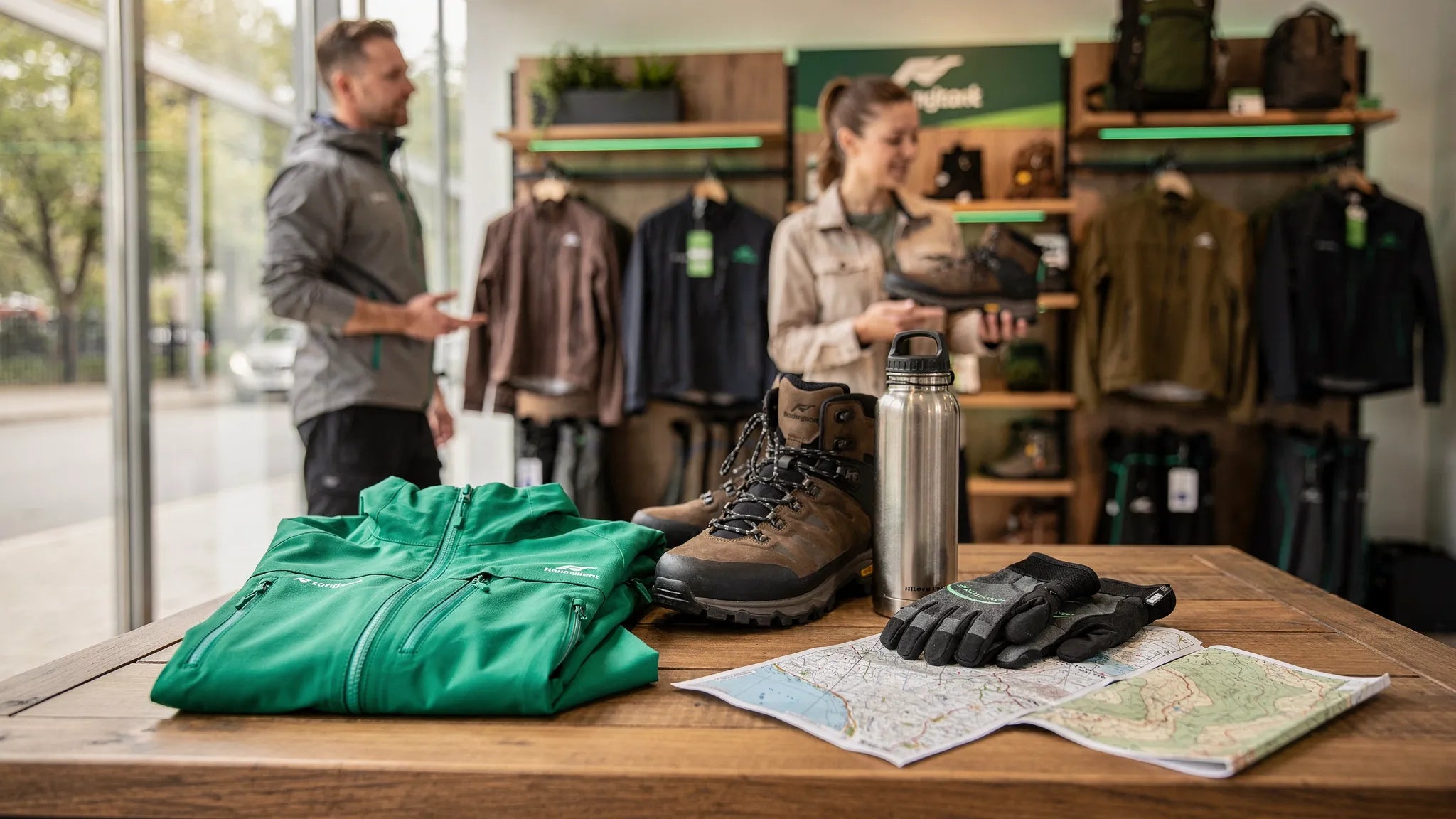
For versatile mid layer that also work outside the mountain, you can start from a clean selection asLanapo. For those looking for more urban aesthetics and premium hand materials, it is also worth exploringBiella Fabrics.


Our recommended options (based on real use)
Here does not count “the best in absolute”, counts the best for your scenario.
1) Ultralight SHAKEDRY Guscio
Best for: trail, fast hiking, light skialp, trips where you want a serious but minimal waterproof.
Key features: very fast drying, no perceived wet‐out, small footprint.
What to do: reliable technical base + light mid. If you get high or you often stop, add a insulation packable into your backpack.
If you are evaluating SHAKEDRY in performance key, you can start from the collectionDynafitand then compare with more robust alternatives.


2) Guscio 3L “only for everything”
Best for: ski on track, freeride, touring with backpack, mixed conditions but rough environment.
Key features: more durable construction, more serenity with rubbing and continuous use.
What to do: classic layering, base + mid, and ventilation management when the intensity rises.
3) Emergency packable shell (2.5L or similar)
Best for: who wants protection “in the bottom of the backpack”, without engaging on a delicate garment.
Key features: compact, easy to carry always, useful when the weather changes.
What to do: windproof or softshell as main layer, waterproof only when needed.
4) Technical windproof for dry days
Best for: cold wind, ridges, high intensity activities with improbable rain.
Key features: comfort in movement, good steam management, reduced weight.
What to do: curated and med base modulable. It is the most “clean” combination for many real days.
5) Softshell for touring and technical daily use
Best for: who prefers breathing and resistance, accepting that it is not a real waterproof.
Key features: more robust, more comfortable, often quieter.
What to do: a waterproof shell in the backpack as a backup (choice of traditional SHAKEDRY or packable).
6) Robust lifestyle shell (city, travel, real rain)
Best for: commuting, long travel, intensive use where durability counts more than weight.
Key features: more tolerant to rubbing, seats, shoulder straps, repeated use.
What to do: clean mid and “bridge” garments that also work indoors. If you are interested in a heritage and longevity approach, you can take a look atFilson.


Care and maintenance: the part that extends the life of the head
With SHAKEDRY the care is above all “anti-abrasion” and “anti-sporco”. The exposed surface works well until it remains clean.
- Wash when needed, with delicate cycle and detergent suitable for technicians.
- Avoid softeners.
- Also clean shoulder straps and belt of the backpack (they are abrasive when they are dirty).
- Do not turn it into the “everyday” jacket if you want me to stay a performance boss.
Close the circle: test, set‐up and consistent choice
If your goal is to stay dry in fast outputs,Ultra GORE‐TEX SHAKEDRYis one of the most convincing ways to do so, as long as it respects its use. If you are looking for a unique shell for everything, or do activities where abrasion is part of the game, a traditional 3L will make you live quieter.
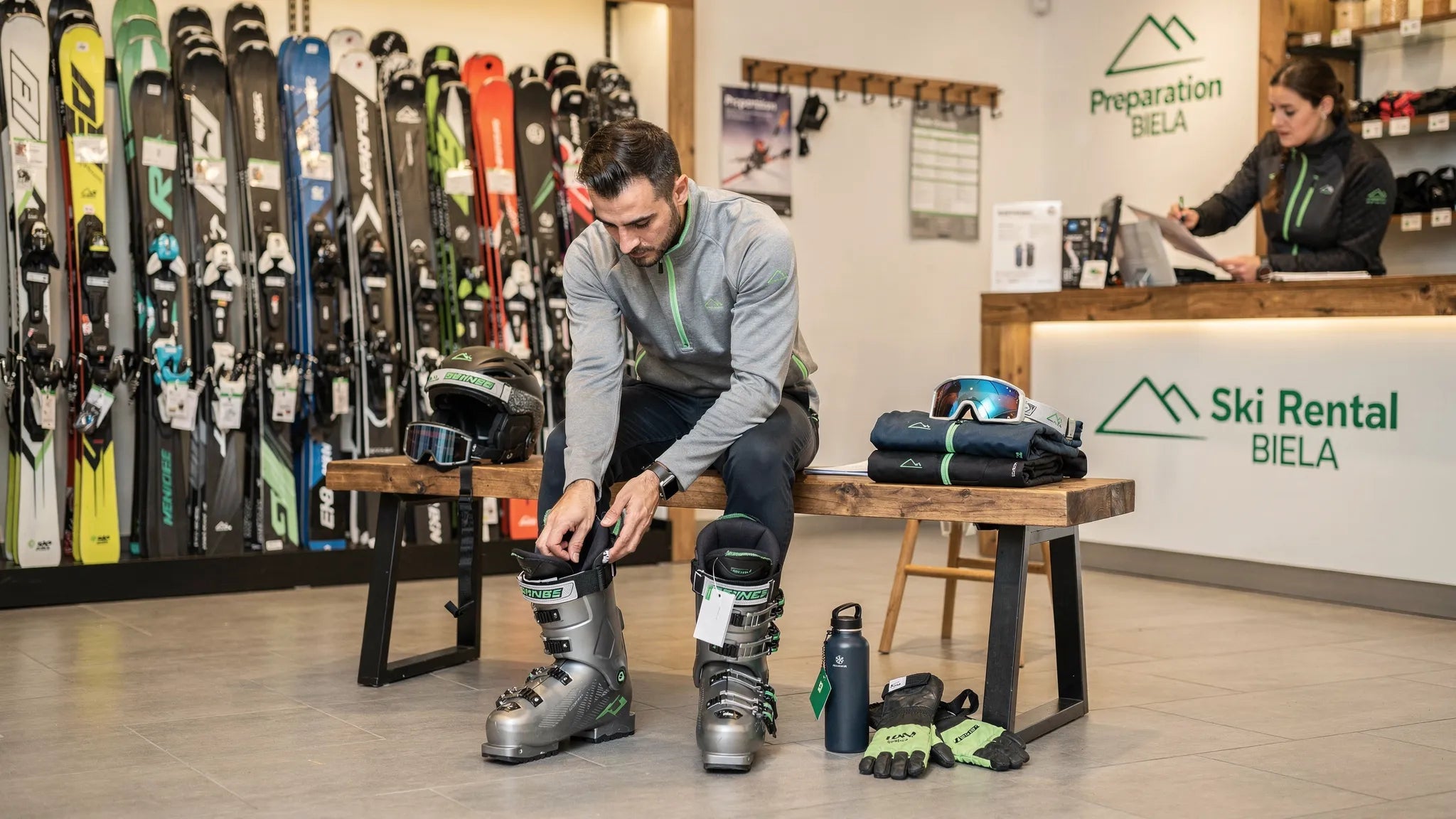
To build a complete set, start from a targeted selection asDynafit. And if you walk to Biella and want to optimize equipment and setup, take a look at theSport Service in storeor, for a weekend without complications, driving onski rental in Biella.
Ski Sises on Google
Choose Ski Sises as a preferred source: you'll see our guides and news more often in Top stories on Google.