















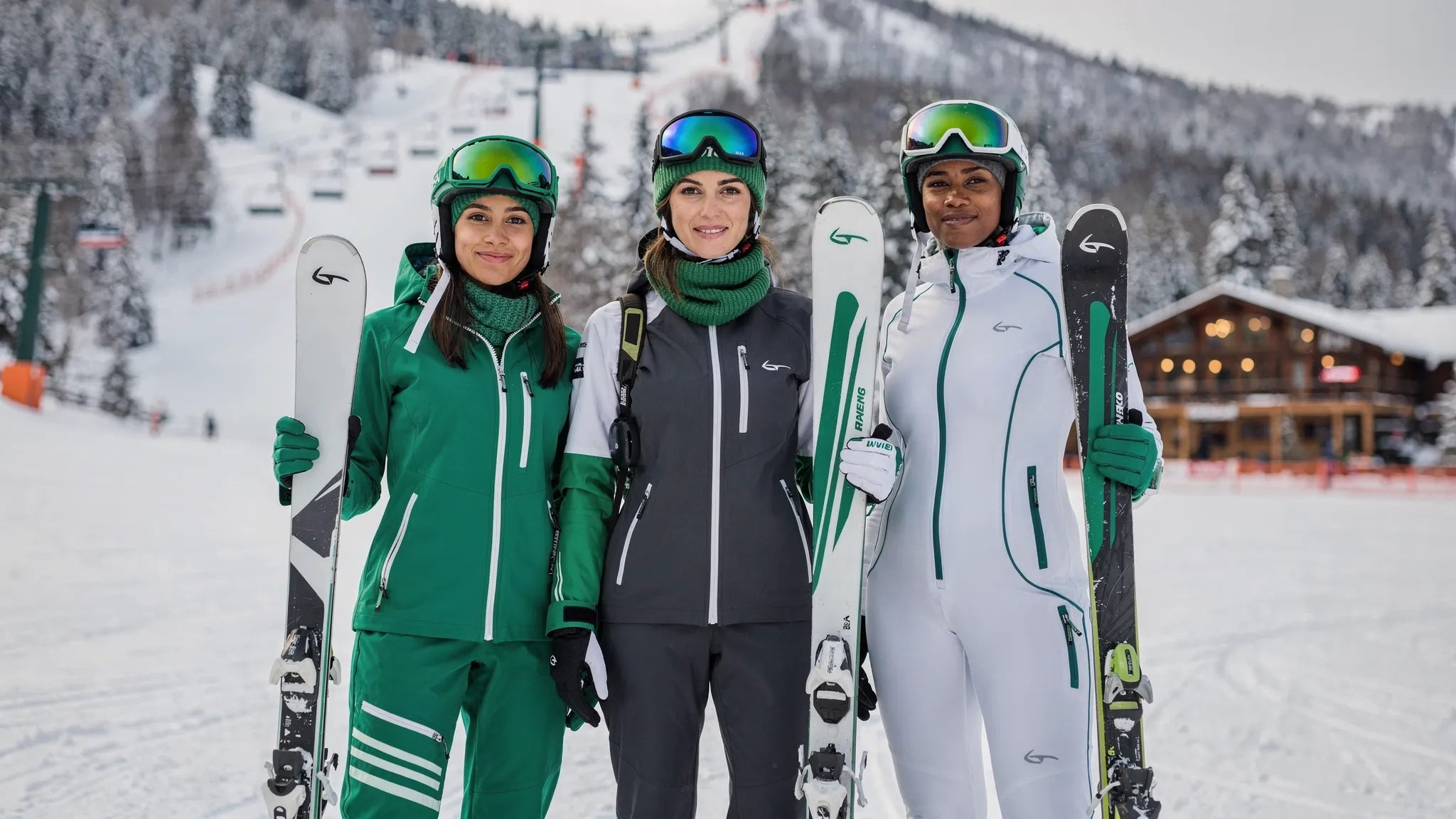
Ski suit woman: how to choose for your use
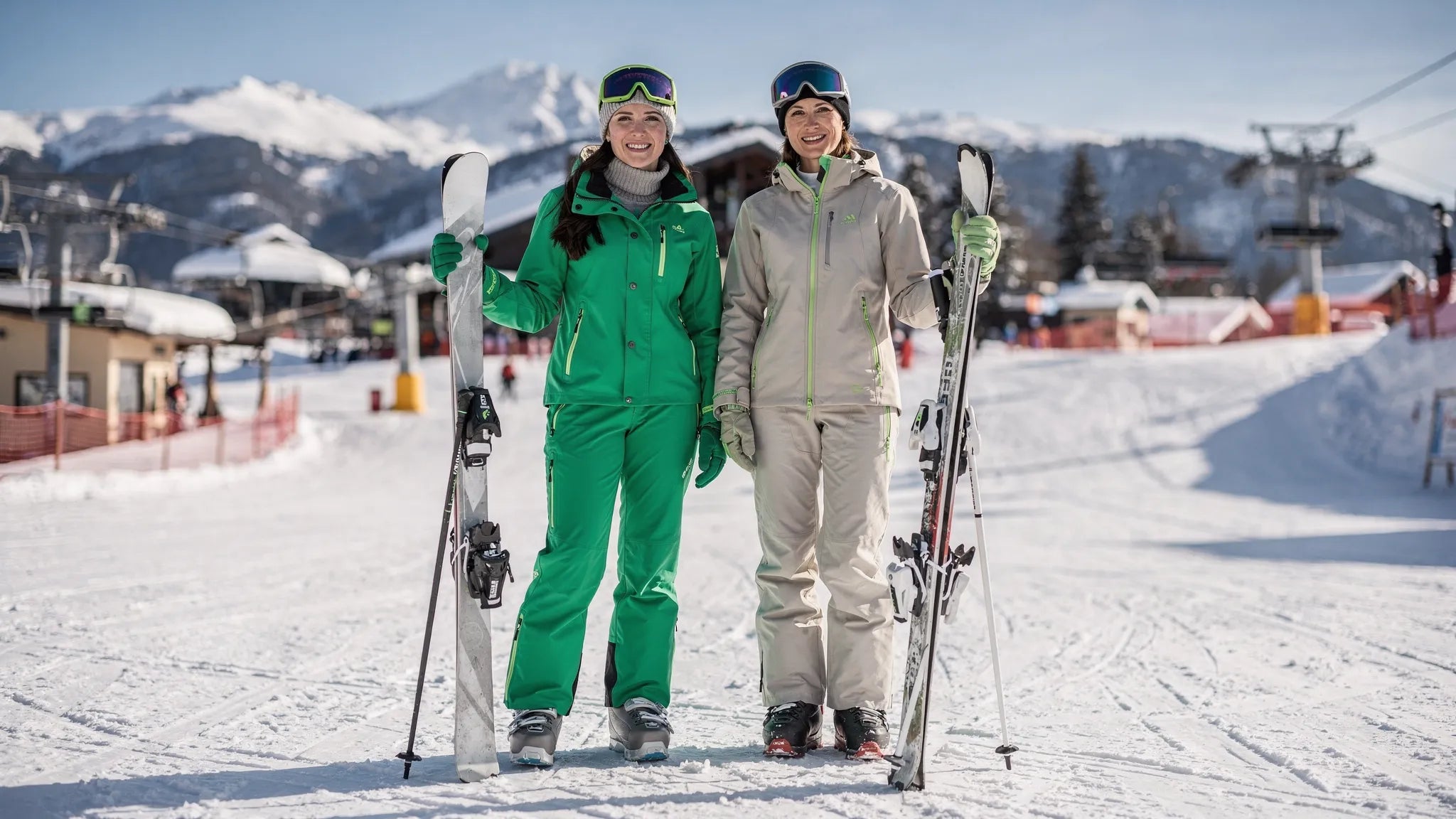
Choose aSki suit womanToday it does not only mean “being warm”. It means managing humidity, wind, falling on the snow, laughter in the cable car, stops at the shelter and days that change weather in a few hours. If you've already skied, you know the right boss is what makes you forget to have it on you. If you are starting, the right choice reduces errors (and expenses) from the first exit.
This guide is designed for those who want to decide quickly but consciously: runway, freeride, trips, occasional weekends, or a more technical and modular set.
Summary (in 90 seconds)
- Start fromscenario of use: how many exits, what weather, what rhythm.
- Decide thearchitecture: two pieces, bib, or one-piece.
- Choose your strategyinsulation: padded if you ski slowly and feel cold, shell + layers if you want control and versatility.
- Check 6 details that make a difference:seams, zip, ventilation, gaiter, reinforcements, hood.
- For the size: try with your real layering and make 4 movements (accosciata, arms on, ankle boots, torsion bust).
1) First question: what is your “real use”?
The choice becomes simple when you stop reasoning by labels (pista, freeride, “calda”) and start to reason by context. Use these three variables.
Frequency
- 1–5 outputs per year: priority to immediate comfort, ease, reduction of errors.
- 6–15 outputs/year: it serves a more balanced set, with a truly usable ventilation.
- Full season: it is better to focus on modularity and durability, also because the suit becomes “equipment”.
Typical weather
- Dry and cold: insulation and wind management count more than rain.
- Humid, heavy snow, snow: construction and waterproofness become decisive, but always together with breathing.
Rhythm
- Quiet rhythm (many stops, high chair, perceived cold): easier insulation.
- Ritmo argued (continuous curves, transverses, short laughter, freeride): ventilation and sweat management are the key point.
To deepen fit and waterproofness with a dedicated checklist, you can also read the internal guide:Ski woman suit: how to choose fit and waterproof.
2) Two pieces, bib or whole suit: what really changes
There is no “better” choice here. There is a consistent choice with how you move.
| Structure | Ideal if... | Practical benefits | Typical trade-offs |
|---|---|---|---|
| Two pieces (jacca + trousers) | you want versatility and ease | simple management, faster changes, more fit options | attention to the point of life and infiltration if you fall/spali |
| Bib (salopette) + jacket | want extra seal and protection | best snow sealing, moving comfort, more covered back | warmer in the cable car, more “technical” to manage |
| One-piece (all) | you want continuous protection and clean style | zero “gap” between jacket and pants, great in deep snow | less practical in pause and logistics, more binding fit |
A quick criterion: if you happen to have snow coming in when you move (falls, light off-piste, children, windy days),bib or one-piecetend to simplify life.
3) Padded or shell + layers: the choice that changes the day
Many wrong purchases arise here. Not the brand, but the strategy.
Option A: padded set (plus “plug and play”)
It is ideal if you want a boss that works well without thinking too much and if, in general, you suffer the cold in the chairlift.
Strong points:
- immediate comfort
- simple management for beginners and occasional skiers
Attention points:
- if you raise the rhythm, you risk sweating and then cool off
- less flexibility between different days
Option B: shell + layering (more control)
It is the typical choice of those who often ski, change locations or want to adapt to the weather. It does not mean “colder”, it meansmore adjustable.
Strong points:
- heat seals with mid layer and layer base
- more exploitable ventilation
Attention points:
- requires a minimum method on layers
If you are interested in building a technical wardrobe with logic “kit”, there is also the guide:mountain clothing: kit 4 seasons without waste.

4) Technical Checklist: 6 details to check in product card
When you buy online, the difference makes the construction details. You don't need to be obsessive, just be systematic.
1) Sewings and critical points
Look for clear indications on seams and reinforcements in exposed areas (spalle, seat, leg interior). The ski suit lives in friction: chairlift, ski, boots.
2) Zip and potato
Zippers are one of the first things to give if they are light or unprotected. Consider also the presence of pathways and systems that limit infiltration.
3) Usable ventilation
Not all fans are the same: the best ones are the ones you can open and close easily, even with gloves.
4) Leg and bottom leg
The “seal” with the boot counts more than it seems. If you want a dedicated focus, here is a practical guide:ski pants: 5 features to check immediately.
5) Hood and collar
It must be compatible with the helmet (if you use it) and especially stable with the wind. A good collar reduces dispersion and improves perceived comfort.
6) Pockets: few, but in the right place
Think about what you really need: ski pass, phone, a pair of thin gloves, a mask. Well placed pockets simplify the day.
5) Fit and size: micro-guide to buy without rethinking
The fit in the woman ski suit has a precise objective:mobility + space for layerswithout unnecessary volumes.
How to try (at home or in dressing room)
Wear the layering you will really use (base + mid, or base only if you ski hot) and do these 4 tests:
- Deep welcome: the head must not “draw” on sitting and knees.
- Arm over the head: the jacket should not discover and should not lock the shoulders.
- Simula the boot lace: the trousers should not compress and the bottom should not be imputed.
- Torsion of the bust: Check that zip and seams do not create rigid points.
Practical rule if you are between two sizes
If you're building a layered system and want to use it even on cold days, it's usually better to prefer the size that leaves youa controlled margin. If instead you point to a padded set for quiet outputs, it often counts more to avoid excessive volume.
For a very clear approach on how to measure and compare tables, the guide “head method of comparison” is also useful outside the ski:Lanapo: guide to models and how to choose size.
Our recommended options (depending on scenario)
Here you can’t find “the best model”. Find configurations that work, and how to complete them.
1) Complete two pieces padded
Best for:first seasons, days on track with many breaks, cold perceived high.
Key features:integrated insulation, immediate protection, solid construction on seat and bottom leg.
What to match:basic essential layer + technical socks + adequate gloves. If you want to choose gloves well (often underrated), use the guide:ski gloves: the complete guide.
2) Shell (yellow + trousers) with modular layering
Best for:frequent skiing, travel with variable weather, who wants “one suit” for several conditions.
Key features:exploitable ventilations, freedom of movement, more controllable moisture management.
What to match:mid thermal layer (more or less warm depending on your perceived cold) and accessories that manage sweat (slim or band, gloves with good heat/manual balance).
3) Bib + jacket (more protective set)
Best for:deep snow, light freeride, windy days, who wants back always covered.
Key features:better sealing, comfort when you bend and rise, protection in fall.
What to match:breathable mid layer and a opening management system (zip, collar) to avoid overheating.
4) One-piece (all)
Best for:who wants continuous protection and a consistent set, especially in cold and dry contexts.
Key features:continuity between high and low, lower risk of infiltration, “wrap-around” feeling.
What to match:gloves with good waterproofness and a comfortable layer base on the skin, because the temperature regulation takes place mainly from the layers.
5) Travel-oriented set (poco footprint, maximum versatility)
Best for:fast weekends, who travels often, who wants to use part of the bosses also off-piste.
Key features:modularity, weight and manageable volume, “bridge” garments that can also be used in the city.
What to match:a technical and comfortable sneaker for transfers and post-skis. If you are looking for travel-friendly options, you can look at the selection:Flower Mountain.


6) Set “technical lifestyle” for after-ski and city
Best for:who wants continuity between mountain, travel and everyday, without a look too sporty.
Key features:clean lines, functional materials, garments that regulate real use.
What to match:a versatile top and a pants that works well with light layers. To build a premium capsule to use often, you can exploreLanapoor a more heritage selectionBiella Fabrics.


Where to go in the shop (without wasting time)
If you are building the set from scratch, a practical rule is starting from the piece that “resolves” more problems:
- if you suffer cold and make few exits: tip first on a comfortable exterior
- if you sweat easily or ski strong: bet first on a system with ventilation and layering
- if you also want the technical approach (outdoor and touring): look at brand with technical credibility asDynafit


For a complete overview, you can also see the general collection:all collections.


Useful services if you are in Biella area (or if you want to leave without purchase)
If you are planning one or two exits and want to decide calmly what to buy after, it often makes senserentaland experience on the field.
- To avoid booking errors and get prepared:ski rental Biella: quick guide
- For maintenance and support in store:sport service: all services
Frequently Asked Questions
Better woman ski suit or two pieces?Depends on your use: the overall protects better from infiltration and “gap” in motion, the two pieces are more practical and versatile (especially on travel and breaks).
How do I know if I need a padded head or a shell?If you do few exits and feel cold in the chairlift, a padded set is often easier. If you ski often or sweat easily, shell + layers gives you more control over temperature and humidity.
What details really matter when I buy online?Ventilations usable, gaiter and bottom leg, quality of zip and seams, reinforcements in friction points and compatibility of the hood with helmet.
How do I choose the size of the woman ski suit without trying it?Measured, compare the size chart and try at home with the real layering. Make 4 mobility tests (accosciata, arms on, boot lace, torsion bust). If you're between two sizes, consider using thicker layers.
Can I use part of the ski set in the city or on the road?Yes, especially if you choose “bridge” garments with clean lines and functional materials. The point is to avoid too specialized pieces if your use is mixed.
When should I rent instead of buy now?If you have few planned outputs, if you are changing level (and therefore needs) or if you want to understand before what kind of fit and insulation you really like.
If you want to build your set quickly and consistently, start from the scenario and then explore a targeted selection:Dynafitfor a technical approach, orall collectionsto compare options. If you are in Biella area, it also evaluates rental and store support to close your choice with more security.
Ski Sises on Google
Choose Ski Sises as a preferred source: you'll see our guides and news more often in Top stories on Google.