













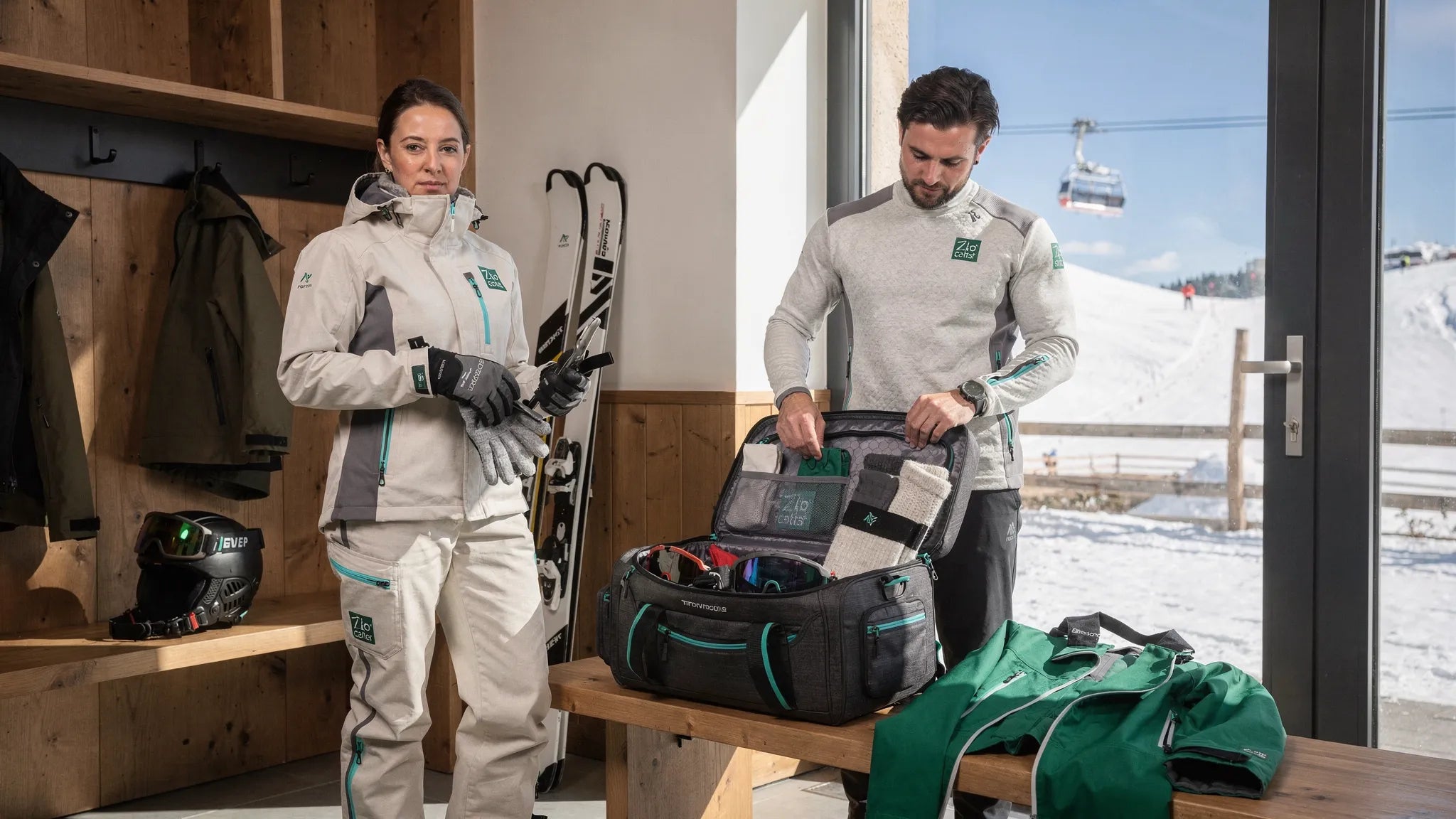
Snow suit or layer set? How to decide
Choosing between snow suits and layered sets is not a matter of taste, nor how cold “you endure”. It is a practical decision: how much you move, how much the weather changes, how much space you have in your suitcase and how much you want to reuse the garments outside the track. A snow suit can simplify a lot, especially in cold and stable conditions. Layering, instead, gives control, versatility and duration. This guide is designed for skiers in the resort, starts for a weekend on the snow, buys for the family or wants to build a technical wardrobe without waste.
Quick reply
- Choose a snow suit if you want immediate protection, simplicity and constant heat on the track.
- Choose a layered set if alternate skis, walks, travel, breaks and varying weather conditions.
- For freeride, splitboard and ski mountaineering, layering is almost always more effective.
- For children, beginners and first white weeks, the simplest solution often wins.
- The fit should be tried with the real layers below, not only on a t-shirt.

First distinction: what are you really comparing
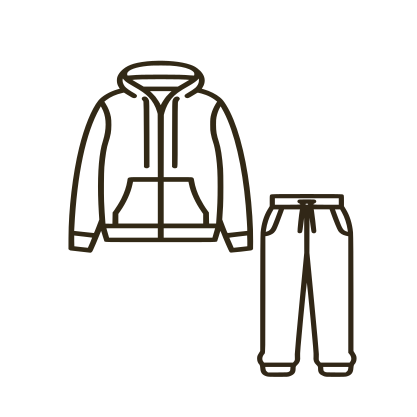
With snow suit means a very protective solution: it can be a whole suit, or a coordinated suit designed to keep warm and isolate well from snow and wind. It is a direct choice, with few decisions to make in the morning.
The layered set, on the other hand, works for modules: leather contact layer base, thermal mid layer, shell or outer jacket, technical trousers. It is not necessarily more technical or more expensive. It is simply more adjustable.
The best choice depends on your scenario, not the category itself.
| Criteria | Snow suit | Layered Set |
|---|---|---|
| Snow protection | Very immediate, with less critical points if construction is good | Depends on interface between jacket, trousers and layers |
| Heat management | Stable, ideal for cold and long breaks | Adjustable, better if the rhythm changes |
| Traction | Can become hot on active days | Easier to open, remove or add layers |
| Versatility | More specific for snow and ski | Reusable in mountain, travel and city |
| Luggage | A chief, often more voluminous | More pieces, but combined |
| Easy for beginners | High | Requires a minimum method |
A useful rule: if your day is predictable, the suit works well. If the day changes often, layering protects you better from errors.
When choosing a snow suit
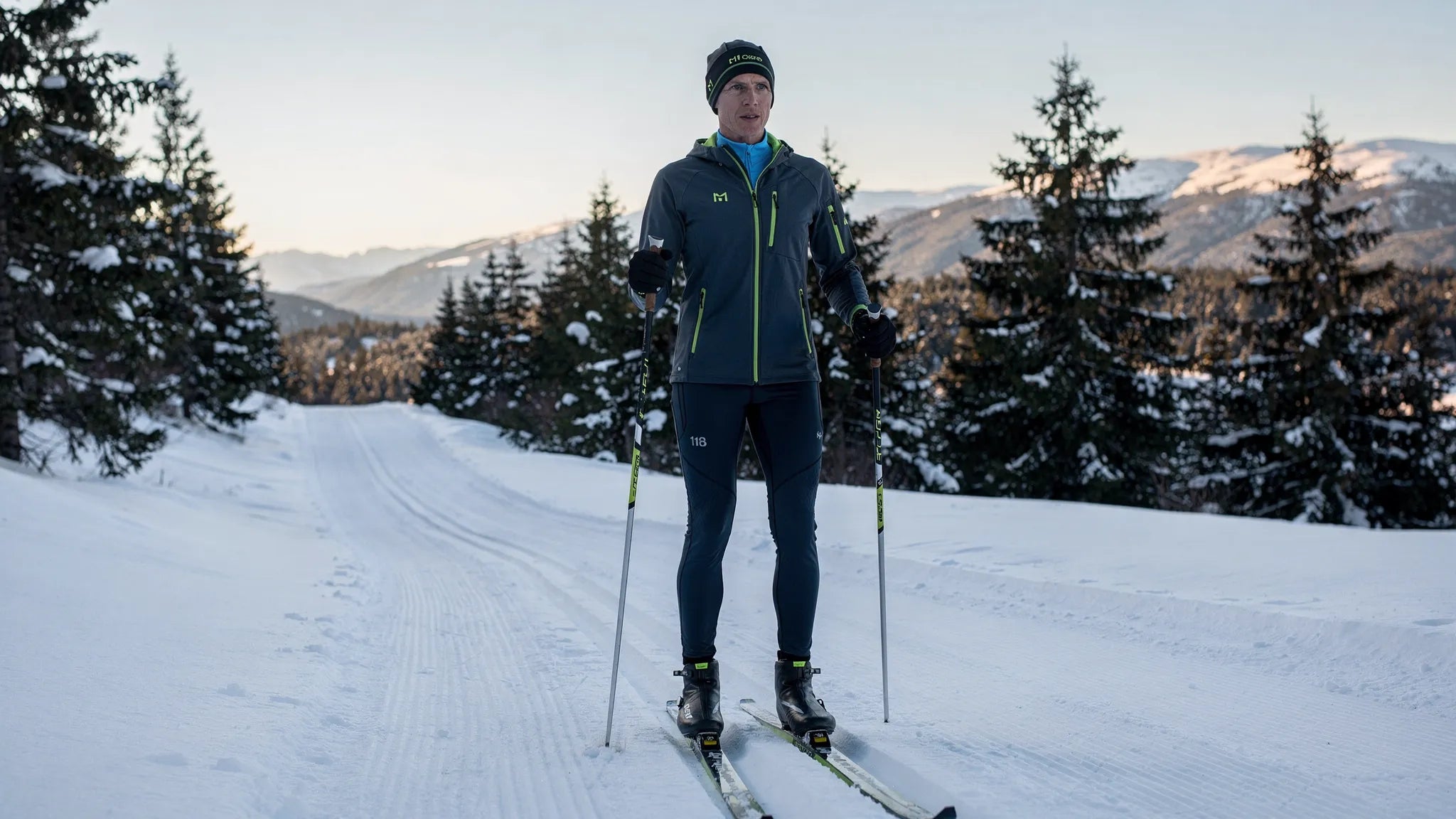
The snow suit makes sense when you want to reduce variables. Get dressed, get out, get the implants, and you know you'll stay in a cold environment for many hours. It is a strong solution for resorts, classic white weeks, skiers who make many breaks and children who play often in the snow.
The main advantage is perceived protection. Less openings, less points where snow can enter, less decisions to make on which layer to add. For those at the first exits, this counts a lot.
However, there is a compromise: if you get warm easily, if you ski with an intense rhythm or if you go from outside to inside, you may find yourself too hot. In that case ventilation becomes fundamental. Look for practical openings, easy to use zip with gloves, hood compatible with helmet if provided and a fit that does not block shoulders, also and knees.
The suit is ideal if the priority is to be covered and dry, not if you want maximum freedom of regulation.
When the layer set is the best choice
The layered set is smarter when the weather is not stable or when different intensity: runs in the morning, lunch at altitude, return on foot, travel, après-ski, maybe a more technical day the next day.
The system works because each layer has a precise task. The layer base handles moisture. The mid layer retains heat. The outer layer protects against snow, wind and humidity. If one of these three roles is wrong, comfort also worsens with expensive garments.
| Road | Function | What to control | Error to avoid |
|---|---|---|---|
| Base layer | Remove sweat from skin | Technical fabric, tight fit but not compressed | Use leather contact cotton |
| Mid layer | Adds adjustable heat | Volume compatible with the jacket | Choose a garment too often |
| External | Protects from snow, wind and humidity | Sewings, zip, hood, ventilation, gaiter | Look only at the technical data and not the construction |
For ski mountaineering, splitboard and freeride, layering is often the most consistent choice. Uphill the problem is not to remain warm, but to avoid getting wet of sweat. Downhill you need to add protection quickly.
For an active mountain-oriented technical set, you can start from selectionDynafit. If you are looking for bridge heads for travel, city and outdoor light, collectionsLanapoandBiella Fabricsare useful to build a more modular wardrobe.


Decision tree: parts from your real use
If you want to decide quickly, do not start from the product. Start from the day like that.
- If you ski almost only on the track, with constant cold and many laughter in the chairlift, choose snow suit or complete isolated.
- If you change skis, walks, breaks and travel, choose jacket and technical trousers with modular layers.
- If you do freeride, splitboard or ski mountaineering, choose shell, mid layer and technical layer base.
- If you buy for children or beginners, prefer simplicity, protection and ease of dressing.
- If you leave with reduced baggage, choose reusable items and not too specialized.
- If you don't know how much you're going to ski, consider ski and snowboard rental first and invest in the most versatile personal items.
The point is not to buy less technical. It is to buy more consistent. A very warm garment can be perfect for a slow ski in January and become uncomfortable on a sunny day in March. A light shell can be excellent with the right layers below and insufficient if you use it alone in the still cold.
Fit and size: proof that avoids wrong purchase
The fit on the snow must leave room for movement, not only appear correct in front of the mirror. Too tight a suit limits mobility and compresses thermal layers. A too large set, instead, creates useless volumes and can let cold air enter.
Always try the head with the real configuration: base layer, mid layer and, if needed, protections or backpack. Then you make five simple movements.
- Lift your arms like you hold your sticks over your head.
- Make a full suit and check your knees, horse and bottom leg.
- Simulate the ski boot.
- Sit down, like on a chairlift, and check that life doesn't pull.
- Rotate the bust and check that shoulders and back remain free.
If you're between two sizes, choose according to the type of boss. For an external shell an extra margin can be useful for layering. For a layer base, better a more precise fit. For a padded suit, the margin must be there, but not to the point to create excessive folds or bulk.
When you buy online, measure a garment that already suits you well and compare it to the product card table. It is the most reliable method to reduce returns and uncertainties.
Our recommended options
1. Complete snow suit
Ideal for:who wants a simple solution for track, cold weekends, beginners and days with many breaks.
Key Features:continuous protection, stable heat, fewer decisions on layering. Check especially zip, hood, cuffs, leg bottom and freedom of movement.
To match:technical layer base, adequate ski socks, warm gloves and helmet. Avoid mid layer too voluminous if the suit is already isolated.
2. Jacket and pants isolated
Ideal for:resort skiers who want comfort, practicality and more flexibility than the whole suit.
Key Features:balance between heat and break management. The advantage is to be able to use separately jacket and trousers, also useful for trips and less cold days.
To match:Breathable layer base and light mid layer. If you suffer cold, add a warmer mid only on the hardest days.
3. Technical shell with thermal layers
Ideal for:experienced skiers, freerides, light mountaineering skiing, variable days and those who want a longer life kit.
Key Features:maximum adjustment. The shell protects, the inner layers define the heat. Look for really accessible ventilation and a fit that works well with backpack and helmet.
To match:technical layer base, fleece or synthetic mid layer, suitable for intensity. For a more technical approach, explore the collectionDynafit.
4. Bib and technical jacket
Ideal for:snowboarder, freerider and who falls or moves often in deep snow.
Key Features:greater cover of the bust and better protection in the living area than many traditional pants. The compromise is a slightly less immediate dress.
To match:jacket with good mobility, breathable layer base and modular mid layer. Always check that the straps do not interfere with backpack or protection.
5. Set travel-friendly snow and city
Ideal for:who often leaves, wants a few well chosen garments and looks for a clean aesthetic even outside the track.
Key Features:technical outer garments, neat mid layer, trousers and shirts that also work on the road. It does not replace a ski suit in severe conditions, but reduces doubles and suitcase.
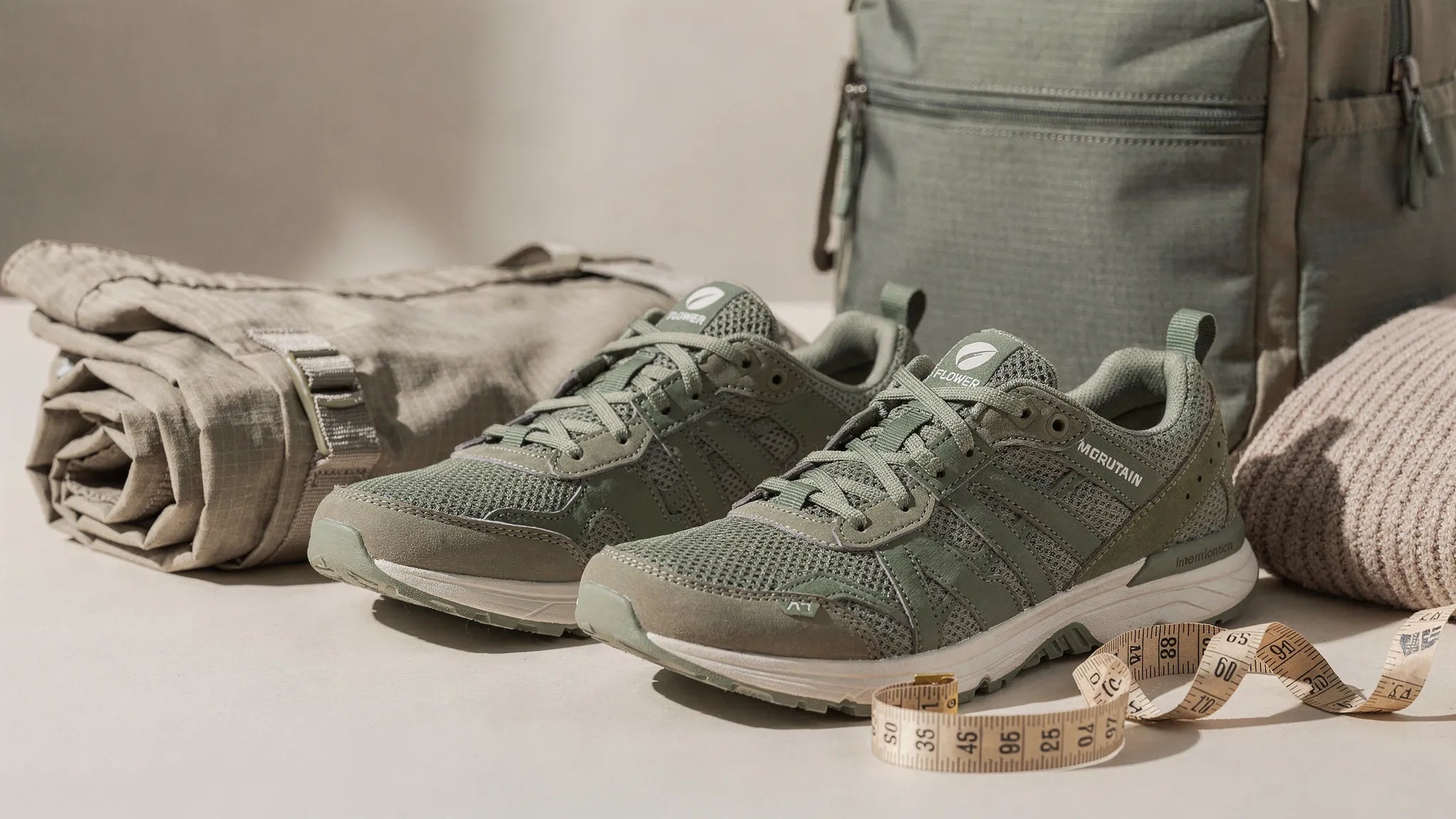
To match:sneaker or travel shoes for after skiing, technical knitting, compact accessories. For versatile pieces, lookLanapoandBiella Fabrics.
6. Beginner setup with rental equipment
Ideal for:who tries skiing for the first time, families and who does not yet know how many days he will do in the season.
Key Features:invest first in the personal layers that you will really use: technical underwear, socks, gloves, jacket or adequate shell. For skis, boots and snowboards, the rental allows you to avoid premature purchases.
To match:fit advice, proof of boots with technical stocking and equipment control before the day. If you are in Biella area, the sport service is the reference point for rental, maintenance and preparation.
Maintenance: the right head lasts if you treat it well
The duration depends not only on the initial quality. It also depends on how to wash, dry and store technical garments. Always follow the label, avoid softeners if not indicated, close zip and velcri before washing and let dry completely before storing.
If the head loses water repellency, it does not automatically mean that it is to be replaced. Often the external treatment can be reactivated or renewed according to the manufacturer's instructions. Before buying a new shell, evaluate the real state of fabric, seams, zip and wear areas.
For a more sustainable approach, build the set around a few consistent leaders and replace only what really limits comfort or safety.
FAQ
Is it better a snow suit or a complete two pieces?Depends on use. The suit is simpler and protective, the complete two pieces is more versatile. For cold track and linear days, the suit works well. For travel and variable weather, better the two pieces.
Does the layer set keep as hot as a suit?Yes, if it is built correctly. The heat depends not only on the thickness, but on the combination between layer base, mid layer and external. The advantage of layering is to be able to adjust the system during the day.
How many layers are under a snow suit?Technical layer is usually sufficient and, on cold days, a light mid layer. If the suit is already very warm, add too much volume can reduce comfort and mobility.
Is it better for children to dress whole or set layers?For children, the suit or a very simple suit can be more practical because it protects better during games, falls and breaks. For more autonomous children, the layered set becomes interesting because it follows better growth, activity and weather.
Is a snow suit good for snowboarding?It can be okay if it leaves freedom of movement and protects well when you sit or fall on the snow. For snowboard and freeride, many prefer bib and jacket because they offer cover and regulation.
If I buy online, how do I reduce the risk of wrong size?Measure a similar garment that already suits you, compare the size chart, consider the layers you will use below and immediately do the movement tests as soon as you receive the package. On Ski Sises are provided returns within 14 days, useful if you need to check the fit calmly.
If you have to choose today, start from your real scenario: cold and simple piste, snow suit; variable weather, travel or intense activity, layer set. Explore the technical and lifestyle collections of Fabbrica Ski Sises online, or go to shop in Biella for a tip on fit, rental and equipment preparation before the next exit.
Ski Sises on Google
Choose Ski Sises as a preferred source: you'll see our guides and news more often in Top stories on Google.