














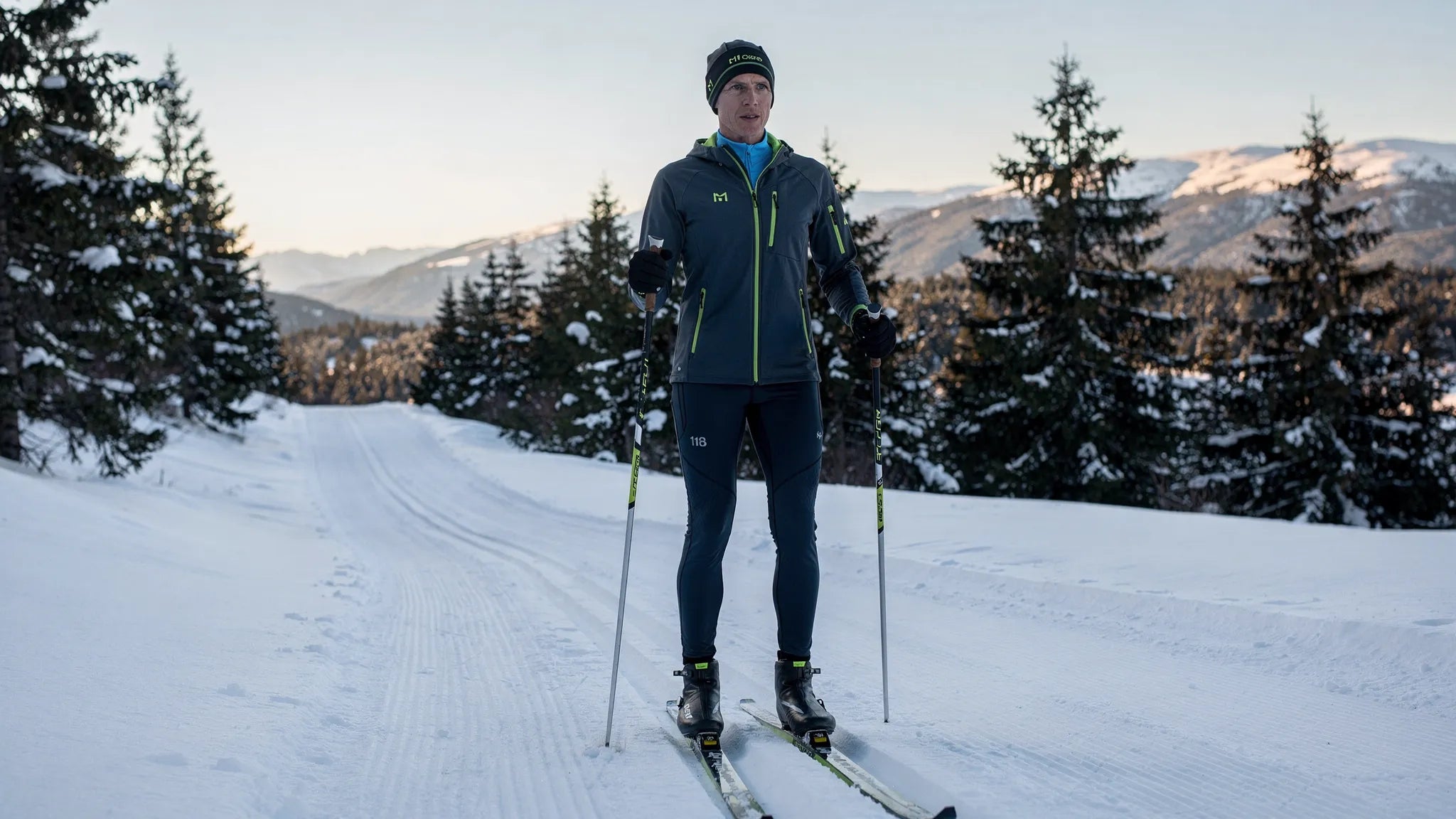
Cross-country skiing clothing: the right kit to start
Cross-country skiing seems essential, but the wrong clothing feels after a few minutes: too hot uphill, cold in breaks, wet hands, freedom of movement limited. The right kit is not the most padded one, it is the one that lets the body breathe and protects in the correct points. This guide is designed for those who start, for those who come from the alpine skiing and for those who want to buy with criterion, without filling the closet of too specialized leaders.

In summary
- The bottom ski clothing must be lighter and more breathable than the track.
- The basic system is simple: technical underwear, light intermediate layer, windproof exterior.
- To start, give priority to mobile pants, dry gloves, band or hat and technical socks.
- After 10 minutes of movement, the body produces heat.
- Avoid cotton, too padded jackets and rigid alpine ski pants.
- Choose the fit in motion, simulating push of arms, bending and long step.
Why cross-country skiing clothing is different from track clothing
In alpine skiing alternates descended, laughter in plant and waited. In the background, however, the work is continuous. The body produces heat smoothly and sweat easily, even with low temperatures.
This changes the logic of dressing. It is not necessary to isolate itself as in the chairlift, it is necessary to manage humidity, wind and thermal dispersion. If you wear a heavy ski jacket, you can feel comfortable in the first minutes, then accumulate sweat and cool as soon as you slow down.
Cold must be respected. Wind, humidity and wet clothes increase the risk of cooling, as well as the indications of the CDC/NIOSH on cold stress. The answer is not to add volume, but to choose dry, modular and easy to adjust layers.
Classic or skating: changes freedom of movement
In the classic step the movement is more linear, similar to a slipped walk. In skating, the side push is wider and requires even more elasticity on the pelvis, thighs and knees.
If you still don't know what technique you're gonna do, choose leaders who don't pull when you widen your step and when you carry your arms forward. In the bottom, a slightly more technical and less bulky garment is almost always more useful than a very hot garment.
Layer basic kit: what to buy first
To start well you don't need a complete wardrobe. It needs a consistent system. Each layer must do a precise job: absorb little, dry quickly, lock the wind where it serves, let move.
| Road | What to choose | Why does it matter | Error to avoid |
|---|---|---|---|
| Base layer | Adhering technical intimacy, synthetic or light merino wool | It keeps the skin dryer and reduces the feeling of cold | Cotton in contact with skin |
| Intermediate strategy | Lightweight, technical mesh or thin thermal vest | Adds modulable heat without blocking movement | Mid layer too often under the jacket |
| External | Softshell, windproof or light shell based on weather | Protects from light wind and snow by letting breathe | Very padded track jacket |
| Gambe | Winter Tight, bottom trousers or stretch technical trousers | Allows push, bending and long step | Hard and voluminous trousers |
| Accessories | Gloves, band or hat, neck warmer, glasses | Protects end and face without overheating | Gloves too heavy and little breathable |
For technical heads suitable for intense activities in cold environment, you can start from selectionDynafit, useful when looking for lightness, breathability and essential protection. For versatile layers to use even before and after the release, collectionsLanapoandFilsonhelp build a more transversal wardrobe, less tied to the single discipline.


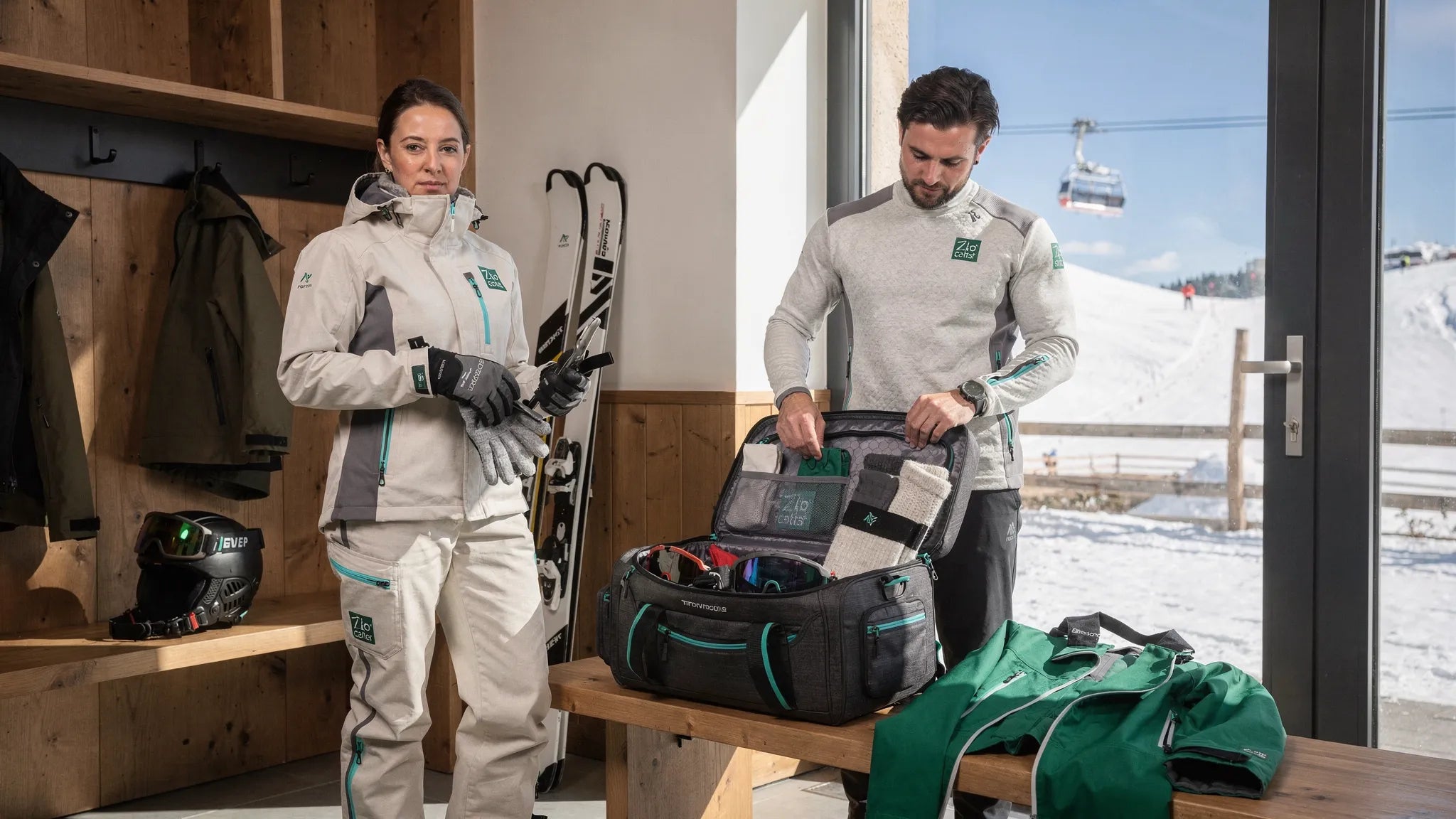
In the bag of the first exit you always keep some reserve element:
- Dry layer base for return.
- Replacement gloves if you tend to sweat a lot.
- Fascia or light hat.
- Thin neck warmer.
- Dry technical socks.
- Hot layer for return trip.
If you are also planning equipment, maintenance or other winter services in Biella, consult thesport service in store. For those who start, separating the budget between essential clothing and well-prepared equipment is often the most rational choice.
Quick decision: what to wear based on weather and rhythm
The key point is the rhythm. Two people can go out on the same day and dress differently: those who proceed slowly with frequent breaks will need more thermal margin, those who push in skating will have to lighten.
| Scenario | Recommended Kit | Practical note |
|---|---|---|
| First easy exit with breaks | Base layer, light mid, softshell, comfortable technical trousers | Keep a hot layer for the end |
| Classic background at regular pace | Base layer, softshell or windproof, elastic trousers | Fresh start, not already hot |
| Skating or intense rhythm | Base layer light, windproof, tight or very mobile pants | Reduce isolation on the bust |
| Wind marked | Base layer, vest or softshell windproof, well regulated accessories | Protect especially chest, neck and hands |
| Wet snow or variable weather | Base layer, mid slim, light shell or softshell more protective | Check that the outside does not block too much steam |
| Dry cold and slow pace | Base layer warmer, mid light, softshell, more protective gloves | Increase accessories before increasing the jacket |
A simple rule: if you are hot already while you prepare, you are probably too covered. If after 10 minutes you feel sweat on your back, lighten the intermediate layer. If you are cold only in hands, head or neck, do not change the whole jacket: work on accessories.
Our recommended options
These are not categories to buy all at once. These are the most sensible options to build the kit progressively, starting from real use.
| Recommended option | Ideal for | Key Features | To match with |
|---|---|---|---|
| Long sleeve technical layer base | Who starts and wants constant comfort | Fit close to the body, good moisture management, reduced volume under other layers | Softshell or windproof vest |
| Mid layer light | Cold exits, moderate rhythm, frequent breaks | Modular heat, easy to remove, also useful for trekking and travel | Technical layer base and light jacket |
| Softshell or windproof jacket | Most of the first exits | Wind protection, greater freedom than a track jacket, versatile use | Layer base, light gloves, band |
| Stretch technical trousers | Classic background, light skating, dynamic outputs | Mobility on knee and pelvis, less clutter, faster drying than heavy trousers | Technical and intimate fit for cold |
| Light gloves with good grip | Who uses sticks and wants precision | Free fingers, more natural grip, less sweat accumulation | Belt, thin neck warmer, spare glove |
| Thermal or windproof vest | Who feels cold on the bust but sweats on the arms | Protects the center of the body without limiting too much thrust | Base layer and sleeves or mid slim |
| Winter technical shoes | Who wants to avoid wet feet and rubbing | Controlled thickness, comfort in the boot, better moisture management | Bottom trousers and well regulated shoe |
For the first purchase, the priority is this: layer base, mobile pants, correct gloves, windproof exterior. The mid layer is immediately after, especially if you practice cold days or quietly.
Fit, size and maintenance
In the bottom the right size is not considering standing in front of the mirror. It must be tested by simulating the sport gesture. A garment may seem correct standing, but pulling on your shoulders when you push with sticks or restricting your hip when you pin the step.
Do these checks before removing the label:
- Take your arms forward like you're pushing with sticks.
- Do a side sink to check the pelvis, thighs and knees.
- Fold forward and check that your back is covered.
- Close zip and cuffs, then breathe deeply to check your chest.
- Try the gloves by holding a stick or similar object.
Between two sizes, choose closer to the body by layer base and trousers, provided they do not compress. For the outer layer leaves room to a light mid, but avoids excessive volumes: the fabric that flies disperses heat and can annoy the movement.
For women's fit, it mainly controls basin, point of life and freedom in the falcade. For those with wide shoulders or using a more structured mid layer, the test of arms forward is more important than the size of the chest taken by stops.
Maintenance is simple but decisive. Wash the technical garments by following the label, use delicate detergents and do not exceed with softeners, because they can reduce the breathability of the fabrics. Dry well gloves, socks and layer base after each exit. A dry and cured garment lasts more, works better and reduces the need for double purchases.
Frequently asked questions
Can I use winter running clothing for cross-country skiing?Yes, it is often a good starting point. But add protection from the wind, gloves suitable for sticks and socks compatible with the bottom boots.
Need a waterproof jacket to start?Not always. For many exits a softshell or breathable windproof is more useful. A light shell becomes interesting with wet snow, strong wind or unstable weather.
Better merino or synthetic wool as a layer base?The merino is comfortable and manages well smells, the synthetic dries generally very quickly. For high rhythm choose lightness and drying, for moderate rhythm it prefers comfort and warmth.
The alpine ski pants are good for the bottom?Only in emergency and for very quiet exits. They are usually too rigid, warm and voluminous. An elasticized technical trousers makes the movement more natural.
How do I know if I'm dressed too heavy?If you already sweat in the first 10 minutes or feel the wet back, you have too much isolation. Reduce the mid layer or switch to a more breathable exterior.
What do I buy first if I have a limited budget?Technical layer basic parts, correct gloves, technical socks and mobile pants. The jacket can be an anti-wind or softshell already present in the wardrobe, if it lets move and does not hold too much heat.
Build the kit starting from a few well chosen garments, not from a too heavy outfit. Explore the technical and outdoor collections of Fabbrica Ski Sises online, or go to shop in Biella for a focus on fit, layering and seasonal services. Free shipping in Italy from 50€ and made within 14 days make it easier to buy with criterion.
Ski Sises on Google
Choose Ski Sises as a preferred source: you'll see our guides and news more often in Top stories on Google.