

Women's scarves: how to choose material, size and practical use
- 8 in the guide


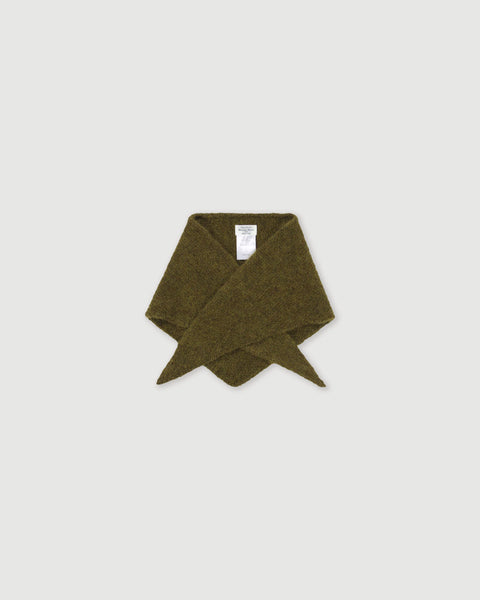


 Women's Anderson N. 803 Scarf Comedia
€128,00
View →
 Women's Vichy Flowers N. 693 Scarf Henna
€145,00
View →
 Women's Mekines Scarf Chocolate
€84,00
View →
 Women's Mekines Scarf Khaki
€84,00
View →
 N 655 Scarf Natural
€54,00
View →
 Women's 768 Scarf Natural
€65,00
View →
 PS2694 Scarf Piscine
€178,00
View →
 Women's Juggler N. 847 Scarf Dream
€67,00
View →
Products in this guide
On screen
Women's Anderson N. 803 Scarf Comedia
€128,00
View →
On screen
Women's Vichy Flowers N. 693 Scarf Henna
€145,00
View →
On screen
Women's Mekines Scarf Chocolate
€84,00
View →
On screen
Women's Mekines Scarf Khaki
€84,00
View →
On screen
N 655 Scarf Natural
€54,00
View →
On screen
Women's 768 Scarf Natural
€65,00
View →
On screen
PS2694 Scarf Piscine
€178,00
View →
On screen
Women's Juggler N. 847 Scarf Dream
€67,00
View →
When you look for women's scarves, the first question isn't which pattern you like best. It's whether you need real warmth, a lightweight midseason accessory, or a scarf that changes the outfit without adding too much volume. Those are different uses and call for different sizes. If you head out in the morning with a heavy coat or jacket, a wool scarf makes more sense. If you'll mostly carry it in your bag and move between outside and inside, cotton or linen can be more practical. In the selection of scarves in the Ski Sises selection you’ll find very different models: to choose well, start from season, size and outerwear you actually wear.
In short
- For everyday cold: wool remains the simplest option, but size matters as much as material.
- For mid seasons and indoors: cotton and linen are easier to wear for many hours.
- To change your look without weighing it down: square scarves and compact sizes are often more useful than a large stole.
- Before ordering: check dimensions, bulk at the neck and which jackets or coats you'll wear it with.
From the catalogue
Explore the models
Open a photo for details




Women's wool scarves: when the choice is truly right
Wool is mainly for when the scarf must protect against cold and stay around your neck most of the day. Composition alone isn't enough — size makes a big difference too.
The Anderson Scarf No. 803 Woman Comedia The Anderson Scarf is by Moismont, for example, made of 100% wool and measures 45 x 180 cm. That proportion is practical if you want to wrap it under a coat without creating too much bulk at the front. The advantage is clear: easy daily use, especially with structured outerwear. The drawback is it covers less than a wide stole and isn't as suitable for laying over the shoulders. Before choosing, decide whether you'll mostly wear it knotted around the neck or also loose indoors.
If you prefer a more substantial scarf, the Vichy Flowers Scarf No. 693 Woman Henna measures 70 x 180 cm and is made of 100% fine wool. Here you gain more surface, pattern and chest coverage. The trade-off is bulk. On padded jackets, short coats or garments with already prominent collars it can become too much. It's worth comparing the scarf's size to the pieces you actually wear on cold days, not to an imagined outfit.
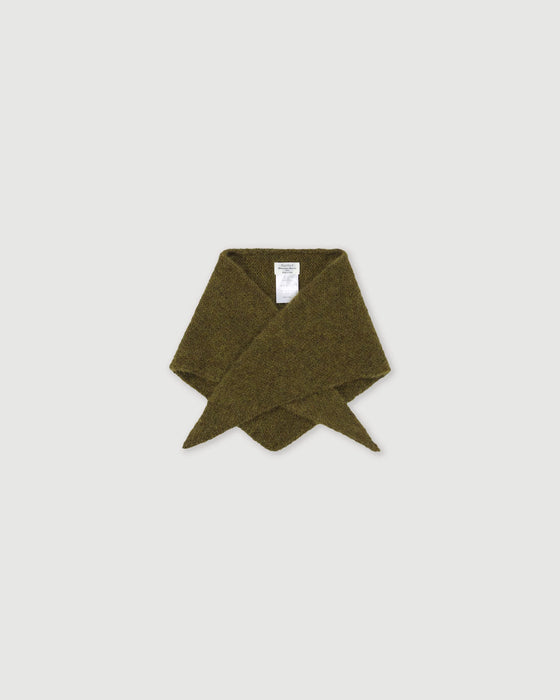
There are also more streamlined models like Mekines Scarf Woman Chocolate and Mekines Scarf Woman KhakiThe Mekines Scarf in Chocolate and the Mekines Scarf in Khaki are both wool. They make sense if you're after a simple scarf to add daily under coats, jackets and knitwear without introducing a strong pattern. The advantage is easy pairing. The downside is they change the overall look little: if your goal is to add character to a neutral coat, a graphic scarf does more.
When cotton and linen are used more than wool
Many heavy scarves look good in photos but end up rarely worn. That often happens if you drive, work in heated spaces, or want an accessory you can put on and take off without overthinking it. In those cases a lightweight scarf can make more sense than a winter one.
The Scarf N 655 Natural The Moismont one is 100% cotton and measures 65 x 65 cm. The compact size makes it easy to fold and keep in your bag. It's suitable for spring and autumn, or for anyone who prefers a close knot at the neck without much volume. The limitation is simple: if you spend long periods outdoors in winter, it's not the right choice as your main protection.
Also the Scarf 768 for women Natural focuses on lightness rather than warmth. The product sheet describes it as a lightweight cotton scarf, suitable for spring and summer, usable at the neck, over the shoulders, or as a hair accessory. The advantage is versatility. The compromise is that it offers little protection from true cold. It makes more sense if you're completing a wardrobe for mild days or travel, and less if you want a single scarf for the winter months.
If you want more width without opting for wool, linen is a useful option. The Scarf PS2694 Piscine, described on the product sheet as pure linen and suitable for the transitional seasons, can be a good choice if you're looking for a stole to wear indoors as well, with a natural texture and less warmth. If instead you imagine wrapping it tight around the neck on cold days, you should look elsewhere.
Square scarf or long scarf: the difference matters every day
Shape matters more than it seems, because it determines how you'll actually wear the scarf. And if the gesture isn't comfortable, the risk is leaving it in a drawer.
A small or medium square scarf is practical if you like an accessory closer to the face and less bulky. The Scarf Juggler N. 847 for women Dream measures 55 x 55 cm and combines 75% wool, 15% silk and 10% cashmere. The compact format helps you wear it with jackets, coats and knitwear without accumulating too much fabric. The limitation is that it doesn't replace a long scarf on cold or windy days.
If you prefer a bandana-style setting, the Scarf Olaf N. 676 for women Velvet and the Scarf Olaf N. 676 for women Western are square, 70 x 70 cm, in 100% wool. They offer more presence than a small foulard but less bulk than a long scarf. They're useful if you want a graphic detail that's easy to tie on jackets and coats. The compromise is less chest coverage compared to rectangular models.
A long scarf remains more flexible if you tend to wear it loose, doubled, or draped over the shoulders. Usually it's the most practical choice when you want warmth and different wearing options. It does, however, require coherence with the outer layer: on a short, very padded jacket it can look out of scale, while it works better on clean-cut coats or slim knitwear.
Patterns, solid colours and size: how to choose without overdoing it
A scarf can fade into the outfit or become the focal point. Neither is universally right — it depends on how dominant your coat, sweater and bag already are.
If your wardrobe is mostly solids or neutrals, a pattern can help. The Mc Innes Scarf No. 804 Tragedy, women's and the Mc Innes Scarf No. 804 Velvet, women'sBoth are 100% wool and 45 x 180 cm, adding a small-check pattern without making neck volume look bulky. The benefit is they add rhythm to smooth coats or simple knitwear. The drawback is that even a discreet pattern demands attention if you already wear checks, stripes or very textured fabrics.
If you already own pieces with a strong visual presence, solids are easier to use. The Darya women's scarf Forest in cashmere should be read this way: a warm, understated accessory that's ready to wear. The advantage is ease of use. The downside is a more measured effect: it's not the model to pick if you want the scarf to be the first thing people notice.
A middle ground is the 805 women's scarf Oxford GreenIt’s 85% wool and 15% silk, size 90 x 180 cm. It can be used as a wrap-around scarf or as a lightweight stole. The advantage is the dual function, useful if you want an accessory that moves between everyday wear and smarter occasions. The compromise is the generous size: on petite frames or with short, sporty outerwear it can look bulky. Before ordering, picture where it will really fall on your torso and how often you’ll wear it tightly knotted.
A simple method to choose among women's scarves
To reduce doubts, do three checks in this order: season, size, then colour.
Start with the temperature
For full winter, wool and cashmere are the most straightforward options. For transitional seasons, cotton and linen become easier to wear. If you'll be indoors a lot, a heavy stole risks staying in the wardrobe more than you expect.
Check the size together with your outerwear
A 45 x 180 cm is often easy to wear with coats and jackets that don't add much bulk. Larger sizes such as 70 x 180 cm or 90 x 180 cm demand more space and visually draw attention. Square pieces measuring 55 x 55 cm or 70 x 70 cm are handy when you want a quick accessory to knot, without much layering.
Decide whether it will be an everyday scarf or an accent piece
If you'll use it Monday to Sunday, generally go for a manageable colour and a simple size. If instead you already have a neutral base, you can opt for a pattern or a less universal size. If you're also sorting other winter accessories, it may help to read the guide on wool hats to better balance materials and volumes.
The practical rule before deciding
If you'll mainly use it to keep warm, pick material and size first. If you're buying primarily to finish a look, decide on shape and visual presence first. That distinction prevents many underused purchases.
If you want to compare lightweight, winter and compact scarf models, explore the scarf collection and check measurements, fabrics and volume against the garments you wear most often.
From the catalogue
Choose a model
Open the product page for sizes and details.
 Moismont
Women's Anderson N. 803 Scarf Comedia
€128,00
 Moismont
Women's Vichy Flowers N. 693 Scarf Henna
€145,00
 Hartford
Women's Mekines Scarf Chocolate
€84,00
 Hartford
Women's Mekines Scarf Khaki
€84,00
 Moismont
N 655 Scarf Natural
€54,00
 Moismont
Women's 768 Scarf Natural
€65,00
 Epice
PS2694 Scarf Piscine
€178,00
 Moismont
Women's Juggler N. 847 Scarf Dream
€67,00
FAQ
What's the practical difference in everyday use between a 45 x 180 scarf and a 70 x 180?
A 45 x 180 cm scarf is easier to wear daily under coats and jackets because it adds less bulk around the neck. A 70 x 180 cm piece covers more, works better draped or laid over the shoulders, but needs more space and can feel bulky with already voluminous outerwear. If you want something to knot quickly and keep on for hours, the narrower size is often more practical.
For a petite woman is it better to choose a square scarf or a wide stole?
For daily use, a square scarf or a not-too-wide rectangular scarf is usually easier to handle on a petite frame. Sizes like 55 x 55 cm or 70 x 70 cm stay close to the face and don’t overwhelm shoulders and bust. A wide stole can work, but check coat length, outerwear volume and where the fabric will really fall when worn.
Is wool or cashmere better if I have sensitive skin on my neck?
People with sensitive skin often choose cashmere for a softer feel at the neck, but material alone doesn't guarantee comfort: knit, weight and how long the scarf stays against the skin also matter. Wool covers a wide range of textures. If your neck is delicate, prefer items described as soft and think about whether you'll wear the scarf tight against skin or over a high collar.
Does a linen scarf make sense in winter?
Yes, but not as a substitute for wool on very cold days. Linen in winter makes sense when you move frequently between car, office, shops and heated spaces and want a light accessory that won't overheat you. If you walk long stretches outdoors or need real thermal protection early in the morning, a linen scarf alone is unlikely to be enough.
Which scarf should you choose with a padded down jacket or a technical coat?
With an already bulky down jacket or a technical coat with a structured collar, a narrow scarf or a square foulard often works best. They sit better under the garment's collar and add less fabric bulk. A wide stole can shift constantly or create too much front thickness. If the outerwear is already very warm, a compact scarf is often more useful than a large, enveloping model.
Ski Sises on Google
Choose Ski Sises as a preferred source: you'll see our guides and news more often in Top stories on Google.


