






















Ski mountaineering equipment: what to buy to start
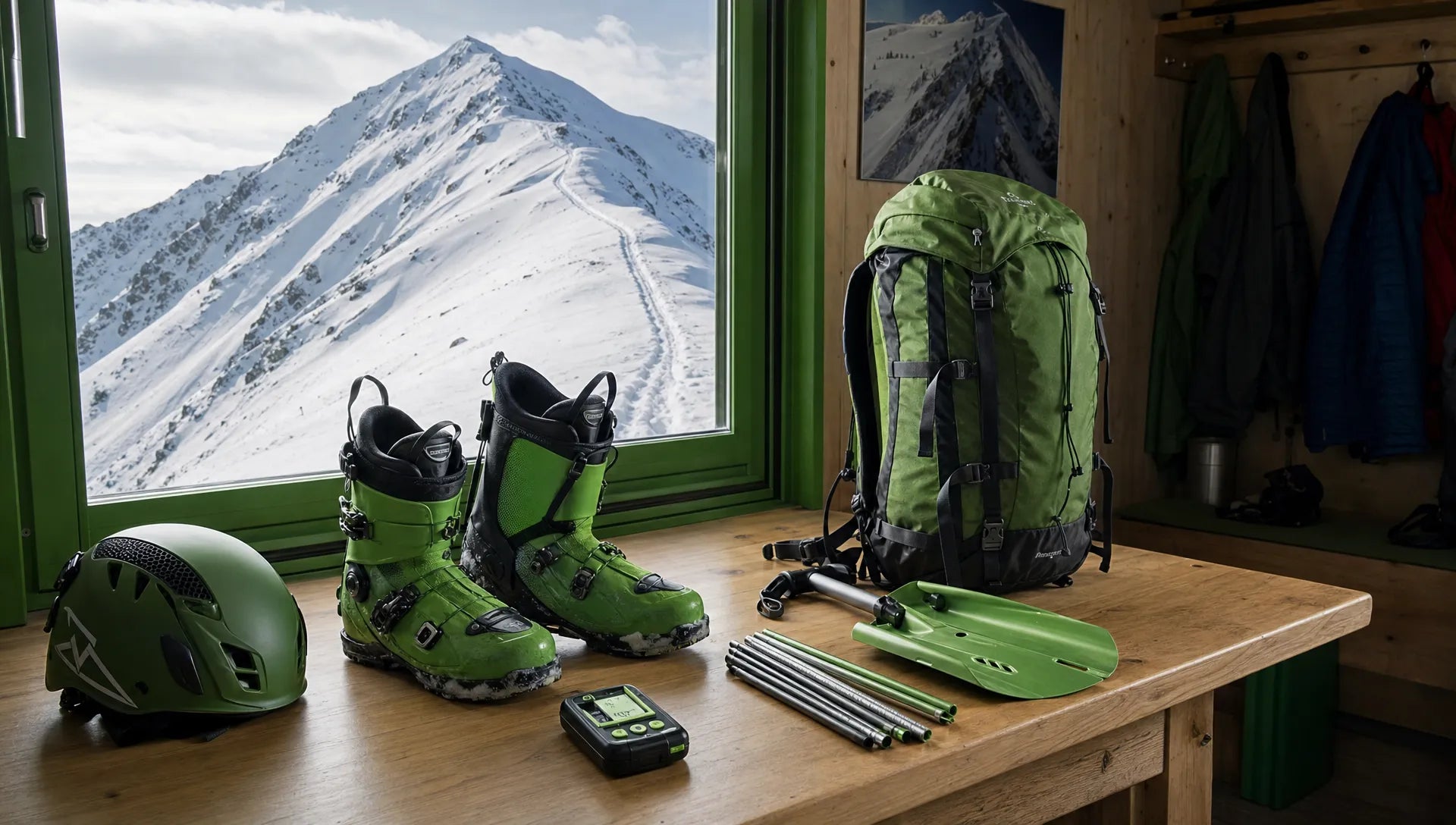
Starting ski mountaineering means buying less, but buying better. The most common mistake is to start from skiing, when the decisive choice is often another element: the boot. Then safety, trim, clothing and accessories come. This guide is designed for those who come from skiing on track, from winter trekking or from freeride and want to build a first solid mountaineering equipment, consistent and without redundant purchases.
In summary: what to buy immediately
- Not only skis: boots, safety kits and skins affect the experience.
- Rent if you are at the first exits: is the smartest way to understand weight, stiffness and width of skis.
- Buy first what should fit well: boots, helmet, backpack and technical clothing.
- The ARTVA kit, shovel and probe is not optional: should be combined with practical training.
- Choose layered garments: uphill, it cools down quickly.
- Avoid extreme ultra-fast at first: better stability, comfort and durability.
The correct logic: first safety, then comfort, then performance
Ski mountaineering equipment to start does not have to choose as a track outfit. Here the body works uphill, the environment changes quickly and the descent comes after an aerobic phase. It needs balance.
Too heavy set makes progression tiresome. A too light set can be nervous, less stable and less reassuring for those who are still learning. The point is not to have the “more technical” equipment, but the one that allows you to move well, stay dry and manage the descent with clarity.
The priority should be this:
| Priority | What to assess | Why does it matter |
|---|---|---|
| Security | ARTVA, shovel, probe, helmet, fit | Without these elements you do not face uncontrolled snowy soil |
| Fit | Boots, stockings, gloves, helmet | A size error becomes pain, cold or loss of control |
| System | Skiing, attacks, skins, sticks | It has to work uphill and stay reliable downhill |
| Layering | Base layer, mid layer, shell, trousers | Heat and humidity throughout the exit |
| Details | Glasses, mask, bottle, front, buff | They are small elements, but often make the difference |
For the first exits, especially if you do not yet have a clear idea of your style, consider the rental. If you are in Biella area, ski and snowboard rental allows you to test different settings before investing in a complete set.
What to buy and what to rent at first
The question is not only “what is needed”, but “what makes sense to possess immediately”. Some items are personal and you should buy them soon. Others can rent while learning what you prefer.
| Element | Buy or rent? | Practical Council |
|---|---|---|
| Boots | Buy, after careful testing | I'm the most important contact point. They must block well downhill and walk without creating painful points |
| Ski and attacks | Rent at first, buy after a few exits | Try different geometries and weights before choosing |
| Skins | Usually with skis | They must be compatible with skiing and easy to handle with cold hands |
| ARTVA, shovel, probe | Buy or rent only if already format | The equipment only serves if you can use it quickly |
| Backpack | Buy | It has to accommodate safety, layers, water and small accessories without hindering the ski |
| Clothing | Buy gradually | Better few well-combinable technical leaders than many unsuitable leaders |
| Helmet and glasses | Buy | Fit, hygiene and comfort are personal |
| Sticks | Buy or rent | Adjustable and reliable are more versatile in the first exits |
If you already have winter outdoor clothing, you can reuse a part, but carefully. Too hot duvet can work as a stop, not as a climb. A hiking jacket without adequate protection can be insufficient with wind, snow or fast descent.
Essential technical elements
Mountaineering skiing
To start, look for a predictable ski. It does not need an extreme model, neither from race nor from pure freeride. It must be light enough not to tire uphill, but sufficiently stable when snow changes.
Those coming from the track often tend to choose more structured skis, because they give confidence downhill. Those coming from trekking can underestimate the ski and bet too much on weight. The correct way is an intermediate way: manageable equipment, not fragile, not specialist.
Attacks
Ski mountaineering attacks must allow uphill walk and downhill locking. Technical systems are widespread because efficient, but require compatibility with the boot and attention in use.
For those who start, operational simplicity counts as much weight. You must be able to insert and remove the boot even on irregular snow, with gloves and cold. In store it is best to try the gesture, not only to read the technical sheet.
Boots
The boot is probably the first purchase to do well. It must offer walking mobility and downhill support. If it tightens in the wrong place, it spoils the ascent. If it is too wide, it reduces precision and safety.
Don't just choose by number. The shape of the foot, the neck, the heel and the inner volume count. A thin or medium technical stocking is often more effective than a thick stocking, because it improves sensitivity and reduces rubbing.
Foca skins
The skins are the engine of the ascent. They must adhere to the ski, slide well and ensure grip. As a beginner, it seeks ease of use and reliability. Learn how to store them properly, dry them after leaving and manage glue carefully.
A poorly treated skin can ruin a day even with the rest of the perfect equipment.

Clothing: the layered system that really works
In touring, clothing must manage two opposite moments: warm climb and cold descent. This is why the unique layer does not work. It needs a modular system.
The layer base must remove moisture from the skin. The mid layer adds isolation without blocking movement. The shell protects from wind and snow. A light thermal head in the backpack is useful for supports, skin changes and unexpected.
To build a coherent technical wardrobe, you can focus on brands that work well between mountain and everyday use. TheArc'teryx selectionis indicated if you look for essential and clean layering, while theselection La Sportivais interesting for garments and accessories designed for dynamic alpine activities. For backpacks, bags and versatile garments, the collectionThe North Facecompletes well a technical set without leaving a sober outdoor aesthetic.


A good basic system to start includes:
- Technical base layer: adherent, breathable, suitable to move without accumulating sweat.
- Mid layer light: useful in departure, in breaks and on cold days.
- Anti-wind and snow-resistant shell: to wear when the weather changes or falls.
- Technical pants: comfortable uphill, protective downhill, compatible with the boot.
- Double Gloves: a light pair to climb, a more protective one to get off or stop.
The simple rule: if you start already too hot, after twenty minutes you will be wet. Better to start slightly fresh and adjust the layers along the route.
Suggested options
These are not “things to buy all together” regardless. These are the categories to be evaluated, in order of utility, with a practical logic for those who are building the first set.
| Option | Ideal for | Key Features | To match with |
|---|---|---|---|
| Ski mountaineering boots | Who wants to invest in the first personal element | Good walking, downhill support, compatibility with touring attacks | Technical calculations and accurate testing in store |
| ARTVA kit, shovel and probe | Any exit outside controlled areas | Search, excavation and localization in emergency | Practical course and exits with competent persons |
| Technical backpack | Half day out and full days | Space for safety, layers, water and accessories | Guscio, spare gloves and snacks |
| Skiing with touring attack | Who has already tried the rental and wants continuity | Balance between uphill weight and downhill stability | Dedicated skins and adjustable sticks |
| Compatible leather | Who buys own skis | Correct adherence, good smoothness, simple management | Cover, protective net and drying after use |
| Adjustable sticks | Beginners and skiers facing varying slopes | Uphill adaptability, traverse and descent | Light gloves and progression technique |
| Technical guide | Who comes out with variable weather | Wind and snow protection, fit on mid layer | Base layer and mid layer breathable |
| Helmet and eye protection | Who wants a personal and hygienic set | Comfort, protection, compatibility with mask or glasses | Light and lens underbody suitable for light |
A beginner with controlled budget can start with boots, personal technical clothing, backpack and helmet, then rent skis, attacks, skins and safety kits for the first guided exits. When the frequency increases, it makes sense to complete the set.
Fit and sizes: where you should not miss
Ski mountaineering fit is more critical than other outdoor sports, because each garment and accessory must work in continuous movement.
For boots, don't think like a lifestyle shoe. The foot must be stable, the heel should not be lifted clearly and the fingers should not undergo constant pressure. Consider that uphill the foot warms up and can swell slightly.
For trousers and shell, check the width of movement. Simulate a falcade, bend your knees, raise your arms and try your backpack. If the boss pulls, climbs too much or limits the gesture, in the mountains will become a problem.
For gloves and socks, avoid excess volume. Too much material can reduce sensitivity and circulation. Better to choose technical garments, dry and well proportioned.
A useful note: if you are between two sizes, do not automatically choose the most comfortable at rest. Consider how it behaves with the backpack, with the closed boot and with the layers worn.
Safety, maintenance and preparation before exit
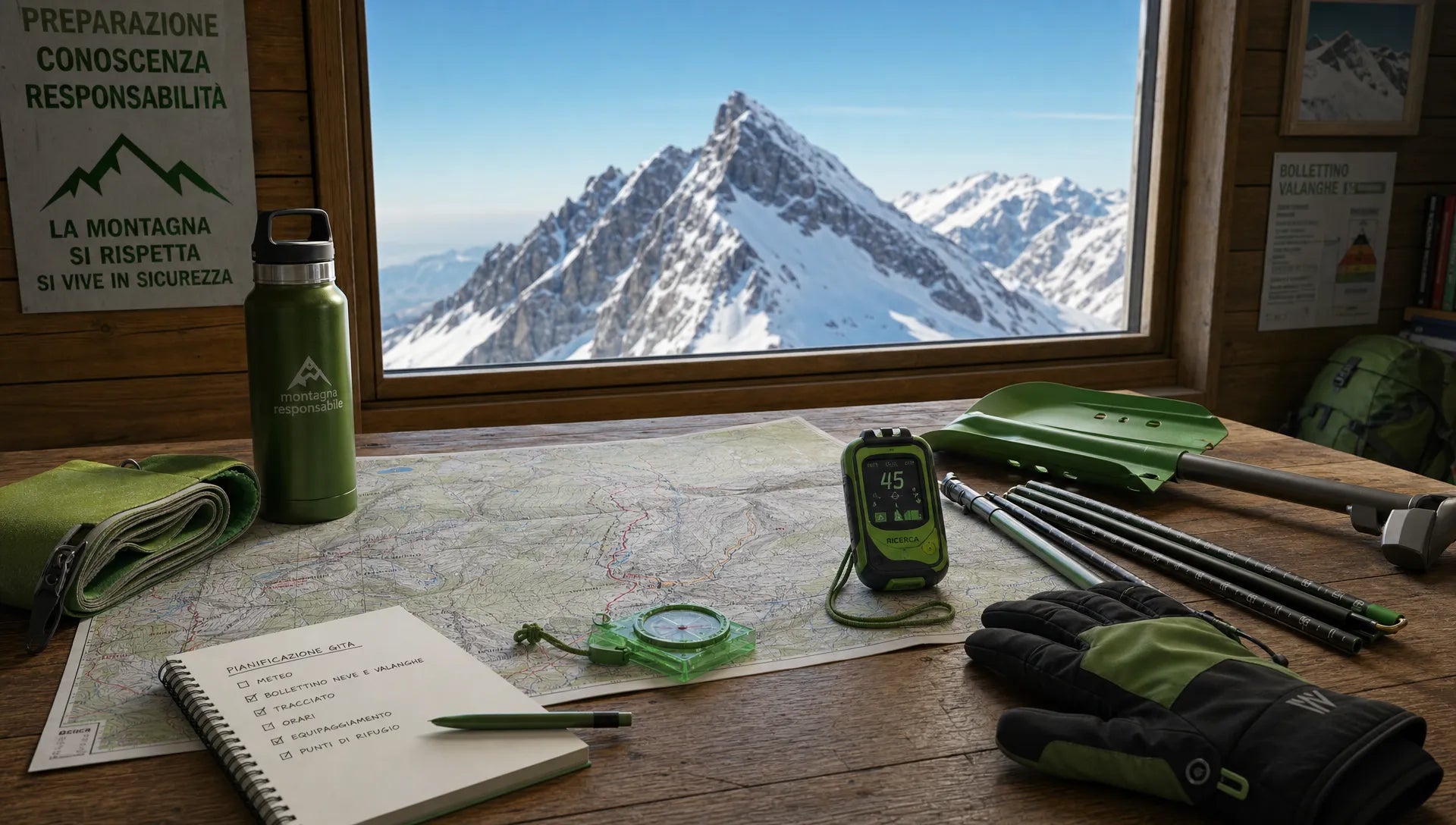
Equipment does not replace competence. Before facing uncontrolled itineraries, it serves snow training, avalanches, self-surface and reading of the soil. The ARTVA kit, shovel and probe must be tried several times, not only purchased.
Before each exit, check:
- ARTVA batteries and proper operation.
- Status of skins and adhesion of glue.
- Screws, attacks, levers and boot blocks.
- Weather, avalanche report and return time.
- Backpack, water, food and front lamp.
- Load phone, power bank and route track saved offline.
The preparation today also passes by digital tools: maps, itinerary files, bookings, weather and travel documents. If you often organize mountain trips and work with personal devices, a specialized support forlaptop service and maintenancecan avoid trivial problems before departure.
After exit, dry boots and skins away from aggressive heat sources. Check the blades, insoles and attacks. Regular maintenance extends the life of the material and keeps the ski more predictable, especially on hard or transformed snow.
Quick decision: which route to choose
If you have never skied mountaineering, start with a guide, course or an organized exit. Rent the technical set and focus on clothing, backpack and personal comfort.
If you already have experience on track and want to make 3 or 4 releases in the season, buy well-chosen boots and ski rentals and attacks. After a few exits you will see if you prefer a lighter, more stable or more downward-oriented trim.
If you make regular exits every winter, invest in a complete set. Choose skis, attacks and skins as a unique system, not as separate pieces. Keep a consistent logic: do not match a very light ski to an unsuitable boot, or a too small backpack with long outputs.
If your goal is freeride with short laughter, it privileges control and protection. If your goal is to explore with longer differences, weight and walking comfort become more important.
FAQ
What is the first equipment to buy for ski mountaineering?In many cases the boot is the first sensible purchase, because it has to adapt to the foot and condition both uphill and downhill. Immediately after they come safety, backpack, technical clothing and helmet.
Can I start with modified track skis?In general it is not the ideal choice. Ski mountaineering requires attacks, boots and skins compatible with the climb. An improvised trim can be uncomfortable, heavy and unsafe.
Do you really need ARTVA, shovel and probe?Yes, when you enter uncontrolled snowy ground. But to possess the kit is not enough: you must know how to use it quickly and do practical training.
Better buy or rent the first equipment?Renting is often the best choice for the first exits, especially for skis, attacks and skins. It makes sense to buy first what depends a lot on fit, such as boots, helmet and clothing.
How do you dress mountaineering ski clothing?It must allow movement, breathability and thermal regulation. Avoid too tight, too heavy or unmodable garments. The layer system is more effective than a very hot single garment.
How many exits do you need before buying a complete set?After some rental or driving exits you will have a clearer idea of weight, stability and comfort. If you predict a regular practice, a personal set becomes more coherent and convenient over time.
Ski mountaineering rewards the measured choice. Start from safety, fit and clothing, try on the field what you do not know and complete the set only when your style is clearer. To build a first curated equipment, online or in shop in Biella, explore the technical collections of Fabbrica Ski Sises or ask for advice before buying: a well-chosen set lasts longer and makes every exit easier to manage.
Ski Sises on Google
Choose Ski Sises as a preferred source: you'll see our guides and news more often in Top stories on Google.