Article: Patagonia Women's: Which Piece to Choose Between Fleece, Down Jacket and Shell
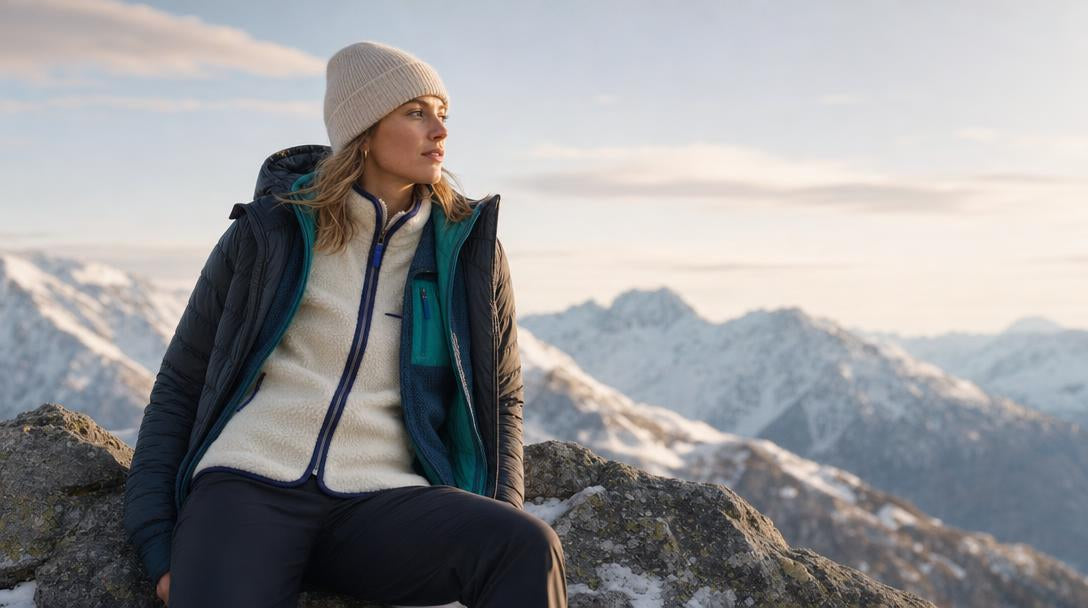
Patagonia Women's: Which Piece to Choose Between Fleece, Down Jacket and Shell
Anyone looking for a women's Patagonia almost always arrives with a name in mind: Retro Pile, Nano Puff, Down Sweater, R1. Before the name, though, it helps to be clear about the job the garment has to do. For soft, everyday warmth over a base layer, a fleece is enough. On cold, dry mornings, when you walk for a long time, a down jacket like the Down Sweater Hoody keeps you warmer. With frequent fog and damp, the synthetic insulation of the Nano Puff gives you less to worry about. The R1 Air makes sense if you move a lot and sweat, while the Triolet, a GORE-TEX shell, is worth considering only if rain, snow and mountains are the rule.
A note on the catalog. Nano Puff, R1 Air and Triolet currently appear in the Ski Sises selection with men's product pages. The features mentioned here come from those pages and serve to explain each line's role. Materials and details of the women's version should be double-checked on its own product page.
Women's Patagonia: which layer are you really missing
The table summarizes the roles. Start from the last column, because it is often the limitation, more than the strength, that makes you rule out a model.
| Model | What it is, according to the product page | When it makes sense | Limitation to keep in mind |
|---|---|---|---|
| Retro Pile | Double-sided Polartec fleece, 100% recycled polyester | Everyday use, weekends, warm layer under outerwear | Not described as windproof: in strong wind you need a layer over it |
| Down Sweater Hoody | Recycled nylon shell, 800 fill power down, wind protection | Dry cold, city, outdoor outings | Not stated to be waterproof |
| Nano Puff | PrimaLoft Gold Eco insulation, DWR finish, wind- and water-resistant | Damp days, travel, layer under a shell | Water-resistant, but not waterproof |
| R1 Air | Lightweight technical fleece, breathable, quick-drying | Intense activity in the cold, with a pack or helmet | Standing still, in the city, it warms less than a thicker fleece |
| Triolet | 3-layer GORE-TEX jacket, waterproof and breathable | Mountaineering, hiking in harsh weather, snow | Too technical for urban commutes |
The fleece to wear every day
If you need the garment from Monday to Sunday, between errands, a walk and a poorly heated home, a fleece is the purchase you are least likely to regret. The Women's Retro Pile Fleece Jacket Natural is made of recycled polyester, with extra-soft double-sided Polartec fleece. It weighs 431 g and is made in a Fair Trade certified factory. The design revisits the brand's classic fleeces in an updated way, so with jeans and sneakers it doesn't look like mountain gear.
Products mentioned in this article

The trade-off is wind. The product page talks about warmth and softness, not protection from the air. On a still day the Retro Pile is enough. In a north wind or at altitude, it needs a layer on top that seals it in.
If you're thinking about a fleece vest, the Patagonia collection also includes a selection of women's vests. A vest warms your torso and leaves your arms free, so it fits under a coat without bulking up the sleeves. It's handy if you drive a lot or move from warm interiors to cold outdoors several times a day. In cold air, though, your arms stay exposed. Before ordering, try the armhole over the long-sleeve top you'll actually wear, not over a t-shirt.
If you're weighing the Synchilla, you can use the same criteria. The Patagonia Synchilla guide is written for men, but the reasoning about use and layering applies to you too. For sizing, refer only to the women's product page.
More warmth: down or synthetic insulation
When fleece isn't enough, the choice comes down to the Down Sweater and the Nano Puff. What mainly separates them is the humidity you meet in your days.
The Women's Down Sweater Hoody Jacket in Black has a recycled nylon shell and 800 fill power down insulation. The product page states wind protection, an adjustable hood and zippered handwarmer pockets. It suits you if you walk a lot in the city in winter or head out of town on cold, clear days. The hood means you don't always have to depend on a hat.
Products mentioned in this article

The Nano Puff currently in the catalog is a men's model, with a very precise product page. The outer fabric is recycled polyester with a PFC-free DWR finish and resists wind and water. PrimaLoft Gold Eco insulation keeps its thermal properties even when wet, the brick-pattern quilting holds the insulation in place, and an inner pocket doubles as a stuff sack. This ability to keep warmth when damp is stated for the Nano Puff, not for the Down Sweater. If you live where fog is frequent or the garment often ends up compressed in your pack while traveling, synthetic is the more reassuring choice.
Water-resistant doesn't mean waterproof. In a long downpour, neither replaces a rain jacket.
R1 Air: the fleece to wear while you move
The R1 Air solves a different problem: sweating under layers that are too closed. The Full-Zip Hoody version in the catalog, also a men's model, is described as a lightweight, breathable, quick-drying technical fleece for high-effort activities in the cold. The shoulder seams are shifted to sit comfortably under pack straps. The hood is thin and designed to fit under a helmet and a jacket hood. The full zip is there to vent heat. It weighs 366 g.
It makes sense for snowshoeing, ski mountaineering and winter outings where you alternate effort and breaks. For a day in town, where you mostly stay still, the Retro Pile is warmer and easier to match. When trying it on, move your arms as if planting ski poles and check whether the hem rides up.
Rain and mountains: when you need a real shell
The Triolet is the technical extreme of the selection. The product page for the men's version lists a 3-layer GORE-TEX fabric that is waterproof, breathable and windproof. It has a helmet-compatible hood, pockets you can still reach while wearing a harness, and underarm ventilation openings. These are useful details for alpinism and exposed terrain.
For city rain or a spring hike, it is more than you need. The collection lists the Torrentshell 3L Rain as its waterproof jacket: check its product page before stepping up a level. If you need a ski jacket for just one week on the snow, ask yourself whether buying one makes sense. The article on renting ski jackets explains when it is worth it.
The collection also includes the Fjord Flannel shirt. It is a garment to wear, not a technical layer, and in the in-between seasons it works well over a tee or under a vest. The material of the variant you are interested in should be checked on the product page.
Size and fit: what to check before choosing
The size guide published in the collection is the men's one. For a women's garment, do not convert those measurements. Use the information on the women's product page, and ask if it is not enough. Try things on with your real layers: a down jacket worn over a t-shirt can seem right and then turn out tight across the shoulders over the Retro Pile. Raise your arms and cross them in front of you; your wrists and lower back should stay covered. Close the hood and turn your head to check your visibility. If the garment will go under a shell, try the shell on over it too.
Ski Sises has a store in Biella and an online shop, with a customer service team that supports you before and after your purchase. If you are torn between two sizes or two lines, trying the garments on one over the other remains the quickest way to see how they work together.
The rule for deciding
Choose based on the weather you meet most often, not the worst day of the year. For dry cold and everyday life, a fleece or the Down Sweater is enough. If humidity is frequent, the Nano Puff is the better choice. The R1 Air is for when you work hard and sweat, the Triolet for mountains that truly demand it. Once you have clarified the role, open the Patagonia collection and compare the women's product pages of the models that match your use.


FAQ
For city winters, is the Retro Pile or the women's Patagonia Down Sweater Hoody better?
It depends on how much time you spend outdoors and how much wind you face. The Retro Pile is a soft Polartec fleece, comfortable indoors too, but it is not described as windproof. The Down Sweater Hoody has 800 fill power down, a recycled nylon shell and wind protection, so it keeps you warmer on long walks. If you make short trips and spend many hours indoors, the fleece is easier to manage. If you walk for a long time in the cold, the down jacket is the better choice.
Can the Patagonia Nano Puff be used in the rain?
The catalog listing for the Nano Puff states that it is wind- and water-resistant thanks to its DWR finish, and that its PrimaLoft Gold Eco insulation keeps its thermal properties even when wet. It remains a water-resistant garment, not a waterproof one. It handles drizzle and damp conditions, but in prolonged rain you should cover it with a waterproof shell. In that case it works well as an insulating layer under your rain jacket.
Is a Patagonia women's fleece vest better, or a fleece with sleeves?
The vest warms your core and leaves your arms free. It's comfortable under a coat, in the car, or when you're adding and removing layers often. The fleece with sleeves gives more coverage and can be worn on its own on cool days. If you already have a good outer layer and only need warmth on your torso, choose the vest. If you want a stand-alone piece, choose the sleeves. Either way, try the size over the long-sleeved top you'll actually wear.
Does the Patagonia R1 Air fleece work under a backpack and helmet?
The catalog listing for the R1 Air Full-Zip Hoody notes shoulder seams shifted to sit comfortably under pack straps, and a slim hood designed to fit under helmets and hoods. It's a lightweight, breathable, quick-drying fleece, designed for intense activity in the cold. Before buying it, test your arm and shoulder movements with a pack on, and check that the hem stays in place.
How do I choose the size of a women's Patagonia item if I only find the men's size guide?
Don't convert men's measurements, because the proportions of shoulders, torso, and sleeves differ. Use the guidance on the women's listing for the garment you're considering. If that isn't enough, contact customer service with your chest and hip measurements at hand. Always decide with the layers you'll wear underneath in mind: a down jacket meant to go over a fleece needs more room than one worn over a thin shirt.
Ski Sises on Google
Choose Ski Sises as a preferred source: you'll see our guides and news more often in Top stories on Google.