Article: Trekking outlet: how to shop without buying at random
Trekking outlet: how to shop without buying at random
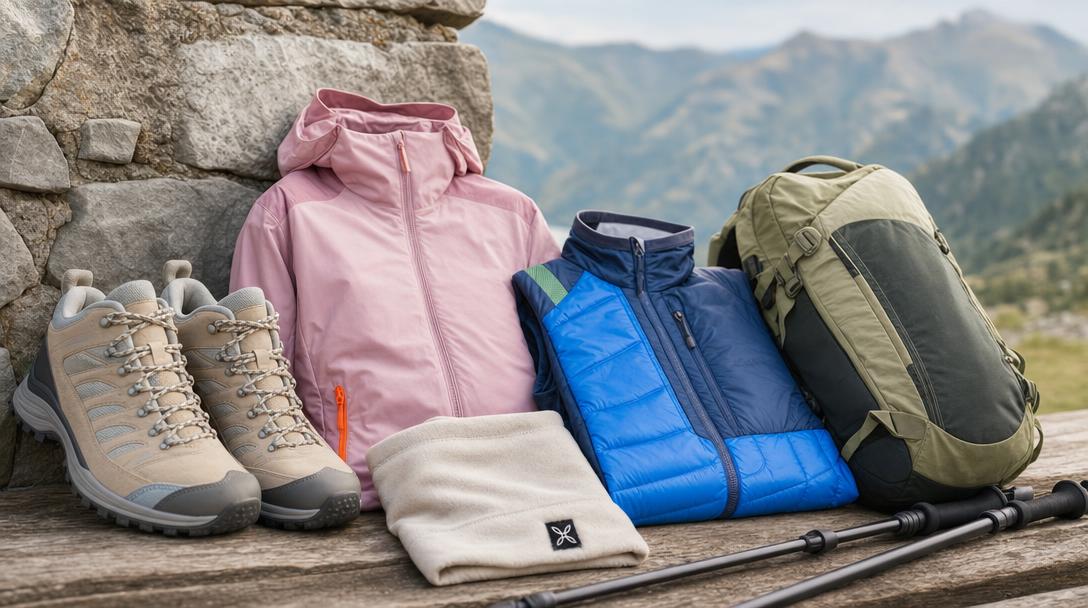
When you shop a trekking outlet, the risk isn’t overspending. More often the opposite happens: you buy an item because it looks like a bargain and then hardly use it, or use it badly. In trekking that shows up as boots too stiff for relaxed walks, layers that are too warm for active movement, or impulse accessories that mostly stay in your pack.
To find your way, make a simple distinction. Do you go out a few times a year on well-trodden paths and do day hikes in the three main seasons? Or do you need gear that makes sense for altitude changes, uncertain weather and tougher terrain? trekking selection this difference matters more than the brand and often more than the price.


Trekking outlet: start from the terrain to avoid common mistakes
Not everything in a trekking collection suits every outing. If you stick to gravel tracks, easy trails or hill walks in good weather, you don’t always need a heavily structured boot. A more technical model can give extra protection and support, but it also adds weight, bulk and a stiffer stride.
A concrete example is the Scarpa Ribelle HD, listed in both men’s and women’s trekking collections. Product specs mention an HDry waterproof, breathable membrane, Perwanger suede upper, Vibram outsole and a dual-density PU midsole. Those features make sense if you expect rough terrain, mountain use and need more protection. But if you mostly hike on easy, dry routes, it may be more boot than you need. Before buying, check three things: how much time you spend on uneven ground, how much stability you want and whether you’re used to a structured shoe.
Be practical here: buying something overly technical won’t automatically improve your walking. Often it just means carrying unnecessary weight. If your outings are normal and frequent, it can make more sense to keep your choice simple and spend your budget on layers, which have a big impact on real comfort.
Layers matter more than the jacket you notice first
In a trekking outlet your eye often goes to the jacket. In practice, for many outings the base layer and mid layer matter more. If you get those wrong you can sweat on climbs and cool down as soon as you slow.
A merino wool shirt makes sense if you do long outings, change intensity during the day or want a piece that works across seasons. In the trekking collection you’ll find several T-shirts from Rewoolution in 100% Merino or Merino ZQ, like the S/S Ocean, Greenary, S/S Sunset and other long-sleeve models. The benefits are clear: temperature regulation, next-to-skin comfort and versatile use. There’s a limit though: for short, very hot outings or if you’re still building basic kit, merino might not be the first purchase to make.
When temperatures drop or you head higher, a lightweight insulating layer is often more useful than a heavy jacket. The Atom Lightweight Hoody Jacket Women Bliss/Spark According to Arc'Teryx, on the Ski Sises page the outer fabric is Tyono 20, the side panels are stretch fleece, it has a DWR water‑resistant finish and Coreloft insulation in the chest and back. Arc'Teryx also states the Atom is designed as a versatile synthetic piece, to wear alone on cool, windy days or as a midlayer; the fabric is wind‑resistant and water‑repellent. In practice: it’s a useful layer if you hike at a steady pace and want something light that won’t trap too much vapor. It’s not the right choice for continuous rain. Water‑repellent and waterproof aren’t the same thing.
Products mentioned in the article

If you prefer to build warmth under a shell, the official Arc'Teryx page describes the Kyanite Hoody as Polartec Power Stretch Pro fleece, with a close fit that layers easily under a shell. That’s an obvious advantage for layered dressing when you want low bulk. The trade‑off is clear too: that kind of fleece makes less sense as the only outer layer if you encounter strong wind or persistent damp.
Small accessories only make sense if they solve a specific problem
Outlet trekking collections often include accessories, and you can easily go wrong in two ways: buying too many or dismissing them entirely. A small accessory can be useful, but only if you’ll actually use it.
The Montura Polar Cap, offered in white and black in the collection, is described as a thermal polyester neckwarmer with a double‑pile construction and an adjustable upper section that converts into a hat. It’s a sensible solution for winter trekking, early starts, or frequent stops. The limitation is simple: it doesn’t replace well chosen layers and in mild seasons it may go unused. Before you buy, ask how many outings you really do in cold, windy conditions or low temperatures.
The same goes for headbands, belts and hats. They make sense when they solve a real nuisance on the move. If they only complete a set, you can usually wait.
How to read a large collection without wasting time
A trekking selection with hundreds of products is useful only if you already know what to filter. If you open everything at once you risk comparing items meant for different situations. To narrow the choice, follow a simple order.
Start with the category you actually need
If you already have reliable boots, don’t restart from footwear just because you found a deal. Begin with the category where you have a real gap: jacket, trousers, insulation layer or accessories. That’s the cleanest way to avoid duplicates and assemble a coherent purchase.
Check season and how intensely you’ll use it
A vest like the Inversion Primaloft Men’s Vest, Blue The La Sportiva item in the listing features Primaloft padding and VapoVent technology, designed for autumn and spring and to manage moisture while active. That implies a dynamic use: it doesn't automatically replace a winter jacket, but it can be useful if you want to keep your torso warm without restricting arm movement. Check how you actually move. If you sweat easily on climbs, the vest can be a very sensible solution. If you get cold during long breaks and need full coverage, you'll likely need something else.
Products mentioned in the article

Also read the product limitations
A DWR finish helps with light moisture and short weather changes, but it's not the same as a waterproof shell. A merino midlayer can be very pleasant and versatile, though not essential in every trekking wardrobe. A sturdy boot offers more protection, but it can be overkill on easy routes. The right choice usually comes from understanding which benefit you're buying and which compromise you're accepting.
Not every outdoor item serves trekking in the same way
In the Ski Sises selection you'll find brands and products designed for different uses. Montura, on its official page, offers lines dedicated to hiking & trekking and a range of shells meant for variable weather. Arc'Teryx, on its official site, focuses heavily on the concept of technical layers and shells for hike and trail. The practical point is this: a garment doesn't work alone but as part of a system.
If you're building a kit from scratch, it's often best not to start with the most specialized piece. A more sensible base is almost always: a garment suited to movement, a midlayer consistent with the season, and an outer protection chosen for the weather you'll actually face. The rest comes later, once you know how you walk and what you truly need.
If you want to think in terms of concrete outings, it helps to compare the product with the type of route. For a short or tourist outing such as the trek to the Ricetto di Candelo with guidance on route and what to wear, very technical solutions can be unnecessary. On longer, more demanding trips, like the 50 km preparation for the Cammino di Ermenegildo in the Oasi Zegna, weight, moisture management and layering matter much more.
A simple rule to choose well
If a product covers a clear portion of your outings, it's worth considering. If you're mainly tempted because it's on sale, pause for a moment. In trekking, buying smart means assembling a few coherent pieces: a shoe suited to the terrain, layers matched to your pace, and accessories that solve a real need.
If you want to narrow the choice slowly, explore the trekking collection starting from the category you actually lack and check which combination fits your use best.
FAQ
What should I buy first at a trekking outlet if I'm just starting?
If you're starting out, focus on what really changes your outings: shoes suited to the terrain you use most and a season-appropriate core layer. Accessories can wait. For easy trails and occasional trips you don't need a highly technical kit right away. Before buying, check where you walk most, how many hours you're out and what weather you usually face.
For trekking, is a water-repellent or a waterproof jacket better?
It depends on the conditions you actually face. A water-repellent jacket is useful against wind, light moisture and short weather changes, and is often more comfortable if you hike briskly. A waterproof jacket makes more sense when you expect real rain, long exposure outdoors or unstable weather. Check the product specs: a DWR finish is not the same as a declared waterproof rating.
Does merino wool make sense even for short hikes?
Yes, it can make sense on short trips if you want next-to-skin comfort, temperature management and a versatile piece across seasons. It's not mandatory. If you go out sporadically and already have shirts that work, it might not be a priority. It becomes more attractive when you alternate climbing, stops and medium-to-long days.
How can I tell if I'm choosing shoes that are too technical for my trekking?
That usually happens when the shoe is designed for needs you don't yet have: very broken terrain, high-altitude use, greater stiffness and structural protection. If you mostly walk on easy paths, an overly robust shoe can feel heavier and less natural for hours. To judge, compare the shoe to your usual routes, not to the exceptional outing you do once a year.
How do I navigate a very large trekking collection without wasting time?
The most useful method is to filter by real need. Start from the category you actually lack, then narrow by season, outing duration and activity intensity. If you sweat easily, prioritize garments that manage internal climate better; if you make many stops or set out early in cold, pay closer attention to insulating layers. In the end, always read a product's limits as well as its benefits.
Ski Sises on Google
Choose Ski Sises as a preferred source: you'll see our guides and news more often in Top stories on Google.