


Snow clothing outlet: a guide to purchases that last
Buying discounted technical garments is smart only if they remain useful for multiple seasons. A snow clothing outlet can help you build a solid kit for alpine skiing, light freeride, high-altitude travel or family weekends, but only if you choose methodically. The logic isn’t to take the lowest price. It’s to understand which pieces you will actually use, how they integrate with what you already have, and which details make a difference after many days on the snow.
In short
- Start from actual use: piste, freeride, travel, children or a cold city require different choices.
- Prioritize fit, weather protection, layer compatibility and ease of maintenance.
- Buy fewer pieces, but more coherent ones: a good shell or a versatile mid layer is worth more than three random purchases.
- Always check zips, seams, adjustments, cuffs, trouser hem and room for movement.
- If you’re a beginner or only travel for one week, also consider renting equipment and invest first in personal clothing.
Snow clothing outlet: how to choose without buying duplicates
Read the price as cost per use
The right question isn’t how much it costs today, but how many times you will use it well. A technical jacket worn for five seasons, on the slopes and in the city, can be more economical than a heavily discounted piece that stays in the wardrobe because it doesn’t breathe, restricts movement or doesn’t match the rest of the kit.
In a snow clothing outlet the most solid savings come from continuity: essential pieces, correct sizes, reliable construction and a style clean enough not to age after one season. If you want to dive deeper into finding bargains, the guide on how to find real bargains in ski clothing outlets helps filter discount from real usefulness.
| Scenario | What to prioritize | What to avoid |
|---|---|---|
| Resort skiing | Comfortable jacket and trousers in the skiing position, protection from wind and snow, accessible pockets | Garments that are too tight across the shoulders or hips |
| Light freeride | Shell, durable trousers, modular layers, details compatible with a backpack | Insulations that are too warm if you climb or walk a lot |
| Family and children | Durability, ease of dressing, controlled size margin | Oversized sizes that limit safety and movement |
| High-altitude travel | Compressible pieces, mix-and-match and usable off-piste as well | Looks that are too specific and that you won’t use elsewhere |
| Urban outdoor | Weather protection, clean lines, everyday comfort | Garments that are too technical if you never go on the snow |
Durability is decided before the checkout
Details to check at leisure
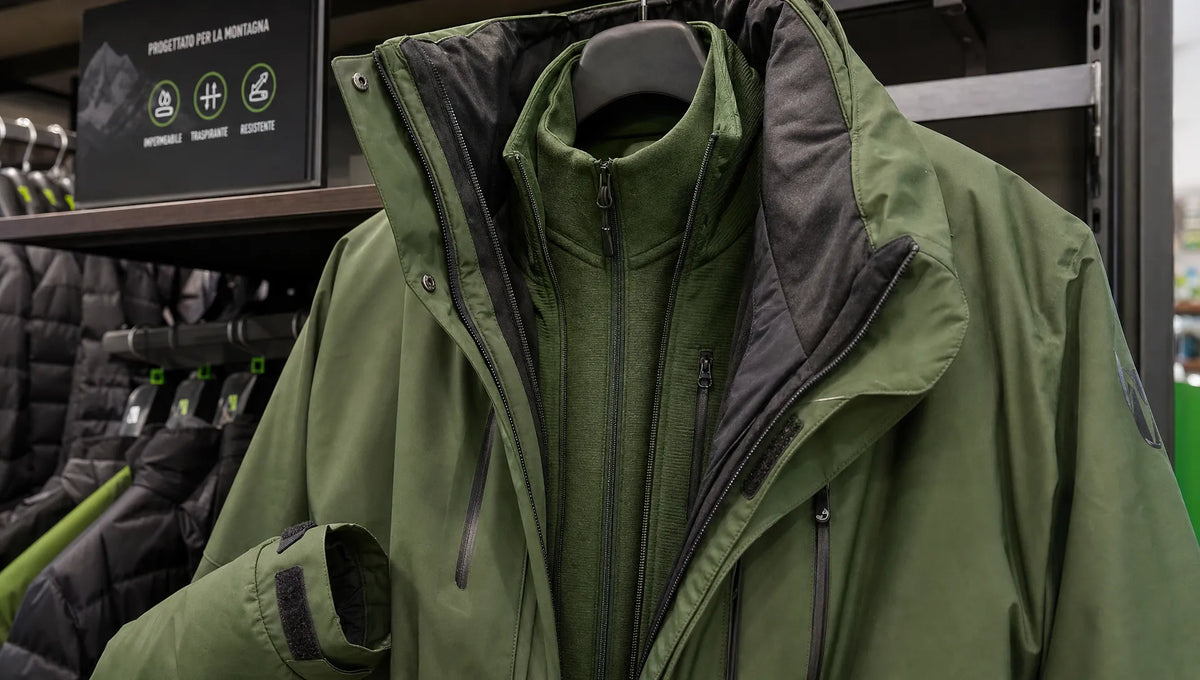
A good buy in a ski clothing outlet is recognised by simple details. The zip should run smoothly, cuffs should close without pinching, the hood should follow movement and the jacket hem should not ride up when you raise your arms. For trousers, check freedom at the knees and hips, protection at the hem and compatibility with boots.
You don't need extreme specs if you don't need them. For resort skiing, ongoing comfort matters a lot: getting on the chairlift, bending to fasten boots, walking across the square, sitting down for lunch, getting back in the car. If the garment works in these moments, you'll wear it more.
Materials and construction: what to really look at
Technical descriptions help, but practical testing remains central. Check whether the fabric feels stable, whether the seams are neat, whether adjustments are easy to use with gloves and whether pockets are placed where you need them. A durable garment shouldn't be complicated, it should be consistent.
For those seeking a technical but understated aesthetic, it's worth exploring collections from brands with a clean identity and careful construction, such as the selection Biella Fabrics when the goal is an outdoor wardrobe wearable even away from the slopes.
Layers: buy less, combine better
The system that avoids waste
The most useful rule is to build a kit in layers. Base layer, mid layer and outer layer must work together. If you buy a very warm jacket, you might use it little on mild days. If you choose only a shell, you may need to complete the kit with an appropriate mid layer. A ski clothing outlet works best when it fills a specific gap in your system.
An effective combination remains simple: a next-to-skin layer that manages moisture, a mid layer that adds warmth and an outer layer that protects from wind and snow. By changing only the mid layer, you can adapt to different days without buying separate suits.
Compatibility checklist
- The base layer should sit close to the body without compressing.
- The mid layer should fit under the jacket without creating excessive bulk.
- The jacket should fasten well even with the mid layer.
- Trousers must allow bending, walking and sitting without pulling.
- Gloves, socks and neckwear should complete protection without creating uncomfortable spots.
For an outdoor travel profile, a collection like Patagonia can be useful to consider for versatile pieces, suitable for multiple contexts and not just a ski week.
Our recommended options: curated choices for real use
Slope outfit for resort skiers
Best for: someone who skis in a ski area, alternating runs, lifts, breaks and short walks.
Key features: jacket and pants must offer weather protection, comfort in the ski stance and reachable pockets. No need to overload the kit: better a stable set, with a fit that allows wide movements and correct layers underneath.
To pair with: technical base layer, lightweight or mid midlayer depending on temperature, well-insulated gloves and ski-specific socks. If you want a more technical piste line, you can compare Descente collection availability with the rest of your kit.
Shell for freeride, splitboard and dynamic days
Best for: someone alternating lifts, short re-ascent sections, variable snow and backpack use.
Key features: the goal is to modulate warmth and protection. A shell or outer layer that isn’t overly insulated lets you regulate the system with what you wear underneath. In a snow clothing outlet this is often the most rational purchase for someone who already has reliable base layers and midlayers.
To pair with: sturdy pants, breathable midlayer, spare gloves and a neck warmer. If the day includes ascents, avoid a system that’s too warm from the outset.
Family kit for a mistake-free week in the snow
Best for: parents who need to dress children or teenagers for several consecutive days.
Key features: ease of dressing, durability and controlled size margin. The garment must follow movement, not restrict it. For children, buying too large seems convenient but often reduces comfort and safety.
To pair with: technical socks, spare gloves and a second midlayer. In the children’s snow clothing outlet it’s smart to prioritize garments that wash and dry easily, because use will be intense.
Urban outdoor jacket for city, travel and high-altitude weekends
Best for: someone who wants a garment that’s functional off the slopes too, with a clean aesthetic and everyday protection.
Key features: comfortable fit, protection from wind and moisture, a fairly sober line that works with technical pants, denim or outdoor footwear. It’s a smart choice for frequent travelers who don’t want to pack too many items.
To pair with: technical knitwear, outdoor trousers and shoes suitable for cold or wet conditions. For this use, it may be worth also looking at the collection K-Way, especially if you’re looking for pieces that work across city and mountain.
High-use accessories
Best for: someone who already has a jacket and pants, but feels cold or bothered by small details.
Key features: gloves, socks, neckwear and a beanie change the quality of the day a lot. They’re less showy purchases, but often more effective. A wrong sock can ruin even the best boot, while an appropriate glove makes every break smoother.
To pair with: what you actually use. If you ski a lot, better to have a dry spare. If you travel light, choose accessories that compress and dry easily.
Equipment rental plus personal clothing
Best for: beginners, occasional skiers, families trying the sport or those who don’t want to buy skis and snowboards right away.
Key features: buying personal clothing makes sense for hygiene, comfort and continuity. Equipment, instead, can be rented until you know your level, frequency and preferences. Those passing through Biella can evaluate the ski and snowboard rental to reduce the initial investment without giving up proper preparation.
To pair with: base layer, jacket, pants, your own gloves and socks. Before the season, a check at the ski and snowboard workshop also helps make what you already own last longer.

Fit and sizing: the quick guide
The right size is the one that moves with you
When checking size, a snow clothing outlet purchase demands more attention than a casual buy. Try the jacket with the mid layer you’ll actually use. Raise your arms, simulate the skiing position, zip everything and make sure the collar doesn’t irritate. If you feel tension on the shoulders or chest, it won’t be better after eight hours.
For pants, test bending and sitting. The hem must work with the boot, not get in the way. For women, fit at the hips, waist and thigh deserves time: a correct piece should protect without compressing. For children, growth room is useful only if it doesn’t create folds, bulk or movement difficulties.
When to choose a different size
Going up a size can make sense if you wear heavy mid layers or if the brand sizes small. Going down a size is risky with snow clothing, because it limits layering and mobility. If you’re between sizes, choose based on movement, not the mirror: in the mountains dynamic comfort matters more than static looks.
Decision tree: what to buy first
If you’re using a snow clothing outlet to build a kit from scratch, the purchase order matters. Start with items that protect and are used most often, then complete with the right accessories.
- If you ski less than five days a year, buy essential personal clothing and consider renting equipment.
- If you ski every season, invest first in jacket, pants and technical socks.
- If you already have a set, check base layers, mid layers and gloves before replacing everything.
- If you travel often, choose versatile pieces that work both in the mountains and the city.
- If you buy for children, prioritize durability, simplicity and a secure fit.
- If you do freeride or splitboarding, build a modular system that isn’t overly warm.
This sequence avoids duplicates. The most effective snow wardrobe isn’t the biggest, but the one where every piece has a clear purpose.
Care and maintenance: making the purchase last
After every outing
Durability doesn’t end at purchase. Let jacket, pants, gloves and boots dry thoroughly. Don’t leave items compressed in a bag for days, because moisture and odors reduce perceived comfort and performance. Check for small abrasions, dirty zips and stressed seams before they become problems.
Wash according to the label, don’t improvise. Technical garments require care: unsuitable detergents or excessive heat can compromise outer treatments and fit. A good outlet garment is worth even more if it’s maintained properly.
Before the new season
At the start of the season try everything calmly. Wear the layers together, check pockets, closures and compatibility with boots and gloves. This small check prevents emergency purchases and lets you buy only what’s really missing. It’s also the right time to assess repairs, replacements or a targeted upgrade.
FAQ
Is it worth buying at a snow clothing outlet even for beginners? Yes, if you start with essential, easy-to-use pieces. For a beginner it makes sense to buy comfortable personal clothing and consider renting skis, snowboard or boots until usage frequency is clear.
Insulated jacket or shell? It depends on the pace. The insulated jacket is practical for on-piste skiing and cold days with little intense activity. The shell is more modular and works well if you want to regulate warmth with internal layers.
What items should you buy first if your budget is limited? Prioritise jacket, trousers, technical socks and gloves. Base layers and mid layers can be added progressively, but they must remain compatible with the outer layer.
How do I know if an outlet garment will last? Check zips, seams, adjustments, fit in motion and ease of maintenance. A garment that moves well with you and integrates with your existing kit is more likely to be used for years.
Can I wear snow gear in the city? Yes, if you choose clean lines, weather protection and manageable volumes. The most versatile pieces are often those with an essential aesthetic and a clear function.
Choosing well means buying with an extra season in mind. Explore the online collections of Fabbrica Ski Sises, compare sizes and availability, or visit the store in Biella for direct advice. With free shipping in Italy over 50 euro, fast delivery from 1 to 4 days and returns within 14 days, you can build a more curated snow kit without buying in haste.
Ski Sises on Google
Choose Ski Sises as a preferred source: you'll see our guides and news more often in Top stories on Google.