


Ski clothing shops: how to find the right one
Searching for “ski clothing shops” looks simple — until you must choose between crowded windows, similar technical sheets and sizes that vary by brand. The right shop isn’t the one with the most products, but the one that helps you buy less and better: the garment suited to your climate, how often you ski, your level and how you move off the mountain too.
Summary
- Start from your actual use: piste, freeride, touring, family weekends or city outdoor.
- Evaluate assortment, fit expertise and after‑sales services.
- Prefer shops that think in layering systems, not isolated single items.
- Online, check shipping, returns, size availability and clear descriptions.
- In‑store, use rental and workshop services as concrete signs of technical experience.
How to evaluate ski clothing shops without wasting time
The first filter is coherence. A good shop won’t offer you the same jacket for a week in Cervinia, a ski day with the kids and a freeride ascent. It asks questions before talking product.
When assessing ski clothing shops, start from three pieces of information: where you ski, how often you ski and whether you run hot or cold. These answers guide everything else, from thermal base layers to outer protection.
A quick choice can follow this logic:
| If your main use is | Look mainly for | Avoid |
|---|---|---|
| Piste and resort | Comfort, protection, functional pockets, tidy fit | Over‑specialised pieces if you ski only a few days a year |
| Freeride or variable days | Layering, freedom of movement, garments easy to ventilate | Heavy, non‑adaptable outfits |
| Ski touring | Lightweight, breathability, compatibility with a backpack and movement | Too much insulation on ascents |
| Family holiday | Ease of use, durability, reliable sizing | Impulse buys only for price |
| For mountain and city use | Clean lines, practical materials, versatility | Items too technical for everyday use |
If you also need to buy skis, boots or accessories, preparing your questions before visiting helps a lot. You can use this guide on ski shops and the questions to ask before buying as a practical checklist.
Assortment: what a truly useful shop should cover
Among ski clothing shops, the best assortment isn’t necessarily the largest. It’s the one that lets you build a complete, coherent system: base layer, mid layer, jacket, pants, socks, gloves, helmet and accessories.
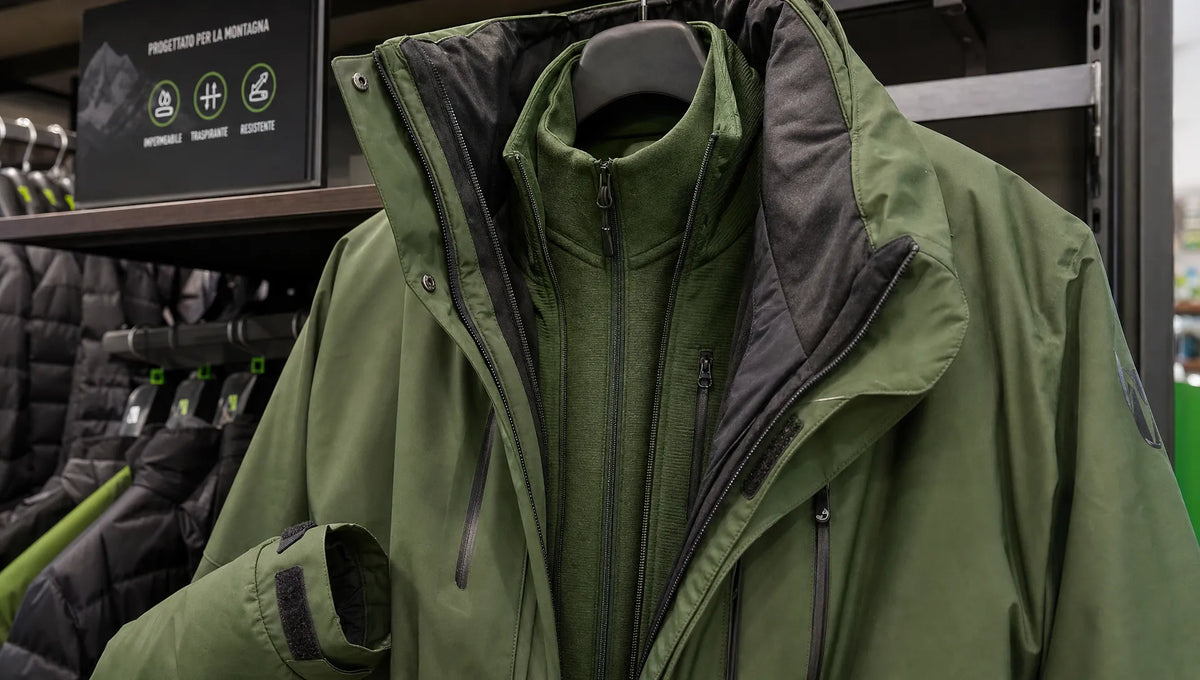
A well curated shop distinguishes between technical clothing and lifestyle pieces inspired by the mountains. Both make sense, but they meet different needs. A jacket designed for all-day skiing must work with the layers underneath. An urban outdoor piece should be comfortable, durable and easy to wear often.
For those seeking a classic alpine approach, a selection like Rossignol can be a good starting point for garments and accessories tied to the snow world. Those who alternate mountain, light trail and travel can look to brands with a strong outdoor focus, such as Salomon, always evaluating each piece based on its intended use.
For a more transversal wardrobe, useful off-piste or in mid-season months, a range like Biella Fabrics fits a different logic: less “just skiing”, more functional everyday wear.
The point isn’t to buy everything at once. The point is to avoid incompatibilities: a jacket too tight over a thick mid layer, uncomfortable pants with your boot, or gloves not suited to the climate where you ski.
Fit, sizing and fitting: where expertise shows
Fit is the most underestimated part. A ski garment can look fine standing in front of a mirror, but feel restrictive as soon as you bend your knees, raise your arms or close your boot.
An advantage of specialized ski clothing shops is the ability to read fit in motion. The right size should leave room for layers, not create unnecessary bulk and not pull in critical areas: shoulders, back, waist, knees and hem.
Before confirming the purchase, try these movements:
- Bend your knees as if you were in skiing position.
- Raise your arms and check that the jacket stays stable.
- Simulate closing the boot with the pants.
- Put on the mid layer you'll actually wear under the jacket.
- Check that the collar, cuffs and waist are comfortable even when closed.
Online, the same criterion applies differently. Read the fit guidance carefully, compare the measurements with garments you already own and consider the return policy. On Ski Sises, free shipping in Italy over €50, fast delivery and returns within 14 days make it easier to buy thoughtfully, not by random trial.

Services and after-sales: the signal that makes the difference
The most reliable ski clothing shops don't stop at the sale. They understand the gear, know the real needs of the mountains and offer support even after purchase.
This is particularly important if you're planning a ski week, have growing children or want to try a setup before investing. In these cases, the ski and snowboard rental allows you to start with a solution suited to the season without buying everything immediately.
The presence of a workshop is also a useful indicator. Repair, maintenance and tuning show a concrete relationship with the snow, not just with fashion. For those who live in or pass through Biella, being able to combine purchase, fitting, rental and service in one place greatly simplifies preparation.
There is also a less technical but decisive aspect: how the shop communicates value. If everything always revolves only around discounts, it's hard to see the real difference between a well-chosen garment and one bought because it's cheap. The topic of perceived value for clothing shops is central also for buyers, because clear selling helps to better read quality, service and expertise.
Our recommended options: curated choices based on your profile
In ski clothing shops focused on advice, the right question isn't “which is the best garment?”, but “which is the best garment for this use?”. The options below are not specific products, but selection paths.
| Recommended option | Best for | Key features | What to pair it with |
|---|---|---|---|
| Resort piste set | Skiers seeking comfort and protection for full days on lifts and groomed pistes | Coordinated jacket and pants, functional pockets, stable fit in motion | Thermal base layer, light to mid mid layer, warm gloves, helmet and technical socks |
| Light freeride setup | Those who alternate descents, variable snow and days with changing weather conditions | Easy layering pieces, good freedom of movement, practical adjustments | Pack-compatible backpack, breathable layers, spare gloves and protective accessories |
| Ski touring setup | Skiers who prioritize ascent, breathability and heat management | Modular layers, low weight, comfort during large movements | Technical base layer, lightweight shell, stretch pants, thin hat and gloves |
| Family and beginner kit | Parents, kids and occasional skiers who want to avoid mistakes | Intuitive, durable pieces that are easy to wear and mix | Appropriate socks, hand and neck protection, helmet, possible equipment rental |
| Mountain lifestyle wardrobe | For those who want pieces usable for travel, weekends and the city | Clean lines, practical materials, good seasonal versatility | Clean trainers or outdoor shoes, technical knitwear, minimal accessories |
This logic reduces wrong purchases. A ski outfit should not only “look good”. It must work in the car, in lift queues, during snowfall, at lunch in a mountain hut and when the temperature changes.
Final checklist before choosing the shop
Before deciding between different ski clothing shops, use a short checklist. If a shop passes these points, it’s more likely to guide you to a solid choice.
Check the assortment. It should cover multiple layers, not just showy jackets. A good shop helps you build the complete system.
Assess the advice. If the salesperson asks where you ski, how often and what your priorities are, that’s a good sign. If they start immediately with price, a step is missing.
Observe the services. Rental, maintenance, repair and after-sales support indicate operational experience.
Read the online terms. Shipping, delivery times, returns and size availability affect the quality of the purchase as much as the product.
Think about durability. A well-chosen garment is used longer, pairs better and reduces unnecessary replacements. It’s a cleaner choice from a consumption perspective too.
FAQ
How do I compare online and physical ski clothing shops? Online, evaluate the clarity of product pages, shipping and return policies, size availability and brand selection. In a physical store, pay attention to advice, fit testing, services and the ability to build a layering system suited to your use.
Is it better to buy ski clothing before or during the season? Before the season you have more choice of sizes and combinations. During the season you can find deals, but you risk less availability. If you have precise technical needs, buying early is wiser.
Should a beginner buy premium technical garments right away? Not always. A beginner should first clarify frequency, climate and desired comfort level. It makes sense to invest in items that affect the day most, like base layers, jacket, pants, gloves and socks.
How do I know if the size is right? The size is correct if it allows movement, fits the necessary layers and stays comfortable in real skiing positions. It shouldn’t pull when you bend your knees or raise your arms.
Can renting replace buying? For skis, snowboards and some occasional situations, yes. For personal clothing, however, having well-chosen own items improves comfort, hygiene, fit and continuity of use.
Choosing the right shop means reducing uncertainty, not adding options. If you want to build a coherent snow wardrobe, start with the technical and lifestyle collections of Ski Sises, or stop by the Biella store for advice tied to your real way of experiencing the mountains.
Ski Sises on Google
Choose Ski Sises as a preferred source: you'll see our guides and news more often in Top stories on Google.