Ski touring equipment: a guide to choosing
Choosing ski mountaineering gear means putting together elements that work together: compatible equipment, clothing that lets you move and protection appropriate for the outing. The risk is buying a good piece that’s of little use compared with what you already own. This guide helps those building their first kit and those who want to replace a single garment to read the the Ski Mountaineering collection from Fabbrica Ski Sises with practical criteria. The starting point isn’t the most specialist product, but the intended use, followed by fit and combinations.


In short:
- Start from the outings you actually do, not the ones you imagine doing just once.
- For skis, boots and bindings, compatibility comes before personal preferences.
- Try clothing together with the layers and accessories you’ll use.
- Buy to fill a specific gap, avoiding duplicates.
Start from the outing, not the single product
Before comparing ski mountaineering gear, define approximate duration, pace, exposure and how often you go out. A steady ascent with few stops and a slower day require different comfort management, even if the route seems similar.
You don’t need to plan for every situation. It’s more useful to recognise the recurring one and identify what isn’t working now: trousers that limit your stride, a jacket hard to wear over other layers, or a boot chosen without considering the rest of the system.
| Prevailing situation | Priority to assess | Mistake to avoid |
|---|---|---|
| Early outings with company | Ease of use, fit and compatibility | Buying separate components without checking them together |
| Frequent outings at a fast pace | Freedom of movement and managing comfort | Choosing only for cold while stationary |
| Days with long stops | Ability to add protection without compressing other layers | Trying a jacket only over a t‑shirt |
| Replacing a single item | Integrating with what you already own | Repurchasing a full set when only one piece is missing |
Experience matters too. Beginners benefit from a clear, coherent set; those who already know their needs can refine choices around a specific constraint. The most specialist product isn’t automatically the most suitable.
Compatibility and safety before purchase
Skis, boots and bindings should be considered together
When choosing ski-touring equipment, clothing is only one part of the system. Skis, bindings and boots must be compatible in the exact versions you plan to use: brand names or general model labels aren’t enough to guarantee compatibility.
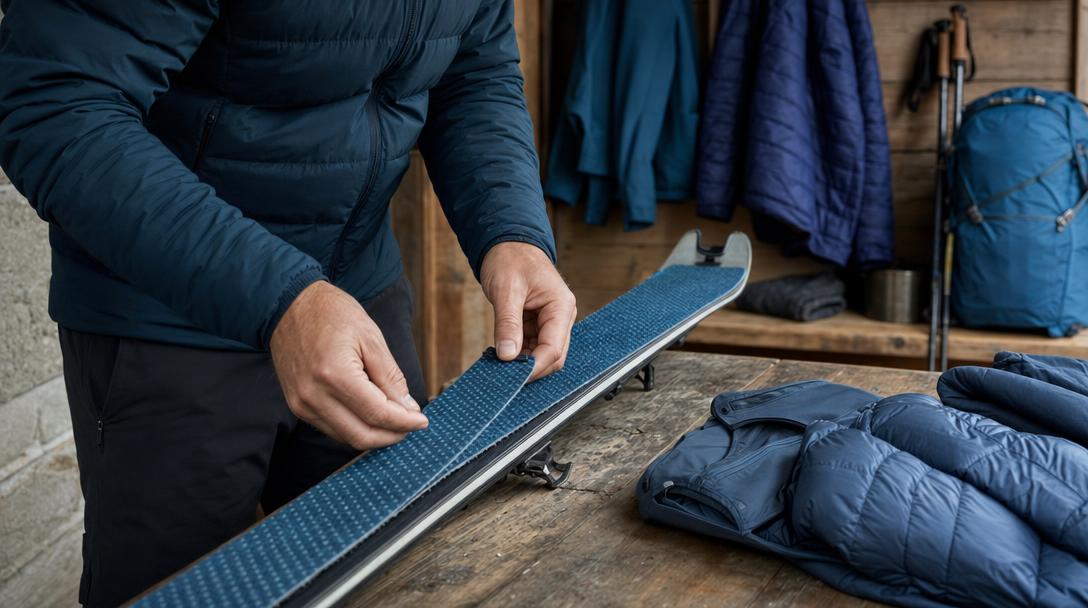
Before replacing any of these items, note the model, version and technical details of the components you already own. Compatibility checks, mounting and binding adjustment require a qualified professional. Skin selection must also consider the skis and their attachment system.
For the boot, don’t judge it only by the first few minutes’ feel. Consider how well it holds the foot, the absence of localized pressure and how it works in the model’s intended modes. Your everyday shoe size doesn’t automatically determine the correct boot size.
Safety equipment requires competence
An avalanche transceiver, shovel and probe are the foundation of self-rescue, but owning them is not the same as knowing how to use them. You need training and practical drills, plus the ability to read the avalanche bulletin and choose an itinerary suited to the conditions and the group.
Wear the transceiver as the manufacturer instructs, not simply stow it in your pack. Shovel and probe must be immediately accessible. None of these tools makes a slope safe or replaces prudent route selection.
Crampons, ice axe and harness depend on the terrain and route. They aren’t accessories to add just to make your kit look more complete: they require compatibility, knowledge and specific skills.
Ski-touring gear: size fitting
For clothing, the correct size is the one that works in motion and with the rest of your kit. It’s not enough that a piece looks good in the mirror. Spend a few minutes testing it while wearing the combinations you’ll actually use on the outing.
Pants: check stride and interference
Simulate a wide step, bend your knees and lift one leg. The waist should stay stable without you having to over-tighten it; the rise and knees must not hinder the movement. Also check length with the knee bent.
Check the relationship between the pant hem and the boot: the fabric shouldn’t interfere with the operations required by your boot model. Don’t assume every pant fits every boot just because both are meant for mountain use.
Tops and jackets: test real pairings
Put the garment on over what you’ll normally wear. Reach forward and up, then put on your pack: shoulders, armpits and lower back must retain adequate mobility. Check that overlapping collars and hoods don’t create annoying bulk.
Between two sizes, don’t automatically pick the larger. Compare the measurements provided by the manufacturer and consider where you need room. Excessive looseness everywhere won’t solve a localized pressure point; a different model may be better. The same applies to men’s and women’s pants: evaluate them on your own body shape, not as simple size equivalents.
Recommended selection: four garments to compare
This selection of ski mountaineering gear is meant to complement your wardrobe, not to recommend a mandatory outfit. The pieces represent four options to consider depending on the missing category. For composition, stated performance, and construction details, refer to the respective product pages.
Radical Polartec Hooded men's midlayer Dynafit
To consider if: you want to try a hooded midlayer to wear among the pieces you use during outings.
The Radical Polartec Hooded midlayer for men Dynafit is an option if you’re updating that part of your kit without replacing your pants as well. The hooded format requires care when pairing it with a jacket that has a different hood.
Products mentioned in the article

Try it over your usual base layer and under the outer protection you already use. The decisive check concerns room across the shoulders and arms and the absence of bulk at the neck. The model name alone does not determine how well it protects from wind or precipitation.
Mercury Dynastretch men's pants Dynafit
To consider if: the limit of your current clothing is in the lower half, especially when you lengthen your stride or bend your knees.
The Mercury Dynastretch men's pants Dynafit are a candidate to compare with the trousers you already own. The useful assessment isn't only aesthetic: check waist stability, freedom of bend and the relationship with your boot.
Products mentioned in the article

Pair them with the midlayer and jacket you already tested, so you isolate the variable you want to improve. If you plan to wear a garment underneath, bring it to the test: choosing a size without considering it can significantly change the final result.
Mercury Dynastretch women's pants Dynafit
To consider if: you’re looking for a women's model to try on your body shape, without basing the choice on the size of a different pair.
The Mercury Dynastretch women's pants Dynafit offer an alternative to examine starting from the relationship between waist, hips and leg length. The women's label identifies the version, but doesn't by itself guarantee the right fit for every person.
Products mentioned in the article

During the test, check that the pant stays stable without compressing the pelvis when you lift your knee. Pair it with your boots and any undergarments you expect to wear on the outing. If you must compensate for a too-tight area by choosing an excessive size elsewhere, consider a different cut.
Durable Down Hoody men's jacket Patagonia
To consider if: your search concerns a hooded jacket to add to the garments already present, rather than a whole new set.
The Durable Down Hoody men's jacket Patagonia Compare starting from the function you want to add. Before buying, check the intended use and stated features on the product page, and don’t assume it automatically protects against precipitation.
Products mentioned in the article

Try it on over the layers you would actually wear. There must be enough room without compressing underlying layers or restricting movement. Also check collar and hood together with the corresponding parts of other garments: two items that work alone may be impractical when layered.
Complete the purchase without duplicating items
To buy ski‑mountaineering gear sensibly, assign each new item a specific role. If you can’t describe the problem it solves, you probably need more comparison before deciding.
For example: you own pants that perform well, but the top pulls across your shoulders when you wear a backpack. The priority is to fix that interaction, not replace all lower layers. If garments are comfortable but lack protection for expected conditions, focus the search on that function and verify it in the product specs.
Also consider actual seasonal use. An item that fits your kit and you’ll wear regularly can be wiser than a purchase for a rare occasion. That doesn’t mean using a product outside its intended purpose, but avoiding unnecessary overlap.
Service life also depends on how you care for it: follow washing and drying instructions, check garments regularly, and don’t replace items that still perform well. For safety components, follow the manufacturer’s inspection schedule and replacement recommendations.
Compare the garments from the Ski Mountaineering collection starting with the missing element: a clear function, checked fit and a cohesive pairing are more useful criteria than buying a full outfit all at once.
FAQ
Where should I start when choosing ski‑mountaineering gear?
Start from the intended use and what you already own. First check equipment compatibility and safety kit, then identify which clothing function is missing. Buying one item at a time can make sense, provided it stays coherent with the rest of your kit.
Do I need to buy all items from the same brand?
No. Fit, bulk and functions must be compatible. For clothing you can mix brands, trying pieces together. For skis, bindings and boots, compatibility must be checked technically for the specific models.
For ski‑mountaineering, should I size up?
Not necessarily. You need room where required, without excess that hinders movement. Try the garment with intended combinations and compare the manufacturer’s measurements. If one area is tight and the rest is already roomy, consider a different cut.
Are an avalanche transceiver, shovel and probe enough for an outing?
No. They are self-rescue tools that require training and practice. Preparation includes checking the avalanche bulletin, weather, route and your group's abilities. Equipment does not eliminate risk and does not replace prudent decisions.
When does it make sense to add crampons, an ice axe, or a harness?
When the route and conditions require them and you have the necessary skills. They are not items to add automatically to your basic kit. Choose them according to terrain, compatibility and your technical preparedness.
Ski Sises on Google
Choose Ski Sises as a preferred source: you'll see our guides and news more often in Top stories on Google.