
Dryarn composition: what to know before choosing
If on an intimate mesh, a ski shoe or a technical garment find the word Dryarn, the right question is not only “is it hot?”, but “what composition does it really have? ”. Dryarn is a technical fiber designed to stay close to the skin, manage sweat and dry quickly. But not all garments with Dryarn are equal: they change percentages, mischies, fit and use destination. This guide is for skiing, walking, traveling or looking for a clean and functional layering without buying randomly.
In short
- Dryarn is a commercial name linked to a polypropylene microfiber, often labeled as “polypropylene” or “PP”.
- The composition of the garment can be 100% polypropylene or a mixture with elastane, polyamide, wool or other fibers.
- It works better as a first layer, technical stocking or head in contact with the skin.
- It is ideal if you sweat a lot, if you do variable intensity activity or if you want a light head that you dry quickly.
- It does not replace a waterproof shell, a heavy heater or an anti-abrasion head.
- The choice depends on use, fit, thickness and construction, not only on the declared fiber.
Dryarn composition: what really indicates the label
Dryarn is not a generic category as “thermal machine”. It is a trademark associated with a microfiber technique in polypropylene. For this reason, on a business card you can read Dryarn, while on the composition label you could find “polypropylene”, “PP” or a percentage of polypropylene combined with other fibers.
This distinction is important. In Europe, the textile composition must report the fibres and the relative percentages according to theEU Regulation No 1007/2011. The name of a technology or a brand can help to understand the positioning of the head, but the correct reading always passes from the label.
In practice, when you value Dryarn composition, look at three elements: the percentage of polypropylene, the other fibers present and the structure of the head. A 100% polypropylene mesh will have a different behavior from a mesh with elastane for greater grip or with wool for more natural comfort.
| Composition on the label | What to expect | Ideal if |
|---|---|---|
| 100% polypropylene or Dryarn | Maximum lightness, low water retention, quick drying | You sweat a lot or do intense activities |
| Polypropylene + elastane | Fit more tight and stable on the body | You want a first layer to follow the movements |
| Polypropylene + polyamide | Greater structure and resistance compared to a very light construction | Uses backpacks, boots or garments subject to rubbing |
| Polypropylene + wool | More warm and natural sensation, with good moisture management | Other activities and cold breaks |
| Polypropylene + other synthetic fibres | Variable balance between drying, comfort and durability | You're looking for a versatile boss, but you need to read case by case |
According to the technical information of the manufacturer, Dryarn is developed to be lightweight, hydrophobic and suitable for sports use in contact with the skin. You can deepen the fiber on the official websiteDryarning, but in the choice of purchase it is essential to evaluate the finished item, not only the name of the fiber.
Why use in technical leaders
The main reason is simple: polypropylene absorbs little water. This helps the fabric not to hang when you sweat and transfer moisture to the outer layers. In winter layering, this feature is precious because a dry skin helps maintain a more stable thermal sensation.
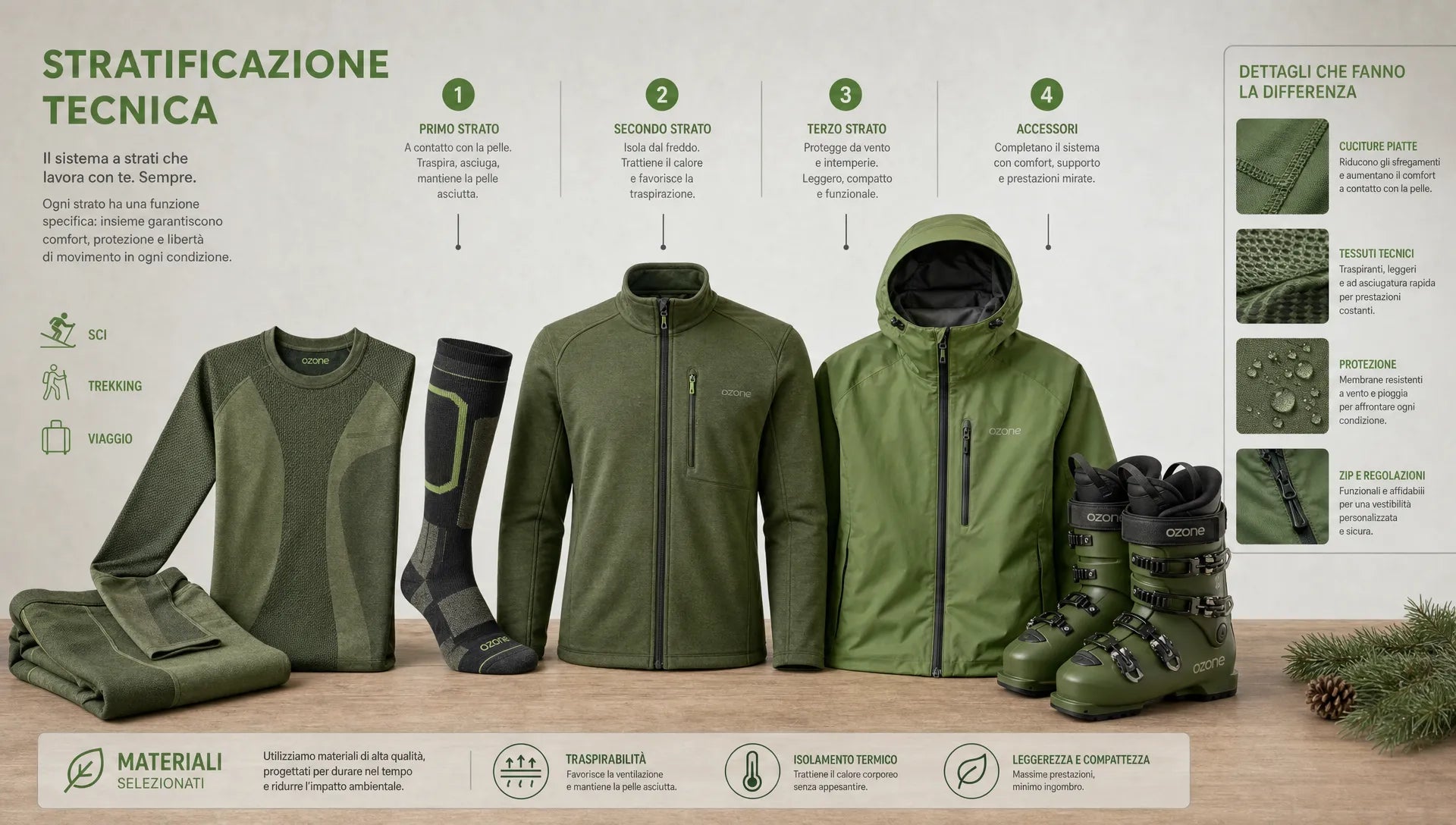
For alpine skiing, Dryarn can work well as technical underwear under a mid layer and a jacket. Uphill, in mountaineering skiing or trekking at altitude, it becomes interesting because it reduces the feeling of wet during prolonged efforts. On the journey, it can be convenient because it quickly dries after washing and occupies little space.
The point not to be misunderstood is the word “hot”. Dryarn does not heat alone as a duvet or a thick pile would do. Its function is above all to keep the skin dryer and collaborate with the other layers. The real heat depends on grammature, processing, grip, air held from the fabric and combined with the later layers.
If you are building a complete system for the mountain, you can compare the first layer with mid layer and shell in the technical selectionArc’teryx, where the layering concept is central even when the head does not contain Dryarn.
When to choose Dryarn and when not
Dryarn is a very sensible choice when the main problem is sweat. If you ski on cold days but move a lot, if you trek with difference in altitude or if alternates taken from the city and outdoor, a polypropylene based garment can help you stay dry longer.
It is less indicated if you are looking for a natural hand, a garment to wear alone in elegant contexts or direct protection from wind, snow and rain. In these cases, better to consider it as part of the system, not as a single solution.
| Scenario | Dryarn makes sense? | What to control |
|---|---|---|
| Skiing on track | Yes, as the first layer | Fit tight, seams, compatibility with salopette or trousers |
| Ski mountaineering and freeride with ascent | Yes, especially if you sweat a lot | Breathability, drying, freedom of movement |
| Summer trekking or half seasons | Yes, if the head is light | Backpack resistance and smell management |
| Daily urban use | Depends. | Fabric Hand, Cutting, Ease of Matching |
| Cold long break | Only as a base | Serves a thermal mid layer above |
| Rain or wet snow | No, not alone. | Needs a protective shell |
For those who move between trail, approach and outdoor fast, it is also worth looking at the items and accessories of the collectionLa Sportiva, useful to build a more dynamic kit around the first layer.

How to decide based on activity
The easiest way to choose is to start with intensity. The more the activity is aerobic, the more it makes sense to prefer drying, lightness and precise contact with the skin. The more static the activity, the more you have to add insulation above.
For a day of skiing in the resort, choose a first layer in Dryarn or polypropylene if you tend to sweat in the intense descents or during the trips. On top, add a battery or a technical mid layer, then a jacket suitable for conditions. The first layer should not do everything: it must work well with the rest.
For ski mountaineering, a composition with elastane can be preferable because it remains more stable during the movement. If you carry backpack, ARTVA, harness or shell for many hours, it also evaluates the resistance of contact zones. Here the construction of the head counts as much as the fiber.
For trekking and travel, consider the washing frequency. A garment that dries quickly is convenient if you have light baggage or consecutive days. However, if the smell is an absolute priority, it also compares merino wool or garments designed specifically for multi-day use.
For outdoor urban use, Dryarn can make sense if you are looking for thermal comfort and sweat management during travel, commuting or travel. In this case, however, the cut and hand of the fabric become decisive. A too technical head can be less versatile outside the sport.
Those who prefer a clean but functional aesthetic can build the look starting from an invisible technical layer and complete it with essential pieces of selectionThe North Face, especially for travel, outdoor daily and weekend in the mountains.
Fit: the detail that changes performance
A first layer in Dryarn works better when it is close to the skin. It should not compress, pull or limit the breath, but should not even create wide folds under the mid layer. Moisture transfer works best when the fabric remains in regular contact with the body.
It mainly controls shoulders, armpits, chest, waist and length of sleeves. If the shirt gets up when you lift your arms, under a ski jacket it will become annoying. If it creates folds under the backpack or under the salopette, you may feel pressure points.
For socks, avoid the idea that “ thicker” automatically means “hoter”. With the ski boot, too volume can reduce precision and circulation. A technical stocking with good moisture management and correct volume often works better than a very heavy stocking.
If you are between two sizes, for a technical layer base it is usually advisable to choose the size that adheres better without tension. For a mid layer, instead, it leaves the space necessary to wear it over the first layer without compressing.
Care and duration: how not to spoil fiber
Polypropylene composition requires some attention. Excessive heat is not a friend of light technical leaders, so it is better to always follow the internal label. In general, delicate washing, low temperatures and air drying help maintain shape and functionality.
Avoid the softener if the head is designed to manage moisture. It can leave residues on the fibers and reduce the capacity of the fabric to work properly. Iron, high temperature dryer and direct radiators are also to be avoided unless otherwise indicated by the manufacturer.
A simple routine works well: low-temperature washing, delicate detergent, flipped head, natural drying. For lighter or more seamless garments, a laundry network can reduce rubbing and washing machine.
From the point of view of sustainability, the firmest choice is to buy a garment suitable for real use and make it last. A synthetic fiber is not automatically “better” or “weight”: it counts the duration, frequency of use, care and ability to avoid wrong purchases.
Our recommended options
| Recommended option | Ideal for | Key Features | To match with |
|---|---|---|---|
| Base layer in Dryarn or polypropylene | Skiing on track, mountaineering, intense trekking | Light, quick to dry, thought for skin contact | Technical mid layer and protective shell |
| Base layer with elastane | Dynamic and precise fit | Increased grip and stability in movements | Technical pants, shell and gloves suitable for the season |
| Mix Dryarn and wool | Cold days with frequent breaks | Balance between moisture management and natural comfort | Lightweight or insulating jacket |
| Technical socks with hydrophobic fibres | Skiing, hiking, long-term boots | Less wet feeling and more controlled volume | Well regulated boot and adequate insole |
| Technical mid layer above the first layer | Resort, freeride, winter trip | Adds insulation without asking for all the layer base | Windproof or waterproof shell |
| Lightweight outdoor travel kit | Weekend, trekking and commuting | Easy to wash, quick drying, small footprint | Technical backpack and essential accessories |
If you want a specific starting point for technical underwear and sports layering, also explore the UYN selection, particularly consistent with those looking for technical garments in contact with the skin.
For a week on the snow, the choice of the first layer is only a part of the kit. If you go from Biella or prefer to travel light, you can complete the organization with ski and snowboard rental, which is useful when you want to focus on clothing and manage the equipment in a simpler way.
FAQ
Dryarn is polyester?No. Dryarn is related to polypropylene, a synthetic fiber other than polyester. On label can be indicated as polypropylene or PP.
Dryarn composition always means 100% polypropylene?No. A garment can contain Dryarn or polypropylene in different percentages, often along with elastane, polyamide, wool or other fibers. The percentage should always be read on the label.
Dryarn keeps warm?It helps to keep the skin dryer. The feeling of heat also depends on thickness, fit, fabric construction and layers worn above.
Better Dryarn or merino wool?Depends on use. Dryarn is interesting for quick drying and lightness. The merino wool is appreciated for natural comfort and smell management. Mischies can offer a balance between the two worlds.
Is it okay to ski?Yes, especially as the first layer. For a full day, however, you need a system: base layer, mid layer and jacket suitable for temperature, wind and precipitation.
How do you wash a head in Dryarn?Always follow the label. In general, better to wash at low temperature, avoid softening, do not iron and dry away from direct heat sources.
Choose well, without complicating the kit
Dryarn composition is a good clue, but not enough alone. Rates, fit, thickness and real use: ski on track, ascent, trekking, travel or technical daily require different choices. If you want to build a consistent system, start from the first layer and complete layering with selected garments for function, comfort and durability. You can explore the technical collections on Fabbrica Ski Sises or go to shop in Biella for a targeted advice.