













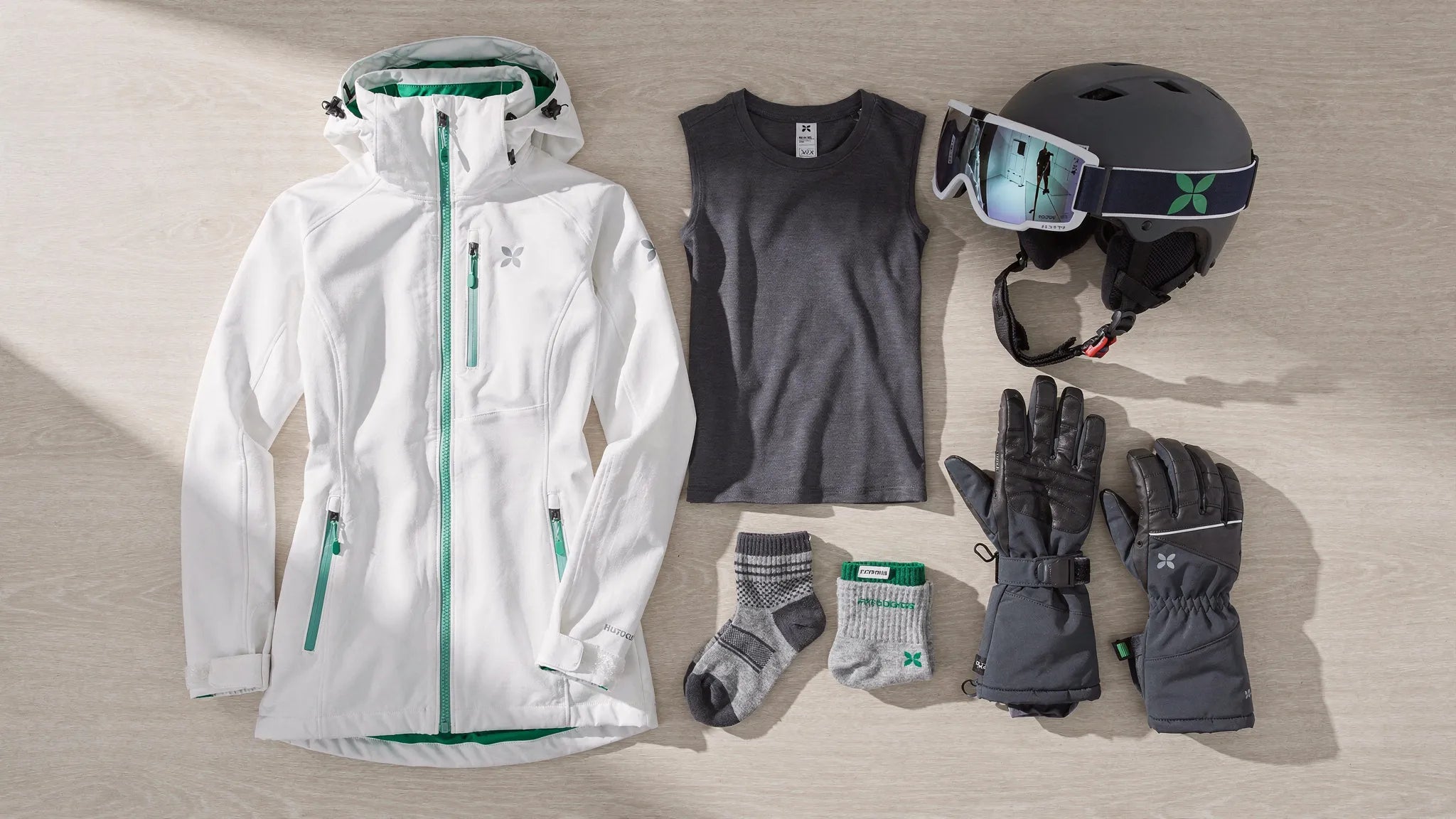
Complete ski woman: the right pieces to match
Putting together acomplete ski womancredible does not mean to buy “technical” or chase the last drop. It means building a system that stays dry, manages the heat when you move, and does not limit you in the key steps (hiking, boot fitting, breaks at the shelter, return to the village). This guide is for those who want to choose with criterion, especially online, and get to the mountains with a few right pieces, combined with each other and ready for more seasons.
- Summary:a complete ski woman works when jacket and trousers work together (protection and ventilation), and the layers below are chosen for rhythm and temperatures.
- Few pieces, well chosen:base layer, mid layer, external (jacca + trousers or bib), socks, gloves, helmet/mask.
- Quick decision:if you sweat easily, it favors shell + layering; if you ski slowly and patroll cold, it evaluates a more isolated set.
- Fit before numbers:test the complete with the boot and gloves, and simulate 3 key movements.
Start from the scenario (not from the technical sheet)
The perfect outfit changes more forscenario of usethat by declared level of waterproofness or “heat”. Before opening the collections, answer these three questions.
1) What rhythm do you have?If you do many descents, walk, stay still, you will need more moisture management (ventilations, layering). If you ski quietly and take long breaks, priority becomes isolation.
2) What weather do you usually meet?Humidity and wind require a more protective exterior; dry and stable climate allows you a lighter and more modular configuration.
3) Pista, freeride, light touring?Even without entering technicalism, it changes the desired strength and freedom of movement.
| Typical Scenario | Real Priority | Configuration simplifying life |
|---|---|---|
| Track, variable days | Versatility, ventilation, layer management | Shell + layer base + mid layer |
| Piste, cold “static” (many breaks) | Consistent heat, comfort | Set more isolated + layer base |
| Wet or windy snow | Long estate, sealing details | External more protective + balanced mid layer |
| Freeride/intense use | Durability, mobility, functional pockets | Robust shell + dedicated trousers |
| Travel and weekends | Packability, combined | Few heads, smart layers |
The pieces that really count in a woman ski suit
Here the goal is to reduce matching errors, not multiply purchases.
Outside: jacket + trousers (or bib)
It is your “barrier” against snow and wind, but also the point where you win or you lose on ventilation.
- Jacket:seeks a fit that leaves space to an intermediate layer without pulling on shoulders and back.
- Trousers:is where snow, humidity and abrasions enter, so the construction detail counts more than marketing.
- Bib (salopette):great if you are often sitting on the snow or want more protection in life, it requires attention to the bust fit.
If you want to explore the theme trousers with fast controls, here you will find a dedicated guide:Ski pants: 5 features to check immediately.
Base layer: the “invisible” part that determines comfort
The base layer must dry quickly and not create annoying folds under boots and protections.
- If you sweat, prefer a layer base that manages moisture well.
- If you're cold, evaluate a more thermal layer base, but without exaggerating, otherwise you'll find yourself wet in the chairlift.
Mid layer: the piece that makes the modular set
A well chosen mid layer is what prevents you from buying two “similar” jackets. It has to warm without cluttering and also run off track, traveling or in the city.
Technical calculations: more important than they seem
A wrong fit alters the boot's fit. Here the construction wins, not the thickness.
Gloves and face protection: micro-details, big difference
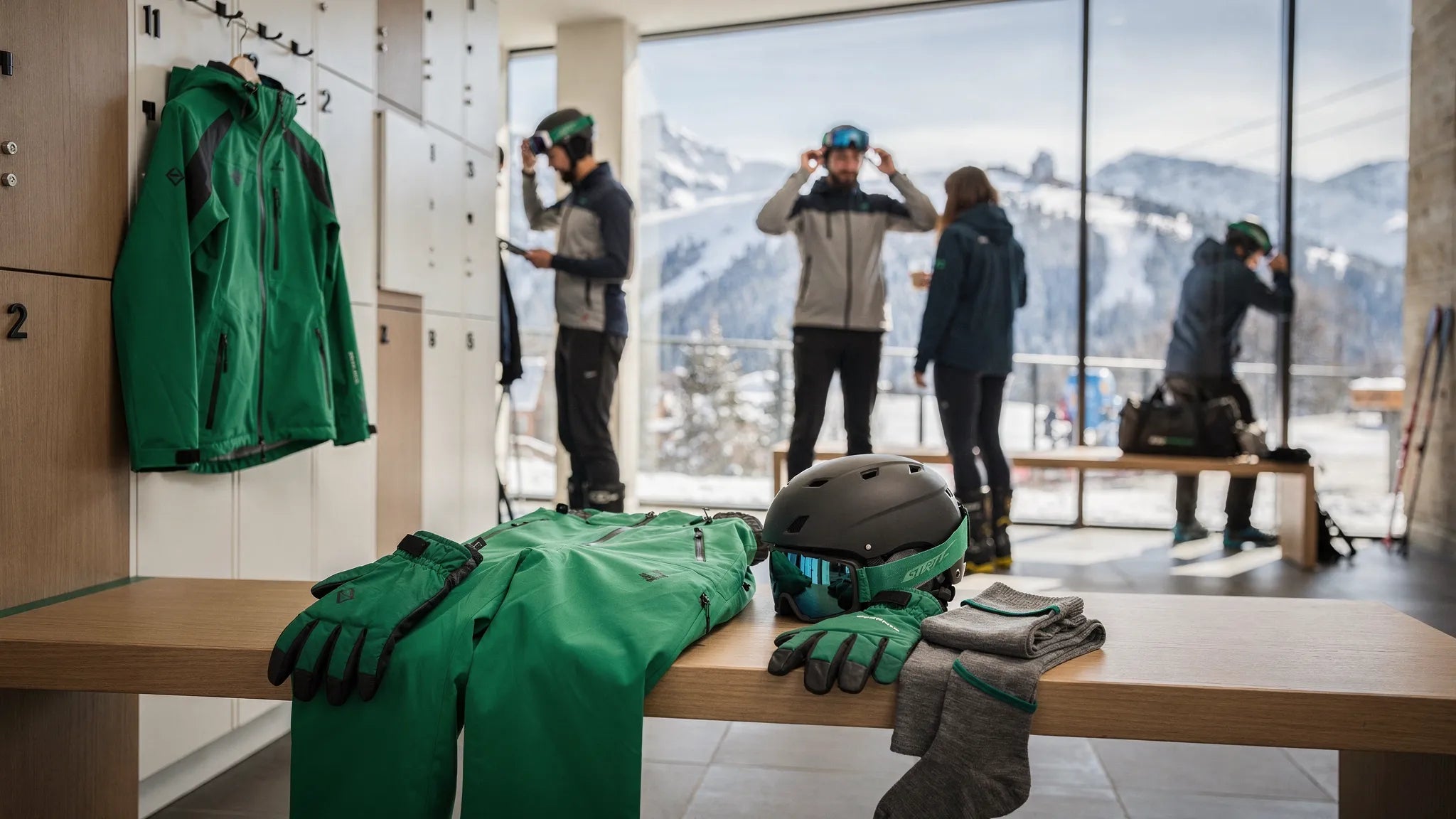
Gloves, mask and helmet are a system: cuffs that overlap well, no cold spots, no infiltrations.
To choose without errors between fingers, muffoles and 3 fingers:Ski gloves: the complete guide.

Fit and sizes: 3 quick tests before removing the label
The fit in the ski is not “I feel good in the mirror”, it is “I move without pulling and without spaces that make snow enter”. As soon as you try home, do it with the boot (or at least with a similar fit for volume) and with the mid layer on it.
Test 1, arms on:raise your arms as to fix mask or helmet. The jacket should not discover the living area and should not pull behind the shoulders.
Test 2, agreed:simulates a balance position as if you were closing attacks or controlling the boot. The pants should not pull on thighs and pelvis.
Test 3, seat “seggiovia”:sit down and bend your knees slightly. If you feel compressions in life or on the bust (especially with bib), you are at the limit.
If you are between two sizes, the practical rule is this: in the ski it is bettercontrolled spaceto layer, but without excess that creates spikes and folds.
Our recommended sets (ready pairings)
These are not “product lists”, they are configurations. They help you choose the right pieces to match, and then finish with consistent accessories.
1) Modular Guscio + Layering
Best for:slopes with variable weather, who moves a lot and wants to control the temperature.
Key features:external protective and ventilatable, base layer that dries quickly, mid layer compressible.
What to match:precise technical socks, glove with cuff that closes well on the outside, mask with good compatibility with helmet.
2) More isolated set “no thoughts”
Best for:who suffers cold, who skis at a quiet pace, weekend with many breaks.
Key features:isolation more present in the outside, less dependence on layering (but basic layer remains essential).
What to match:light mid layer (not too often), warmer gloves, attention to ventilation, however, are used to manage moisture.
3) Bib + jacket: high waist protection
Best for:days with fresh snow, who wants a higher and stable sealing.
Key features:comfort in movement, stability in life, extra protection against infiltration.
What to match:mid layer not voluminous on the bust, gloves with clean overlap, attention to fit when you are sitting.
4) Complete “travel-friendly” for weekends
Best for:who travels light and wants pieces even out of the snow.
Key features:few consistent, external reliable, mid layer can also be used in light urban or outdoor contexts.
What to match:a compact hot accessory and technical socks that do not change the fit of the boot.
5) More robust configuration for intense use
Best for:who often skis, who is hard on materials, who wants a set that lasts seasons.
Key features:construction and credible reinforcements, stitching and cured closures, fit that does not limit.
What to match:resistant gloves, helmet and mask with good wind protection, reliable layer base (it is what washes more).
6) Spring and mild days: controlled lightness
Best for:end of season, higher temperatures, long days.
Key features:maximum usable ventilation and ventilation, essential layering.
What to match:lighter gloves, layer base more oriented to sweat management, mask that does not hang easily.
Useful collections to build a coherent set
For those who prefer a “curated” approach, starting from clean collections helps to avoid random combinations.
- For technical leaders and performance approach:Dynafit.
- For mid layer and versatile pieces, also useful off season:Lanapo.
- For footwear and outdoor lifestyle (also travel):Flower Mountain.
- For garments and materials with more heritage and “lasting” imprint:Biella Fabrics.


If you are in Biella area: when you should rent or use the laboratory
If you are building the set for the first season, or you want to upgrade targeted, it often makes senseski and snowboard rentaland invest first on clothing and accessories that you will always use.
To understand what to prepare and how to book without errors:Ski rental Biella: quick guide.
And for services in store (nolege, maintenance, repairs):Sport service: all services in store.
Frequently Asked Questions
What is the difference between complete woman ski two pieces and whole suit?In the two pieces you can better modulate the layers and use separately jacket and trousers. The whole suit is more “sealed” and practice against snow, but it requires more attention to fit and management of breaks.
Better shell or set isolated for a woman ski suit?If you move a lot and sweat, shell + layering is more manageable. If you ski slowly and often feel cold, a more isolated set can be simpler, as long as you still have correct ventilation and layer base.
How do I choose the right size online for jacket and ski pants?Measure a similar garment that suits you, check the size chart and try at home with mid layer and boots. Do the 3 quick tests (arm up, welcome, sitting). If you're between two sizes, consider how much stratification you'll really use.
What should not be missing to complete the outfit?Correct technical socks, gloves adapted to your “perceived cold”, and good compatibility between jacket cuffs and gloves. These are small details that change the day.
Can I build a set that works outside the snow?Yes, focusing on mid layer and accessories that have a clean fit and practical materials, and choosing an outside that is not too specialized if you will also use it on the road.
One last simple step
If you're building your owncomplete ski woman, start from a configuration (not from a single head) and then finish with the right accessories. You can explore the selection for women in the collections and, if you have doubts about sizes and combinations, contact Fabbrica Ski Sises customer service. On the shop you will find free shipping in Italy over 50€ and made within 14 days, so you can choose with more serenity.
Ski Sises on Google
Choose Ski Sises as a preferred source: you'll see our guides and news more often in Top stories on Google.