

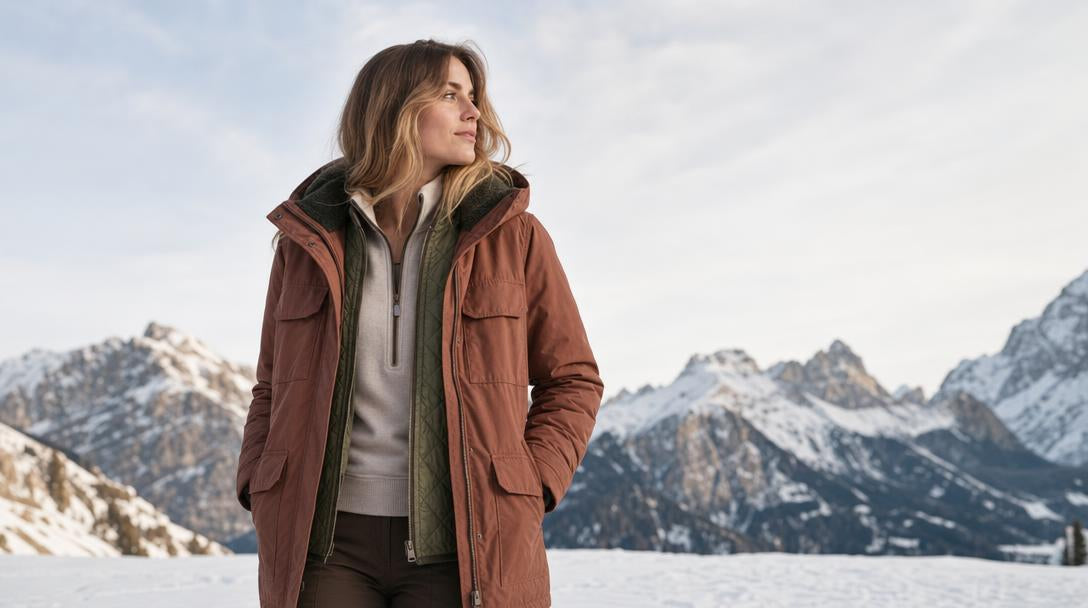
Women's coats and jackets: how to choose by use, warmth and fit
Women's coats and jackets: start from how your day actually goes
If you're looking for women's coats and jackets, don't choose by category name alone. Think instead about where you'll wear it, for how long and in what weather.
A woman who leaves in the morning, drives, goes into the office, runs a couple of errands and returns in the evening has different needs from someone who walks a lot or stays out longer. In the first case you often want a manageable piece that won't make you too hot indoors; in the second you prioritise coverage, wind protection and freedom of movement.
A common mistake is choosing outerwear for how it looks in the mirror. The real problem comes later, when it pulls at the shoulders, gets in the way when you sit or doesn't leave room for the knitwear you actually wear in winter.
So there are a few practical checks: how cold you feel, how long you spend outside, what layers you normally wear underneath and whether your main issue is dry cold or dampness.
Jacket or coat: use matters more than looks
A jacket usually makes life easier when you're on the move. It's simpler to handle with short trips, stairs, cars, shoulder bags and constant transitions between outdoors and indoors. In many cases it also gives more freedom for shoulders and arms, especially if you pick a short or mid length.
A coat makes more sense when you want a cleaner line and extra coverage. In the city it works well over knitwear, tailored trousers and more polished shoes. But be clear: not all coats cope with rain, wind or very active days. If you often get on and off public transport, walk fast or wear bulky layers underneath, the wrong coat will end up staying hung up.
In the selection Jackets and Coats you'll find exactly this crossroads. If you want a piece to wear four or five days a week, versatility matters more than initial impact. If instead you're completing a more urban wardrobe and wear the piece in regular settings, a coat can make more sense — but only if your climate truly supports it.


Cold and rain don't require the same response
Many wrong purchases start here. People buy something very warm when the real issue outside is dampness, or pick a jacket that's pleasing to the eye but lets too much wind through.
If your winter is cold but fairly dry, you can prioritise insulation: fill, lining and the garment's ability to retain heat without forcing you into three heavy layers. If instead you face windy days, light rain, humid air and constant weather changes, outer protection becomes more important than warmth alone.
In the jackets and coats selection You can clearly see two different approaches. On one side are waxed‑cotton pieces like Barbour, useful to identify the category: waxed cotton helps against humidity and light wind and has a very recognisable character. Its strength is city‑to‑weekend versatility. The drawback is obvious too: it isn’t automatically very warm, so the outcome often depends on what you wear underneath.
On the other side are jackets and parkas already more prepared thermally. A concrete reference is Patagonia Isthmus Uomo Sisu Brown: the spec lists a PU coating, DWR finish, body and hood lined in polyester fleece made from 100% recycled fibres and sleeves insulated with Thermogreen at 60 g. A piece like that simplifies winter if you spend longer outdoors or want fewer layering decisions. The compromise is that it may be too much for someone who spends most of the day in heated interiors.
Always check the wording in product descriptions. Water‑repellent, water‑resistant and waterproof are not the same. A DWR finish or a waxed fabric helps with light rain and damp, but shouldn’t be read as full waterproof protection in continuous rain.
Space for layers decides whether you’ll really use the piece
Choose your outerwear thinking about what you wear from November to February, not a quick try‑on with a thin tee. It’s a simple step, but it changes the result a lot.
If you mostly wear a shirt or a light knit underneath, you can afford a slimmer cut. If you style turtlenecks, chunky wool, thin fleeces or gilets, you need more room across the chest, shoulders and armholes. A nice‑looking piece that’s too tight ends up unused, even if the labelled size is technically correct.
Within the collection the layering theme also appears in the gilets by Barbour designed as liners, such as the Polarquilt Waistcoat Zip‑In Liner for men in Olive and the Warm Pile Lining Waistcoat Zip‑in for men in Beige. They’re useful examples not because the search was gendered, but because they show a practical logic: a compatible jacket can be warmed up by adding an internal layer instead of replacing the outer garment entirely. The advantage is extending the season; the limitation is that pieces must be compatible and not every customer wants a two‑part system.
A simple wear test beats many descriptions: zip the piece, cross your arms, sit down, raise your shoulders as if carrying a bag. If you feel pull at the front or back, after a few hours that discomfort will matter more than colour or brand.
Length and volume: small hanger differences, big differences on the body
Length changes how you live with the piece. A short or mid‑length jacket is often more practical if you drive, walk quickly or make frequent in‑and‑out trips. A long model gives more coverage and can feel more coherent in a city wardrobe, but it asks for less hectic use or at least a well‑thought‑out fit.
Also consider fit closely. A very tight piece may look neat at first but becomes restrictive with an extra sweater. One that's very roomy gives freedom, but in the city it can feel bulky, cumbersome or simply too warm for real use.
The most sensible choice usually follows what you already have in your wardrobe. If you often wear substantial knitwear, avoid pieces that are too slim. If you mostly use thin layers and want a coat for quick indoor-to-outdoor trips, don’t buy volume that will sit unused.
When technical features are useful — and when they’re overkill for you
Heritage pieces, urban styles and more technical jackets sit in the same category. They don’t do the same job.
A technical jacket makes sense if the weather really dictates your day: frequent rain, wind, long walks, outdoor weekends, or a need for lightness or precise protection. A clear example in the collection is The North Face Giacca New Mountain Q Uomo Blue Coral, which specifies waterproof, breathable and windproof fabric. That build is useful when the main concern is staying dry and protected, not achieving a more city-friendly silhouette.
Products mentioned in this article

Still, there’s a limit: for almost exclusively urban use—driving, office and short errands—a very technical jacket can be unnecessary. In that case comfort, ease of pairing and the ability to handle your everyday winter often matter more than maximum weather protection.
If you want to think more about the difference between warm garments and more protective ones, this article may help: how to choose between coats and down jackets without confusing style, warmth and real use.
What to check before buying online
Before choosing between women's jackets and coats, try to check these points in the product page and images:
- the garment length compared with your usual journeys;
- presence of lining, padding or removable inner layers;
- type of declared protection against water and wind;
- realistic space for the knitwear you use in the coldest months;
- collar, hood, closure and pockets, which greatly affect everyday comfort.
If you’re undecided, follow a simple rule: choose the piece that best solves your real week, not the one you like only in theory. To compare lengths, construction and protection levels calmly, you can explore the Jackets and Coats selection.
FAQ
Is a jacket or a coat better if you often go in and out of heated spaces?
Usually a jacket is easier to manage. Short or mid lengths warm less when you enter shops, offices or public transport and are more comfortable if you sit often or carry a bag. A coat can work better if you want more coverage and a neater look, but only choose it if it doesn’t bother you during frequent transitions between warm and cold. A useful check is to think how many hours you’ll wear it closed, not only how it looks in the mirror.
Is a waxed or water‑repellent garment enough for city rain?
For short trips and light rain, often yes — especially if you use it in town and aren’t outdoors for long. Waxed fabric or a water‑repellent finish helps against dampness, splashes and sudden weather changes. They aren’t the same as full waterproof protection, though. If you walk a lot in the rain or wear the piece outside the city, check the product notes for clear waterproof ratings and inspect the hood, closures and wind protection before you buy.
How do I know if a women’s coat leaves enough room for layers underneath?
The best check is simple: picture the combination you really wear in midwinter — for example a turtleneck or wool sweater — and judge the coat from that. If you already have little room across the shoulders with a medium layer, you’ll likely wear it less when it’s colder. Seated, it shouldn’t pull at the front, and when closed you shouldn’t feel compression under the arms or across the back. If you normally dress light, excessive internal volume can harm both fit and comfort.
Does it make sense to have only one women’s outer layer for the whole winter?
It can make sense if the climate isn’t extreme and you accept a compromise. The right piece in this case leaves room for an extra layer when needed but isn’t so warm that it becomes uncomfortable on mild days. It’s a practical choice if you want to simplify your wardrobe. The obvious limit: one outer layer rarely performs perfectly both in severe cold and in wet transitional weather. If you aim to cover many months with a single purchase, versatility matters more than specialization.
When is a technical jacket too much for everyday city use?
It’s too much when it offers protections you hardly ever use in your routine. If you mostly drive, make short trips and spend most of the day indoors, a highly technical construction can be less useful than a simpler piece that’s easier to carry. It makes sense again if you face frequent rain, wind, long walks, or you also wear the jacket at weekends outside the city. In short, the value of technical features depends on how much real weather exposure you have each week.
Products mentioned in this article

Ski Sises on Google
Choose Ski Sises as a preferred source: you'll see our guides and news more often in Top stories on Google.


