
Ski mountaineering clothing: what really needs
Ski mountaineering asks for balance: you have to climb without overheating, but get to the top with enough protection for the descent. The most common mistake is to dress “from skiing” too heavy, or to start with light but not manageable garments when the weather changes. This guide is designed for those who are building the first kit, for those who want to lighten the backpack and for those who are looking for really useful technical garments, without buying more than necessary.
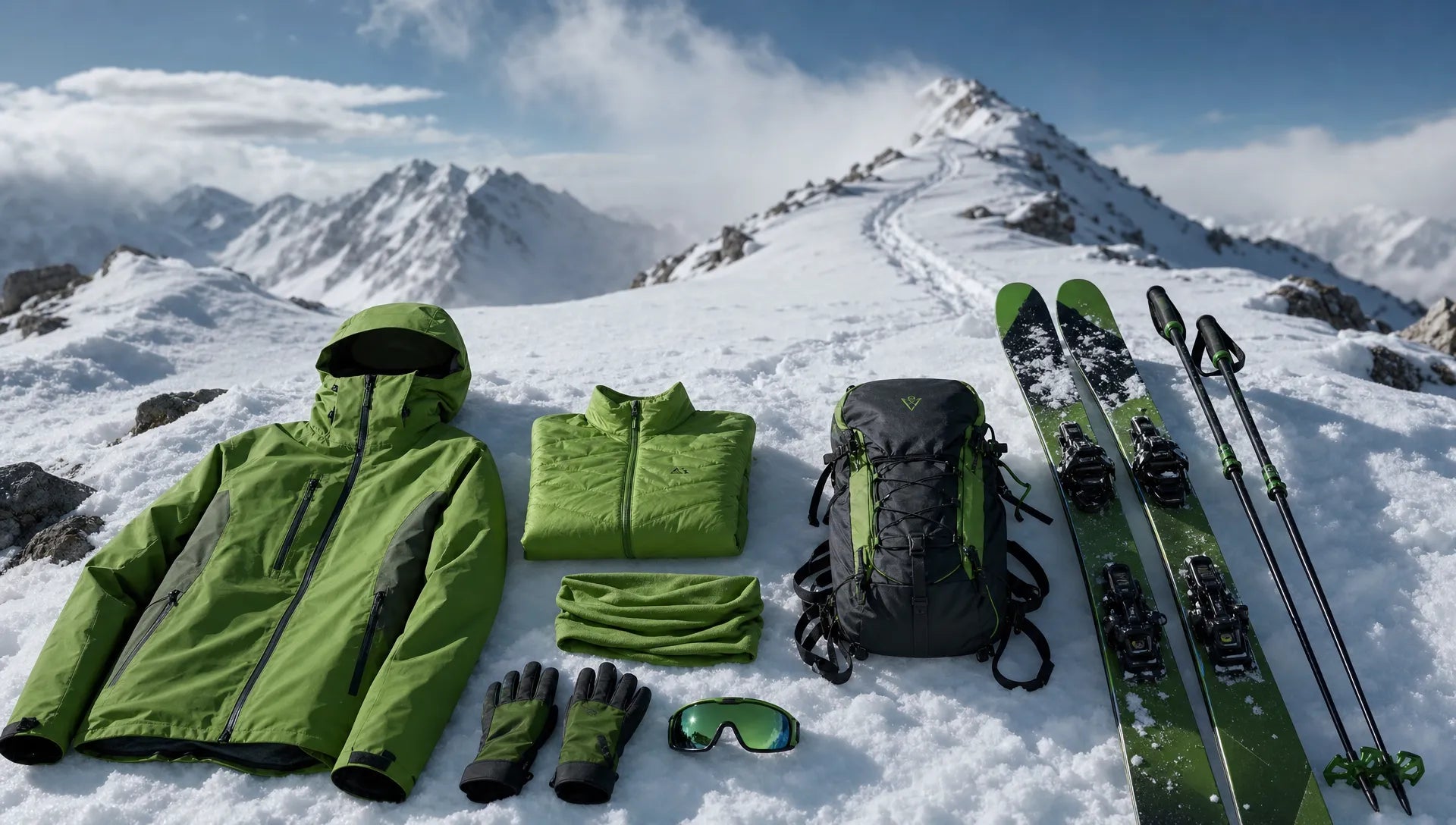
In summary: what really needs
- Breathable technical intima, better if suitable to sweat uphill and dry quickly.
- Light intermediate layer, easy to hold on or store in the backpack.
- Windproof and protective shell for crest, stop and descent.
- Technical pants with good mobility and heat management.
- Two-weight gloves, one for the ascent and one more protective for the descent.
- Technical socks, hat or band, neck warmer and glasses.
- An ordered backpack, with space for layers, water, safety and accessories.
The principle: to dress in layers, not to dress heavy
In ski mountaineering the body works in two very different stages. Uphill produces heat, often for hours. In descent it cools quickly, especially after a break in the peak or during a transition exposed to the wind.
This is why mountaineering ski clothing works better when it is modular. You don’t need a single “hot” head. It takes a combination of layers that can be opened, removed, worn and compressed in the backpack without interrupting too much rhythm.
The first layer must be in contact with the skin and move the moisture outward. Cotton and casual garments are not ideal, because they hold sweat and become cold as soon as you stop. The technical fibres and merino wool, in different weights, are more consistent choices.
The second layer regulates heat. It can be a light fleece, a technical sweatshirt or an active insulation garment, depending on the intensity and temperature. It must allow movement and breathe well.
The third layer protects. A shell serves against wind, snow and humidity, but it does not have to become an uphill sauna. Openings, zips, correct fit and ease of storage count as the level of protection.
Climb and descent: how to decide what to wear
The choice depends not only on the temperature. They count exposure, wind, altitude, output duration, group rhythm and type of descent. A short trip near the plants requires a different management than a long day with more repellate.
| Situation | Priority | Practical choice |
|---|---|---|
| Long and regular climb | Traction | Light technical intimacy, thin intermediate layer, shell in the backpack |
| Very cold start | Initial protection | Easy heat layer to remove after the first minutes |
| Wind at altitude | External barrier | Smooth or windproof vest at hand |
| Discess after pause | Quick heat | Wear the hot layer before cooling |
| Variable or wet snow | External resistance | More protective shell and technical trousers |
| Short training | Lightness | Few layers, very breathing, without unnecessary redundancies |
A good rule: if you're already hot at the parking lot, you're probably too dressed. The first minutes may look fresh, but the body quickly enters the temperature. Better to start slightly under comfort and have a ready layer in the backpack.
For those who alternate mountaineering, trekking and outdoor activities, it is worth building a cross-section technical wardrobe. Brand asLa Sportivaare interesting because many garments work well out of snow, between training, excursions and travel.
The essential garments, without excess
An effective kit should not be huge. It must cover the correct functions: sweat management, heat, protection, mobility and safety. Below you find a concrete base.
| Chapter | Serves for | What to assess |
|---|---|---|
| Technical heading | Keep your skin dry | Weight, breathability, comfort on seams |
| Light Midlayer | Add controlled heat | Elasticity, drying, compatibility with backpack |
| vest or windbreaker | Cut the wind without covering too much | Encumbrance, freedom on arms, ease of opening |
| Gum | Protect downhill and unstable weather | Hood, zip, resistance, fit over layers |
| Trousers touring | Move uphill and get off protected | Stretch, openings, reinforcements where they serve |
| Light Gloves | Get up without sweating too | Grip, sensitivity, drying |
| Protective gloves | Down, cold, wind | Heat, protection, compatible cuff |
| Technical calculations | Comfort in the boot | Thickness, support, moisture management |
Accessories are often underestimated. A thin band or hat, a neck warmer and a pair of suitable glasses can change the quality of the day. Even the backpack is part of the system: if the layers are difficult to achieve, you will end up not using them at the right time.
For those who need to prepare skis, attacks or materials before the season, the services in store in Biella can be useful for rental, control or maintenance of the equipment. Clothing works better when the rest of the setup is ordered.
Fit and sizes: the comfort feels moving
In ski mountaineering the fit must be more precise than traditional track clothing. A too wide garment disperses heat, entangles and creates useless volume under the backpack. Too tight a garment limits the falcade, pulls on the shoulders and makes it difficult to add layers.
The simplest proof is to simulate real movements. Lift your arms as if you hold the sticks, fold your knees, rotate the bust, close the backpack and verify that the head does not go too far. Also check the compatibility between sleeves, gloves and watch, because they are small details that are noticed in the mountains.
For trousers, the critical point is the mobility of hip and knee. The climb requires a pitch width, especially on steep tracks. The descent requires protection and stability, without excess fabric around the boot.
For women, the fit should be evaluated with even more attention on shoulders, chest, waist and pelvis. It is not enough to choose a smaller size: a specific cut can improve comfort, freedom and management of layers.

Our recommended options: recommended items to build the kit
Light Technical Intimate
Best for:regular exits, supported climbs, who tends to sweat a lot.
Key features:must dry quickly, stay comfortable under the backpack and not create friction. Light weight is often more versatile, because you can add heat above without wetting the first layer.
What to pair it with:slim midlayer uphill, shell in the backpack and light neck warmer on the most exposed days.
Elastic technical midlayer
Best for:who seeks a garment to keep on the move, even on trek or travel.
Key features:must follow the body, breathe and offer a controlled heat. The Heads of SelectionArc'teryxare a good direction if you are looking for a clean, technical and lasting approach.
What to pair it with:technical underwear dry, windproof vests in cold climbs and shell for descent.
Vest or windproof layer
Best for:climb with wind, change of exposure, who does not want to cover too much the arms.
Key features:a technical vest protects the bust, which is the most sensitive area to the cooling, without getting too much temperature. It must be easy to open and store.
What to pair it with:breathable layer base, light gloves and touring trousers with good aeration.
Technical guide
Best for:descent, uncertain weather, wind on the crest, long days.
Key features:the shell must enter over the layers without compressing, protect when needed and handle the openings well. It is not the garment to wear always, but what must work when conditions change.
What to pair it with:light or thermal midlayer, more protective gloves and hood compatible with helmet when provided.
Ski mountaineering trousers
Best for:who wants a specific head for climb and descent, not a compromise from track.
Key features:seeks mobility, technical fabric, protection at exposed points and good temperature regulation. Too hot pants can become the first problem in long climbs.
What to pair it with:technical socks not too thick, thermal underwear only when necessary and upper shell to balance protection.
Compact backpack and transfer bag
Best for:who makes day trips, weekend in the mountains or trips with equipment.
Key features:for the trip serves an ordered backpack, with quick access to the layers. For the trip you need a durable and well-organized bag, especially if you need to separate dry garments and used material. The selectionThe North Faceis useful to complete the accessory and transport part.
What to pair it with:light inner pockets, spare gloves, protected glasses and a dry layer for return.
What to avoid when buying ski mountaineering clothing
The first mistake is to buy too hot garments because “in the mountains it is cold”. It is true, but uphill the body works. Cold is better managed with light and modular layers, not with a single heavy garment.
The second mistake is to choose only according to the use on track. The resort clothing is designed to go back with the plants and ski with alternating intensity. Ski mountaineering requires more breathability, more moisture management and less volume.
The third mistake is to neglect gloves. Only a couple rarely enough. Uphill needs sensitivity and ventilation. Downhill requires protection. Bringing a second dry pair is a simple but very effective choice.
The fourth mistake is not to think about the backpack. A great boss, if too bulky, will stay at home. When you choose a shell, a midlayer or a thermal layer, always evaluate how much space it occupies and how quickly you can wear it.
Finally, avoid building the kit at once if you have not yet clear your real use. Start with the essentials, make some exits, then integrate. Online selection and in store allows you to build a progressive system, not a redundant wardrobe.
FAQ
What is the first head to buy for ski mountaineering?Technical intimacy is often the best starting point. If the first layer remains wet, even the more technical heads above work worse.
Better merino wool or synthetic?Depends on use. The merino is appreciated for comfort and smell management, the synthetic tends to dry quickly and works well in the intense climbs. Many mountaineering skis use both according to the day.
Need a padded jacket?It can serve for breaks, emergencies or cold days, but it does not replace the layered system. For many outputs, a light midlayer and a well chosen shell are more versatile.
Can I use ski clothing?In part yes, especially at the beginning, but often it is too hot and less breathable. If you start making longer trips, specific touring garments improve comfort and sweat management.
How many layers do I have to carry in my backpack?On a standard trip it is best to have at least one shell, a pair of more protective gloves and a light hot layer. The precise amount depends on weather, altitude and duration.
How do I know if the size is right?Try the head with the layers you really use, wear the backpack and move. If you pull on shoulders, knees or pelvis, or if you create too much volume, it is not the correct size or cut.
To build an essential and consistent kit, parts from the layers that you will use more and complete only where you need. UpFabbrica Ski Sisesfind a careful selection of technical clothing, accessories and outdoor brands, with free shipping in Italy over 50€, fast delivery and return within 14 days.