















Mountain dresses: practical capsules for four seasons
Choosing mountain clothes all year round does not mean filling the closet of technical garments. It means building an essential capsule, modular and consistent with the way you live outdoors: summer hiking, weekends at altitude, ski on track, urban travel, trips with reduced luggage. This guide is designed for those who want to buy better, not more. It helps you understand which leaders deserve space, which are redundant and how to create practical combinations for four seasons.
Summary: the mountain capsule in short
- Parts of three layers: breathable base, insulating intermediate, protective exterior.
- Choose items that work in multiple contexts: path, snow, travel, city.
- Invest first in shell, technical pants, mid layer and suitable footwear.
- Avoid duplicating too specialized if you do different but not extreme activities.
- For occasional skis and snowboards, consider the equipment rental and concentrate the budget on the garments you will use most often.
The logical capsules: less heads, more combinations
A capsule of mountain clothes works when each garment has a precise role. The point is not to find the head “perfect for everything”, but to choose compatible pieces between them. An external jacket must work on a fleece or light down jacket. A trousers must accompany you from fresh trekking to the day in the refuge. A shoe must be chosen according to the real ground, not to the generic idea of mountain.
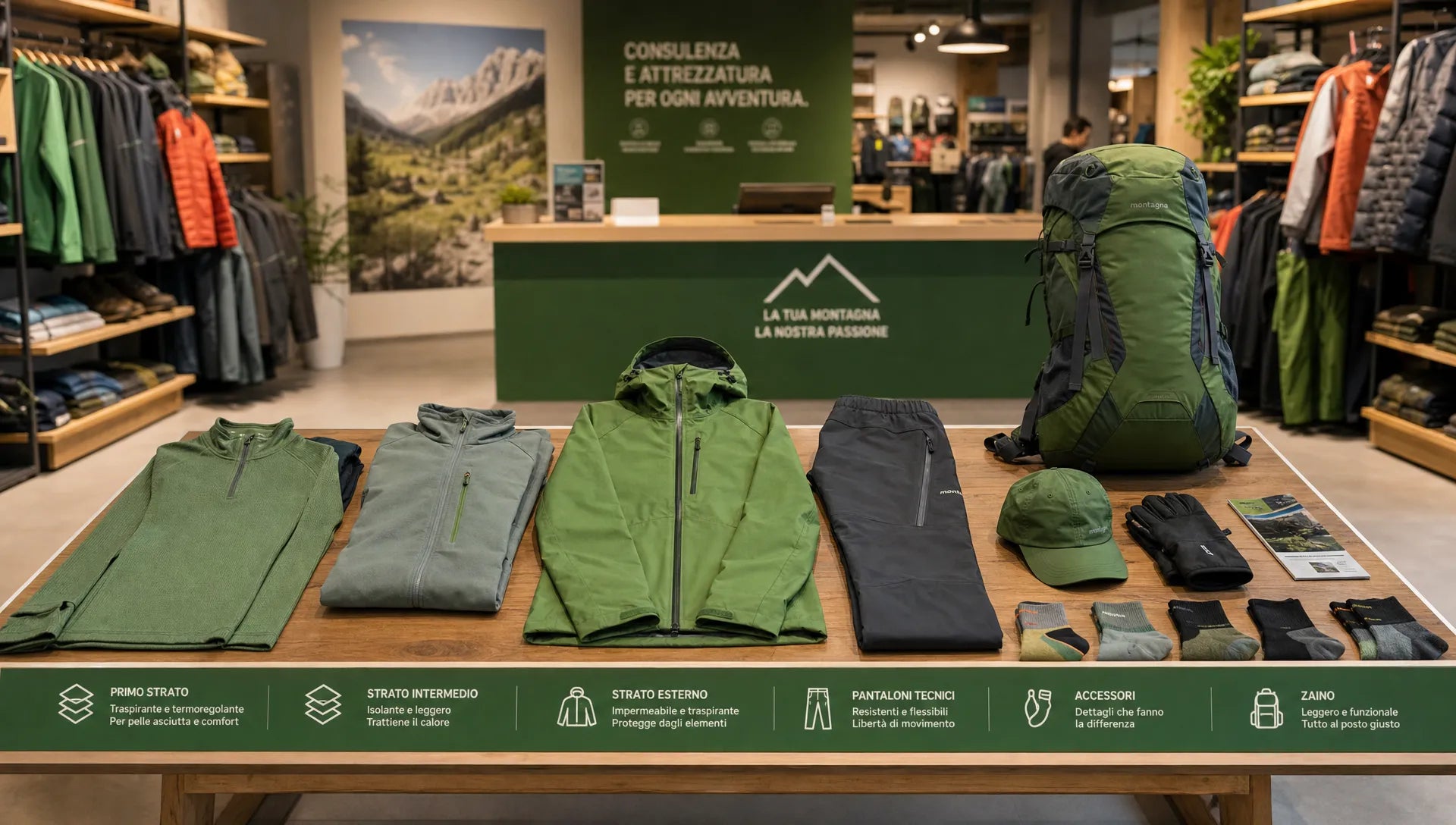
The most reliable system remains layered. The base layer manages moisture and comfort on the skin. The intermediate layer adds heat. The outer layer protects from wind, rain and snow. If you want to deepen the modular approach with a responsible purchasing logic, you can also read the Ski Sises guide upmountain clothing and kit 4 seasons without waste.
| Road | Role in capsules | When needed | Error to avoid |
|---|---|---|---|
| Base layer | Keeps skin dry and stable | Trekking, skiing, travel, high intensity activities | Choose it too heavy to use it only in winter |
| Mid layer | Adds modular insulation | Half seasons, stops, evenings at altitude | Buy too many similar items |
| External shell | Protects wind and precipitation | All year round, especially at altitude | Confuse heat and weather protection |
| Extra insulation | Increase comfort in breaks and cold | Winter, refuge, cold trips | Use it as the only technical layer |
| Accessories | Handle thermal dispersion and comfort | Every season, with different weights | Treat them as secondary details |
Decision tree: from where to start
The right capsule depends on three factors: main activity, more frequent climate and intensity level. A person who walks slowly in the mountains needs more insulation than those who go up fast. Those who ski on track prefer protection and static comfort. People who travel often look for compact, presentable and easy to match.
| If your priority is | First investment | Second investment | Practical note |
|---|---|---|---|
| Trekking 3 seasons | Light shell and technical trousers | Breathable mid layer | Point on compact items in the backpack |
| Skiing on track | Protective jacket and thermal layer | Adequate gloves, socks and trousers | The comfort depends on the accessories |
| Freeride or ski mountaineering | Breathable Layer and Reliable Shell | Insulation by stopover | Before the exit, check weather and bulletins, for example onMeteomont |
| Weekend in altitude | Mid layer versatile | Suitable for the ground | Better few well-combinable leaders |
| City and outdoor lifestyle | Essential technical jacket | Clean and functional trousers | Look for sober, durable and easy to use items every day |
| Travel with reduced baggage | Composable Shell | Washable and quick drying layer base | Every boss must have at least two uses |
The essential capsule for four seasons
A practical capsule is not the same for everyone, but a balanced base can be built with few elements. The goal is to cover most exits without buying a different item for each month.
| Category | Reasonable amount | What to choose |
|---|---|---|
| Technical base layer | 2 or 3 | One lighter and one more thermal, depending on the activities |
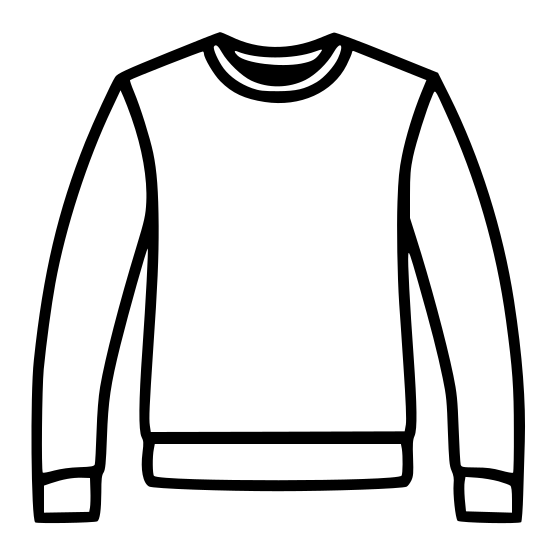
| Mid layer | 1 or 2 | Pile, technical mesh or outdoor sweatshirt with good breathability |
| Shell | 1 | Protective jacket to use over other layers |
| Extra insulation | 1 | Vest or light jacket for breaks, travel and winter |
| Technical pants | 1 or 2 | A model suitable for trekking and daily use, plus one warmer if necessary |
| Technical calculations | 2 or 3 pairs | Specifications for hiking or skiing, with thickness consistent with the shoe |
| Accessories | Few but targeted | Hat, gloves, neck warmer, belt, compact backpack |
For a consistent selection of premium outdoor garments, brand collections are a good starting point. Those looking for a technical and transversal language can focus onPatagonia selection, while those who want garments designed for mountain, travel and daily use can exploreThe North Face collection. For shoes and accessories related to movement, theSalomon collectionis particularly relevant.


Our recommended options
1. Protective shell
Ideal for:Trekking at altitude, travel, half seasons, ski with correct layering.
What to look for:protection from wind and precipitation, functional hood, practical zip, cut that allows you to wear a mid layer below. The shell must not be very hot: its main task is to protect.
To match:light layer base in mild seasons, batteries or compact insulation when the temperature drops. In the city it works over a technical mesh or a clean casual garment.
2. Mid technical layer
Ideal for:almost all exits, from autumn trekking to day skiing.
What to look for:good breathability, comfort on the shoulders, volume contained under an external jacket. A too bulky mid layer reduces freedom of movement and limits travel use.
To match:shell in case of wind or unstable weather, insulating vest if you predict long breaks. It is one of the most useful leaders even outside the mountain.
3. versatile technical trousers
Ideal for:hiking, walking, travel, Alpine weekends and informal daily use.
What to look for:durable fabric, freedom of movement, comfortable life with backpack or belt, well positioned pockets. For a four season capsule it is best to choose at least one not too specialized pant, able to move between path and city.
To match:base thermal layer below in cold months, fits technique appropriate to the shoe. For outdoor urban use, combine it with an essential jacket and a clean fit.

4. Light insulation
Ideal for:breaks in the top, shelter, travel in cold season, daily use when serving heat without excessive volume.
What to look for:good heat and weight ratio, ease of compression, fit that allows you to use it over a mid layer or under a shell. A vest can be very efficient if you need freedom on your arms.
To match:layer and shell base in winter, technical mesh in half seasons. If you want a more small capsule, consider also garments from the clean line inBiella Fabrics collection, useful for a technical but sober wardrobe.


5. Breathable layer base
Ideal for:dynamic activities, skiing, walking uphill, trips where you want to wash and reuse a few garments.
What to look for:comfortable contact on the skin, moisture management, uneasy seams under backpack or jacket. The layer base should not be too wide, but should not limit the breath or movements.
To match:mid layer light if you move a lot, extra insulation if you expect stops. For the capsule, better have a lighter head and one warmer instead of three similar garments.
6. Technical footwear and socks
Ideal for:who wants to avoid the classic mistake of starting from clothing and underestimating the foot.
What to look for:Stable fit, sole consistent with the soil, correct space for fingers, compatibility with the stocking you will really use. A shoe too rigid for easy or too light walks for challenging paths reduces comfort and safety.
To match:technical socks with adequate thickness, trousers with compatible bottom, possible waterproofing if provided by the material. The shoe should be tested by thinking about the main use, not only the feeling of the first minutes.
7. Smart accessories
Ideal for:complete the capsule without increasing too much volume in the backpack.
What to look for:gloves proportional to the season, hat or band, neck warmer, dedicated socks, compact backpack and functional belt. They are details, but often determine the success of a day in the mountains.
To match:Everything. The accessories allow to extend the use of the same garments between different seasons, especially when the temperature changes during the day.
Fit and sizes: how to choose without errors
The fit of mountain clothes must be evaluated in motion. Lift your arms, fold your knees, simulate the use of the backpack, check that the collar does not bother and that the sleeves remain in position.
The layer base must follow the body without compressing. The mid layer must leave space to a thin layer below, but do not create useless volume. The shell should be tested over the mid layer, because buying it too precise limits use in winter. The trousers must allow a long and comfortable step, especially if you use it on the way or for prolonged walks.
For footwear, always consider technical stocking. A tried pair with casual socks can seem correct in the store and be different on the path. If you are between two sizes, consider the prevailing use: dynamic trekking, skiing, travel or city require different sensations.
How to adapt the capsule to the four seasons
The same capsule changes character according to combinations. In spring and autumn the mid layer becomes the most used head. In summer they count protection from the wind, breathability and management of thermal shocks. In winter they come into play insulation, accessories and more thermal layers.
| Season | Practical combination | Note of choice |
|---|---|---|
| Spring | Light base, mid layer, shell in the backpack | Prepare for wind and quick change |
| Summer | Breathable base, lightweight pants, compact shell | At altitude the weather changes even on stable days |
| Autumn | Base, warmer mid layer, shell worn or ready | The difference makes her accessories and shoes |
| Winter | Thermal base, mid layer, insulation, shell | For ski and snow care socks, gloves and outdoor protection |
If your capsule serves especially for a white week, not everything must be purchased. For occasional skis or snowboards, it can be smarter to invest in quality personal items and use theski and snowboard rental in Biellafor equipment. If you already own skiing or snowboarding, theSki and snowboard workshophelps maintain efficient equipment without replacing it before necessary.
What to avoid when you build capsules
The first mistake is to buy for extreme scenario when real use is moderate. A very specialized leader can be excellent in its context, but little used in the rest of the year. The second mistake is to duplicate mid layer with identical functions. The third is to save on stockings, gloves and base layers: they are less visible, but they affect a lot on comfort.
A good rule is to ask: “This boss works with at least three pieces I already own? ” If the answer is no, it may be isolated. The capsule does not reward the most technical leader in absolute, rewards what fits best in your system.
Frequently Asked Questions
How many mountain clothes do you need for a four season capsule?For most people it is enough 10 or 12 well-chosen elements, including layer base, mid layer, shell, trousers, insulation, socks and accessories. The number grows only if you practice very different or very frequent activities.
Better buy a warm jacket or shell with separate layers?For a versatile capsule it is often more practical a protective shell combined with modular internal layers. A very warm jacket can be comfortable in winter, but less useful in half seasons.
Are mountain clothes good in town too?Yes, if you choose items with clean line, controlled volume and non-excessive technical details. Shell, mid layer, technical pants and outdoor footwear can also work well for commuting, travel and weekends.
How do I choose the right size for layering?Try the bosses in the order you use them. Base layer near the body, comfortable mid layer, shell with enough space over the other layers. If a garment limits shoulders, neck or step, it is not suitable for a practical capsule.
When should I rent instead of buy?You should rent when using the equipment a few times a year, when you are starting or when you want to travel light. For garments in contact with the body, such as layer base, socks and gloves, it is better to have personal items carefully chosen.
A capsule of mountain clothes is built starting from real use, not from an infinite list. Choose first the items you will use most often, then complete the system with specific accessories and layers. To get started, explore the outdoor and sportswear collections of Fabbrica Ski Sises online, or go to shop in Biella for a guided and consistent choice with your mountain season.
Ski Sises on Google
Choose Ski Sises as a preferred source: you'll see our guides and news more often in Top stories on Google.