















Snow suit: how to choose it without errors
Buying asnow suitIt seems simple until you end up with moisture in your sleeves, snow coming from your ankle or a fit that limits your movements just when you need precision. The good news is that errors are almost always predictable: they do not depend on the “right type” in absolute, but from the match between real use, construction and fit.
This guide is designed for those who ski on the track, for those who alternate freerides and trips, for families and for those who want a clean and reliable set also buying online.
- Objective: stay dry and comfortable (before “very hot”).
- Key Choice: two pieces, bib or whole suit, based on rhythm and snow.
- Details that count: seams, zip, gaiters, reinforcements, usable ventilations.
- Fit: it must allow layering and wide movements without unnecessary volume.
- Method: decision tree + quick checklist before purchase.
1) Define the scenario, the suit you choose so
Before looking at brands and “numbers”, clarify three variables. They avoid 90% of the wrong purchases.
A. Where will you use it more?
- Pista (planners): more breaks, more perceived cold, more contact with chairlift.
- Freeride / deep snow: more snow inputs, more abrasion, more need to seal.
- Ski touring / splitboard: more sweat, more rhythm changes, more importance of ventilation.
B. What's your rhythm?
- Calm / Beginner: it serves simple thermal management, more “easy” garments.
- Sports: It serves real breathing and comfortable ventilation.
C. How much do you want it to be “modulate”?
- If you travel often and ski in varying periods, it usually wins a layered approach (low + mid layer) because it adapts the suit to multiple days.
Mini decision tree (practical)
If your problem issnow entering(falls, powder, children), currencybib or one-piece.
If your problem issweat and overheating, point upshell + ventilation(more than on heavy padding).
If your problem iscold in chairlift and slow days, a setisolated(jacca and trousers with padding) simplify everything.
2) Two pieces, bib or whole suit: pro and compromise
There is no “better” format, there is the most coherent one.
| Configuration | Strong points | Typical limits | Ideal for |
|---|---|---|---|
| Two pieces (jacca + trousers) | Versatility, easy fit adjustment, easier to manage in the bathroom | More snow input points (life) if not well sealed | Track, mixed use, travel |
| Bib (salopette) + jacket | High protection on back and waist, less snow inside, stability in movement | A little more “hot” on, managing layers more important | Freeride, families, deep snow |
| Full suit (one-piece) | Total seal, zero “gap” in life, clean set-up | Fit to adjust, less modularity, thermal management to plan | Freeride, cold days, who wants simplicity |
Note: If you are undecided, the two pieces are often the most elastic choice. If you already know you're going to make such deep snow, the bib is the most rational compromise.
3) What to really look at: protection, breathability, construction
The specifications count, but only if read together with the construction.
Water resistance: it is not only “water column”
The water column is a useful reference, but does not tell everything. It counts mainlyhow the head is built:
- Stitching: nastrates (partially or totally) make the difference in critical points.
- Zip: Protected zips reduce infiltration in the area pockets and ventilations.
- Water repellent treatment (DWR): it helps to slip away the water, but it must be maintained over time.
If you want an orientation reference (not a law), many “seri” ski sets often move in ranges like 10,000–20.000 mm and beyond, but for real use the priority is to avoid entrances in shoulders, seat and zip.
To understand how membranes and protection work, you can deepen on the bases of laminates onGORE‐TEX.
Breathability: it serves moisture management, not magic
If you sweat, it is not enough “more waterproof”. Serves:
- Usable ventilation(easy to open and close, even with gloves).
- Layering sensible: base that dries, mid layer calibrated, external that protects.
Some brands and product cards use RET values and tests such as ISO 11092 (standard for evaporative resistance). If you are interested in metric, find reference to ISO 11092. In practice, however, the difference makes it ventilation zip and choice of the base layer.
The details “anti-errori” that few control
Long days are won here.
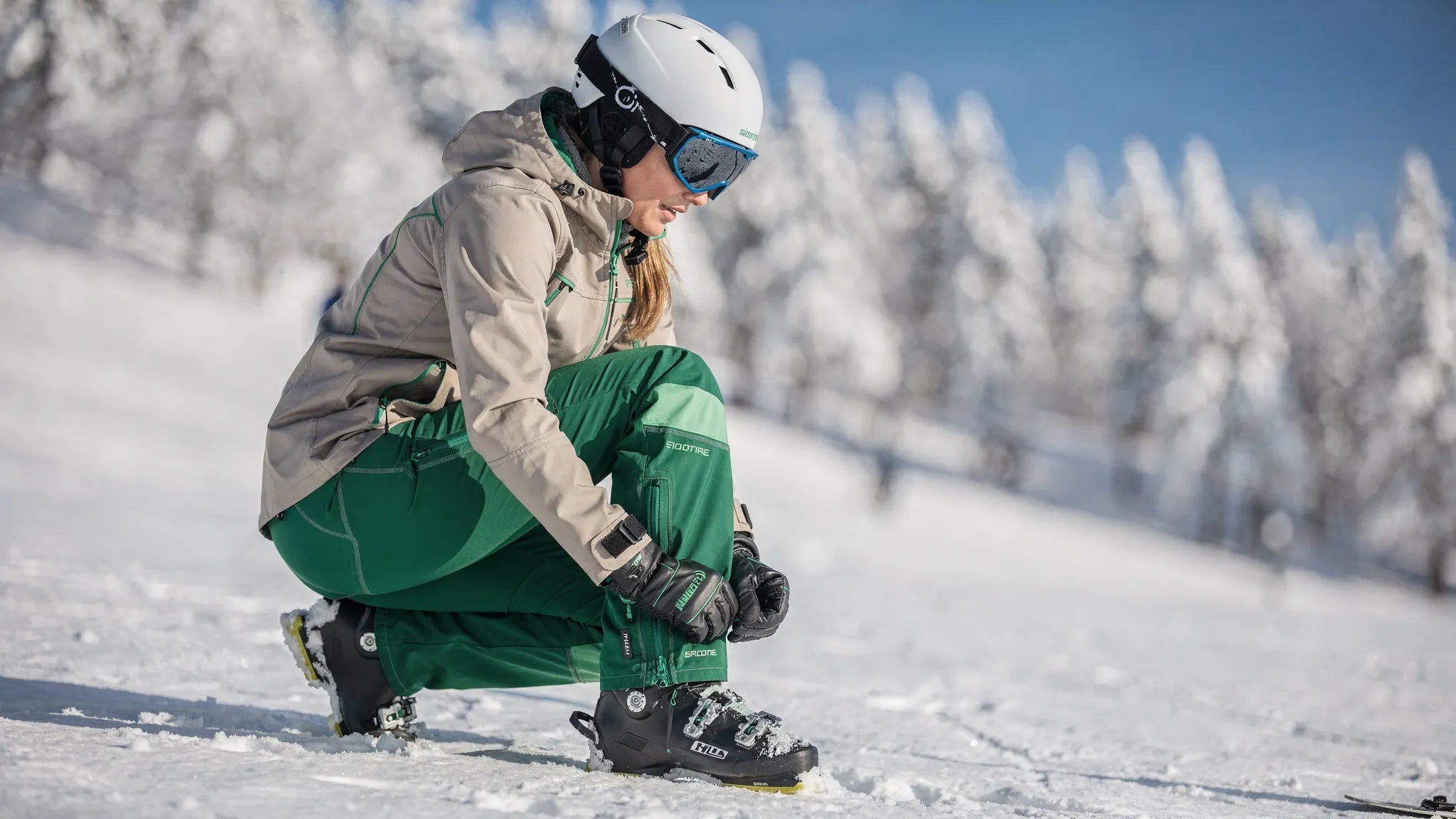
- Internal leg: must seal well on the shoe, without pulling.
- Bottom leg: sufficient space for the boot, with protection from foil and abrasion.
- Reinforcements: on seat and inner ankle increase durability.
- Cuffs: if the jacket does not close well with the glove, enter snow.
- Pockets: better few but place where they don't bother with backpack and chairlift.

4) Fit and size: the quick test that avoids returns
Onesnow suitmust not be “adhesive”. It has to leave room for movement and an intermediate layer, without creating excess of fabric that whips to the wind or frozes.
The 3 rules of fit (simple)
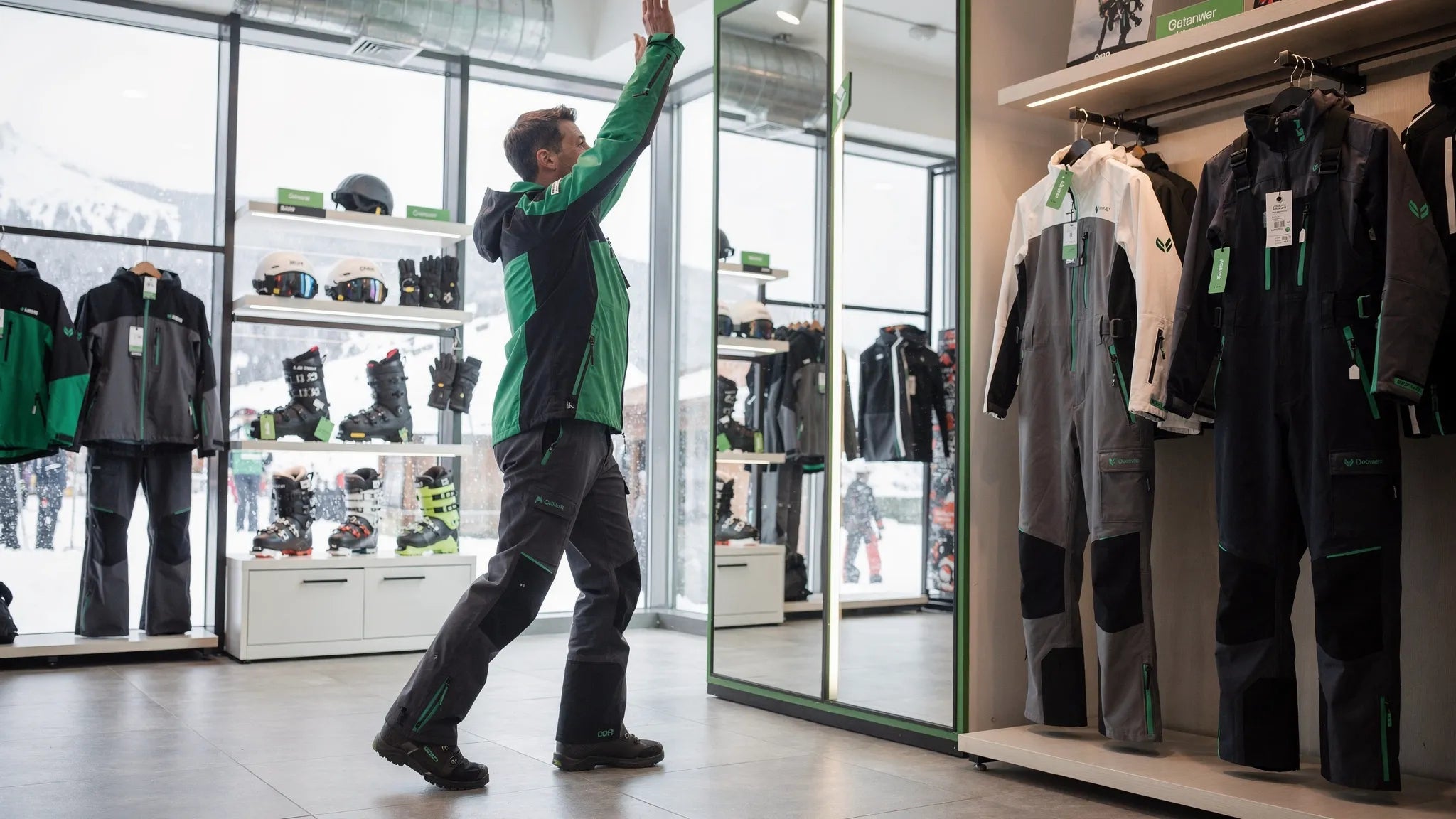
1) Shoulders and arms: raise your arms as to attach the chairlift. If you pull on your shoulders or find your wrists, you're at the limit.
2) Welcome and long step: make a welcome and then a broad step. If you feel horse or knee shooting, on the track you will feel double.
3) Try “real volume”: wear your typical mid layer (technical hair or light down) and test. If you only try with a t-shirt, the size may be faked.
Quick indications (when you are between two sizes)
- If you skiCalm down.and you want simple thermal management, often you should prefer some space for the layers.
- If you dotouringor you have high rhythm, avoid excess volume (more rubbing, warmer on).
- If you havehips or thighs more present, always check the measures of the basin and thigh (not only life).
5) Online shopping checklist (anti errors)
Before clicking “buy”, browse this list. It is designed for real product cards.
- Indicated use: track, freeride, touring, travel. If it's not clear, ask.
- Construction: seams, zippers, gaiters, reinforcements.
- Ventilation: where they are and how practical they are.
- Compatibility: bottom leg with boots, wrist with glove, neck with helmet.
- Measures: compare with a boss that suits you (jacca and pantalone, not “in the eye”).
- Policy: Plan test at home as soon as it arrives, without removing labels.
If you need equipment for a weekend or want to postpone the purchase at the end of the season, consider also the serviceski rental in Biella. And if you have doubts about set-ups, repairs or maintenance, you will find a complete overview insport service in store.
6) Our recommended options (recommended choices)
Here you do not find “the unique model”, but configurations that really work. Choose the most consistent one with your use.
Option 1: Two isolated pieces (easy and protective)
Best for: slopes, cold days, beginners, who often stops.
Key features: good weather protection, simple thermal management, comfort in chairlift.
What to do: technical underwear and a light mid layer. To complete the after-ski look with a clean and versatile approach, take a look at selected items asBiella Fabrics.


Option 2: Guscio + layering (maximum modularity)
Best for: variable seasons, travel, sports skiers alternating different conditions.
Key features: great adaptability (add or remove layers), more useful ventilations, prolonged use on several seasons.
What to do: base layer that dries quickly and technical mid layer. If you are looking for a more “technical” setting, explore the selectionDynafit.


Option 3: Bib + jacket (anti snow, very stable)
Best for: freeride, deep snow, families (even for those who kneel often with children).
Key features: protection on back and waist, less snow inputs, good grip on movement.
What to do: mid layer not too often (to avoid overheating) and gloves with compatible cuff.
Option 4: One-piece (total seal, set-up “cleaned”)
Best for: who wants zero gap in life and maximum protection in cold and windy conditions.
Key features: continuity of protection, less weak points, “closed” comfort.
What to do: base and mid layer chosen carefully (here ventilation counts more than the padding). A pair of comfortable footwear for travel and après-ski can complete the exit, see the selectionFlower Mountain.


Option 5: Touring-oriented set (light, breathable, with zip)
Best for: ski touring and splitboard, long climbs, high rhythm.
Key features: effective ventilation, moisture management, cut designed to move so much.
What to do: technical layer base, minimal mid layer. If you want to integrate “bridge” garments (also used in travel and city) with careful construction, currencyLanapo.


Option 6: Family set (robust and simple to manage)
Best for: family days, wet snow, many on/offs (bar, ski school, games).
Key features: ease of wearing and removing, reinforcements where you need, details that seal well.
What to do: a dry change in the backpack and easy accessories (heat neck, gloves with good closure on the wrist).
FAQ (FAQ)
Better padded snow suit or shell?It depends on the rhythm. If you run smoothly and patroll cold, the padded simplifies. If you sweat or travel in variable periods, shell + layers is more flexible.
Why do I even bathe with a “waterproof” suit?Usually for three reasons: unprotected seams and zippers, consumed DWR (the external fabric is “saturated”), or internal condensation from insufficient breathability and wrong layering.
Is the bib uncomfortable?If the fit is correct, no. It requires only more attention to the thermal (six more “closed”) and practicality (pause, bathroom). In return, it reduces snow inputs a lot.
How do I know if the size is right without trying it?Compare the size of the product card with a garment that suits you and do a full home test as soon as it arrives (mid layer included): arms up, welcome, long step.
Do you need to buy everything new for a week on the snow?Not always. If you ski 1–2 times a year, it can make sense to rent equipment and invest first on what impacts comfort and safety (fit, stratification, gloves, socks).
Clear action
If you want to choose your ownsnow suitwith a quick criterion, start from the scenario and then compare two options: set isolated vs shell + layering. If you need an opinion on the fit (especially when you are between two sizes), please contact the team or go to the store in Biella: often you need few measures and the real use to direct the right choice.
Ski Sises on Google
Choose Ski Sises as a preferred source: you'll see our guides and news more often in Top stories on Google.