































Ski mountaineering: checklist to start safely
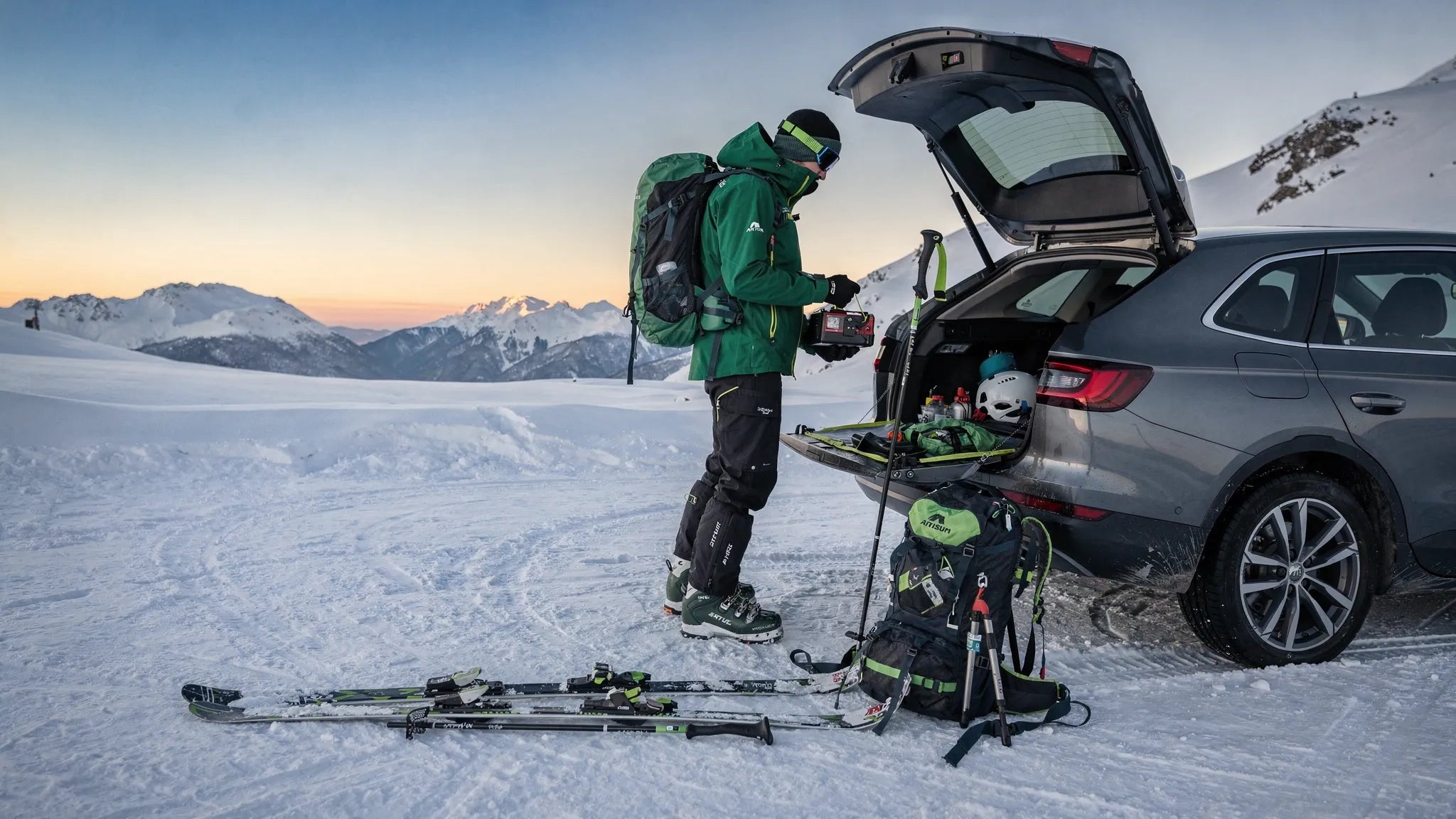
Ski mountaineering attracts because it promises silence, clean lines, autonomy. But it is the autonomy to make everything more serious: out of the beaten track there are no “standard conditions”, and the difference between a nice exit and a problem often lies in what you checked before leaving. This checklist is designed for those who are starting (or leaving after years) and want to build a method: essential equipment, layer clothing, planning, management of the group and a simple criterion to say “now no”.
If you read only one thing
- Start with small objectives: easy routes, low altitude difference, simple exposure.
- Always consult weather and avalanche bulletin, then adapt the round (not the contrary).
- ARTVA, shovel and probe must be carried, wise to use and tested before each exit.
- Layering minimal but functional: dry uphill, protected downhill.
- The “go/no-go” decides first (and confirms on the spot), not when you are already in the cross.
1) Before the equipment: scenario, level, conditions
In mountaineering skis the most important checklist is not in the backpack: it is the choice of the scenario. If you are at the beginning, the goal is not “make meters” but go out with margin.
Micro decision tree (clean, repeatable)
Think of three questions, in this order:
- Conditions: stable weather and manageable visibility? Avalanche bulletin consistent with an easy route?
- Group: similar rhythm, clear communication, someone with real experience in that land?
- Exit: simple logistics (parking, obvious return), early return options, unobligated track.
If an answer is “no” or “maybe”, the output is simplified or postponed. It is not general caution: it is risk management.
For Italy, a reliable base is to consult theAINEVA avalanche bulletins(regional areas, trends, valuation problems). If you often move outside the border, the bulletinSwiss SLFit is useful to understand how problems are described and what to observe on the ground.

2) Checklist security: what is not negotiable
There are no shortcuts outside the track: security is a system. Bringing the equipment without knowing how to use it is a common mistake, and unfortunately frequent.
Minimum kit (always)
- ART(in transmission, worn correctly, batteries ok)
- Pala(metallic, robust)
- Report(context-appropriate length)
- Backpackwith dedicated compartment and quick access to the safety kit
- Telephoneload, offline map, saved emergency numbers
- First aidessential + thermal blanket
- Front(also for “short” turns)
Pre-starting control (2 minutes, but done well)
- ARTVA: group test (transmission and reception)
- Pala and probe: accessible (not buried below all)
- Backpack: straps and closures in order, nothing hanging
- Weather: latest update (wind and visibility count more than temperature)
To make the checklist more practical, here is a table with typical errors that are worth minutes, not theory:
| Element | Why do you need it? | Common error | Quick control |
|---|---|---|---|
| ART | Research of the wrong | In the pocket or in the backpack | Wearing, group test, batteries ok |
| Pala | Effective excavation | Delicate or too small Pala | Quick assembly, metal blade |
| Report | Precise location | At the bottom of the backpack | Probe in dedicated compartment, ready |
| Backpack | Organization and access | Safety kit “mixed” with other | Dedicated and free department |
| First aid | Trauma/hypothermia management | Incomplete or unusable kit | Essential content, easy access |
Practical note: if you are at first, seriously evaluate an exit with guide or an avalanche course. The point is not only “know”, but to train decisions and procedures.
3) Progression equipment: what to choose without complicating your life
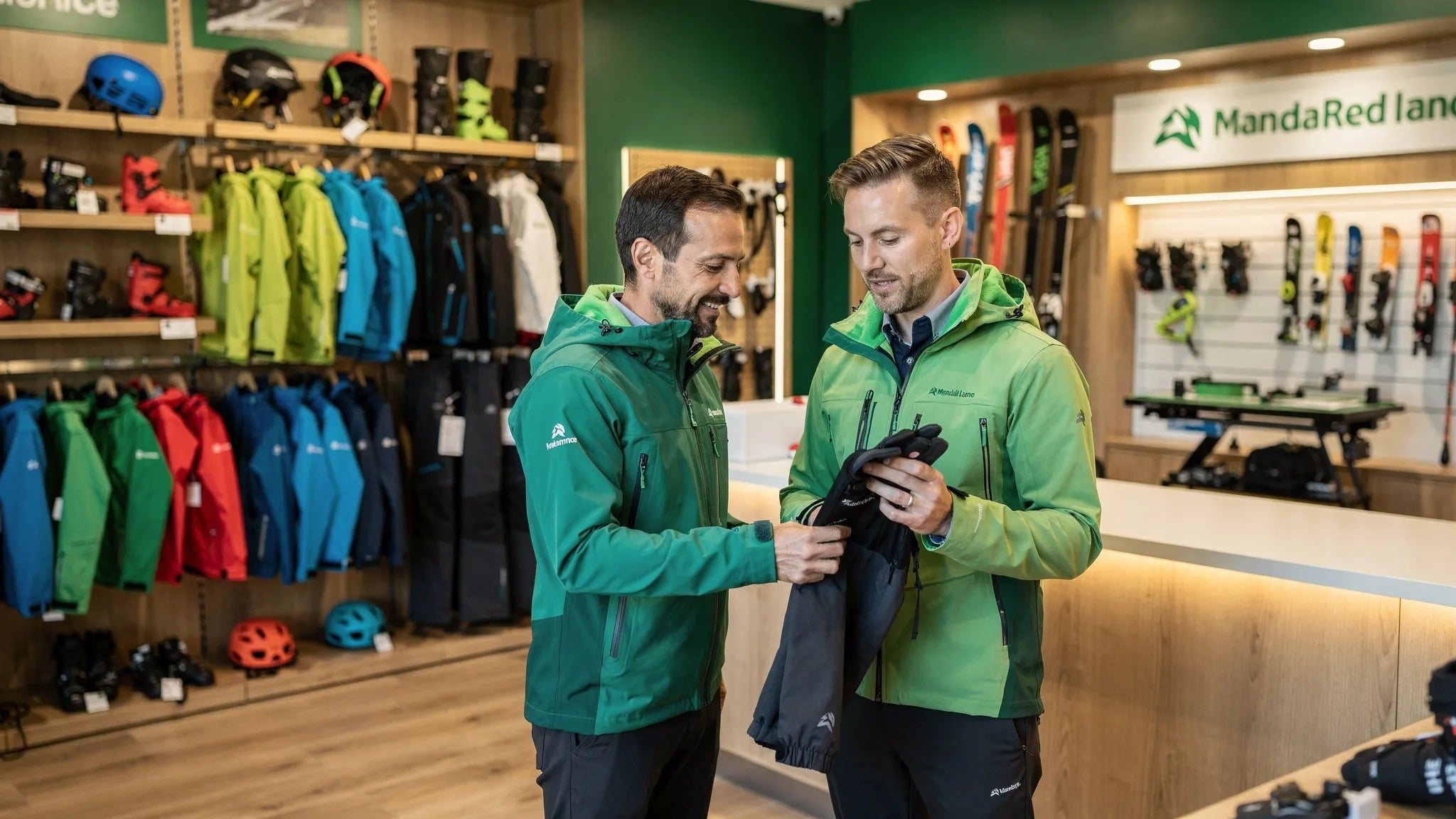
To start safely, the equipment must bereliable and simple to manage, especially with gloves and wind. In this phase it is more useful to reduce friction (mountain/smonta, adjustments, recesses) than to pursue the “lighter” solution.
Key components (panoramic)
- Ski and skin: the more they count tightness and ease of management than the extreme performance.
- Attacks: must be consistent with your use (easy exits, classic trips, mix with track). If you have any doubts, be advised in the store.
- Boots: comfort and precision must be balanced. Pain to the uphill feet means tiredness and worse decisions.
- Ramps(if provided): they are not “uncommon accessory”, but hard snow insurance.
If you don't want to buy right away, rental can be a smart choice to figure out what you really need. If you are in the area, you can start from the serviceski and snowboard rentalto correctly set sizes, adjustments and expectations, then decide what to buy with multiple criteria.
4) Layering for ski mountaineering: dry uphill, protected downhill
Uphill produce heat, downhill you lose it. Layering in ski mountaineering is not “heavy clothes”: It ismanage humidity and windwith few righteous leaders.
Simple rule
Start slightly “fresh” at the parking lot. If you start already warm, after 15 minutes you will be wet. And from wet to cold, you pass quickly.
Well-built minimal set
- Base layer: technical, adhering, designed to transport moisture.
- Mid layer: thermal but breathable (to be put and remove often).
- External layer: protection from wind and snow, with useful ventilation.
- Accessories: Modular gloves, thin band or cap, technical socks.
To choose quickly and consistently, you can start from “amps” collections and then filter for use:accessories, Man, Woman.


Hydration and cold: a detail that weighs
Drinking is a classic: at altitude you don't have thirst like in the gym, but you consume a lot. Bring a handleable bottle with gloves and think of something quick to eat.
On the margin (especially if frequent shelters, accommodation or mountain work), water quality and treatment systems are a real theme: there are specialized suppliers inwater purification technologiesfor professional and industrial contexts.
5) Fit and sizes: how to avoid more expensive errors
Ski mountaineering amplifies the flaws of fit: rubbing, cold points, compressions. A “almost right” size can become the problem of the day.
Practical indications (without obsessions)
- Base layer: it must be near the body, without folds. If “balla”, it holds moisture.
- Mid layer: it must allow freedom of movement (high arm, sticks, rotation of the bust).
- Gum: Try under the layer that you will really use downhill, not with a light knit.
- Pants: uphill they count comfort and joint, downhill protection and compatibility with boots.
- Gloves: better a modular system (subsequent + warmer glove) than a single “all-round” glove.
If you are buying online, keep a reasoned guide to the measures: the articleSports shop: how to choose sizes and fithelps reduce common mistakes.
Our recommended options (careful choices, logic “best for”)
Below you will find a selection of categories that work well to start. They are not “the best in absolute”, they are what tends to give more room to those who are building experience.
1) Technical layer base
Best for:first exits, moisture management without complications.
Key features:quick drying, good elasticity, comfortable construction on the skin.
To match with:technical socks and a light mid layer to manage the stops.
2) Breathable mid layer
Best for:regular climbs with variable temperatures.
Key features:good heat/transpiration ratio, front zip useful for ventilating, bulking in the backpack.
To match with:windproof or waterproof shell for descent.
3) Touring trousers (softshell or hybrid)
Best for:classic trips where you want to move a lot without “bollire”.
Key features:freedom of movement, breathability, moderate wind protection.
To match with:ghette or details compatible with the boot, adequate stockings.
4) External layer (guscio or protective jacket)
Best for:windy descents, light snow, weather in change.
Key features:wind protection, helmet compatible hood, useful ventilation.
To match with:warmer mid layer in the backpack for long stops.
5) Modular Glove System
Best for:who suffers cold downhill but sweats uphill.
Key features:thin undercoat for fine work (hairs, buckles), more protective glove for descent.
To match with:a mask or protective eyewear for wind and snow.
6) Backpack with safety compartment
Best for:automatic procedures (fast access, order, fewer errors).
Key features:dedicated compartment for shovel and probe, stability in movement, handleable straps with gloves.
To match with:ARTVA-pala-sonda kit and an essential mini first aid.
7) Avalanche safety kit (ARTVA, shovel, probe)
Best for:those who go out even only “to the sides” of the area or on untouched itineraries.
Key features:reliability, ease of use, control and regular training.
To match with:a pre-exit routine (group test) and dedicated training.
If you want to complete the set with logic, parts from the elements you will always use: take a look at the collectionaccessoriesand build around what you already own.
Maintenance and services: what saves you errors
Safety also passes by equipment in order: skins that hold, cured lamines, sensible adjustments. If you're releasing already used material, or you want pre-season control, consider a step in the lab.
For those in Biella area, it isSport service in storeis the starting point to understand what interventions make sense and when to make them (without waiting for the week of the first trip).

Close well: your checklist “from pocket”
If you're starting, mentally print this sequence:
- Conditions ok (meteo + bulletin), itinerary consistent.
- Ready group (recommendation, communication, shared decision).
- Complete and tested safety kit.
- Modular layering (dry salita, protected descent).
- Royal plan B (to combine, turn, return).
To build your set with calm and criterion, explore the selectionaccessoriesand, if you have any doubts about sizes or combinations, please contact the team: better one more question before, than a wrong choice at altitude.
Ski Sises on Google
Choose Ski Sises as a preferred source: you'll see our guides and news more often in Top stories on Google.