














Ski shop: what to ask before buying
Entering a ski shop without a list of questions often leads to two errors: buy too technical, or buy too generic. In the first case you pay for performance that you will not use. In the second you risk cold, uncomfortable or material not suitable for your own ski. This guide is designed for those who are preparing a week on the snow, for those who want to update their kit and for those seeking a more aware purchase, online or in shop. The goal is simple: understand what to ask before you buy, and recognize when a council is really competent.
Quick reply
- A good ski shop must ask you where you ski, how often, with what technical level and with what sensitivity to the cold.
- For skis, snowboards and boots, the size is not enough: they serve weight, height, experience, ski style and purpose.
- For clothing, always try the garment by thinking about layering, not on just one random shirt.
- Safety and maintenance count as much as purchase: helmet, attacks, lamines, insoles and protections should be carefully evaluated.
- If you are at the beginning or ski a few times a year, the rental can be the smartest choice before investing.
Start from a simple question: where and how ski?
The first question to do, and to expect, is this: what kind of ski must you support? A competent ski shop does not depart from the most expensive product, but from the context. One morning on the beaten track, a day with variable weather, a freeride exit and a week with children require different priorities.
The difference is not only technical. Change the weight of the garments, the way you move, the necessary protection, the type of accessories and even the logistics of the journey. If the clerk doesn't ask questions, you do it.
| If you recognize yourself in this profile | What to ask the store | Practical indication |
|---|---|---|
| Beginner or return on skis | What equipment forgives me for errors? | Look for comfort, stability and ease, not extreme rigidity |
| Skier from resort | Which kit protects me for a whole day on the track? | Insulation Priority, waterproofness, gloves and correct helmet |
| Regular skier | Where does it make sense to upgrade? | Invest first in boots, layering and maintenance |
| Freeride or ski touring | Does the boss manage ascent, wind and weather changes? | Prefer modular layers and breathable materials |
| Family with children | What better to buy and what to rent? | Evaluate growth, frequency of use and practicality |
| Weekend in the mountains | How do I make an efficient baggage? | Choose versatile items and easy to arrange accessories |
This table also serves to direct your purchase online. If you are replacing a boss you already know, the choice is more linear. If you need to build the kit from scratch, the custom board becomes more important.
Fit and size: questions that avoid errors
In the ski world, a wrong size is not just an aesthetic question. It can limit movements, create pressure points, reduce heat or compromise safety. Before buying, always ask how to dress the product in its real use.
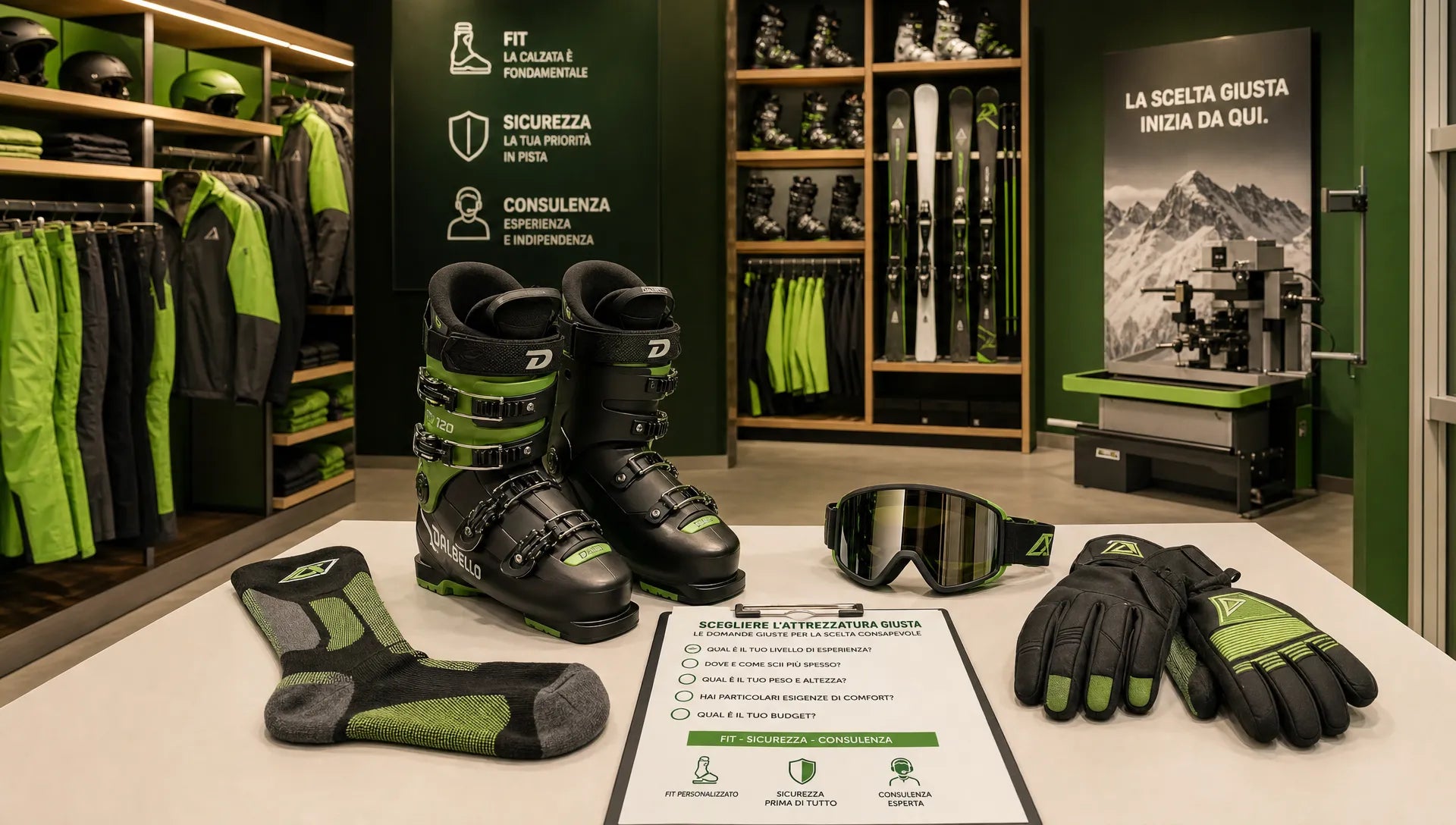
For boots, the correct question is not what port number, but how to work the foot inside the boot. The heel must remain stable, the fingers should not be crushed, the calf must close without excessive compressions. The ski shoe changes the perception of the fit, so it is better to try with a thin technical stocking or however consistent with the use.
For jackets, trousers and mid layer, the fit must be tried in motion. Lift your arms, simulate a bending, sit down, check that the head does not pull on the shoulders or in life. If you use protection or backpack, consider that too. Too tight a garment can look elegant in the store, but become uncomfortable when you have to add a thermal layer.
| Category | Question to do | Practical check |
|---|---|---|
| Ski jacket | Can I wear it with layer and mid layer base? | Arms must move without pulling on the shoulders |
| Ski pants | Are you comfortable in bending? | Check life, knees and compatibility with the boot |
| Casco | Is it certified for alpine skiing? | It must adhere without painful pressure and without oscillating |
| Gloves | Am I suitable for my cold sensitivity? | The fingers must move, but without excessive space |
| Boots | What is the correct volume for my foot? | The heel must be firm and the neck of the stable foot |
A simple rule: if a boss already requires compromises during the test, in the mountain will expand them. Comfort is not a detail, it is performance.
Materials and performance: what really applies to you
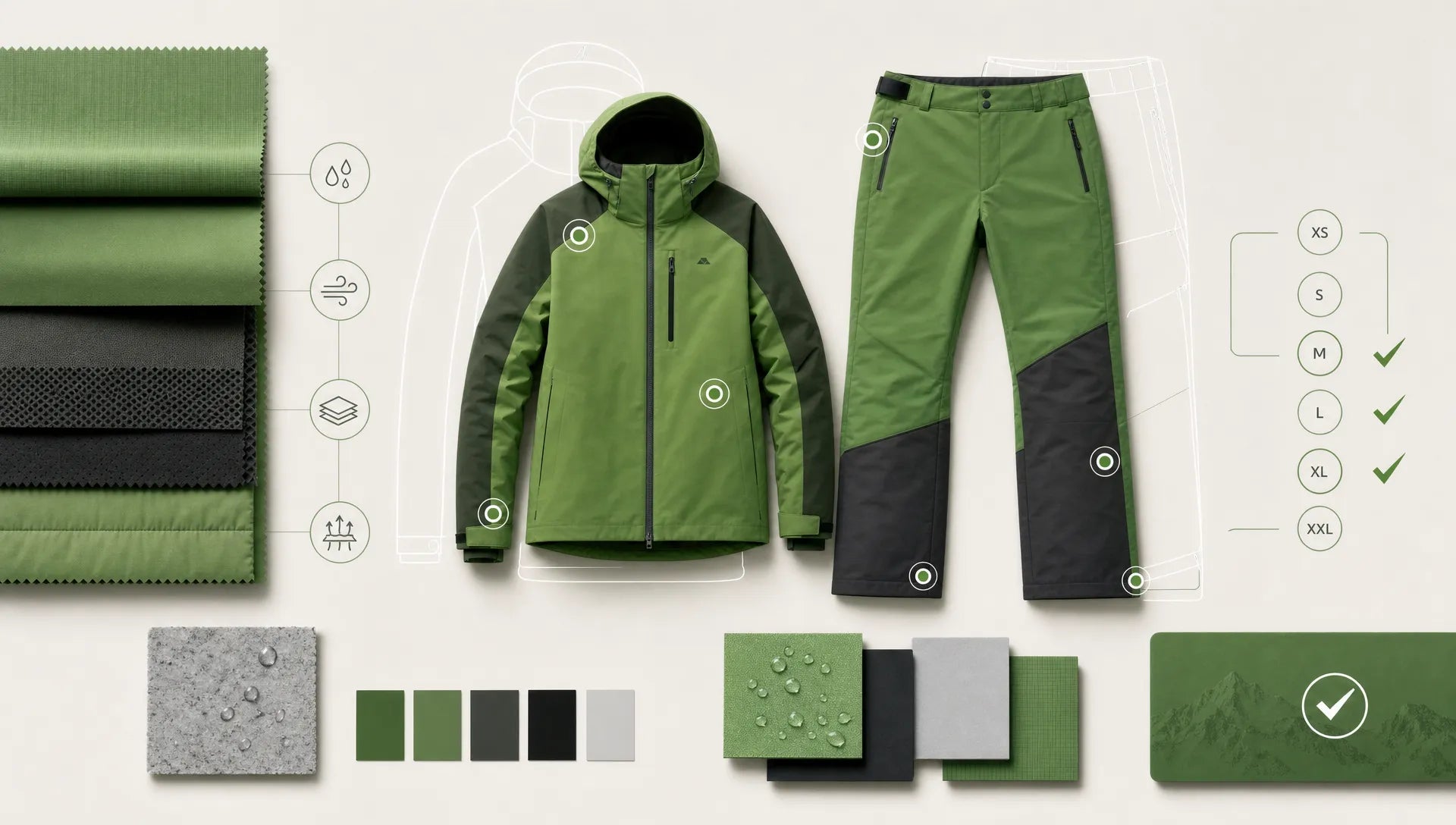
Waterproof, breathability, insulation, elasticity, abrasion resistance: these are useful words only if connected to your use. Not everyone needs the maximum technical level. A lead must protect in the chairlift and during the break. A ski touring head must manage sweat, wind and rhythm changes. An outdoor urban garment must be technical enough to hold the weather, but clean in the lines and easy to use every day.
The best question is: in what conditions will I really use this boss? If you ski especially in resort, watch carefully thermal comfort, functional pockets, compatible hood and freedom of movement. If alternating mountain, trekking and city, it evaluates more modular garments, easy to layer and suitable for several seasons.
For a technical and versatile wardrobe, you can focus on a selection treated like that Arc’teryx, ideal when looking for essential items, clean and designed to last. If your use is more travel, weekends and mountain daily, the collectionThe North Faceis a good area to explore for functional garments and accessories.


Who moves between trails, hiking and more dynamic activities can look at the selectionLa Sportiva, especially when the point is lightness, freedom of movement and technical approach. For those looking for a more transversal sports aesthetic, to be used outside the mountain, the collectionAdidascan complete a travel-to-city kit.


The correct choice is not always the warmest or more structured garment. It is often the one that fits best with what you already have.
Security, maintenance and services: the store also counts after purchase
A ski shop should also be evaluated for what happens after sale. The competence is seen in questions about safety, adjustments and maintenance. If you are buying or adjusting skis and attacks, the staff must consider height, weight, level, ski style, length of the boot sole and conditions of use. This is essential information for responsible regulation.
The helmet should be chosen with the same attention. Look for Alpine skiing homologation, check stability on the head and test compatibility with the mask. A helmet that moves too much or creates pressure is not the right helmet. For children, leaving too much room to grow is an understandable temptation, but it is not a good solution.
If you are not sure you want to buy right away, try first. For a white week, a weekend or a passing season, ski and snowboard rental allows you to better understand measurements, sensations and real level before investing. It is a practical choice for those who travel light or for families with needs that change quickly.
If you already have the equipment, ask when it is time to intervene on lamine, insole and general control. A couple of well maintained skis can change the quality of the day. Before buying a new set, it can be worth going from the ski and snowboard lab to see if the current material is still suitable.

Our recommended options
These are not strict choices, but directions of purchase. They need to understand which combination makes more sense according to your profile, without buying disconnected pieces.
| Recommended option | Best for | Key Features | What to do |
|---|---|---|---|
| Essential track kit | Beginners, families, occasional skiers | Cold protection, freedom of movement, simplicity of use | Correct helmet, hot gloves, technical socks and equipment rental if you do not ski often |
| Modular premium layering | Regular skiers and mountain travelers | Combined layers, comfort in different temperatures, use even off-piste beat | Technical layer base, light mid layer, shell or jacket based on weather |
| Set freeride and ski touring | Evolutionary users, dynamic outputs, variable weather | Breathing, low weight, wind protection, freedom in movements | Technical backpack, spare gloves, glasses or mask suitable for visibility |
| Snow weekend bag | Who travels often or leaves for a few days | Easy organization, versatile garments, durable accessories | Large bag, technical beauty, extra stockings, warm break garment |
| Outfit outdoor urban | Gorpcore, commuter, après-ski sobrio | Clean lines, functional materials, everyday use | Technical sneaker, sweatshirt or hot mesh, light jacket for variable weather |
| Service before purchase | Who already owns ski or snowboard | Real status control, maintenance, possible savings on unnecessary purchases | Dissolving, lamina control, verification of wearable attachments and replacement accessories |
The most useful criterion is to build a system. An excellent jacket does not compensate for unsuitable gloves. A precise boot does not need if the rest of the kit makes you sweat too much or cool in the chairlift. Each piece should respond to a clear function.
Final questions to be asked before the checkout
Before completing the purchase, bring the conversation about use, duration and service. A reliable store should not have difficulty responding clearly.
| Area | Question to do | Why does it matter |
|---|---|---|
| Use | Is this product suitable for my level and frequency? | Avoid oversized or too basic purchases |
| Compatibility | Does it match what I already own? | Reduces double expenses and layering problems |
| Fit | How do you dress during the movement? | Improved comfort and real performance |
| Duration | How do I wash it, dry it or store it? | Extends the head's life and maintains performance |
| Security | Do you need a technical adjustment or control? | Protects from errors on attacks, helmet and wearable material |
| Logistics | What are delivery times and returns? | Helps plan before departure |
For online purchases, always check availability, times and conditions. On Fabbrica Ski Sises the shipment in Italy is free above 50 €, the delivery is indicated in 1-4 days and the return is available within 14 days. These are practical details, especially if you’re preparing a start and don’t want to get to the last with a boss to change.
Online or in store in Biella: how to decide
Buying online is ideal when you already know your size, you need to replace a similar garment or you want to complete the kit with accessories, mid layer, bags, stockings or lifestyle garments. It is also the most convenient channel if you have little time and want to quickly filter by brand, category and availability.
The physical store remains valuable when you need a fit rating, when choosing boots, helmet or equipment, or when you need a comparison between rental, maintenance and purchase. For a beginner, a parent or an experienced customer who wants to optimize the set, the direct advice can avoid unnecessary expenses.
The best choice is often hybrid: inform you online, select two or three options, then ask for confirmation whether the product has to support a technical use or an important start. So you buy with less doubt and more consistency.
Frequently asked questions
What is the first thing to ask in a ski shop?Ask if the product is suitable for your level, frequency with which you ski and the type of soil you frequent. Good advice starts from your real use, not from the product on display.
Better buy or rent skis?If you ski a few times a year, you are beginner or have growing children, the rental can be more practical. If you ski often and already have a stable level, purchase can become more convenient and personalized.
How do I know if a ski jacket suits properly?Try it with the layers you'll use in the mountains. You have to manage to move arms and busts without tension, keeping enough space for a mid layer but without excessive volume.
Can the ski helmet be taken a little larger?No, too big a helmet can move and protect less. It must adhere stablely, without creating pressure points and without swinging when moving the head.
How soon should you buy before a white week?Better move with margin, especially if you need to check size, return or match. Even with quick deliveries, a few extra days allows you to try everything calmly.
What should I bring if I go to the store to try boots or clothing?Bring ski socks or technical socks similar to those you'll use on the track. If you try jackets or pants, wear or wear a base layer and a mid layer to simulate real use.
Choosing well does not mean buying more. It means asking the right questions, understanding what you will really use and build a consistent kit. Explore the technical collections online, or go to shop in Biella for a direct advice on purchase, rental or maintenance before the next exit to the snow.
Ski Sises on Google
Choose Ski Sises as a preferred source: you'll see our guides and news more often in Top stories on Google.