






















Mountain shops: what to really buy (and what not)
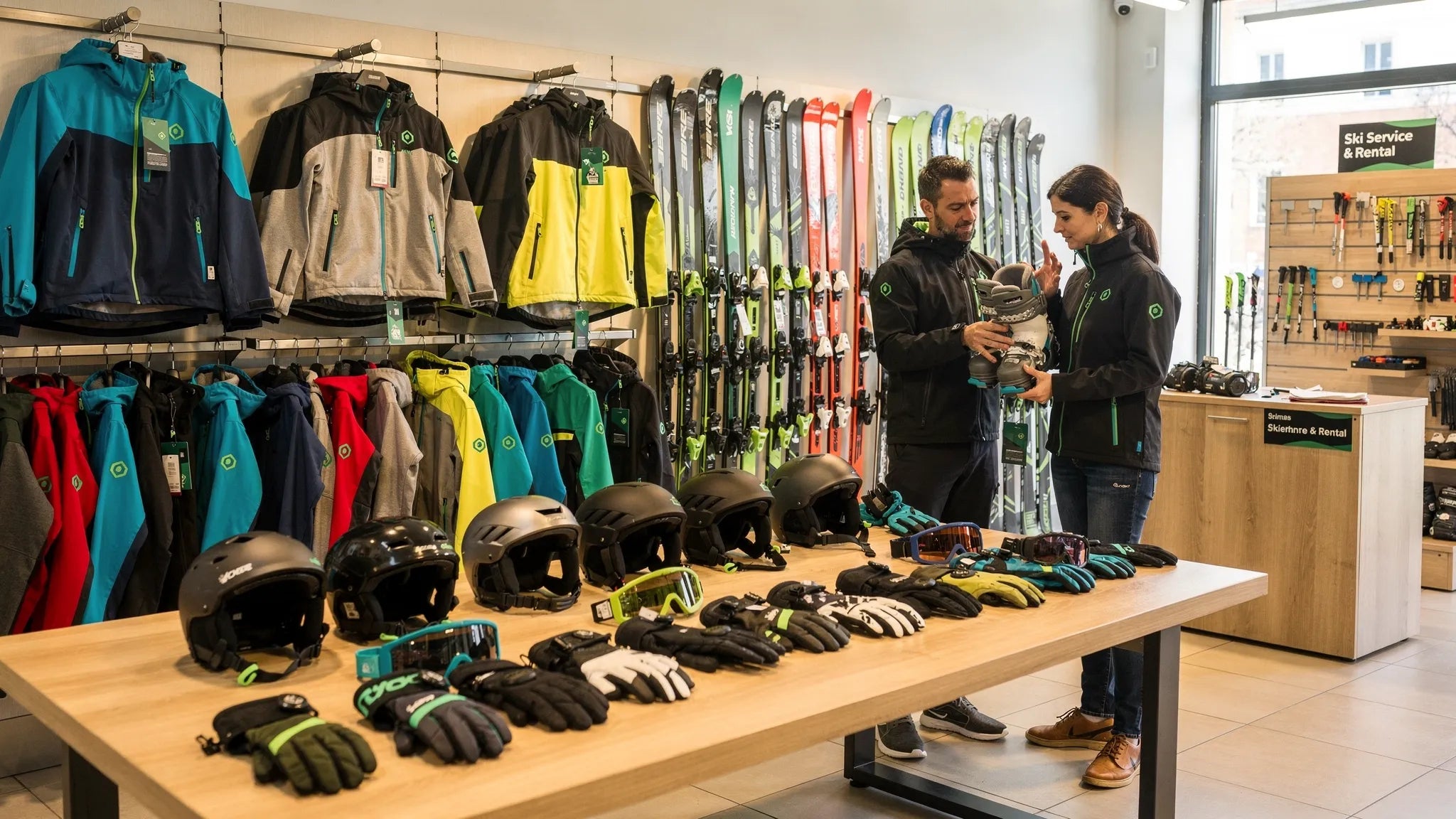
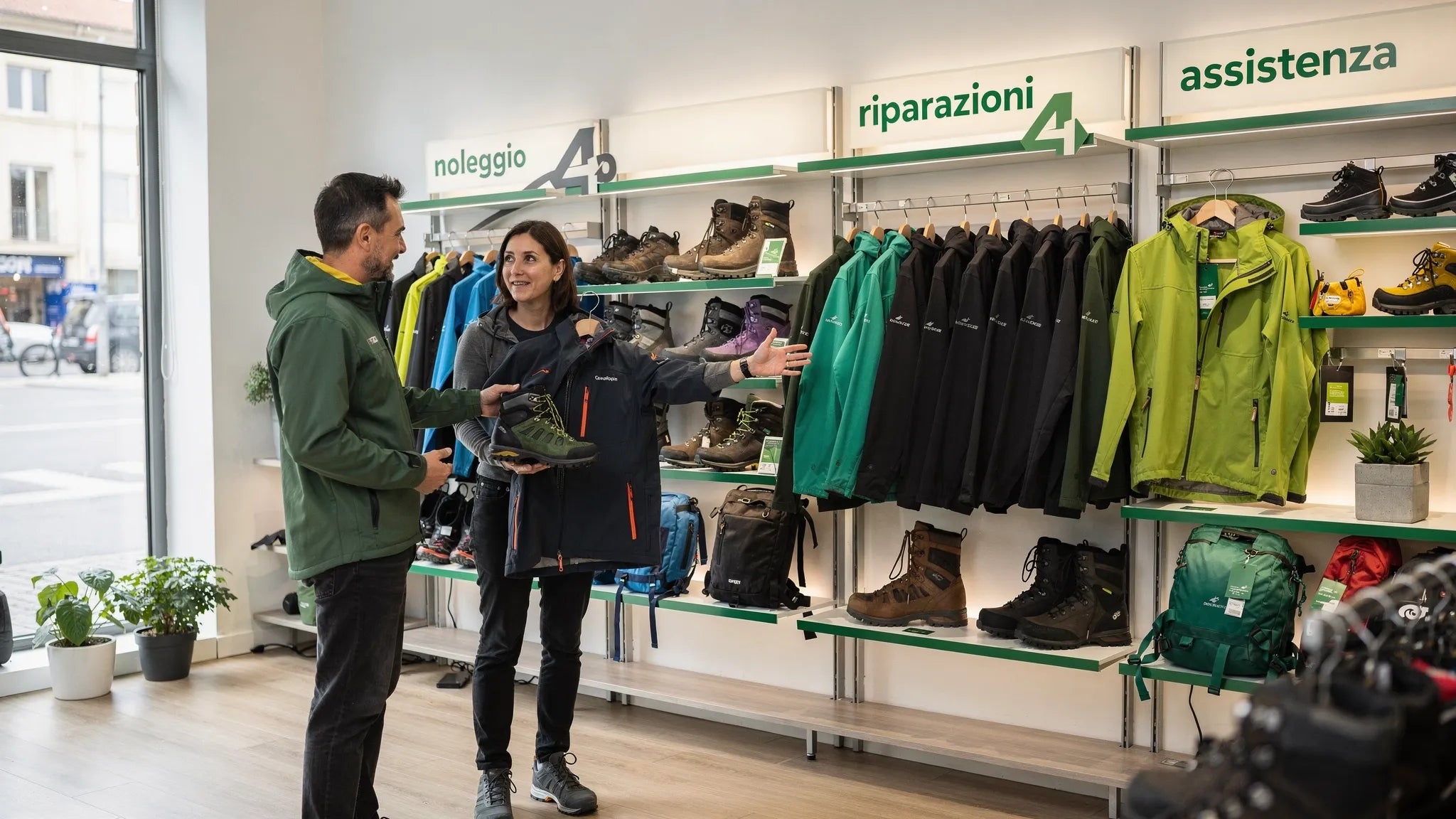
Enter one of the bestshops for the mountaincan be paradoxically the fastest way to buy useless things: too many variations, too many “solutions” and one certainty, the weather will do its own. This guide is used to cut noise. It is designed for those who ski on the track, for those who make trekking and weekends at altitude, for those who travel often and want technical chiefs who also function outside the paths. Here you will find what the investment is really worth, what to postpone and what to avoid completely.
- Summary (in 60 seconds):
- Buy first what determines comfort and safety (calzature, base layers, weather protection).
- Choose a modular kit, not a “specialist” wardrobe for each exit.
- Avoid purchases guided only by technical data out of context.
- When it makes sense, userental and laboratory: it is often worth more than an upgrade.
- Before holding a boss, do 4 quick fit tests (they save you returns and rethinks).
1) First question: what mountain do you really do?
The most reliable criterion to buy well is the real scenario (duration, altitude, rhythm), not the declared discipline.
Use this map to define priorities and compromises.
| Scenario of use | Real priorities | Where there's no point exaggerating |
|---|---|---|
| Pista (day) | heat manageable, practical waterproofing, gloves and mask “right” | ultra light heads from speed touring, complex technical backpacks |
| Freeride / offpiste (resort) | snow protection, mobility, anti-infiltration details | too push padding if you sweat easily |
| Trekking (half day) | sweat management, wind, shoes and socks | shells “from shipping” for quiet exits |
| Weekend in altitude / travel | versatility, layering, quick drying | doubles (two similar shells, three mid layer equivalent) |
| City + travel (outdoor lifestyle) | prolonged comfort, robust materials, clean aesthetics | extreme specifications that you will not use |
If you can't choose, a simple rule works almost always:buy 70% of your outputs, not for the exception.
2) What to really buy: the essential kit (without waste)
In the shops for the mountain, the most common mistake is to start from the outside “more technical” and build everything around. In practice it is best to do the opposite: starting from what regulates microclimate and comfort, then add protection.
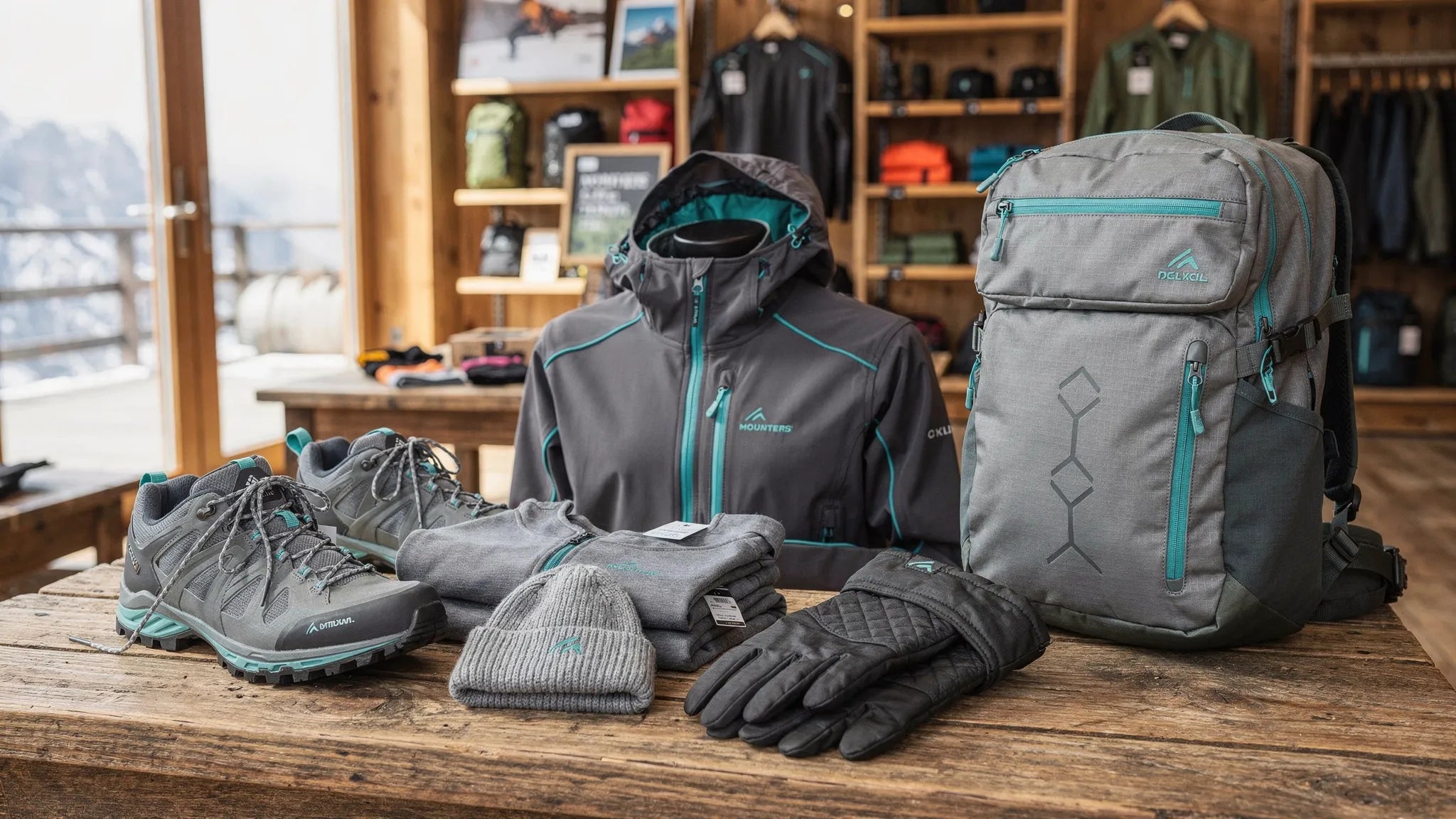
5 categories that change the day
Footwear and socks (first of all).If your feet are not well, all the rest is irrelevant. The right shoe, combined with a consistent technical fit, reduces friction, improves stability and perceived fatigue.
Base layer (top and, when needed, bottom).It is the layer that decides whether you stay dry or not. Here more counts the management of moisture than the “heat” declared.
Mid layer (a good, not three mediums).It's modular. It has to work both in activity and on break, without forcing you to continue to change.
Weather protection (anti-wind or shell).The wind is the multiplier of the cold. For many exits it is enough a head that cuts wind and manages light rain, while the waterproof shell becomes decisive when the weather is unstable or the snow is wet.
A “high impact” accessory.Gloves, hat or band, glasses or mask: small objects, big difference. If you ski often, it is worth choosing with method (to deepen: the guide to gloves is already on the blog, here we stay on the general picture).

Quick decision tree: Do you need a waterproof shell or just an anti-wind?
Ask these three questions.
♪rain / snow are likely, or go to altitude with variable weather,shell shell.
♪the wind is the main problemand you move at a sustained pace, oftenwindproof or softshellare more pleasant (less “ sauna effect”).
♪you'll do both thingsduring the year, the best choice is almost always a modular system: a reliable external and intelligent internal layers.
3) What NOT to buy (or buy after)
This is not about “saving”. It's about avoiding what ages bad, or that forces you to buy more to make up.
Three typical purchases to be sent back
Double heat.Two similar feathers, three equivalent batteries, too thick stratification that then does not breathe. Better a really versatile mid layer and a well-made layer base.
Extreme specifications out of context.A garment designed for very intense efforts or severe environments can be perfect, but only if you really use it. Otherwise you pay complexity (construction, maintenance, delicacy) without benefit.
Oversize backpack “for security”.In practice, too big a backpack leads you to fill it. More weight, more sweat, more fatigue. Choose volume based on real life.
Things to avoid almost always
It's not a moralist list, it's risk management.
- “miraculous” accessories that replace technique and layering.
- Super padded heads used as a unique solution (sweep inside, cold after).
- Shoes purchased “a feeling” without a walking test and without technical stocking.
For many, buying less becomes easier with a simple table.
| Buy now | Buy later (if needed) |
|---|---|
| footwear + technical socks | second mid layer “rotation” |
| reliable layer base | extra accessories (backup) |
| external consistent with weather | very specialized leaders |
| a right volume backpack | aesthetic upgrades |
4) The hidden value of mountain shops: services, not only products
A strong store doesn't just sell you an item, it helps you make it work over time.
Rental: when it really happens
If you ski a few times, if you are changing level or if you want to try a set before buying, rental is a rational choice. It reduces errors and allows you to understand what you miss.
If you are in the Biella area or spend a weekend, you can start with the guide dedicated toski rental in Biella, useful also only to knowwhat data to prepareand what to control at the retreat.
Laboratory and maintenance: more performance, less purchases
On the snow, a well done maintenance feels immediately. And often it costs less than a wrong upgrade. The same applies to repairs and technical services.
For a complete overview of the available services (repairs, repairs), see the page:Sport service: all services in store.
5) Fit and sizes: 4 quick tests before holding a garment
The fit is part of the performance. And online, the difference between “good” and “perfect” lies in a five-minute control.
Test 1: Arms up.Lift your arms as if you had to adjust helmet or hood. If the head “draws” in shoulders and chest, in the mountains you will always feel it.
Test 2: Welcome and step long.Simulate a step and a steep descent. If the trousers limit or descend, it is not the right size to move.
Test 3: Real Layering Test.Wear under the layer you'll really use. A garment that only works with a light t-shirt will force you to change your trim.
Test 4: seat and belt/pink.Sit down and then tighten a belt or wear a backpack. Check pressure and interference points (tables, zips, edges).
If you are between two sizes, the question is not “how tight I am”, butthat I need to move and layer.
Our recommended options (curate, with logic “best for”)
These are not “best in absolute”. They are solid options to build a kit consistent with most scenarios.
If you look for credible technique for ski touring and mountain performance
Best for:outputs where rhythm and moisture management count, or a technical set for several seasons.
Key features:garments designed to move (functional cuttings, technical materials, modularity).
To match with:base layer + mid layer essential, plus a warm backup accessory in the backpack.
Recommended Collection:Dynafit.


If you want “bridge” leaders in the mountains, travel and everyday
Best for:who travels often, makes outdoor light and wants a clean wardrobe, without “technical only” effect.
Key features:versatility, careful construction, leaders holding many different days.
To match with:a stable hybrid sneaker and a windproof exterior for half season.
Recommended Collection:Lanapo.


If you leave your shoes (and want a hybrid travel and outdoor light sneaker)
Best for:mixed itineraries, cities plus easy paths, days with many hours standing.
Key features:prolonged comfort, stability, sole suitable for variable surfaces.
To match with:technical stocking, durable pants and a compact external layer.
Recommended Collection:Flower Mountain.


If you are looking for a premium “secure” gift idea (and really useful)
Best for:Quick gift, with high rate of use and low probability of error.
Key features:accessories and transversal garments, quality materials, timeless style.
To match with:a guide to the fit and the possibility of change size (there is the policy, not the instinct).
Recommended Collection:Biella Fabrics.


Frequently Asked Questions
What really makes “good” a mountain shop?A well-kept assortment, clear product cards, support on fits and materials, and services (note, laboratory) that help you after purchase.
What is the most common mistake when I buy for the mountain?Buy a very specialized outer garment and then discover that there are layers, socks or suitable shoes. Comfort starts from below.
Better buy everything immediately or build the kit over time?Almost always in time. Start with the essential kit (shoes, layers, weather protection), then add only when you know what you really use.
How do I reduce the risk of wrong size online?Measure a garment that suits you, compare the tables, then do the 4 tests of fit (arm up, welcome, layering, sitting with backpack). If you are undecided, ask for support with your measurements.
When should I rent skiing instead of buying them?If you ski a few times a year, if you are improving quickly or if you want to test a trim before investing. Rental avoids “phase” purchases.
Clear action, without friction
If you want to build an essential and consistent kit, start from a targeted selection and then ask for confirmation on the fit. Explore collectionsDynafit, LanapoorFlower Mountain, or, if you are in the area, also evaluate the services in store viaSport service. Free shipping in Italy from 50 euros, fast delivery and returns within 14 days help to finalize without forcing choices.
Ski Sises on Google
Choose Ski Sises as a preferred source: you'll see our guides and news more often in Top stories on Google.