Arc'teryx Gore-Tex shells: how to choose yours
Choosing a Gore‑Tex Arc'teryx shell means first understanding what protection you need, how much room to leave for layers underneath, and which details matter during activity. The model best for a rainy day isn’t necessarily the one you'd pick for trail running or skiing. This guide starts from the Arc'teryx collection from Fabbrica Ski Sises to help you evaluate use, fit and combinations, distinguishing the shell from the garments that complete the system. A reasoned choice, for those buying their first technical piece and for those replacing one.


In summary: Before choosing, clarify these three points.
- Main activity: Walking, skiing and getting around town require different freedom of movement and different details.
- Underlying layers: The shell protects from the outside, while thermal comfort depends mostly on what you wear underneath.
- Actual fit: Try the piece with the clothing you usually wear, not just over a light shirt.
Start from the activity, not the model name
Trekking, travel and everyday use
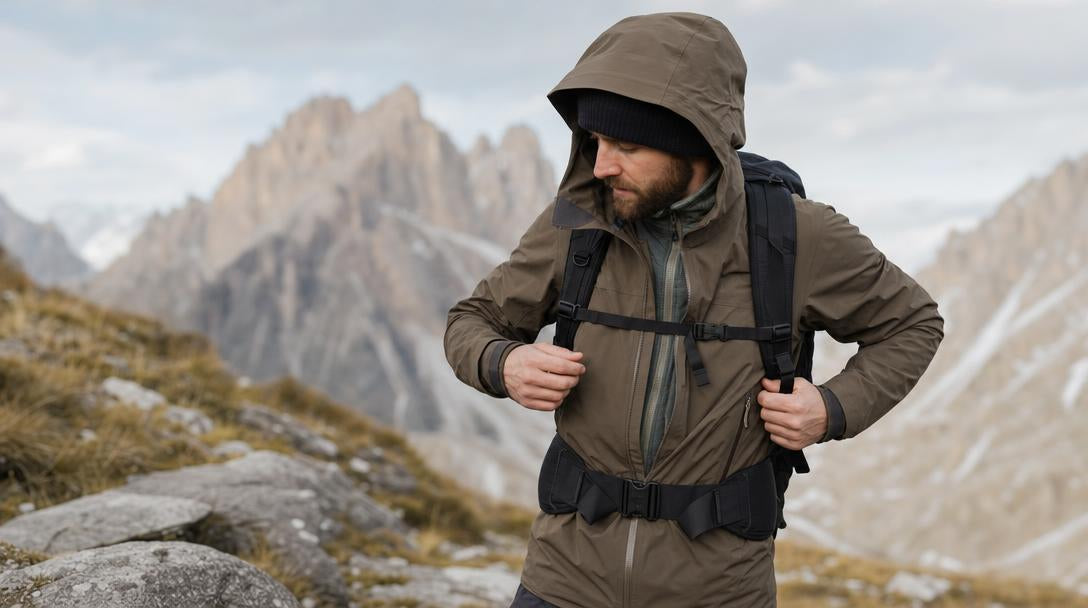
For long walks, the balance between protection and heat management matters. Check that the hood follows head movements, that the cuffs adjust easily, and that pockets remain reachable with your backpack on.
When choosing a Gore‑Tex Arc'teryx shell, also think about how long you’ll wear it versus how long it will stay in your pack. For intermittent use check the model’s weight and pack size; for frequent use focus more on freedom of movement and how easy the adjustments are.
In town the criterion remains practical: the piece must work over the layers you actually wear, without pulling at the shoulders when you carry a bag or get on a vehicle.
Skiing and more intense activities
For skiing, choosing a waterproof jacket isn't enough. You need targeted checks: room for layers, coverage during movement, and hood compatibility with a helmet when specified by the manufacturer. Pockets and dedicated features must be checked on each model, not assumed from the brand.
In trail running the priority changes: a shell that works well for walking can be impractical during running. Evaluate bulk, arm movement and any race requirements. The choice must follow the activity, not the desire to use a single garment for every situation.
What to expect from a Gore‑Tex Arc'teryx shell
Protection from rain, not thermal insulation
GORE‑TEX denotes a technology used in waterproof, windproof and breathable garments. It does not, by itself, describe every feature of the finished jacket: construction, adjustments and intended use still need to be checked on the specific product page.
So don’t pick a Gore‑Tex Arc'teryx shell like you would a down jacket. Its main job is to limit exposure to the elements; warmth is built with a mid layer suited to conditions and effort.
When you're climbing you may need less insulation than during a long stop. A good pairing lets you add or remove layers without restricting mobility.
Breathability and moisture management
Breathable doesn't mean sweat disappears in every situation. Effort level, temperature and outside humidity affect comfort. Wearing too many layers can also make a garment feel unbreathable.
The durable water‑repellent finish on the outer fabric and the waterproof barrier serve different purposes. When the outer fabric soaks, comfort can worsen without that proving the membrane has failed.
To preserve performance, follow the care label. Washing, drying and reapplying DWR shouldn't be improvised: use only procedures and products compatible with the garment's instructions.
Size and fit: try the shell with the right layers
Your usual size is a starting point, not a guarantee. A Gore‑Tex Arc'teryx shell should leave enough room for layers without creating unnecessary bulk that hinders movement.
Start from the model's size chart and follow the indicated measurement method. Don’t assume two jackets from the same brand share the same cut or volume distribution.
During fitting, check these movements:
Raise both arms and check that the hem doesn't expose the torso excessively.
Bring your arms forward as if holding poles, without feeling shoulder strain.
Fully zip the jacket over the intended midlayer, checking neck comfort.
Put on your pack and check that shoulder straps and hip belt don't make needed pockets unusable.
If you fall between sizes, don't automatically size up. A larger size may give more room but worsen sleeve or hood position. Decide based on where you feel the limit and the layers you'll use.
Women's fit and pairing with trousers
For a women's model evaluate shoulders, chest and hips separately. The garment should follow your body without compressing the underlying layer, especially when bending or rotating the torso.
If you're also shopping for a women's Beta pant, treat its size separately: the jacket size alone won't determine it. Check the waistband, knee mobility and hem compatibility with your planned footwear. Don't assume a pant inherits technical features from a jacket in the same family.
Recommended selection: a shell and two complementary pieces
These three items from the selection Arc'teryx They serve different functions. The Beta AR Women’s Jacket is the starting point to assess the shell; the zip-up fleece and the toque complete your layering without replacing the outer protection.
Beta AR Women’s Jacket: the shell to evaluate
Ideal if: you’re looking for a women’s shell and want to check whether it suits your activities. The Beta AR Women’s Jacket is the selection benchmark to focus comparisons on.
Products mentioned in the article

To decide if this Gore‑Tex Arc’teryx shell is right, check the product page for features, construction and available sizes. Don’t assume features from other versions of the same model.
Pair with: a base layer suited to the exertion and a midlayer chosen for the temperature. When trying it on, wear those exact pieces to evaluate available space.
Emblem Fleece Full Zip Hoody Men: the layer to consider
Ideal if: you’re looking for a men’s hooded full‑zip fleece for everyday wear or to test under your shell. The Emblem Fleece Full Zip Hoody Men should be considered for that purpose, not as a substitute for a waterproof jacket.
Products mentioned in the article

A full zip lets you open the garment when your thermal sensation changes. Before using it as a midlayer, check that overall bulk and the presence of two hoods don’t irritate your neck.
Pair with: your men’s shell, checking length, sleeves and shoulder freedom. For very intense activities, use the stated intended use on the product page rather than inferring from the name.
Bird Head Toque: an easy accessory to add
Ideal if: you want to finish the outfit with a hat to wear on cool days and during breaks. The Bird Head Toque is the selection accessory to judge based on comfort and fit.
Products mentioned in the article

Check the size info on the product page. When you try it on, make sure it stays put without pinching and that the brim doesn’t interfere with your glasses.
Pair with: the shell and midlayer in situations requiring extra coverage. Don’t assume compatibility with a helmet: that pairing needs a specific check and you should follow the helmet manufacturer’s guidance.
Before buying, compare the exact version
When comparing one Gore‑Tex Arc’teryx shell with another, put comparable items on equal footing: full name, men’s or women’s version, article code and declared features. The family name alone isn’t enough for a precise comparison.
Prioritize the details you’ll actually use. An easily accessible pocket when wearing a backpack can matter more than features designed for an activity you don’t do. Likewise, a fit built for bulky layers isn’t necessarily better if you’ll wear the shell mainly over a light midlayer.
For a purchase meant to last, consider maintenance. Choosing well means you can clean and store the garment per instructions, not treating it like a no‑care item.
Finally, check available sizes when ordering. Availability can change and shouldn’t be inferred from photos or the model appearing in the collection.
To choose your Gore‑Tex Arc'teryx shell, explore the the Arc'teryx collection from Fabbrica Ski Sises and compare the model with the layers you’ll actually wear.
FAQ
Is a GORE‑TEX shell warm on its own?
It’s not primarily designed to insulate. It shields you from the elements; thermal comfort depends on the layers underneath, your activity and the conditions.
Is the Beta AR Women’s suitable for skiing?
Assess it against concrete needs: movement, room for layers and compatibility with your gear. Check the hood, pockets and features on the product page—don’t assume it includes every detail of a dedicated ski jacket.
How many millimetres of water column does GORE‑TEX have?
Water resistance is expressed in millimetres of water column. For the garment you’re buying, refer to any declared value in the documentation: don’t assign a figure to the product based only on the membrane name.
Better to wear Arc'teryx Atom or Patagonia Nano Puff under the shell?
They’re insulating alternatives, not equivalents of a waterproof jacket. Compare the exact versions for bulk, heat regulation and fit under a shell. There’s no single best choice for every use.
For trail, is Arc'teryx or Patagonia better?
Compare models intended for the same activity. Verify declared protection, freedom of movement, packability and any race requirements, instead of choosing just by brand.
How do I verify a Arc'teryx garment is genuine?
Buy from an identifiable seller and keep the paperwork. Check consistency between the item, labels and product code: a single aesthetic detail isn’t enough to certify authenticity.
Ski Sises on Google
Choose Ski Sises as a preferred source: you'll see our guides and news more often in Top stories on Google.