


















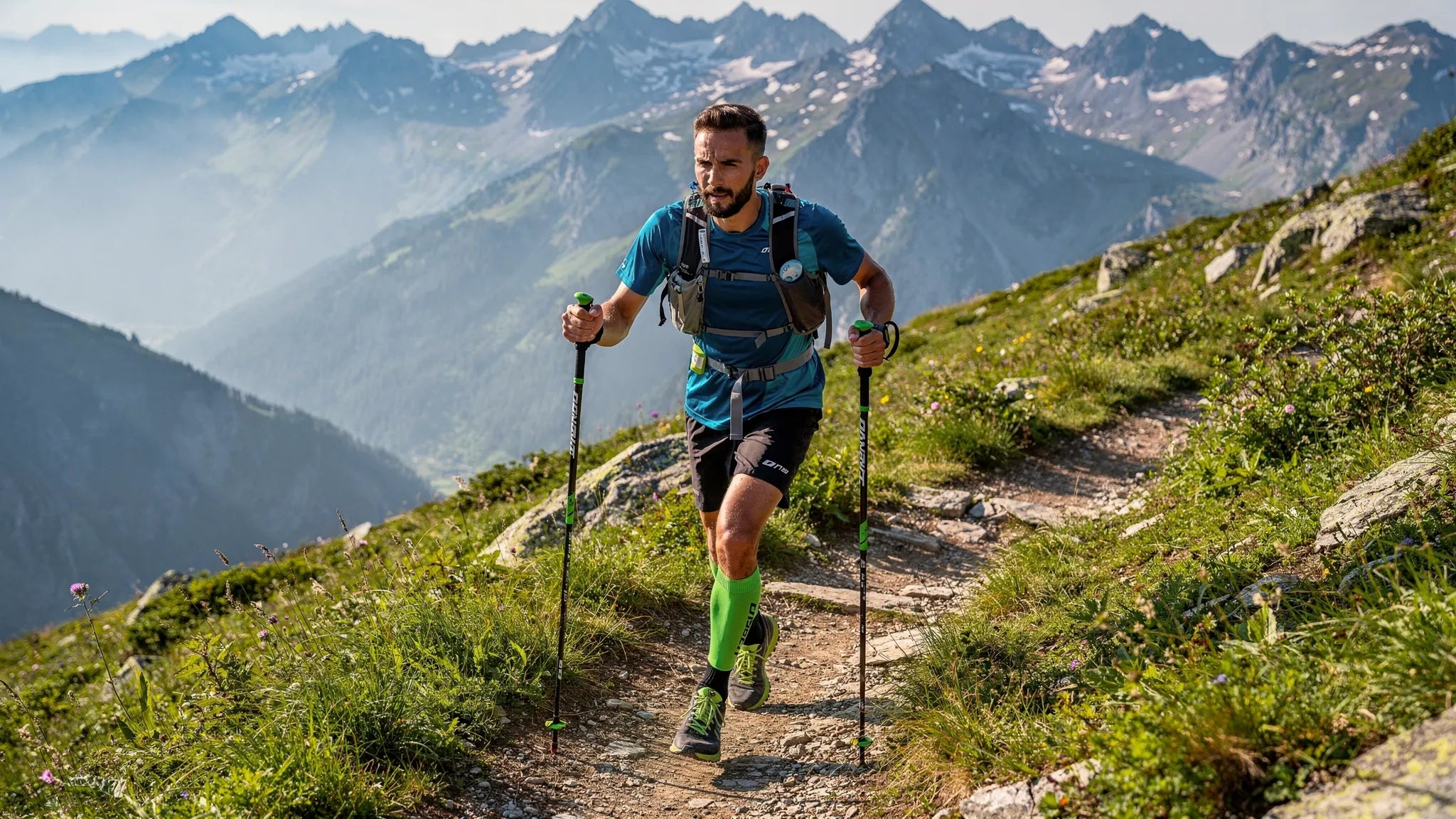
Dynafit Vert Pro Pole: how to choose length and use
Choose a stick asDynafit Vert Pro Poleseems easy until you find yourself in front of the question that really matters:What length?A couple of centimeters can change uphill pace, gesture efficiency and control when the slope rises. This guide is for those who do vertical, skyrunning, fast hiking or light ski touring and wants a clear criterion, not “in feeling”. Take away a measurable method, a mini decision tree and a set of practical combinations.
Quick response (in summary)
- The right length is the one that gives youpush without lifting the shouldersand maintains the arm in a natural position.
- If your use issteep climbs and high rhythm, it usually works a measureslightly shortercompared to classic trekking.
- If you wanta unique stick for more disciplines, value aTelescopic(and accepts a little more bulk and weight).
- If the stick isfixed length, first choose the main scenario, then confirm with the elbow test.
What does a “Vert” stick really need (and when you don’t need it)
A stick designed for fast outputs and height difference (as the name “Vert” suggests) makes sense when the priority is to transform the arms into traction and stability.
You use it well when:
- Tilt up on compact or mixed soil, where you want to download part of the work on arms and cores.
- Technical traits in which the stick becomes a third and fourth point of support.
- Gare or workouts where the continuity of the gesture counts more than the “comodity” of the long stick.
You can do without it when:
- The route is very courier and slightly steep (rescue to bring them just).
- You are downhill long and very technical, and you have no confidence in planting without stiffening.
Practical note: the difference does not only the stick, butthe right length for your gesture. That's where you win (or you waste) energy.
Dynafit Vert Pro Pole: how to choose length (measurable method)
If you buy online, the goal is to reduce uncertainty to two simple checks.
1) The elbow test (the most reliable)
Handle the stick with the tip on the ground near the foot.
- Generic Trekking:aims to a elbow near the90°.
- steep climb and high rhythm:seeks a slightly more “closed” feeling, with a slightly more folded elbow. If you find yourself pushing with high shoulders, you're long.
It is the same principle also recommended in general guides on trekking poles: the rule of elbow is more robust than formulas if you have special proportions (long legs, short bust, etc.). A useful reference: the REI guide on how to choose trekking sticks.

2) Adjust according to the scenario, not to the “perfect number”
If the main scenario is clear, the measure becomes a technical choice, not a compromise.
| Main use scenario | What to prefer | Direction on length |
|---|---|---|
| Vertical, steep climbs, skyrunning | Cadence, traction, arms “bass” | Trendsshorter |
| Mixed Fast hiking (salita + traversi) | Versatility and neutral posture | Standard(gomito near 90°) |
| Sliding traits, falseplanes, use more “by push” | Leverage and performance | Trendslonger |
Mini checklist before confirming the measurement
- Can you plant without turning the bust and without “trying” the ground?
- In push, do the shoulders stay low or rise automatically?
- If you increase the uphill pace, does the tip remain stable or “scappa” behind?
If two out of three answers say “high shoulders” or “unsteady tip”, the measure is probably to be reviewed.
Fixed or adjustable length: decision tree (key and honest)
There is no universally better option, there is the most consistent with how you move.
Quick decision tree:
- If you want the stick especially forvertical, races, fast outputsand you already know your size, choose a solutionfixed length(simple, essential).
- If you want to use it also fortrekking, travel, family loans, better aTelescopic.
- If you need it oftenput it in the backpack(ports where you do not use it, equipped steps, transfers), currency afolding folding folding.
Trade-off to put on the table (without marketing):
- Fixed: less things to adjust, but you have to guess the measure.
- Telescopic: more flexible, but requires attention on locking and maintenance.
- Foldable: great transport convenience, but you have to be precise on assembly and tension.
If you are evaluating Dynafit models, you can start fromDynafit collectionand compare at a glance the available product families.


How to use it well: essential technique to not waste energy
A correct length only works if the gesture is clean.
Uphill steep (where the “paga” stick)
- Plant near the foot, not too forward, so the thrust is immediate.
- Work “low”: if you feel your shoulders rise, you are looking for leverage where you don’t need it.
- Keep steady pace, better a less powerful but regular push.
Downhill (when it makes sense)
- Use it to stabilize, not to brake. If you use it as a brake, stiffen and lose fluidity.
- Reduce the amplitude of the gesture and anticipate the support points.
Lace: small detail, big difference
General rule: the lace must help you to “find” the handle and transmit strength without tightening too.
- If you tighten the handle like a handlebar, after an hour you’re tired.
- If the lace is too slow, the hand works double.
Fit and size choice: what to do if you are between two sizes
With discrete size sticks (often in step), the choice “between two” is frequent.
- If your use issteep climb and high rhythm, in most cases it is better to stayon the shortest.
- If your use includestransverses and sliding traits, the measureintermediate or slightly longercan be more efficient.
The most practical way to decide, without guessing:
- Try the gesture with any stick (even at home) and watchshoulders and elbow.
- If you feel that to push well you have to “lift”, you are long.
Our recommended options (choices for real use)
You don't find an endless list here, but logical options. The idea is to build a coherent set.
1) Dynafit Vert Pro Pole
Best for:vertical, skyrunning, quick exits uphill when you want maximum simplicity.
Key features (in practice):Efficiency-oriented choice and quick gesture, ideal if you have already clear your length.
What to match:
- A light ascent kit (gilet/zaino from running, essential layers).
- Slim gloves if you use it often with cold or wind.
To compare alternatives of the same philosophy, parts fromDynafit.
2) Foldable backpack stick
Best for:races and routes “stop and go” (ports where you use them and treat them where you pick them up).
Key features (in practice):reduced footprint when not needed, quick management if you are used to mount and disassemble without wasting time.
What to match:
- Backpack or vest with dedicated external fixing system.
- A light and compressible shell for weather changes.
3) All-round telescopic pole
Best for:only one stick for fast hiking, hiking and mixed use.
Key features (in practice):fast adjustment to alternate ascent, beams and sliding traits.
What to match:
- Modular clothing (base + mid + external) not to “cuocere” uphill.
- Shoes with good support if you do many hours, because the stick does not compensate for an unstable support.
If you are building a mixed output kit, take a look at the selectionTrail Running Running(for consistent garments and accessories with a high rhythm).


4) More robust base for “ruvido” use
Best for:very technical terrain, intense use, heavier backpack, conditions where bumps and twists are more frequent.
Key features (in practice):priority to perceived durability and stability.
What to match:
- Pants or tights with good freedom of movement (the gesture with sticks is repetitive, it serves mobility).
- A sweat-oriented layering setup, not only heat.
For those who alternate season and discipline, it can make sense to explore the collectionAlpine skiing.

FAQ
How do I choose the length of the Dynafit Vert Pro Pole if I buy online?Start from the elbow test: in a neutral position it aims at about 90°, then it shortens slightly if you use it mainly in steep climb and at a high pace.
If they are between two sizes, better short or long?For vertical and steep climbs, usually better the shorter. For mixed use with sliding traits, the longer can be more efficient.
Can I use the same trail and ski touring stick?You can, but it's a compromise choice. If you really alter different disciplines and slopes, a telescopic reduces the risk of wrong measurement.
Does the lace go tight?No. It must support part of the push without requiring you to tighten the handle. If you feel formidable or stiffening, it is too closed.
When do I need to change wear or tear-proof parts?When you lose grip on hard ground, when you notice obvious consumption or if the tip becomes unstable. Intervention soon avoids “disposing” the gesture and fatigue you.
A simple action to close your choice
If you have already defined the scenario (vertical, fast hiking or light touring), go straight toDynafit collectionand select the measurement with the elbow test as reference. If you want a quick opinion before buying, the staff can help you choose according to height, typical soil and rhythm.
If you are in Biella area and want to optimize the equipment over time (not just buy it), consider it alsoSport Service in storeand, for the snow season, the guide toski rental in Biella.
Ski Sises on Google
Choose Ski Sises as a preferred source: you'll see our guides and news more often in Top stories on Google.


