
Dynafit Speedfit 84: guide to measurements, attacks and set-ups
If you're watchingDynafit Speedfit 84, you probably already have clear what you want: a ski mountaineering set that goes well, be reliable downhill and do not force you to compromise “from race”. The difficulty, almost always, is another: choosemeasurement, attacks and componentsin a coherent way, without being framed in an unbalanced set-up (too light, too rigid, too specific). This guide is designed for those who make fitness trips, quick exits and classic touring in the resort, and wants to buy with criterion.
Summary (in 60 seconds)
- The Speedfit 84 is, by setting, a choice oriented toefficient climbandclean managementon “normal” snows from trip.
- Themeasureyou decide first on your style (Rhythm and lens), then on height and level.
- Theattacksshould be chosen for real priorities (perceived safety, brake or leash, elasticity), not per grams.
- Boots and skins do half the work: a consistent set-up makes the Speedfit 84 much more “easy”.
- If you are between two sizes, in most cases win the choice thatkeeps the ski handy(especially if you do fast trips).

Dynafit Speedfit 84: where you place (and for those who make sense)
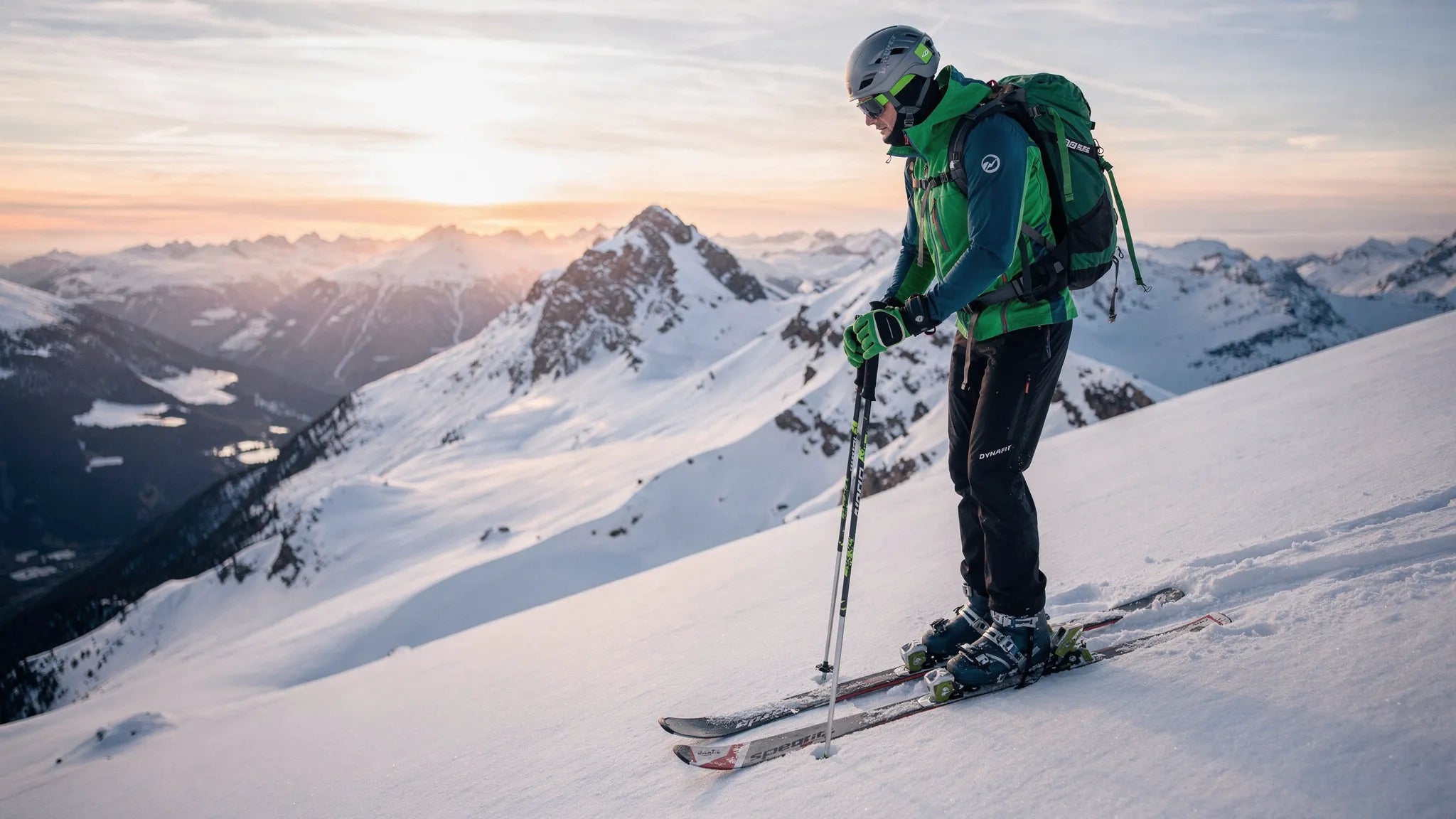
The name “84” usually indicates a width in the center around84 mm: a value that tends to favor the sliding uphill and a controlled ski on transformed, compact and spring snow. In practice, it is a typical setting of who:
- makes touring with sustained rhythm (before or after work, short trips, height difference “clean”)
- wants a ski thatdo not penalize the ascentwith unnecessary encumbrance and inertia
- prefers ordered trajectories and speed management, more than floating “from powder”
On the contrary, if your primary goal is to look for deep snow and wide ski, a measure in the most generous center often makes the day easier. The Speedfit 84 makes sense when you want a tool that you accompany often, not only “in the right days”.
If you need a starting point to compare options, you can start from a targeted selection of brands and categories.
- Dynafit Collection:discover Dynafit
- Touring section:explore ski mountaineering
Speedfit 84 measures: how to choose length without guessing
The useful rule is not “longer is more stable”. The useful rule is:the measure must support your rhythm and your type of descent, without asking extra energy when you're tired.
The basic criterion (simple, but solid)
Use your height as a reference and then move based on three levers:
- Priority ascent: slightly shorter measure for easier efficiency and inversions.
- Priority descent: Longer measure for stability and support.
- Land: wood and narrow trips reward maneuverability, wide open slopes reward stability.
Mini decision tree (practical)
If you make quick trips and often on joke tracks: choose a length that you get between chin and nose.
If you make touring “classic” (out from half to whole day): tip to a length between nose and forehead.
If you want more downhill support and have good technique: You can climb to a length near your height, but only if you don't weigh uphill.
Guide table (orientation)
It does not replace a test, but reduces the most common errors.
| Profile of use | Starting point on your height | Why it works | Attention to |
|---|---|---|---|
| Fast uphill / fitness | Height less 10 to less 15 cm | Easy inversions, less inertia, more rhythm | Stability on fast steep |
| Balanced Touring | Height less 5 to less 10 cm | Compromise clean climb-descent | Choose too long “for security” |
| Discess more present | Height less 0 to less 5 cm | Support and stability | Fatigue uphill, maneuverability in the wood |
When should you choose the shortest measure (even if you are good)
- Often use the Speedfit 84 onshort tripsor with little time.
- You want a ski that “perdonates” when your legs end.
- Make many conversions, woods, steep tracks, or hard snow trips where precision counts.
Attacks: what really counts on a Speedfit 84 set-up
Attacks are the point where a set-up becomes consistent, or a difficult compromise. For a ski like the Dynafit Speedfit 84, the most common choice is apin attack. From there, practical differences are three.
1) Brake or leash
- Brake: more practical in resort contexts and with frequent transitions. It generally increases weight and complexity, but makes management more linear.
- Leash: essential, minimal, often lighter. It requires more attention in transitions and falls in certain situations.
2) Elasticity and “feeling” downhill
In simple words: some attacks are more “easy”, others filter better stresses and transmit more confidence. If you want to use the Speedfit 84 even when snow is hard or move, this aspect weighs more than you admit.
3) Ease of use with gloves and real snow
In real touring, the difference makes it details like:
- ease of passage uphill-descent
- lifting management
- cleaning of the inserts (compatibility with boots and habit to “keep everything clean”)
Quick selection table attacks (logic, non-marketing)
| Type of pin attachment | Ideal if | Strong points | Typical purchase |
|---|---|---|---|
| Essential Ultralight | Fast outputs, difference in level, rhythm | Reduced weight, clean set-up | Less “comfort” downhill |
| All-round touring | You want real balance | Perceived safety, easy use | Weight a little higher |
| More oriented descent | You want more solid ski | Transmission and support | Less efficient climb |
Important note:adjustment and verification must be made by qualified personnel. Even with pin attacks, correct calibration and compatibility with the boot are what separates a pleasant set-up from one that you don't trust to use.
If you're in the area, it makes sense to lean on a lab that really makes set-up and control, not just selling.
- Shop services:sport service in Biella

Complete set-up: boots, skins, rampant and sticks
With a ski like Speedfit 84, set-up consistency is simple:too soft boots make the descent imprecise, too rigid boots can remove naturalness uphill.
Boots: the rule “1 boots, 2 speeds”
Ask yourself what kind of skiing you do when you're cool and what kind of skiing you do when you're tired.
- If you want to run and control even on hard snow, you need a boot withtrue support.
- If the goal is to grind height and keep pace, better a more walk-oriented setting (without extremities).
Quick checklist before purchase:
- Range of movement perceived as natural.
- Tallone well steady (uphill reduces bladders, downhill increases precision).
- Volume of the compatible foot (do not “stringe” by force, better to work of plantar and adjustments).
Skins: the choice that changes the rhythm
On an 84 mm, a well-chosen skin gives you two things:safety sealandconstant sliding.
What to control:
- Material: mix (mohair and synthetic) is often a good balance point for general use.
- Cut: the skin should be chosen so that it properly covers the base and then rewire properly.
- Fixing system: easy to handle with gloves and snow, more than “sofisticated”.
Rampant (knives): when they become “necessary”
If you often turn on hard snow, spring in the morning or exposed beams, the rampant is not an optional accessory. Must becompatible with the attackand consistent with your use.
Practice rule:
- if you happen to “grat” and lose hold with the skins, the rampants enter the standard set-up
Sticks: telescopic or fixed
- Telescopic: more versatile, useful in traverse and downhill.
- Fixes: essential and clean, but less adaptable.
Regulations and controls before the first exit
A well-mounted Speedfit 84 is “easy”. A speedfit 84 mounted quickly can become nervous and unpredictable.
Sensitive controls (even if you have experience):
- Centered attachment and installation performed according to art.
- Regulations verified with the real boot (not “similar”).
- Lamine: Sharpening consistent with your use (if you turn often on hard, precision changes the day).
- Skins: proof of gluing and management in cold environment before making a long trip.
If you're planning a single day or a weekend and want to avoid rushing purchases, also consider renting as a real set-up test.
- Practical guide:ski rental in Biella (no errors)
Our recommended options: consistent set-up for Speedfit 84
Here you do not find “the best”, you find configurations that work because they have a logic.
1) Setup “Fast uphill”
Best for:workouts, short trips, high rhythm.
Key features:essential pin attachment, walking-oriented boots, sliding skins.
What to pair it with:Compact backpack and light technical clothing, to manage sweat and wind with few layers.
2) Setup “Touring balanced”
Best for:most skiers who want only one set.
Key features:pin all-round, boots with good downhill support, skin mix (balance).
What to pair it with:a reliable shell and a mid-layer that dries quickly (the uphill comfort is as much as the descent).
3) Setup “Descent safer”
Best for:who skis well and wants more stability when the snow is moved or hard.
Key features:more control-oriented attack, more sustained boots, attention to adjustments and lamines.
What to pair it with:helmet and weather protection more robust if you are often in variable conditions.
4) Setup “Resort touring”
Best for:on track, rapid transitions, installation context.
Key features:priority to practicality (useful brake), ease of use with gloves, quick lifting management.
What to pair it with:an essential outfit that does not hinder (pantalone with good mobility and real ventilation).
5) Setup “Neve dura e traversi”
Best for:spring trips in the morning, compact conditions, technical steps.
Key features:rampant in the kit, skins with good grip, trim that gives you confidence.
What to pair it with:Mountaineering ramps if your soil includes stretches on foot, and precise management of the layers not to cool off.
6) Setup “One pair for the whole season”
Best for:who often skis and wants consistency, not collection.
Key features:balanced set-up, regular maintenance, non-extreme measurement choice.
What to pair it with:a layered clothing system designed to last and repair, more than “seasonal”.
Fit and sizing: 5 minutes avoiding a return
For an online purchase, the part that makes the difference is to reduce ambiguity.
- If you choose the ski size:use the table as a base and then fixes by style (salita vs descent). If you're between two sizes, ask yourself which one you'd use most often.
- If you choose the boot:measure and volume count more than the number. If you can compare with a boot that you already own (length and feeling on the neck).
- If you choose leather:Make sure you have a clear compatibility with the width and fixing system.
For practical doubt, the team can help you build a consistent set-up starting from height, weight, level and type of trip.
Frequently Asked Questions
Is the Dynafit Speedfit 84 also suitable for ski mountaineering?Yes, if your goal is to learn a clean uphill gesture and have a manageable ski. To start without stress, choose a non-extreme size and a balanced set-up (all-round attack, comfortable and well regulated boots).
Better to choose the longest measure for “stability”?Only if you really use it. If you do many conversions, short trips or woods, the shorter measure often improves perceived control and safety, especially at the end of the day.
What kind of attacks to mount on Speedfit 84?Typically a pin attack is the natural choice. The difference makes it brake or leash, ease of use and feeling downhill. The best set-up is that consistent with your outputs, not the lightest one ever.
Do you need the rampant on a 84 mm ski?It depends on the soil and season. If you turn on hard snow or spring in the morning, yes, they become a standard component.
Can I use the Speedfit 84 on the track?You can, but it's a ski designed for touring. It makes sense to “pellate” and trips to the resort, not as a substitute for a dedicated ski slope.
Does it make sense to rent before buying?Yes, especially if you are deciding between two measures or between two families of attacks. A real exit clarifies what a product card cannot tell you.
Next step (without complicating the season)
If you want to build a consistent Dynafit Speedfit 84 set-up, parts from selection and then close the custom circle and attacks with a quick comparison.
- Go to selection:Dynafit on Fabbrica Ski Sises
- If you are composing a complete touring set:ski mountaineering
- If you prefer to test or fix the equipment in the store:sport service in Biella