















Chesapeake's: guide to key leaders and differences
Buy Chesapeake's online is easy, until you are in front of very similar garments: shirt or overshirt, light jacket or field jacket, straight trousers or chino. The difference, often, is not “the style”, but as a detail changes the real use: stratification, mobility, maintenance, and how much the head holds a week of travel.
This guide is designed for those who want to build an essential wardrobe (city, weekend, light outdoor) and for those who buy for the first time Chesapeake's and want to choose with criterion, reducing returns and rethinking.
In short (summary)
- If you want only one piece “bridge”, start fromovershirt or light jacket, these are the two most versatile categories.
- Important differences arefabric weight, construction, collar/punches, pockets, lengths.
- For the fit, do not guess: use ahead of comparisonand do two quick motion and layering tests.
- If you are building a complete look, think inThree levels: clean base, functional layer, finish.
- On Fabbrica Ski Sises you haveFree shipping from 50€, rapid delivery (1-4 days) andmade within 14 days.
Chesapeake's: what kind of garments to expect (and why they like)
Chesapeake's is typically chosen by those who want random “clean” garments, easy to repeat and to layer. The idea is not the perfect outfit for a single occasion, but pieces that work between contexts: informal work, travel, weekends, outdoor life without extreme technicians.
If you are beginning, it makes sense to start from selection and reason for functions, not by categories of closet. The shortcut is to ask: I need morea layer(to manage temperature changes), morea basic head(to complete rotations), or morea pant(to stabilize all proportions)?
To see the current assortment, you can start fromChesapeake's collection.


The differences that count: 5 details not to confuse similar garments
When two heads “look the same” on screen, they are almost always not in real life. These are the five points separating a clear purchase from a garment that remains hanging.
1) Weight and hand of fabric
You don't need to know complex numbers or technical cards: you just need to understand if the head is thought as a base, as an intermediate layer, or as a light exterior.
- Lighter fabrics tend to work better in indoors and travel.
- The more structured fabrics hold the shape, improve the “clean” yield, and hold the stratification better.
2) Construction: lined, removable, and reinforcements
A removable light jacket is often more “four seasons” because it does not overload. A richer construction gives a more decided appearance, but can become less flexible on the road.
3) Collar, cuffs and closures
These are small details that change the way the boss behaves.
- A more structured collar holds better under an external layer.
- Adjustable cuffs help if you carry clock or if alternate layering.
- Closures and patts influence how quickly you wear and remove the head, and how “suitable” is to different contexts.
4) Pockets: location and access
The pockets tell the function. High and applied pockets often push towards overshirts and outerwear. More discreet pockets maintain urban readability.
5) Lengths and volumes
Most mistakes are born here. Two garments in the same size may differ by:
- total length (covering, proportions)
- chest width (stratification)
- bottom opening (as it falls on the trousers)
To make everything more concrete, here is a practical table on the three categories that most often confuse.
| Category | What really changes | Ideal if | Attention to |
|---|---|---|---|
| Shirt | lighter, more “clean”, less space for layers below | informal office, travel, daily rotations | shoulders and sleeve length, tends to mark if too dry |
| Over! | more structure, more present pockets, designed for layering | half season, modular look, smart casual relaxed | volume to the chest, must close without pulling with a layer below |
| Lightweight jacket | designed as external, more protection and “form” | commuting, weekend, variable climate | length, mobility of arms, compatibility with mid layer |
Mini decision tree: which item to buy first
If you are now entering the Chesapeake's world, avoid buying “belly” is simple: choose the first piece based on where you will use it most often in the next 3-4 weeks.
- City and informal work: clean shirt or essential overshirt. It works on a minimal basis, and avoids having to “build” too.
- Travel (train, car, airplane) and long days: comfortable and tidy pants, plus an easy medium layer to manage.
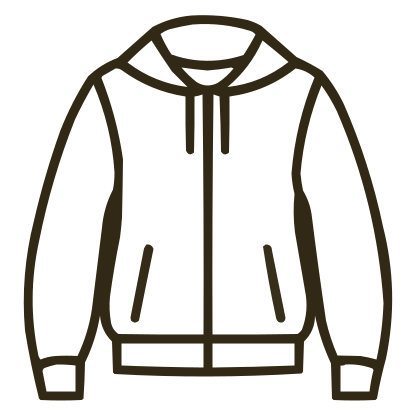
- Weekend and light outdoor: light jacket or more structured overshirt, is the layer that solves multiple scenarios.
- You already have so many bosses above and few below: Choose a base (t-shirt or knit) and bet on rotations and easy maintenance.
If your goal is a truly modular wardrobe, you can also take inspiration from how the brand “clean workwear” and travel-friendly reason. In store you find useful alternatives to compare, such asUniversal WorksorLanapo(excellent to understand volumes and proportions between bridge heads).


Fit and sizes: quick method to buy without guessing
You don't need to become a measure maniac. It needs a repeatable method.
Step 1: Choose a credible “confront”
Take a garment that suits you and has the same function ( shirt with shirt, overshirt with overshirt). Put it on a floor.
Measure only 4 points:
- shoulders (from seam to seam)
- chest (abcella-axilla)
- Total length
- width
Then compare with the size chart or sizes in product card.
Step 2: Apply layering rule (without exaggerating)
If you expect to use the head as a layer, consider that it must “close well” even with a base below. He doesn't have to become wide, he has to be practicable.
Step 3: Two tests at home as soon as the package arrives
Here you reduce unnecessary returns.
- Arms test: raise your arms and simulate everyday gestures (flying, backpack, handles). If you pull back or back, it's a signal.
- Sitting and step testingSit down and take two long steps. If life drops or feels constant tension, it is likely not the right size.
With regard to returns: in Europe the right of withdrawal on online purchases is normally within 14 days, with exceptions. A clear reference is the guideYour Europe on returns and the right of withdrawal. On Fabbrica Ski Sises you can findmade within 14 days, faster delivery and free delivery from 50€.
Chesapeake's key garments (and how to choose between variants)
Here we do not talk about generic “must have” but of pieces that, in practice, give the maximum relationship between use and rotation. Each voice includes logic “best for”, differences to look, and combinations.
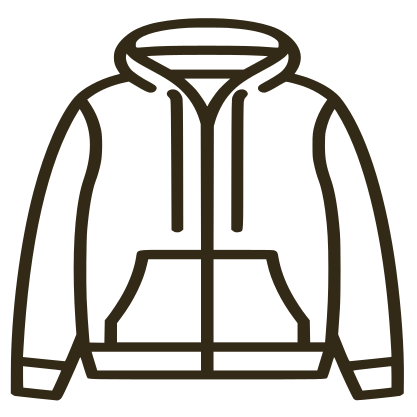
1) Overshirt (the bridge piece)
Best for: half season, informal office, weekend, clean stratification.
What to look at: fabric structure, presence and position pockets, length (it has to cover well without becoming long jacket).
What to do: minimal base and straight trousers. As a shoe, a solid and versatile sneaker helps keep the look contemporary, see the selectionFlower Mountain.


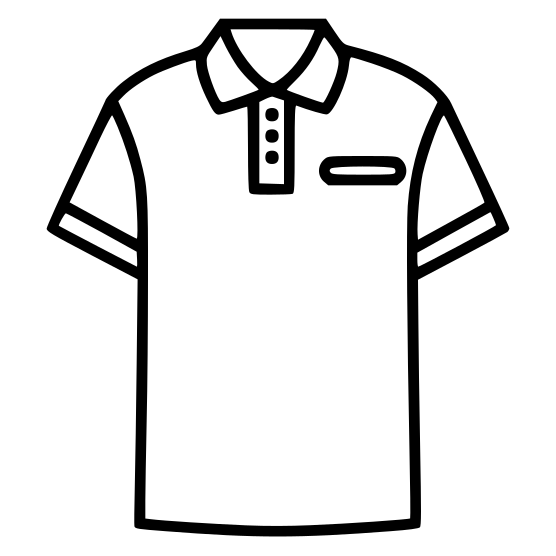
2) Essential shirt (the base that “high” everything)
Best for: weekly rotations, travel, layering under overshirts or jacket.
What to look at: shoulders, sleeves, and how the bottom falls (if you want it in or out of the pants).
What to do: light knitted or light jacket. If you are looking for a cleaner aesthetic, compare volumes withUniversal Works.
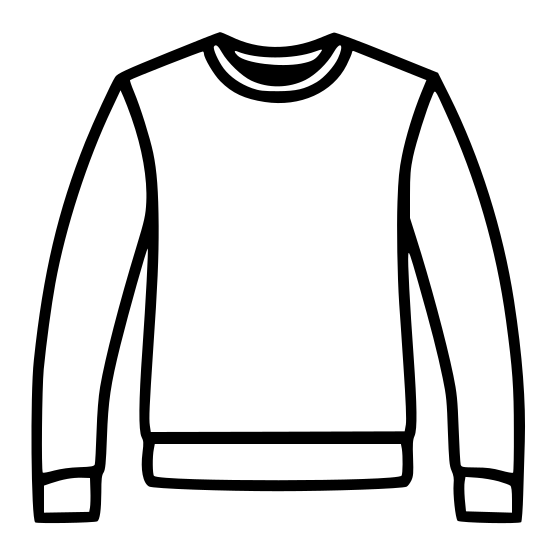
3) Clean sweater or sweater (average “silent” layer)
Best for: long days, cold office, weekend, travel.
What to look at: volume on chest and sleeves (it must flow under an outside), and finishes on neck and wrists.
What to do: overshirt above, pants straight below. If you build a more sartorial-casual capsule, you can insert a more “tessile” handpiece fromBiella Fabrics.


4) Straight trousers or chino (the cloaking column)
Best for: commuting, travel, everyday use.
What to look at: waist and horse (comfort in seat), bottom opening (proportion with shoes), fabric stability (however it maintains shape).
What to do: shirt or shirt, lighter external. If you want a more “outdoor urban” reading, the combination with clean technical sneaker works well.
5) Lightweight jacket (outside for variable climate)
Best for: shifts, weekends, half seasons, layering reasoned.
What to look at: arms mobility, pocket access, and how much space you have under for a medium layer.
What to do: base + medium layer, then jacket. For a “kit” approach and without doubles, you can also read the logic of the modular wardrobe in the mountains and cities, and apply it in urban version.
6) Functional accessory (multiplier)
Best for: travel, weekends, long days, rapid rotations.
What to look at: ease of use and maintenance. A right accessory solves micro-problems (temperature, organization) and makes a simple look more consistent.
What to do: If you are building a set for travel and activity, think about consistent accessories with the shoe and your main exterior.
Three outfit formulas, without chasing the total look
A capsule works if you repeat the formulas, not if you look for always new combinations.
Formula “clean city”: shirt + straight trousers + overshirt. You move between contexts without changing the register.
Formula “travel”: comfortable base + clean sweater + light jacket. The point is temperature management, not “technical” aesthetics.
Modular Weekend Formula: t-shirt or base + structured overshirt + durable trousers. If it rains or changes the weather, add only the outside, do not change everything.
Where to close your purchase (and when to ask for support)
If you have doubts between two sizes, the most effective way is to send to customer service the 4 measurements of your comparison head (spalle, chest, length, bottom) and tell us how you want to use it (basic only, or even layering). It's the kind of information that really reduces errors.
To start, exploreChesapeake's collectionand build a “system” trolley: a base head, a bridge head, a trousers.
If you go to Biella and want to optimize sports equipment (ski, snowboard, tennis), take a look at thesport service in storeor practical guide forski rental in Biella.
Ski Sises on Google
Choose Ski Sises as a preferred source: you'll see our guides and news more often in Top stories on Google.


