
Men's summer tennis and padel outfit: practical guide
Quick decision: what really matters for the outfit
If you're looking for an outfit for men's summer tennis and padel that works on court, put movement first: freedom in the shoulders, wide leg movement and a shoe that locks the foot during changes of direction. To compare other items from the same brands, check the collezione Adidas: Stile Sportivo e Streetwear.
If you play tennis or padel in summer, put movement first: freedom in the shoulders, wide leg movement and a shoe that locks the foot during changes of direction. With these three points at the center you can choose pieces that last longer and limit unnecessary purchases.
The shirt: concrete criteria to check
It isn't enough for the t-shirt to be lightweight: you need to check how it behaves when you raise your arms. When trying it on or on the product page check the cut and behavior in motion — raise your arms and verify that no seam pulls or that the garment doesn't ride up above the waist; a FreeLift‑type design reduces the risk of shifting during serve. Also check ventilation and fabrics: mesh panels or quick‑dry technologies in the description help manage sweat in high‑intensity phases. Finally note practical fit details like elastic collar, side vents and longer back hem, and prefer flat seams if you worry about shoulder chafing.
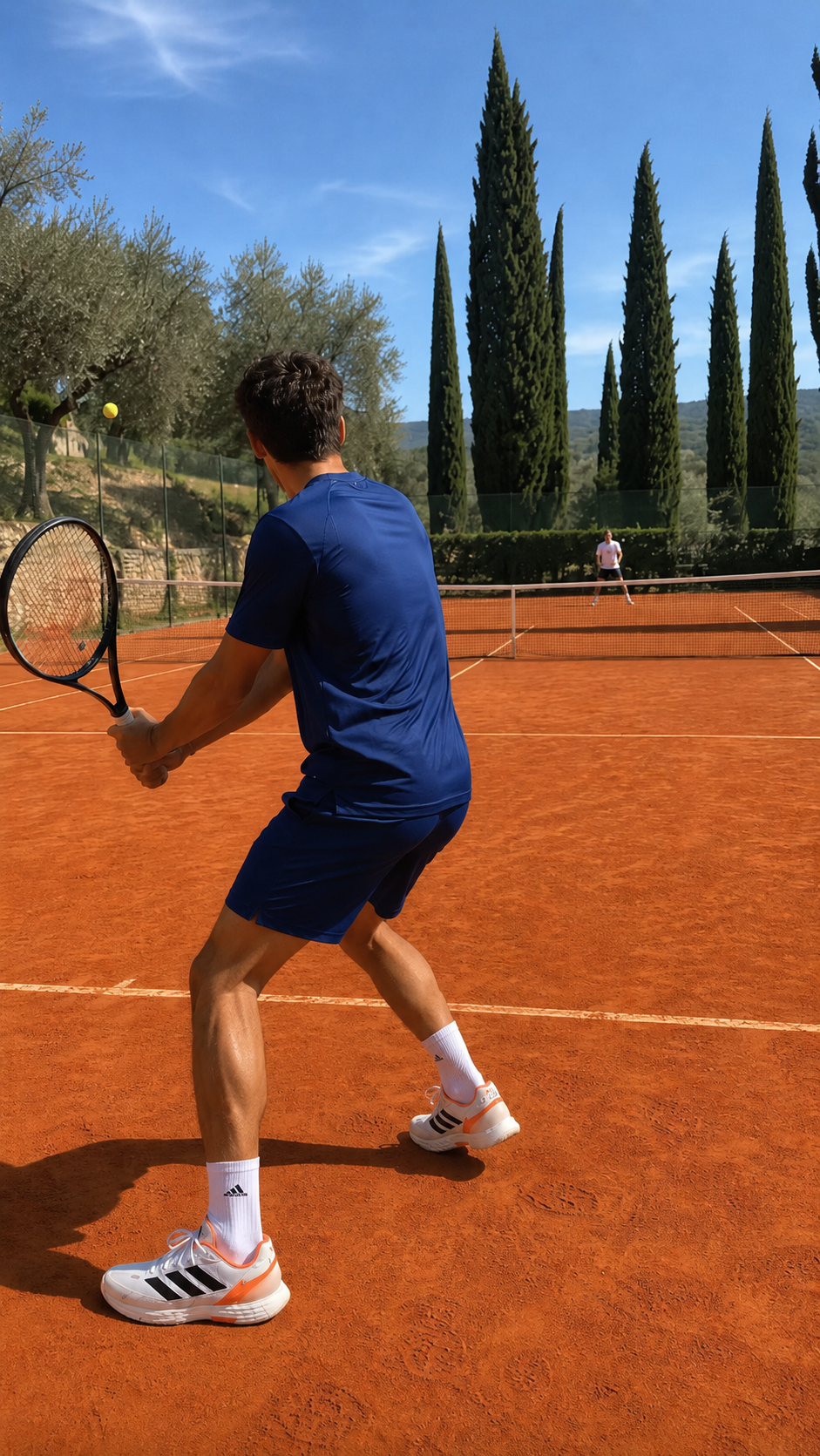
In our outfit the T-shirt Club Uomo Dark Blue lists FreeLift for the shoulders and CLIMACOOL for ventilation in the description: these are elements to confirm based on the size you normally wear.
Shorts: what to check before buying
For shorts evaluate durability and freedom of movement, not just color. Check the elasticity and the crotch length: do a squat to verify the crotch doesn't ride up or limit your split step; a crotch that's too short tends to pull, one that's too long can get in the way. Look at the waistband: an elastic + drawcord system keeps the garment in place without squeezing and without slipping during quick changes. Assess the pockets: in padel you need a secure pocket or a zip to prevent balls and small items from falling out while you move. Finally check the finishes: stretch fabric and flat seams reduce chafing and follow lateral lunges.
The Club Climacool Stretch Shorts indicate stretch fabric and Climacool technology: they suit you if you want ventilation combined with freedom of movement, but evaluate wear after several trainings to check seam durability and hold.
Shoes: three non‑negotiable checks
The shoe decides most problems on court. Before buying try or check: the real fit — wear the sock you'll use on court and wait for the heel to settle; check the space in front of the big toe (a practical rule is about half a centimeter). Check lateral support and heel reinforcement: move laterally and make some quick changes to understand if the upper and heel limit inward roll of the foot. Evaluate the outsole according to the surface you encounter most often: on the product page look for the outsole description to understand if it's designed for clay, synthetic or mixed use, because grip and durability vary greatly by surface.
Our suggestion includes the Defiant Speed 2 Tennis Shoes. They are presented as a tennis model on the product page: check the outsole and, if possible, try the fit before heavy use.
Usage profiles: which investment makes the most sense for you
Casual player (1–2 times a month): for occasional play a balanced, lightweight and affordable pair is enough; you don't need the latest technology if you don't spend many hours on court. Regular player (several times a week): invest primarily in shoes — good lateral support and an outsole resistant to your surface are worth more than expensive shirts. Competitor or mixed use (intense training + leisure): consider models with reinforcements, more durable outsoles and think about having two pairs to alternate so the outsole can rest and last longer.
What to look for on the product page before buying
When you buy online read composition and technologies listed on the page carefully (fabrics, percentages and description of features), fit notes (regular, slim and any sizing advice) and compare them with a shirt or pair of shorts you already wear. Check the outsole description and recommended use to understand if the model is intended for match, training or mixed use. Finally verify the size guide and the return policy: having the option to exchange size makes online purchasing less risky.
Quick checks to do before purchase (checklist)
- Try the shirt by raising your arms: no seam should pull or shift the garment.
- Do a squat and a few lateral steps in the shorts to evaluate comfort during the technical move.
- Put on the shoes and simulate bursts: check for a stable heel, no pressure points and adequate space in front of the big toe.
- If you buy online, consult the size guide on the product page and keep the return option to change size if needed.
A practical rule to decide immediately
Invest first in the element that limits your play today: if you feel instability or ankle discomfort, buy better shoes; if the garment shifts during serve, replace the shirt. The outfit shown on the page View and buy the complete look combines T‑shirt, shorts and shoes for a balance between mobility and ventilation: use it as a reference to compare sizes and variants.
If you want to compare sizes and models, explore the Tennis and Padel Collection to see alternatives and technical details.


FAQ
Which size should I take for the Adidas Club Men's T‑shirt?
Consult the size guide on the product page and measure a shirt you already own that fits well: take chest circumference at the widest point and length from neck to hem. If you're between sizes and play a lot, choose the larger size for more freedom of movement; if you prefer a more fitted profile, take the smaller. Always check the return policy before buying online so you can correct a wrong size.
Are the Defiant Speed 2 Tennis Shoes suitable for both training and matches?
They can work for both situations, but it depends on the surface and intensity. For light training and occasional matches a generalist tennis shoe is often adequate; for very intensive use or specific surfaces check the outsole type on the product page and the level of lateral support. If possible, try the model in store and simulate the lateral movements typical of your game.
How can I check shoe fit at home before returning them?
Wear the shoes with the socks you'll use on court. Walk, do lateral steps and a few short sprints; if possible, also try a squat. Check that the heel doesn't slip, that there are no pressure points and that there's about half a centimeter of space for the big toe. If you feel lateral instability or pain, change size or model before using them intensely.